
Salt Lake City & surrounding counties
The few shingles that failed, put back right
Plenty of the roofs we get called to need one careful repair and nothing more. A handful of loose tabs, one course that lifted in the wind, or a cracked boot around a pipe can be fixed without disturbing the rest, and we will tell you when that is all it takes.
Repairs we get called out for
These are the repairs that come up again and again on the roofs we work around here.
Where the water actually gets in
A stain on the ceiling marks where water finally dripped, which is rarely where it entered. Water travels along the underlayment and down rafters before it shows, so the hole can sit several feet uphill. Before anyone climbs the ladder, we look in the attic for the wet trail, darkened wood and any daylight around a pipe.
Sometimes the attic answers the question on its own. A bath fan that empties warm, wet air into the attic can drip on a ceiling in winter and look exactly like a roof leak. In that case the shingles are fine, the fix is a duct, and we say so instead of selling you a repair you do not need.
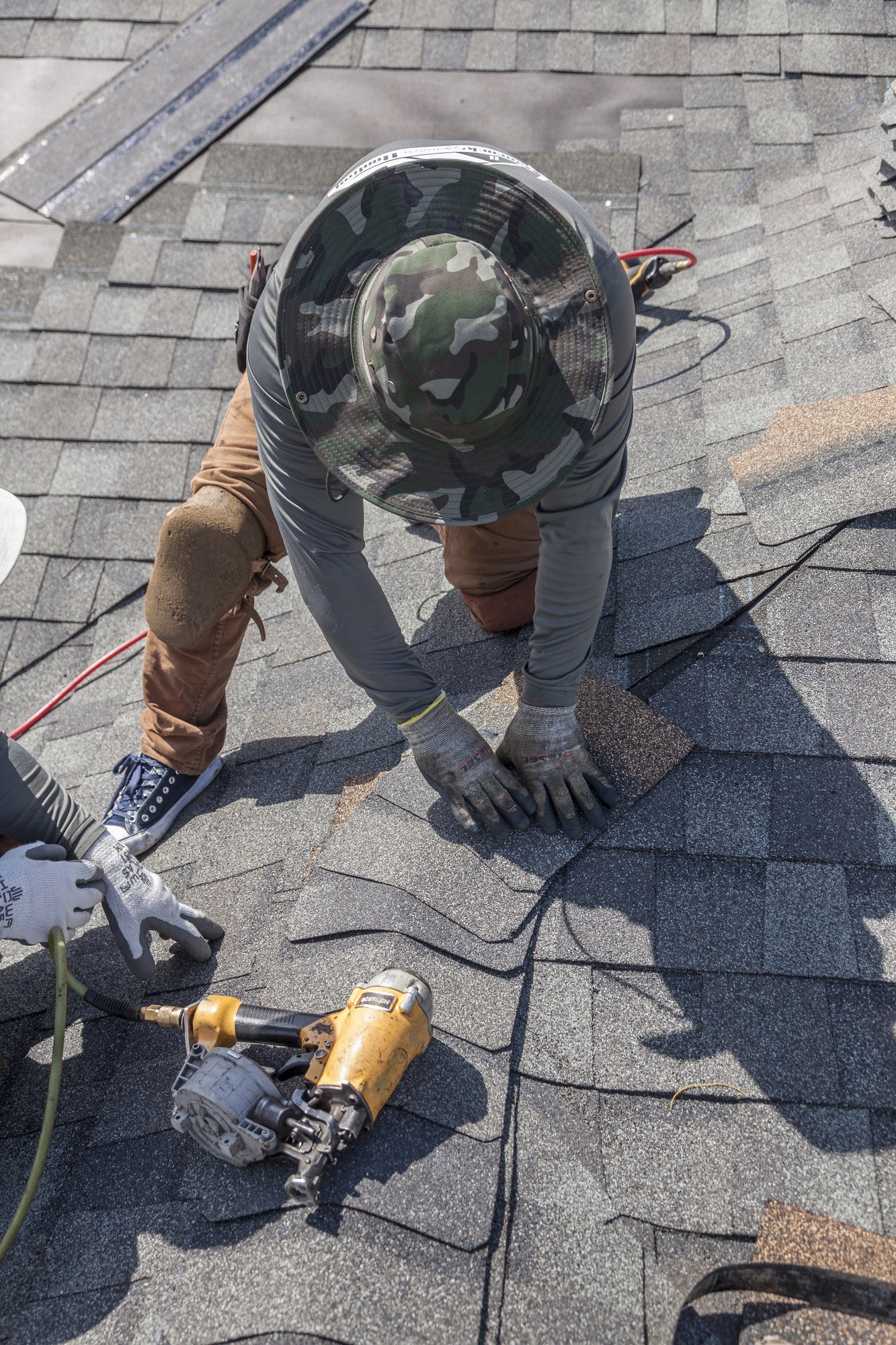
Taking one shingle out cleanly
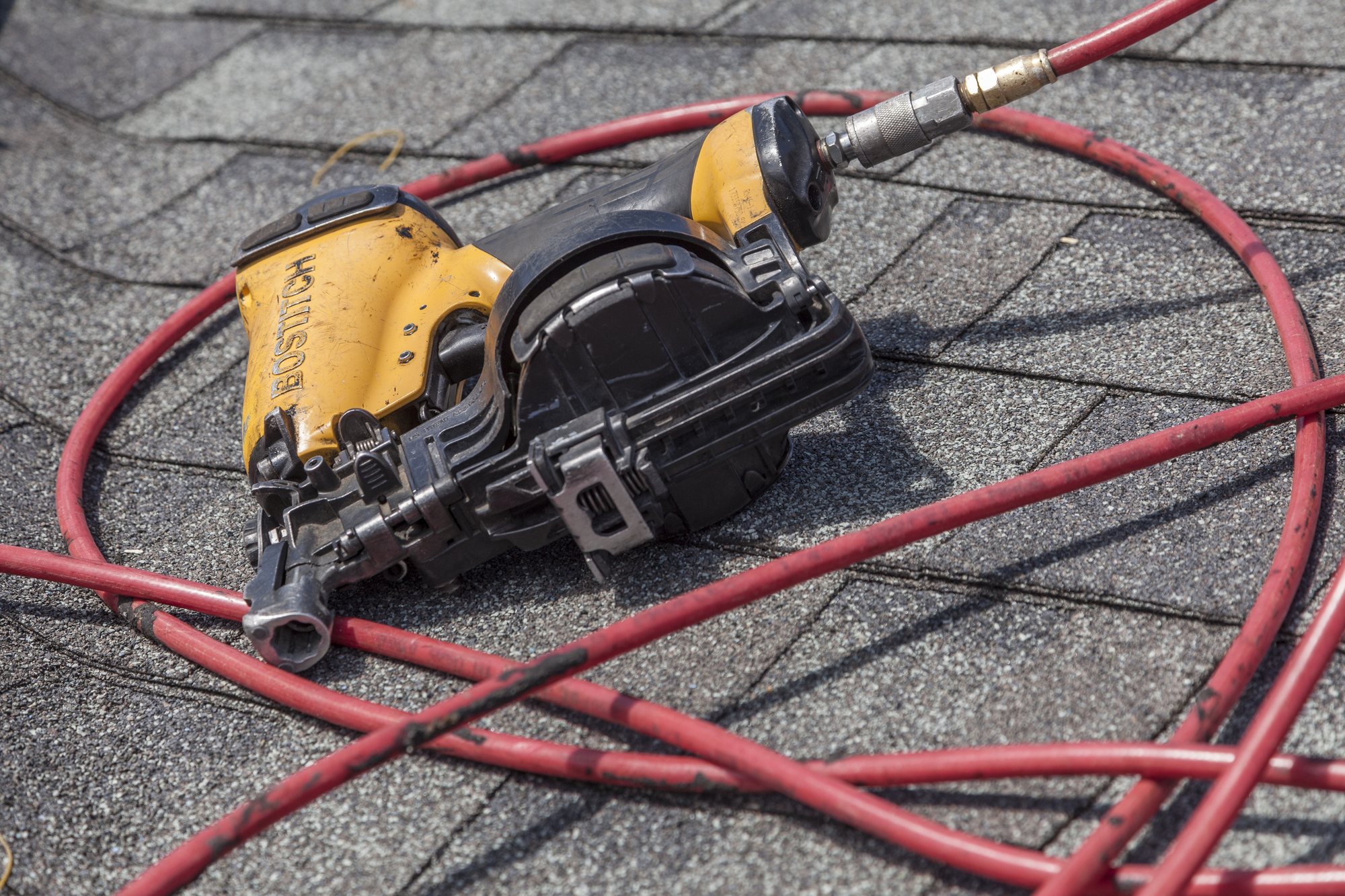
The photo shows a yellow coil roofing nailer with its red air hose looped around it, resting on a gray shingle field. On a repair the nailer comes out last. Getting the damaged piece off without wrecking the course above it is the slow part.
Each shingle is held by its own nails and by the nails of the row above, which pass through its top edge. We break the seal on the course above with a flat bar, lift it gently, pull the nails holding the bad piece, and slide it out. The new shingle slips in under the lifted course, gets nailed on its line, and the course above is nailed back down through it.
In warm weather the sun softens the seal strips and they grab again on their own. In the cold they stay hard, so every piece we disturbed gets hand-sealed with dabs of roofing adhesive that hold it until spring warms the roof.
Old three-tab that snaps instead of bending
Some roofs cannot be repaired that way, because the shingles are too far gone to lift. Old three-tab that has baked for years in sun at this elevation loses the oils that keep it flexible. Bend a tab on a cold morning and it breaks off in your hand.
When we find that, we try one or two pieces first and stop if they crack. If the shingles around the damage keep breaking as we work, a repair can grow larger than the hole it started as. So we come down and show you photos of what we saw, and nobody tears up half a slope on a job you agreed to for one spot.
Why a new piece rarely matches
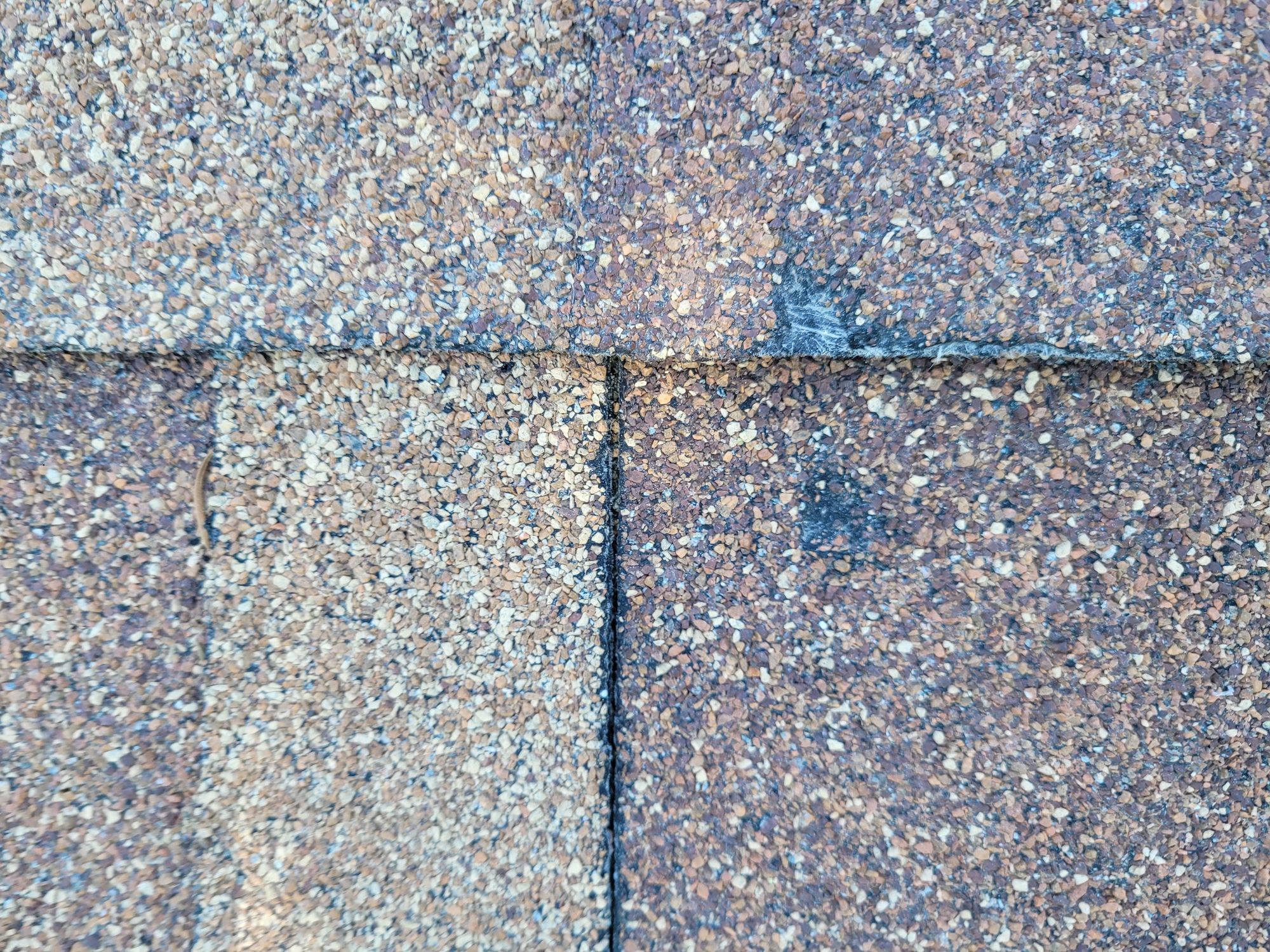
The second photo is an extreme close-up of brown shingle granules where one course meets the next and two tabs butt together. Up close you can see how many colors are blended into what reads from the street as one brown.
That blend is why a repair is hard to hide. Manufacturers change their color mixes and retire styles, and the shingles already on your roof have spent years fading. Even a bundle with the same name on the wrapper can land a shade off.
We bring the closest match we can find and tell you before we start how close it is likely to look. On a back slope nobody sees, many owners shrug at it. On the front of the house, a patchy look bothers some people enough to change the decision, and that is a fair call to make.
A good repair leaves the shingles around it sealed down tighter than they were before we came.
Past the point of patching
We will keep repairing a roof as long as that makes sense, and we tell you when it stops making sense. The signs are shingles that crack in our hands, granules worn off across a whole slope, or a deck that has gone soft under the damage. Then the conversation turns to a full roof replacement in Roy, with photographs of what we found so you can judge it yourself.
One problem or several? The Roy roof inspection page explains how we read a whole roof. The valley-wide roof repair page has more on this work, recent jobs are in the gallery, and the town itself has a Roy service area page.
We are a second-generation family company, woman-owned, with 27 years in the trade. Call (801) 382-8898 to talk it over with one of us, or send a note through the contact page with a photo of the stain or the spot on the roof.
Where Roy sits on our map
Roy is on the Weber County side of the ground we cover, and repair calls there are booked the same way as anywhere else we work.
Can you fix just the shingles that blew off?
Usually, yes. If the shingles around the damage still bend without cracking, we replace the missing pieces, nail them in under the course above, and seal them down. If they crack as we lift them, we stop and show you.
Will the new shingles match my roof?
Close, rarely exact. Colors and styles change over the years and your old shingles have faded. We bring the nearest match available and tell you up front how noticeable it is likely to be.
Can you repair a roof in winter?
Yes, on a dry day. Shingles do not seal themselves in the cold, so each piece we touch gets hand-sealed. Larger work that needs a warm, dry deck may wait for better weather.
My pipe boot is cracked. Is that a big job?
Usually not. The old boot comes out, a new one goes in under the shingles above it and over the ones below, and the area gets sealed. It is one of the repairs we do most often.
When would you tell me to replace instead?
If the field cracks as we handle it, if bare spots cover entire slopes, or if the wood under the leak has gone soft. You get the photos either way and make the call.
The rest of the Roy work
Talk to Hancock
Get a leak looked at
Tell us where the water shows up inside and roughly when it started, and we will come walk the roof and tell you plainly whether it is a repair or something bigger.