
Roofing in the Vernon area
From tear-off to ridge cap across Vernon and the streets around it.
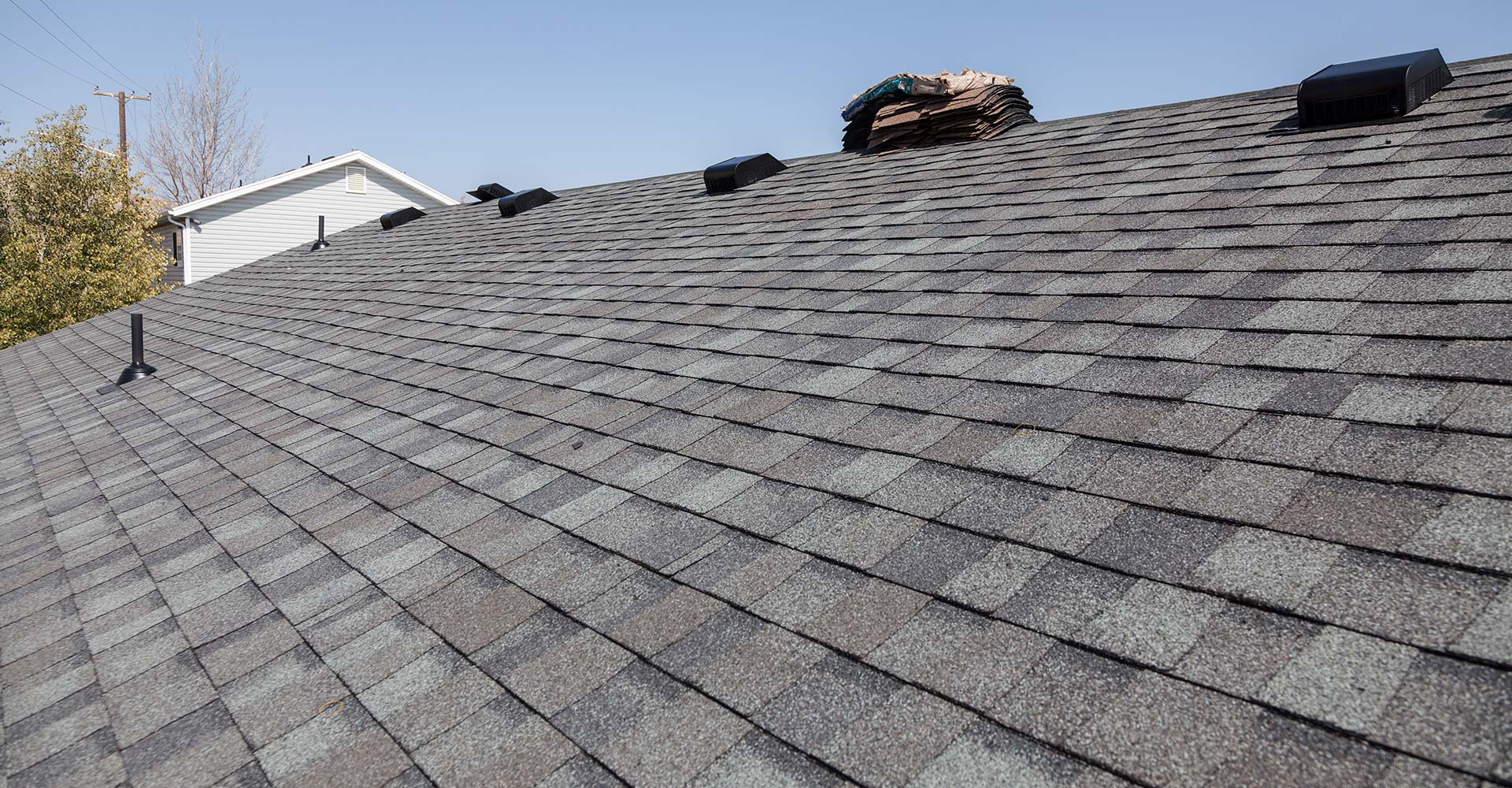
How roofs age around Vernon
Sun does more damage at this elevation than people expect. Thinner air means harder ultraviolet, and a south or west slope in Vernon will age visibly faster than the north side of the same house. That is why we read a roof plane by plane rather than giving it one verdict.
Because we are on Tooele County roofs most weeks, we know how the housing around Vernon was put together, which is a different thing from knowing how roofs work in general.

The weather a Vernon roof works against
Thermal shock on metal and flashing
Metal moves. On a sunny winter day a standing seam panel or a piece of valley metal can run a hundred degrees warmer than the air, then drop back after dark. That expansion and contraction happens every clear day of the year here. Panels have to be fastened so they can move, clips have to be right, and a valley has to be detailed to slide instead of being pinned tight at both ends.
Pinned metal tears its own holes
When movement is blocked, the fastener holes elongate and that becomes the leak path.
Chimneys and the winter melt
Masonry sits colder than the roof around it and snow banks against the uphill side. Meltwater runs down the brick and looks for a way in. Step flashing, counter flashing tucked into a reglet cut, and a cricket behind a wide chimney are what keep it out. A bead of sealant across a chimney base is a temporary measure that somebody will be redoing in two winters.
Old mortar makes it worse
Where the joints have gone soft, the water gets into the masonry itself and the flashing is only half the job.
Open desert country west of the Oquirrhs, where wind is the constant and shade is scarce. Nailing pattern and UV both matter more out here.
What we find on roofs around Vernon
Architectural over three-tab
Most homes here that are replacing a roof move to architectural shingles and stay there. The laminated construction is thicker, carries a higher wind rating out of the wrapper, and does not show every wave in old decking the way a three-tab does. Three-tab still has a place on a rental, an outbuilding or a repair that has to match what is already up.
Wind rating is a nailing question
A shingle only earns its rating if it is fastened the way the wrapper says. Six nails in the nail line, not four in the wrong spot.
Dry-in is the real milestone
The moment that decides whether a re-roof goes well is not when the last shingle goes down, it is when the deck is covered, taped at the penetrations and sealed at the edges. From that point the house is weather-tight and everything after it is finish work. A crew that understands this never leaves at the end of a day with bare deck showing.
Ice barrier goes down first
Eaves, valleys and every pipe before any field underlayment. Working from the bottom up means every sheet laps over the one below it the way water expects.
Then the metal, then the field
In that order, every time.
What we do around Vernon
Every service is its own page. These are the ones Vernon asks for most.
Roofing
Full replacements and new roofs on Vernon homes, deck up.
Repairs
Leaks and failed details, which is most of what Vernon calls about.
Upkeep
Inspections, cleaning and sealing before a small thing gets expensive.
Shingles
Architectural laminate, the field material on most of this valley.
Metal
Standing seam and corrugated, common on canyon-side snow load.
Tile
Clay and concrete tile, and the flashing work they need.
Commercial
Membrane systems for flat and low-slope buildings around Vernon.
Coatings
Restoration coatings when a commercial roof has life left.
Storm
Hail, wind and the insurance paperwork that follows.
Skylights
Installation and the curb-flashing repairs skylights usually need.
Gutters
Gutters, downspouts and fascia, which are part of the roof.
Government
Schools, city, county, state and federal buildings. Every government service is on the government roofing page.
How the job runs
Attic access before the ladder goes up
A good deal of what we need to know is inside, not outside. We want to see the underside of the deck, the insulation depth at the top plate, whether the soffit chutes are clear, and whether there is a bath fan dumping warm wet air into the attic instead of out through the roof.
Half of roof leaks start in there
A roof fixed without looking at the attic is a roof fixed halfway. Sometimes the answer is that the shingles are fine and the bath fan needs a duct.
Waste, salvage and what gets hauled
A tear-off generates a surprising volume, and a fair amount of it does not have to go in a landfill. Asphalt shingles can often go to a recycler, sound tile gets set aside for salvage, and scrap metal leaves separately. The rest goes out in the trailer the same day the work ends.
Leftover material is yours to keep
If you want a bundle in the garage for a future repair, say so before the trailer leaves. Matching a color in six years is the hard part, and a few spare shingles solve it.
The yard gets walked at the end
Twice, in two directions.

Work from around the valley

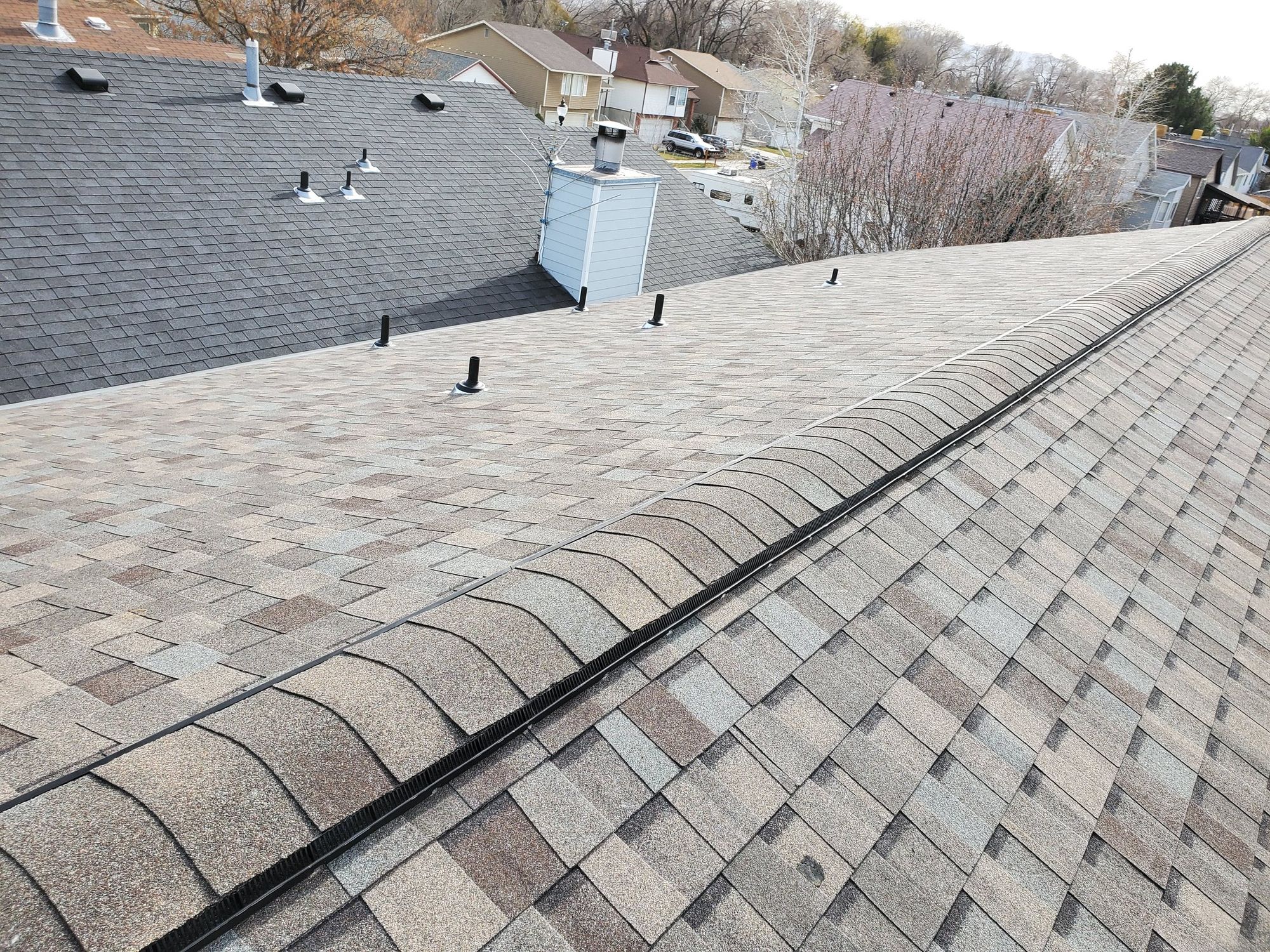

Built for the house itself
We do not run one spec on every roof and call it standardization. A shaded bench home under heavy trees needs different attention than an exposed lot that catches every gust off the mountain. Pitch, exposure, elevation and what is already up there all change the answer.
Which is why we look first
Nobody can tell you what a roof needs from the street or over the phone.
We live under these roofs too
Our families are in these same neighborhoods, on the same benches, taking the same wind and the same snow. When we detail an eave a certain way it is because we have seen what the other way does two streets over.
Same weather, same stakes
There is no version of this where we get to install something we would not put on our own house.
It is a small valley
People remember who did their neighbor’s roof.
Questions we get asked
Not the question you had? Call the shop and ask a person. We would rather talk it through than have you guess from a website.
(801) 382-8898Do you actually work in Vernon?
Yes. Vernon sits inside the ground we cover around Salt Lake City, and the crew is there most weeks rather than once a season.
How fast can you get to Vernon after a storm?
Storm calls jump the queue. We get there, stop what is coming in, and schedule the real fix rather than rushing a permanent repair in bad weather.
Do you handle the insurance side?
On hail-damaged roofs, we work with your insurance to get the roof covered. We document the damage thoroughly with photographs, so the claim reflects what is actually on the roof.
What happens if you find bad decking?
We show you. The decking is only visible during a tear-off, so that is when soft sheathing gets found and replaced. We photograph it rather than just add it to a list.
Do you work through the winter?
Yes, with judgment. Shingles need to seal, and in genuine cold that takes longer or needs hand sealing. Emergency work happens whenever it has to. Full replacements get scheduled around the weather rather than forced into it.
What makes a Utah roof different?
Snow load, ice at the eaves, canyon wind and high-altitude sun, all on the same roof. A crew that learned roofing somewhere mild has to learn it again up here.
Where Vernon sits on our map
Tooele County work, Vernon included, is a normal week for this crew rather than a trip.
Roof work in Vernon
Call (801) 382-8898. We will get on the roof, look properly, and tell you what it needs.