
Recent roofs
Work from around the Salt Lake valley, photographed as it happened.

What these pictures show
Every photograph here is a real Hancock job. Tear-offs down to the deck, underlayment going on, valleys cut in, ridge cap run out, and the finished roofs at the end of it.
You can tell a lot about a roofer from what a job site looks like mid-day. That is most of what is in here.
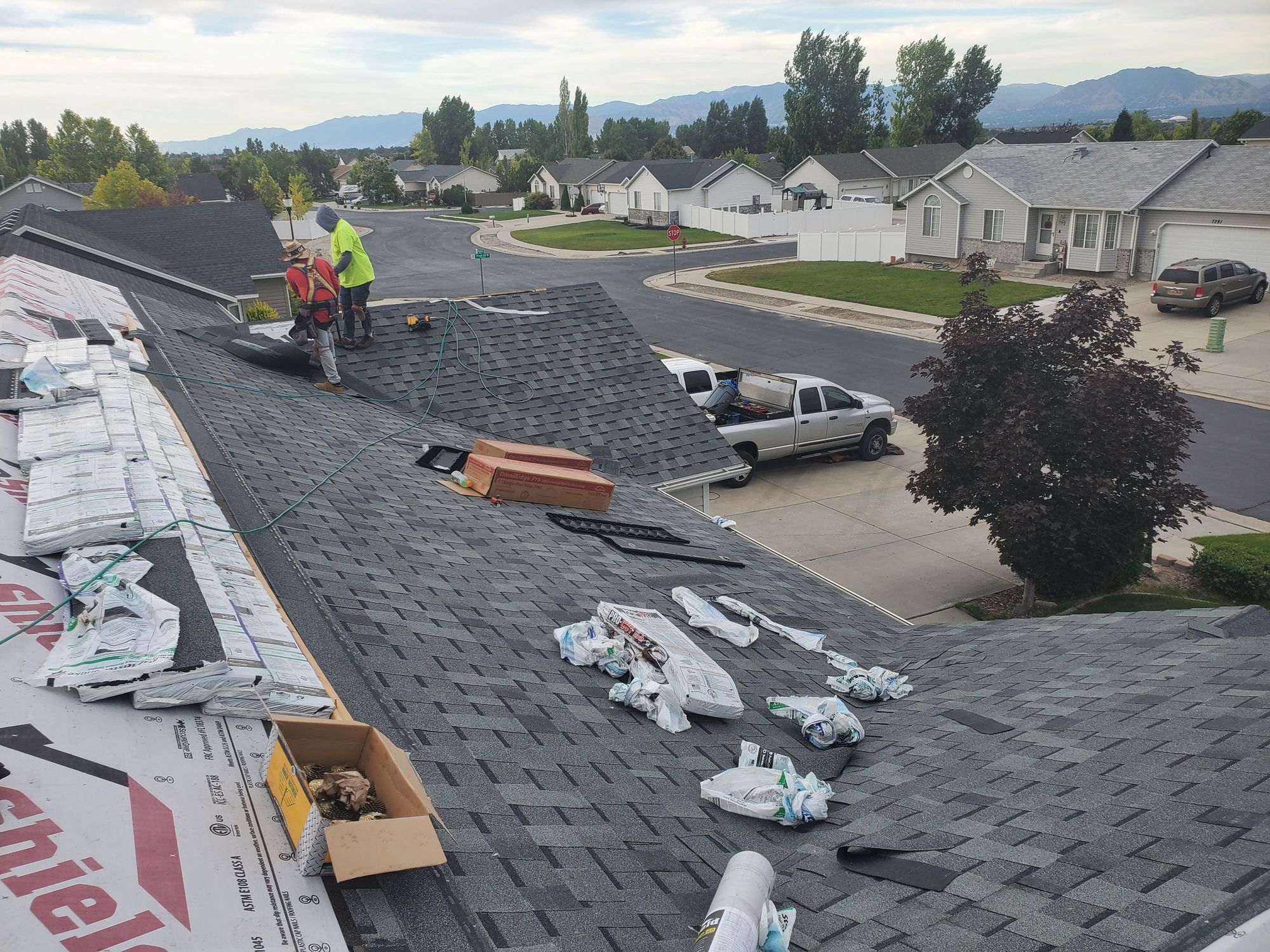
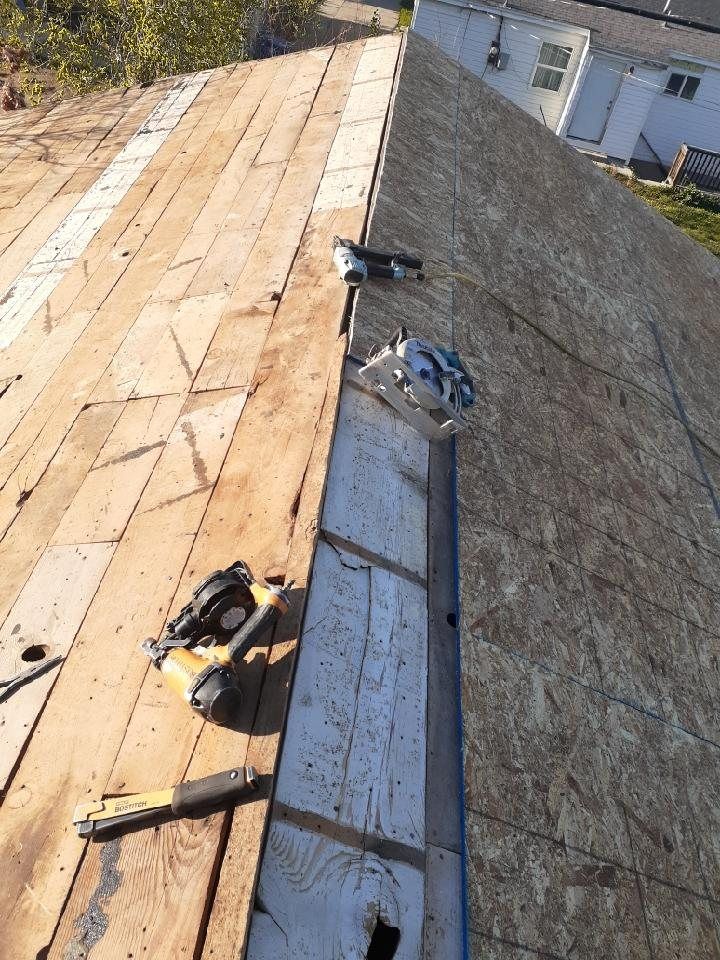
Tear-off and decking
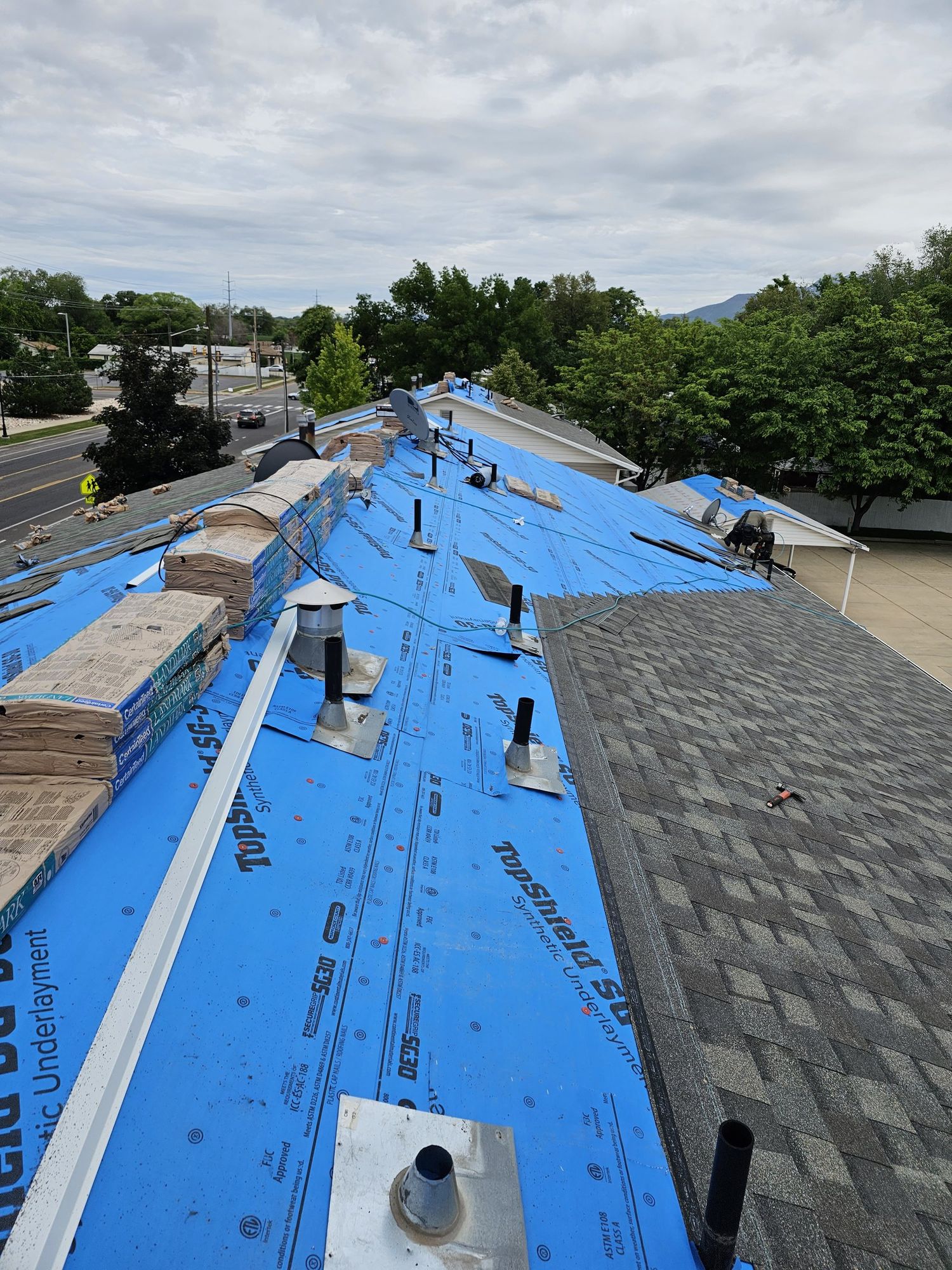
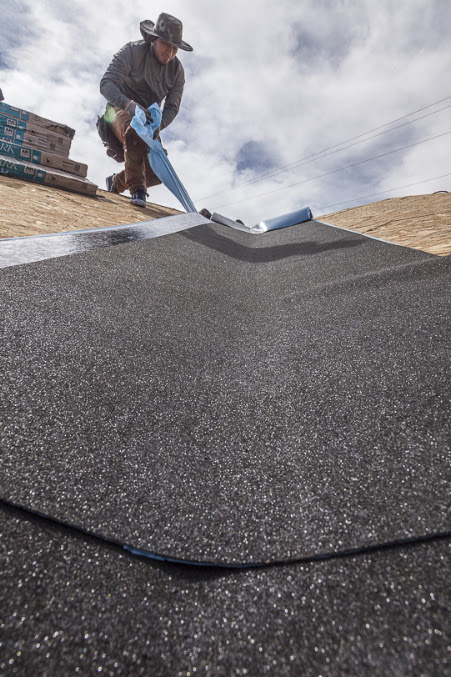
Detail work

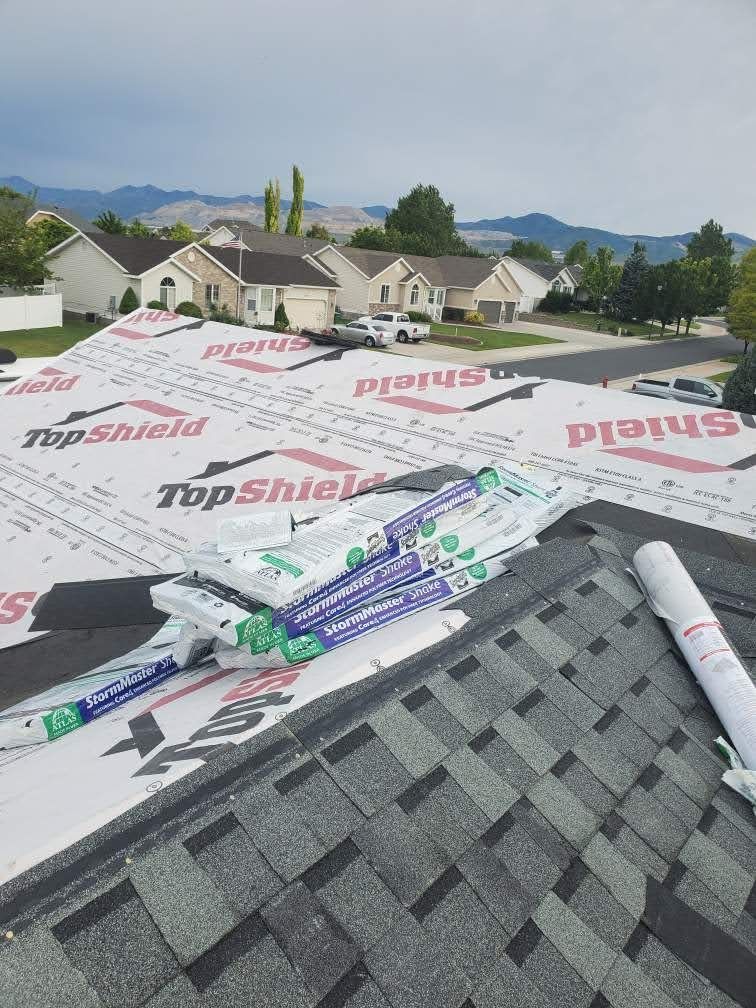
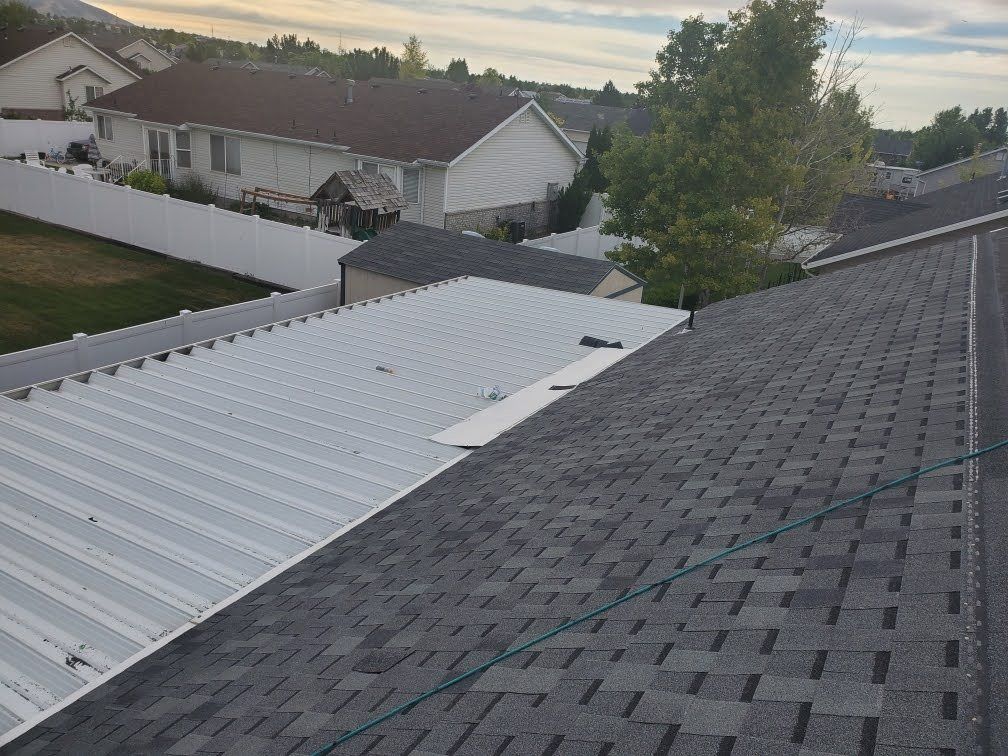
Finished

Why these photographs
Every picture here is a real Hancock job on a real roof in this valley. Nothing is stock, nothing is staged, and nothing came from a supplier’s marketing library. You are looking at the actual work.
What to look for
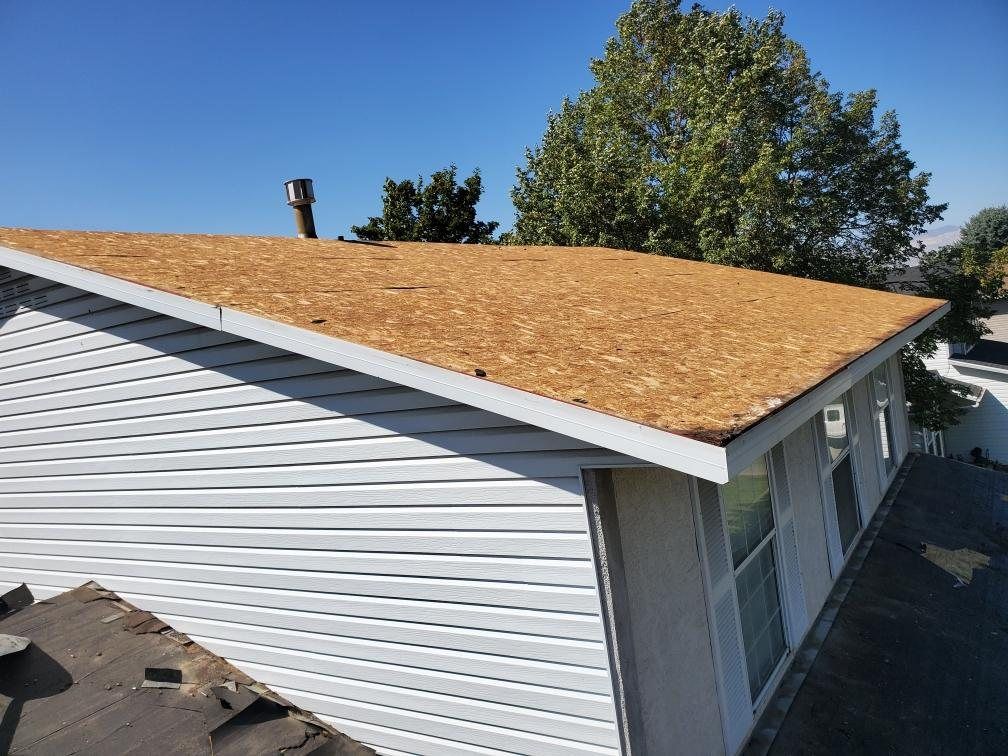
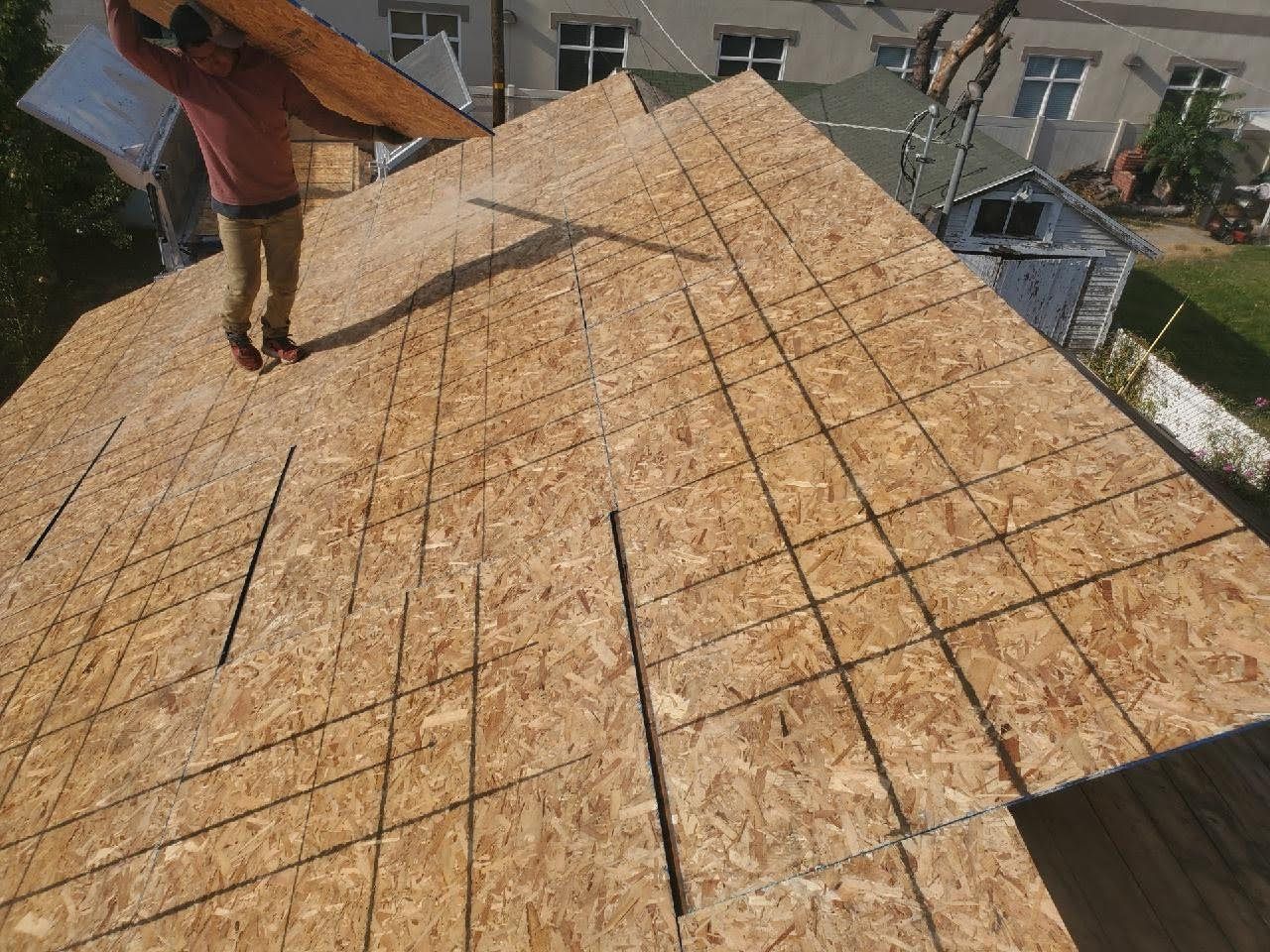
Look at the middle of the job rather than the end of it. Tear-offs where the decking is exposed tell you whether somebody checked the sheathing. Valleys and flashing tell you whether the details were formed or sealed. The finished shots are the easy part.
The Wasatch in the background
Most of these were taken on ordinary working days across the Salt Lake valley, Davis county and up toward the mountains. The peaks behind the rooflines are why the roofs here have to be built the way they are.
Tear-off and decking
The pictures of bare decking are the ones worth studying. That sheathing is only visible during a tear-off, and it is the only chance anyone gets to find and replace soft panels before a new roof goes over them. A crew that photographs this stage is a crew that looks at it.
Details and finishes
Valleys, pipe boots, step flashing, chimney work and ridge cap. None of it is the part people notice from the street and all of it is where roofs actually leak. The finished shots at the end are the result of the unglamorous frames before them.
What we find on roofs around here
What we find most often
On houses in this valley the three recurring findings are unbalanced ventilation, flashing that was sealed rather than formed, and decking that went soft under a valley nobody could see into. All three are invisible from the ground and all three are cheap to fix while the roof is already open.
What the age of the house tells us
A house built in the 1950s, one built in the 1980s and one built last year each fail differently. Older stock tends to have thinner decking and original framing that was never sized for a second layer of shingles. Houses from the building booms tend to share a builder’s ventilation shortcut across a whole subdivision. New construction usually fails at a detail somebody rushed to hit a schedule.
The year a Utah roof works through
Spring wind off the benches
Canyon wind is the thing homeowners here tend to shrug off. It does not arrive as a steady push, it arrives in gusts that lift a shingle tab, break the seal strip, and set it down again looking fine. Three or four of those and the tab is loose, water gets a path, and nobody knows until a ceiling stains.
Rakes and ridges go first
Edges take the uplift. That is why we nail the rake tighter, use a starter course with a factory seal at the eave, and look at ridge caps before anything else after a blow.
Cold nights pull condensation into the attic
A lot of what people call a roof leak up here is not a leak. Warm moist air from the house rises into an attic, hits a deck that is well below freezing, and condenses on the underside of the sheathing. In the morning it drips. Homeowners see a wet spot and think shingles, when the problem is that the attic is not moving air.
Frost on nail points
We look for rust rings and frost on the nail shanks. That pattern tells you it is condensation before a single shingle comes off.
What we check
- Starter course at the eave and rakes
- Nailing pattern and placement
- Course offset and exposure
- Ridge cap fastening
Where roofs go wrong
The shortcut we see most
Shingles laid over a second existing layer to save a tear-off. It hides the decking, adds weight the framing was not sized for, and guarantees that the next roof is a bigger job than this one should have been.
What good looks like instead
Down to the deck, sheathing repaired where it is soft, ice barrier where the eaves need it, and the flashing formed rather than sealed.
Signs worth a look
- Granules collecting in the gutters or at the downspout discharge
- Tabs lifting or curling along a rake or ridge
- Shingles that look bare or patchy from the street
- Staining or daylight visible in the attic
What to expect
How long it takes
Most houses in this valley are one to two days on site once the crew arrives. What stretches it is pitch, the number of existing layers to strip, and how many valleys and penetrations the roof has. We tell you which of those apply to yours before the schedule is set.
What happens to your yard
Tarps go down over landscaping and the drive before anything comes off the roof. Material is staged where it will not crack concrete. At the end of every day the site gets cleared, and when the job is finished a magnet goes over the whole yard for nails.
What you should expect from us
A walk of the roof before anything is quoted, photographs of what we found, a plain explanation of what needs doing and what does not, and Hancock answering for the job through to the finish.
Why Hancock
One neighbor at a time
We are not trying to be the biggest roofer along the Wasatch. We work in the towns we live in, we take on what we can do properly in a week, and most of what comes our way comes from somebody who watched us work on their street. That is a slower way to grow a business and it is the reason we are still standing behind roofs we put on years ago.
Word travels on a street
Which keeps us honest better than any advertising would.
Second generation on a roof
This is a family trade here. The owner learned it working for his uncle, who did not tolerate a sloppy valley, and those habits carry into every job the name goes on. Twenty-seven years in the trade is the owner’s own time on roofs, learned before there was a company.
Eight years under this name
The Hancock Signature name has been on trucks for eight of those years. Two different numbers, and we keep them straight because the difference is the whole story.
Where we work
Nine counties around Salt Lake City, plus every community inside them.
Salt Lake County
Davis County
Weber County
Box Elder County
Tooele County
Utah County
Summit County
Wasatch County
Morgan County
Questions we get asked
Not the question you had? Call the shop and ask a person. We would rather talk it through than have you guess from a website.
(801) 382-8898How long does a roof replacement take?
Most houses in this valley are a one to two day job once the crew is on site. Steeper pitches, multiple layers to strip and complicated roofs with a lot of valleys take longer, and we tell you which yours is before we start.
Do you work through the winter?
Yes, with judgment. Shingles need to seal, and in genuine cold that takes longer or needs hand sealing. Emergency work happens whenever it has to. Full replacements get scheduled around the weather rather than forced into it.
Will you tell me if I do not need a new roof?
Yes. Plenty of what we look at turns out to be a repair, and we say so. A roof with years left in it gets left alone, and you get the photographs either way.
What happens if you find bad decking?
We show you. The decking is only visible during a tear-off, so that is when soft sheathing gets found and replaced. We photograph it rather than just add it to a list.
How do I know when a roof is getting close?
Granules collecting in the gutters, tabs lifting or curling at the edges, shingles that look bare in patches, and daylight or staining in the attic. Any of those is worth a look.