
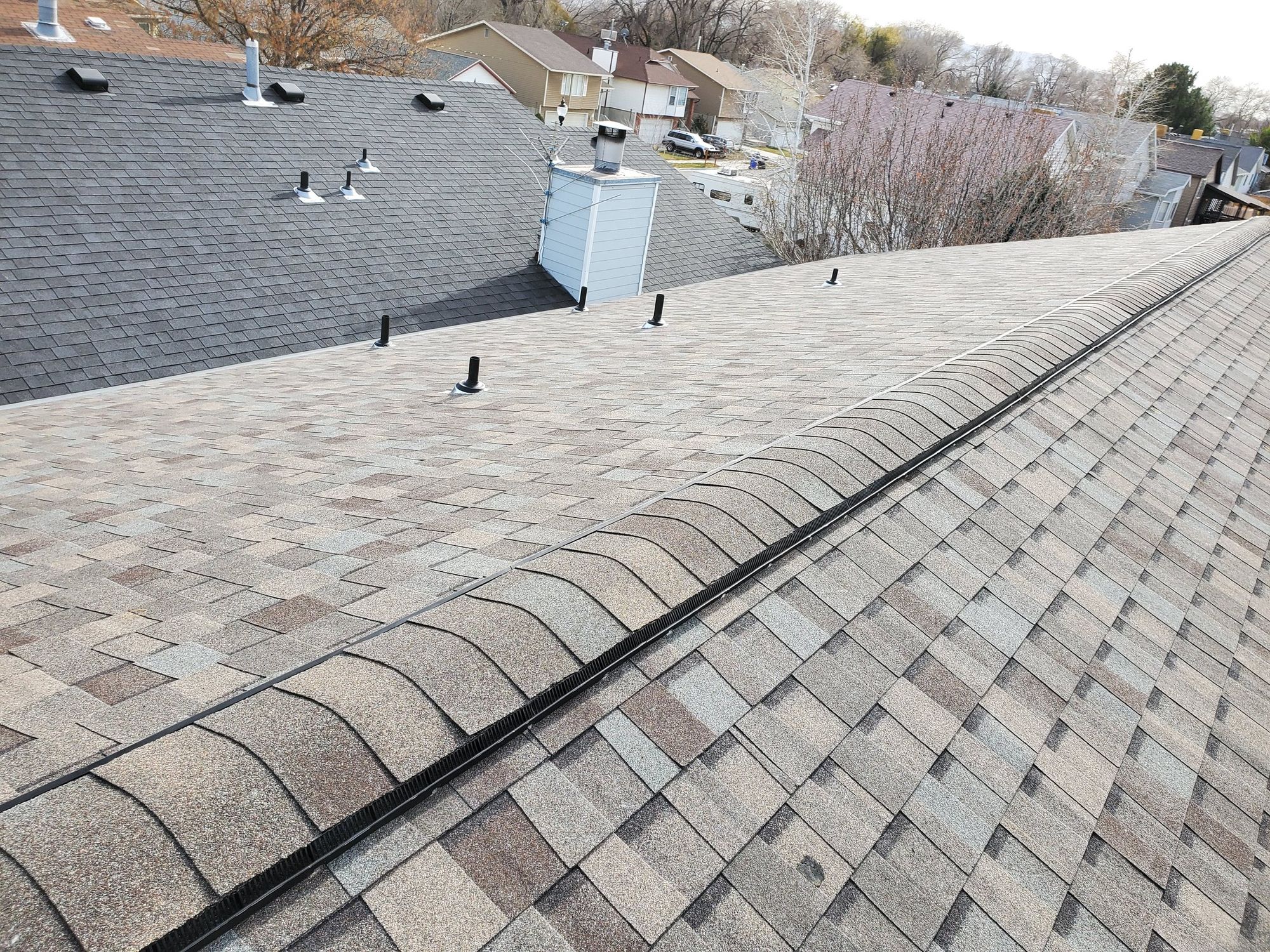
Davis County, Utah
Roofing in the Sunset area
Honest roof work in Sunset, from a family company in its second generation.
The year a Sunset roof works through
Attic condensation gets reported as a leak in Sunset more often than an actual leak does. Water drips onto insulation, stains a ceiling, and the roof above it is perfectly sound. Telling the two apart takes getting into the attic rather than onto a ladder.
Because we are on Davis County roofs most weeks, we know how the housing around Sunset was put together, which is a different thing from knowing how roofs work in general.

The weather a Sunset roof works against
Bands off the lake
Homes on the north end of the valley catch snow bands that come off the water and dump on a narrow strip while the next town over gets nothing. That snow arrives wet and it arrives fast. A roof in one of those corridors takes more events per winter than the numbers for the metro would suggest.
It is a per-street question
Two miles can be the difference between an average snow year and a hard one. Which is why a roof age that seems fine on paper sometimes is not.
We ask about the last few winters
Homeowners in a band know they are in one.
Microclimate changes street to street
Two homes ten minutes apart can be on completely different roofs in terms of what they endure. Elevation, whether the lot sits in a canyon draw, how much tree cover is overhead, and which direction the main slope faces all change the answer. A roof age that is fine on a shaded north-facing bench home is well past done on an exposed south-facing lot at a higher elevation.
Why we look before we talk
That is the reason we get on a roof before saying anything about it.
Davis County runs narrow between the lake and the mountain, and the wind funnels through it. The corridor around the base sees gusting that the sheltered streets further east do not.
What we find on roofs around Sunset
Dry-in is the real milestone
The moment that decides whether a re-roof goes well is not when the last shingle goes down, it is when the deck is covered, taped at the penetrations and sealed at the edges. From that point the house is weather-tight and everything after it is finish work. A crew that understands this never leaves at the end of a day with bare deck showing.
Ice barrier goes down first
Eaves, valleys and every pipe before any field underlayment. Working from the bottom up means every sheet laps over the one below it the way water expects.
Then the metal, then the field
In that order, every time.
Fasteners rust from the inside out
Screws and nails on a roof within reach of the lake air corrode faster than the same hardware would inland. A plain steel nail head disappears under a shingle and takes years off the roof’s hold without a single visible symptom. Hot-dipped galvanized or stainless where the metal is exposed is a small line item that decides whether the roof reaches its rated life.
Mixed metals make it worse
Aluminum flashing pinned with the wrong screw sets up a reaction that eats the softer metal at every contact point.
We look at the old nails
What came out of the last roof tells you what to put in the new one.
Sunset is part of our Davis County work. 27 years in the trade, and a full replacement carries our 10-year workmanship warranty.
What we do around Sunset
Every service is its own page. These are the ones Sunset asks for most.
Roofing
Full replacements and new roofs on Sunset homes, deck up.
Repairs
Leaks and failed details, which is most of what Sunset calls about.
Upkeep
Inspections, cleaning and sealing before a small thing gets expensive.
Shingles
Architectural laminate, the field material on most of this valley.
Metal
Standing seam and corrugated, common on canyon-side snow load.
Tile
Clay and concrete tile, and the flashing work they need.
Commercial
Membrane systems for flat and low-slope buildings around Sunset.
Coatings
Restoration coatings when a commercial roof has life left.
Storm
Hail, wind and the insurance paperwork that follows.
Skylights
Installation and the curb-flashing repairs skylights usually need.
Gutters
Gutters, downspouts and fascia, which are part of the roof.
Government
Schools, city, county, state and federal buildings. Every government service is on the government roofing page.
How the job runs
Sequencing around a mason or a painter
When a chimney needs tuckpointing or a wall needs paint, the order those trades go in decides whether anybody has to come back. Masonry work happens before the roof ties into it so the flashing can be cut into fresh joints. Siding and paint on a wall above a roof plane go in before the final course below them.
We will talk to your other trades
A five minute phone call between two crews saves a week of scheduling around each other, and we would rather make the call than let you relay it.
A roof that needs a second visit
Some jobs cannot be finished in one stretch. Decking that turns out worse than the attic suggested, a chimney that needs a mason, a skylight on order. When that happens the house gets fully dried in and weather-tight, you get told exactly what is outstanding and when, and the open item does not quietly become your problem to chase.
Nothing is left half done overnight
Weather-tight at the end of every day is the rule, whether the roof is finished or not.
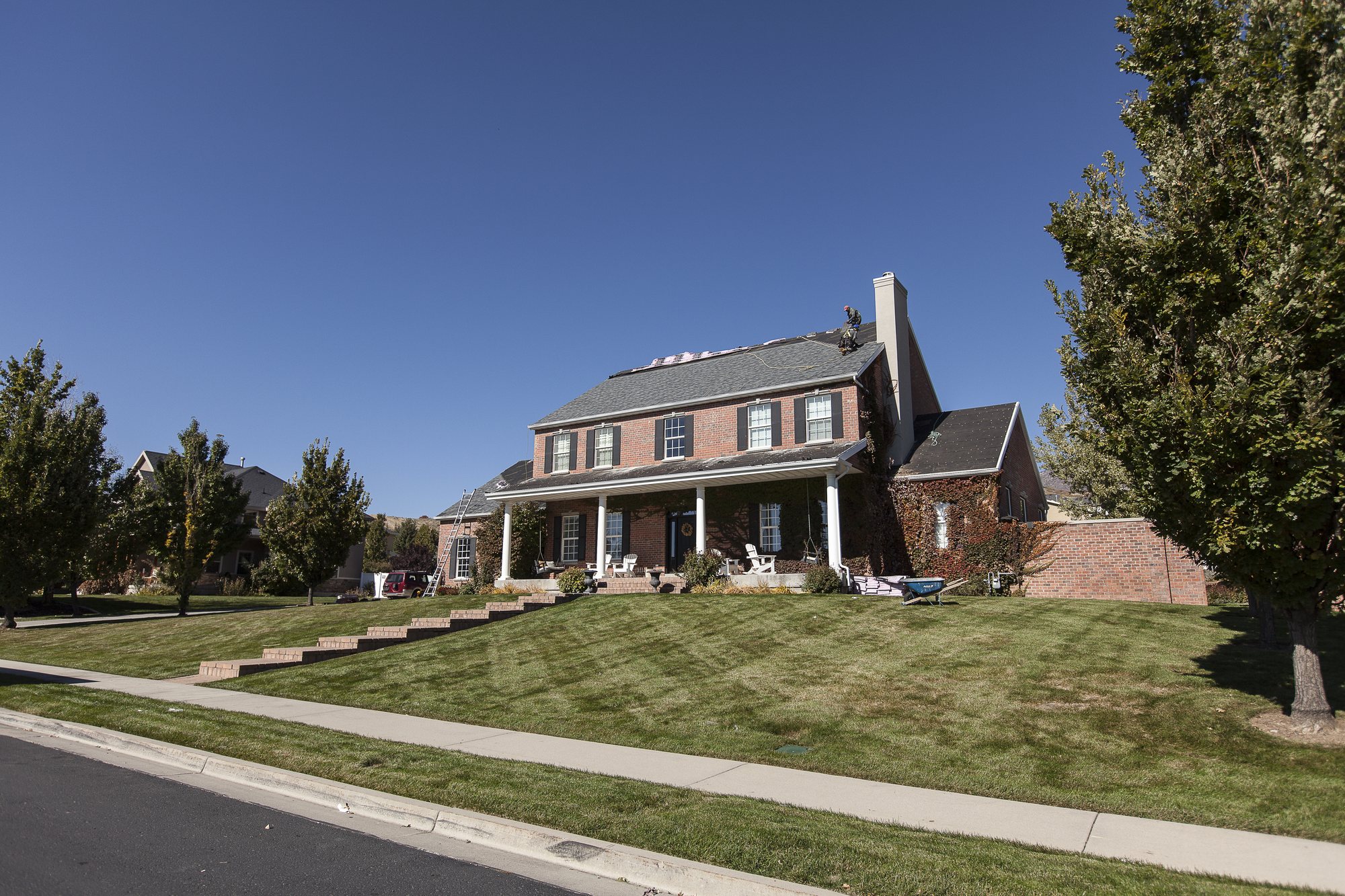
Roofs around Sunset
Work from around the valley


One neighbor at a time
We are not trying to be the biggest roofer along the Wasatch. We work in the towns we live in, we take on what we can do properly in a week, and most of what comes our way comes from somebody who watched us work on their street. That is a slower way to grow a business and it is the reason we are still standing behind roofs we put on years ago.
Word travels on a street
Which keeps us honest better than any advertising would.
We are not salespeople
Nobody here is going to sit at your kitchen table and work a close. We get on the roof, we tell you what is up there, and we leave you with the information. If the roof has five good years left, that is what we will say, and we would rather you call us in five years than feel pushed today.
No pressure, no expiring offers
Roofs do not need urgency manufactured for them. When one needs replacing, it is obvious.
Questions we get asked
Not the question you had? Call the shop and ask a person. We would rather talk it through than have you guess from a website.
(801) 382-8898Do you actually work in Sunset?
Regularly. Sunset is ordinary working territory for us, not an outlying job we take when it is quiet.
How fast can you get to Sunset after a storm?
As fast as we can get there. Stopping the water comes first and the permanent repair follows once the weather opens a window.
Do you handle the insurance side?
On hail-damaged roofs, we work with your insurance to get the roof covered. We document the damage thoroughly with photographs, so the claim reflects what is actually on the roof.
What happens if you find bad decking?
We show you. The decking is only visible during a tear-off, so that is when soft sheathing gets found and replaced. We photograph it rather than just add it to a list.
Do you work through the winter?
Yes, with judgment. Shingles need to seal, and in genuine cold that takes longer or needs hand sealing. Emergency work happens whenever it has to. Full replacements get scheduled around the weather rather than forced into it.
What makes a Utah roof different?
Snow load, ice at the eaves, canyon wind and high-altitude sun, all on the same roof. A crew that learned roofing somewhere mild has to learn it again up here.
Where Sunset sits on our map
Our Davis County route covers Sunset, so a look at a roof here does not wait on a gap.
Talk to Hancock
Roof work in Sunset
Call (801) 382-8898 or send a note, and we will book a time to walk the roof with you.