
Salt Lake City & surrounding counties
Upkeep for a roof that still has years in it
A roof with life left in it mostly needs someone to go up once a year and handle the small things before they show up as a stain on a ceiling. Around Roy that list is flashings, valleys, gutters, moss on the shaded side, and any low gravel roof over a porch or an addition.
What the yearly visit gets done
Clear the water paths
Packed leaves and needles come out of every valley and gutter run, and each downspout gets flushed until it runs free.
Reseal and replace
Dried-out sealant at flues and walls gets cleaned and redone, and a cracked rubber pipe boot gets swapped for a new one.
Tend the low roof
Any gravel roof over a porch or addition gets cleared, bare spots get gravel raked back over them, and the drain gets opened.
Fix the small stuff
A loose tab gets sealed down, a popped nail gets reset, and a lifted ridge cap gets fastened before wind finds it.
Photos before we go
You see each spot we touched and anything we would watch next year.
Caulk has a shelf life on a roof
Every bead of sealant on a roof is on a clock. With the sun this valley gets and the swing from cold nights to hot afternoons, it stays soft for a few seasons, then shrinks, cracks and lets go of one side of the joint. Nothing went wrong when it does. The material simply ran its course, and the fix is to clean the joint and seal it again before water finds the gap.
The better question is what the sealant is doing there. On a well-built detail the metal sheds the water by its shape and the bead is a second line. Where a bead is the only thing between rain and the deck, we flag it, and on a maintenance visit we either reseal it or replace the flashing so the caulk is no longer carrying the load. Pipe boots get the same treatment: a cracked collar gets swapped for a new boot instead of buried under more goop.
The roof maintenance page lays out the same work for houses across the valley.
Where the granules went
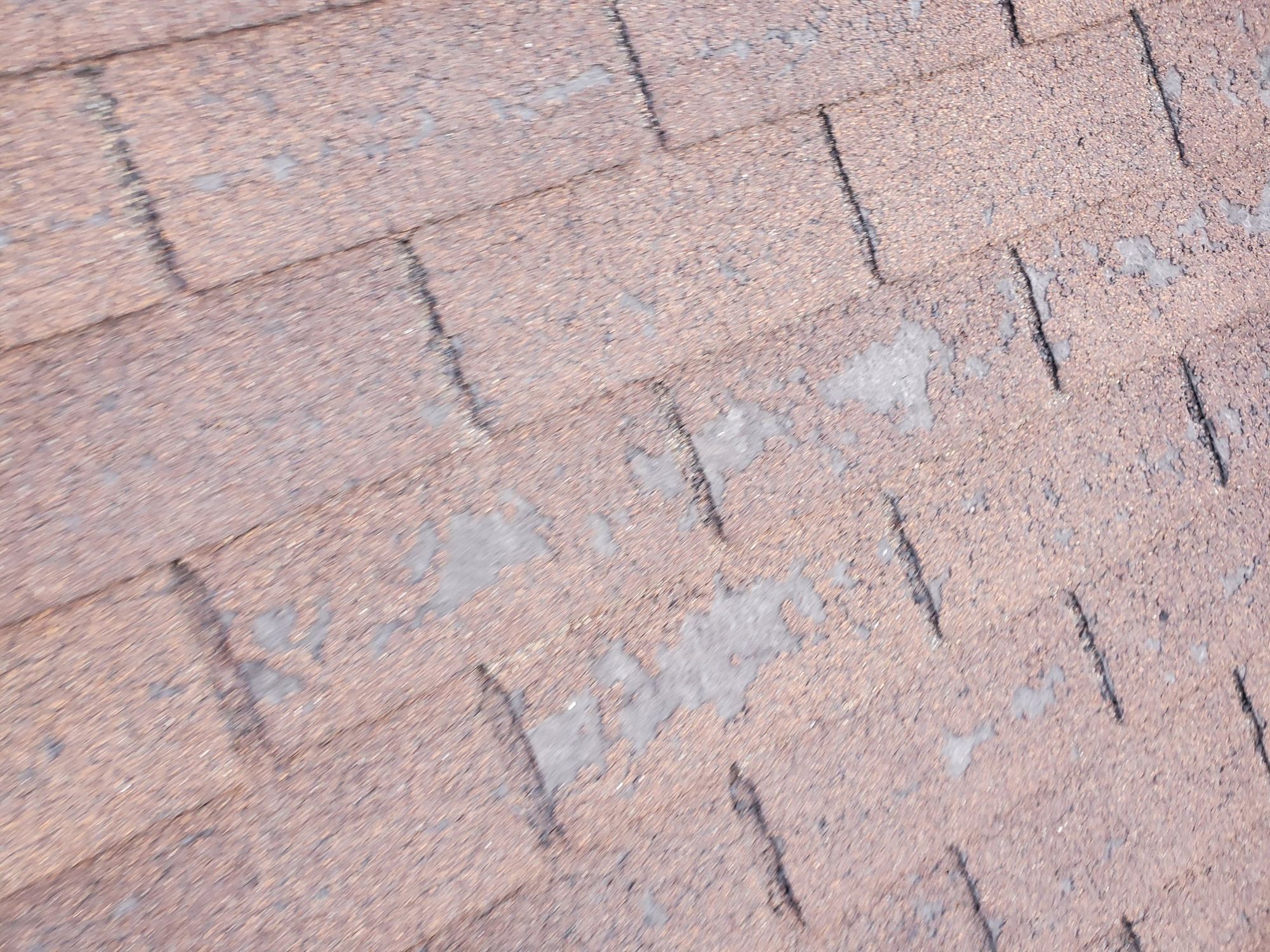
This close-up shows brown shingles worn down to the gray mat, the granules washed away. Granules are what shield the asphalt from the sun. Once they are gone the mat bakes, turns brittle and starts to crack, and that wear tends to show first on the slopes that take the most afternoon sun.
Most of those granules end up in the gutters, which is one reason we look in the gutter before we look at the shingles. A gutter carrying a layer of grit is telling you the roof is losing its surface. A little after a new roof is normal. A steady supply on an older one is a sign to have the whole roof read properly, and our roof inspection for Roy homes does exactly that, with photographs and a straight answer on how much life is left.
Green on the shady side
Where big trees shade a roof, the north-facing slope can hold its dampness for days while the sunny side is bone dry, and moss moves into it. As it grows it keeps water pressed against the shingle and creeps under the bottom edges, lifting them a little at a time.
A pressure washer is the wrong tool. It blasts the granules off along with the moss and takes years off the shingles in an afternoon. We treat the growth gently, brush off what lets go easily, and leave the rest to die back. Then the real fix: trimming the limbs that hang over the roof so the slope gets sun and air and dries out like the others. Skip the trimming and the moss is back by the next wet spring.
The flat roof nobody looks at
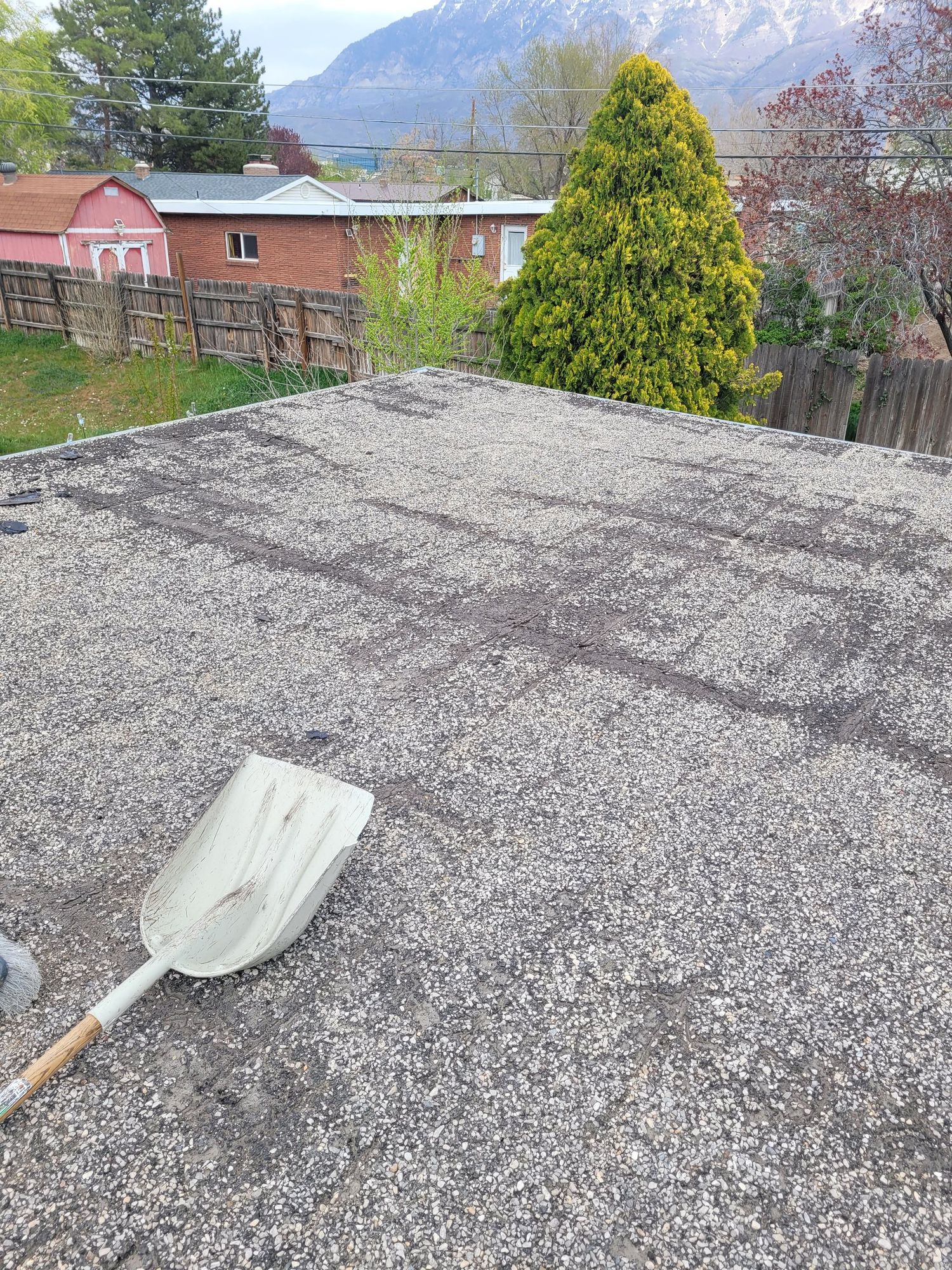
This photo shows a low gravel-surfaced flat roof with a shovel lying on it, fenced back yards and snowy mountains beyond. A porch or carport roof this low is out of sight from the driveway, so its first sign of trouble is often a stained ceiling underneath.
A flat roof needs different attention from a sloped one. We look for low spots where water sits after a storm, bare patches where the gravel has scattered and left the surface to the sun, and debris piled against the edges or over the drain. Snow that slides off the main roof lands here too, and the weight of a heavy spring snow sitting on a low roof is worth watching. We clear it, rake gravel back over bare spots, and note any blister or split in the layers below.
A bead of caulk is a maintenance item, and a roof that depends on one needs a visit on the calendar.
Old patches from owners before you
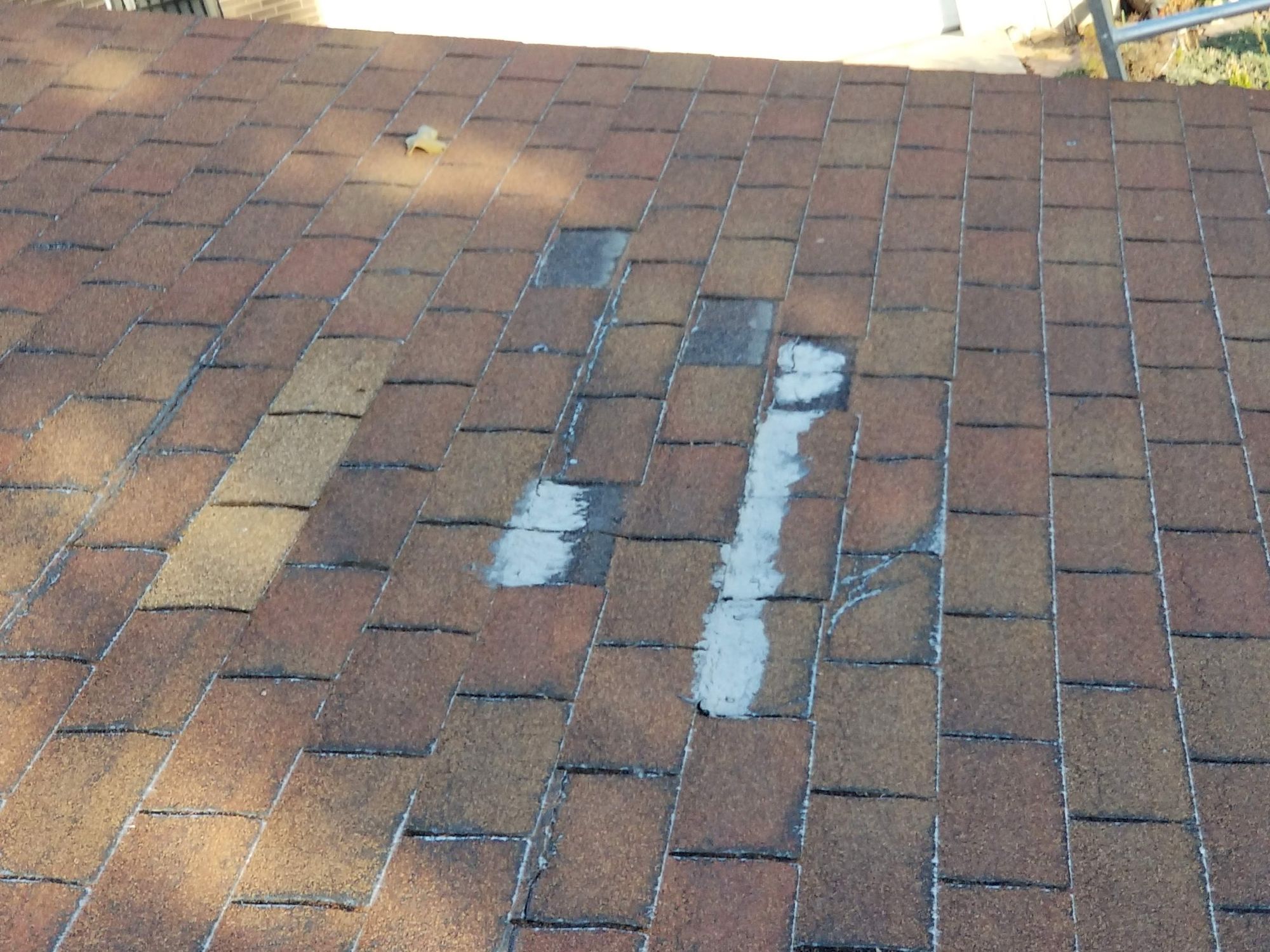
Plenty of roofs carry somebody else’s repairs: a smear of white patching over a cracked tab, a bead of caulk along the top of a flashing that runs flat up a brick wall, a mismatched shingle nailed through its face. They held for a while. On a maintenance visit we tell you which of them are still doing their job and which ones are waiting to leak.
Redoing them properly is usually small work. Against brick, the metal belongs in a groove cut into a mortar joint, so water running down the wall is thrown onto the roof instead of behind the flashing. A face-nailed shingle gets pulled and replaced with one fastened where it should be. If a patch turns out to be hiding something bigger, the repair work we do in Roy covers what comes next.
We are a second-generation, woman-owned family company with 27 years in the trade. Finished work is in the gallery, the page for Roy itself covers snow, moss and the map for the town, and you can call (801) 382-8898 or write to us to get a yearly walk on the calendar.
Where Roy sits on our map
Roy is part of our regular Weber County ground, about 30 miles up the road from the Salt Lake City shop, so a yearly visit fits into a normal week.
Is once a year really enough?
For most roofs with life left in them, yes. Add a visit after a heavy hail or wind storm, or after a winter that left ice sitting at the eaves, even if the roof looks fine from the driveway.
Can you pressure wash the moss off?
We will not. Pressure washing strips the granules along with the moss and shortens the life of the shingles. We treat the growth gently and trim back the limbs that keep that slope wet.
Why did you reseal flashing that was not leaking yet?
Because sealant dries out and shrinks on a schedule, and a cracked bead lets water in before you see a stain. Resealing it a season early is far less trouble than drying out a ceiling later.
Does the little flat roof over my porch need anything?
Yes. Low gravel roofs collect standing water, scattered gravel and debris, and they catch whatever snow slides off the main roof. We check for ponding, bare spots and splits, and clear what has piled up.
A previous owner patched my roof. Should it be redone?
Sometimes. A smear of patching compound or a caulked flashing can hold for a while, but it rarely lasts. We look at each one, tell you which are still sound, and redo the ones that are not.
The rest of the Roy work
Talk to Hancock
Put a yearly visit on the calendar
Tell us when the roof was last looked at and what you have noticed. We will clear the valleys and gutters, reseal what needs it, check any low roof out back, and send you the photos.