
Salt Lake City & surrounding counties
Flashing fixed at the joint that leaks
Leaks tend to start where something passes through the roof or butts against a wall. We repair the metal at that spot and leave the sound shingles around it alone.
Five places flashing gives out
Flashing is the metal and rubber that turns water at every break in the shingles. On the North Salt Lake houses we climb, these are the pieces that fail, roughly in the order we find them. The general picture is on our roof flashing repair page.
Pipe boots wear out before the shingles do
A rubber pipe boot is the shortest-lived part on most roofs. The shingles around it can have years left while the collar has already cracked from the sun. Because the crack sits right at the pipe, the water it lets in drops through the very hole the plumber cut in the deck.
Before the boot goes on, a vent pipe is just a hole in the underlayment with a pipe through it. Once the boot is on, the house stays dry there because of one rubber collar and the shingles lapped over its flange.
Replacing a boot means lifting the shingles above it, sliding the old flange out and setting a new one under the upper courses so water lands on top of it. We do not smear a ring of caulk around a split collar and call it fixed. Where a roof has several pipes, we usually change all of them on the same trip, since they aged together.
The bead around a flue collar
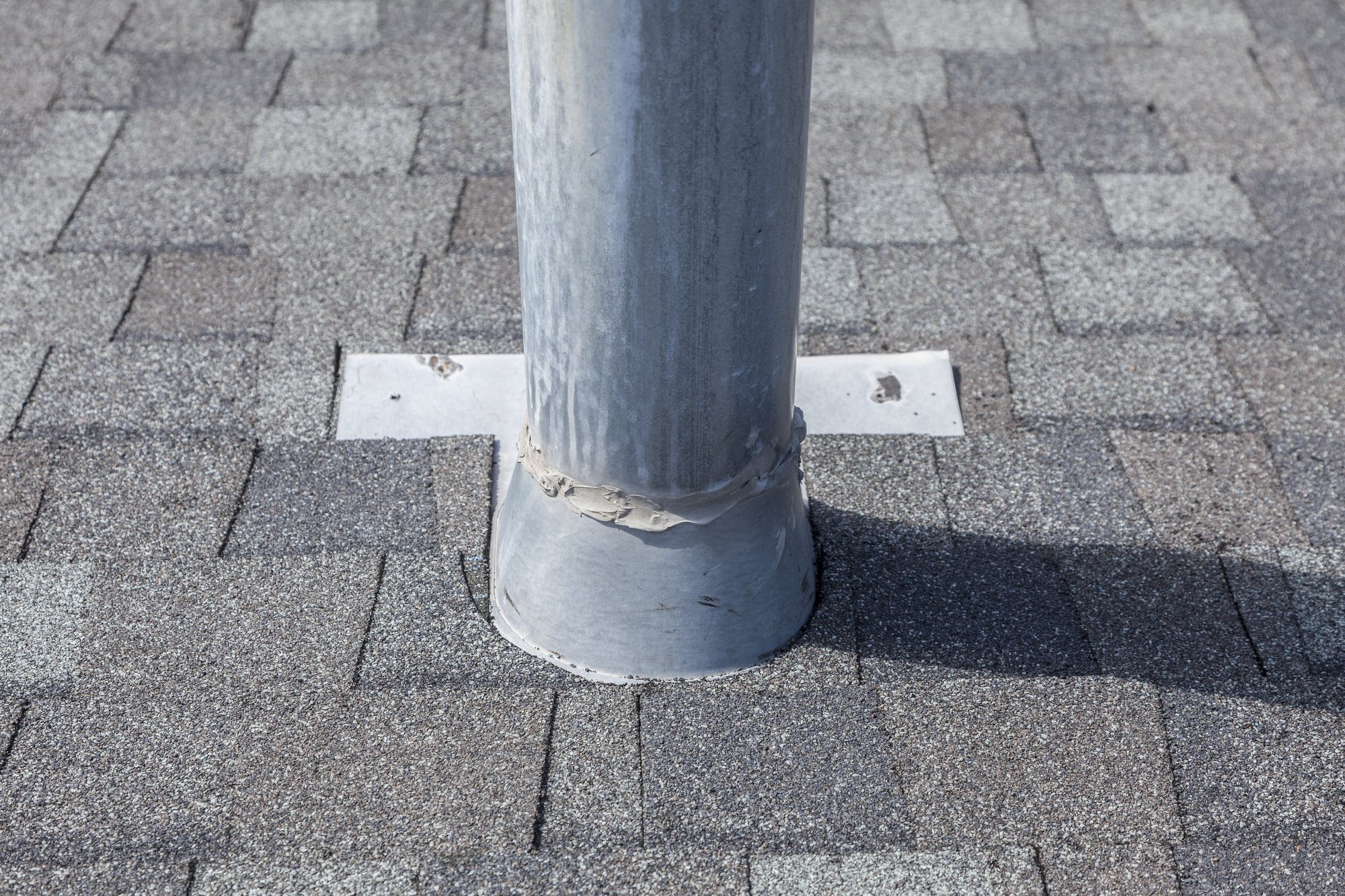
Metal flues for the furnace and water heater come through the roof inside a flashing cone, with a storm collar clamped to the pipe above it. The collar sheds rain off the pipe, and a bead of sealant closes the gap where it meets the metal. That bead is the weak point. Sun and the heat of the flue itself dry it out until it shrinks away from one side and opens a thin gap that only shows up close.
Resealing the collar is a fair repair, and we will do it and tell you it comes due again. When the cone itself is rusted, bent or set on top of the shingles instead of under the courses above, the right fix is a new flashing slipped in properly with the collar sealed fresh.
If sealant is the only thing keeping water out, the repair has a shelf life.

Lifting courses instead of tearing off
A failed flashing almost never means the roof has to come off. Shingles are laid in overlapping courses, and on a roof that is still flexible we can break the seal on the rows above the problem, lift them, pull the old metal and slide new metal in where the old piece sat. The courses go back down and get hand-sealed. From the yard you should not be able to find where we worked.
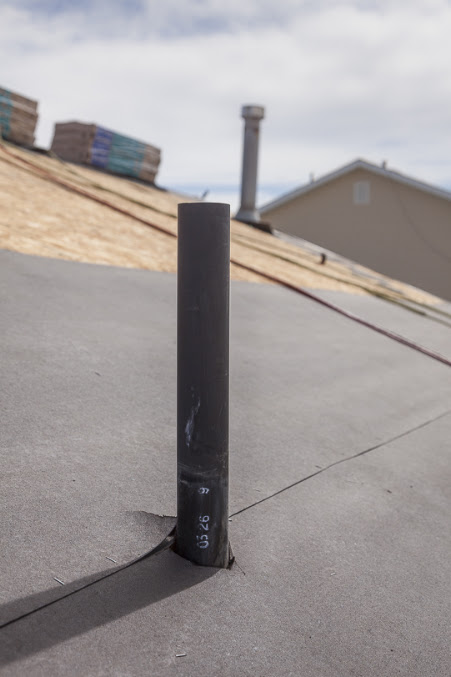
The order of layers matters as much as the metal. Here one of our guys is hammering underlayment snug around a flue flashing on new OSB, the underlayment and the metal fitted together before any shingle comes near them. A repair follows that same sequence on a smaller patch of roof.
Older three-tab that has gone brittle is the exception. It cracks when lifted, so there we replace a wider section or talk with you about where the roof is headed.
Walls are where water hides
Porch roofs, garages and additions joined to the main house are where we find the most hidden rot. Water that misses a step flashing does not show inside right away. It runs down the sheathing behind the siding and soaks the framing for a long while before a stain ever appears.
On lap siding we pull the bottom boards, fit step flashing course by course and add a kickout at the low end. On brick or stone, the counterflashing should sit in a groove cut into a mortar line, with the top edge sealed in the groove. Stucco is cut back carefully along the joint so the new metal can tuck under it, then patched.
Bent metal keeps turning water for as long as it stays put, while caulk hardens and lets go. We build the joint so the metal does the work and any sealant is a spare.
Other work that often rides along
Flashing calls often turn out to involve something nearby. Frost melting off the nails in an attic can drip right beside a vent pipe and pass for a boot leak, so we look at the attic too, and our North Salt Lake roof ventilation page covers that side. Shingles lifted near a wall after a gusty spell belong on the wind damage page for North Salt Lake. The North Salt Lake area page has the full list of our work in town.
Call (801) 382-8898 to set up a visit, or write to us from the contact page with a photo of the stain if you have one. The gallery has finished flashing and roof work.
Where North Salt Lake sits on our map
North Salt Lake runs from the refinery flats up onto the hillside, and flashings on both ends take the same hard freeze after a mild afternoon.
Flashing questions
Answers to what people ask once they suspect the leak is at a pipe or a wall.
(801) 382-8898Can you replace one pipe boot without reroofing?
Yes, on almost any roof that is still flexible. We lift the shingles above the boot, swap it and seal the courses back down. On a very brittle roof the surrounding shingles may need replacing too, and we show you why before doing it.
How do I know a flashing is the problem?
A stain near an exterior wall, a chimney or a bathroom with a vent above it points that way, and so does a leak that only shows in heavy rain. We confirm it from the attic and the roof before anything gets replaced.
Is caulking the flashing good enough?
For a night, sometimes. Caulk is useful as a backup and as a stopgap in bad weather. As the main seal it hardens in the Utah sun and pulls loose, so we rebuild the flashing and use sealant only where the design calls for it.
Do you fix flashing on brick chimneys?
We do. Chimneys get step flashing along the sides, counterflashing set into the mortar, and a cricket behind the chimney when it is wide enough to hold snow and water against the back. Loose bricks or a failing crown need a mason, and we tell you if we see that.
Will new flashing match my roof?
Step flashing and counterflashing come in colors that sit close to most shingles and trim, and pipe boots are usually black or gray. Shingles we lift go back in their own spots, so the patch blends in. On an older roof, any replacement shingles may look a shade newer for a while.
The rest of the North Salt Lake work
Talk to Hancock
Show us where it drips
Tell us where the water shows up and what sits on the roof above it, and we will bring the right metal on the first trip.