
Salt Lake City & surrounding counties
Herriman storm damage that cannot wait
When wind or hail opens a roof up, the job is to stop the water first and do the lasting repair once the weather lets us do it properly. Storm calls jump the line, and we tell you plainly which part of the work is temporary.
Until we get there
The first few minutes inside the house matter more than anything on the roof. Move furniture, electronics and anything paper out from under the drip, and set a bucket or a stack of towels where the water lands. If a ceiling is sagging with water above it, keep everyone out from under it. If water is running through a light fixture, switch that circuit off at the breaker and leave the fixture alone. Then call us at (801) 382-8898. If you cannot get through right away, leave a note on our contact page with what you are seeing, and we will call you back.
Please stay off the roof. Wet shingles are slick, snow hides the edge, and a roof that just took storm damage is the last place to find out which spots are soft. We bring the ladders and the materials to close it up. If you can, take pictures of the damage from the ground and of any water inside the house, since they help later with insurance paperwork.
What a storm call looks like
You call, and the storm call moves ahead of the work already on our schedule.
We get to the house and find where the water is actually getting in, which is often a ways uphill from the stain.
The opening gets dried in, covered and sealed well enough to keep the next storm out of the house.
We photograph the damage on every slope that took a hit, for you and for any insurance claim.
The permanent repair gets scheduled for weather that lets us do it right, and we tell you what it involves before we leave.
An open valley with a piece gone loose
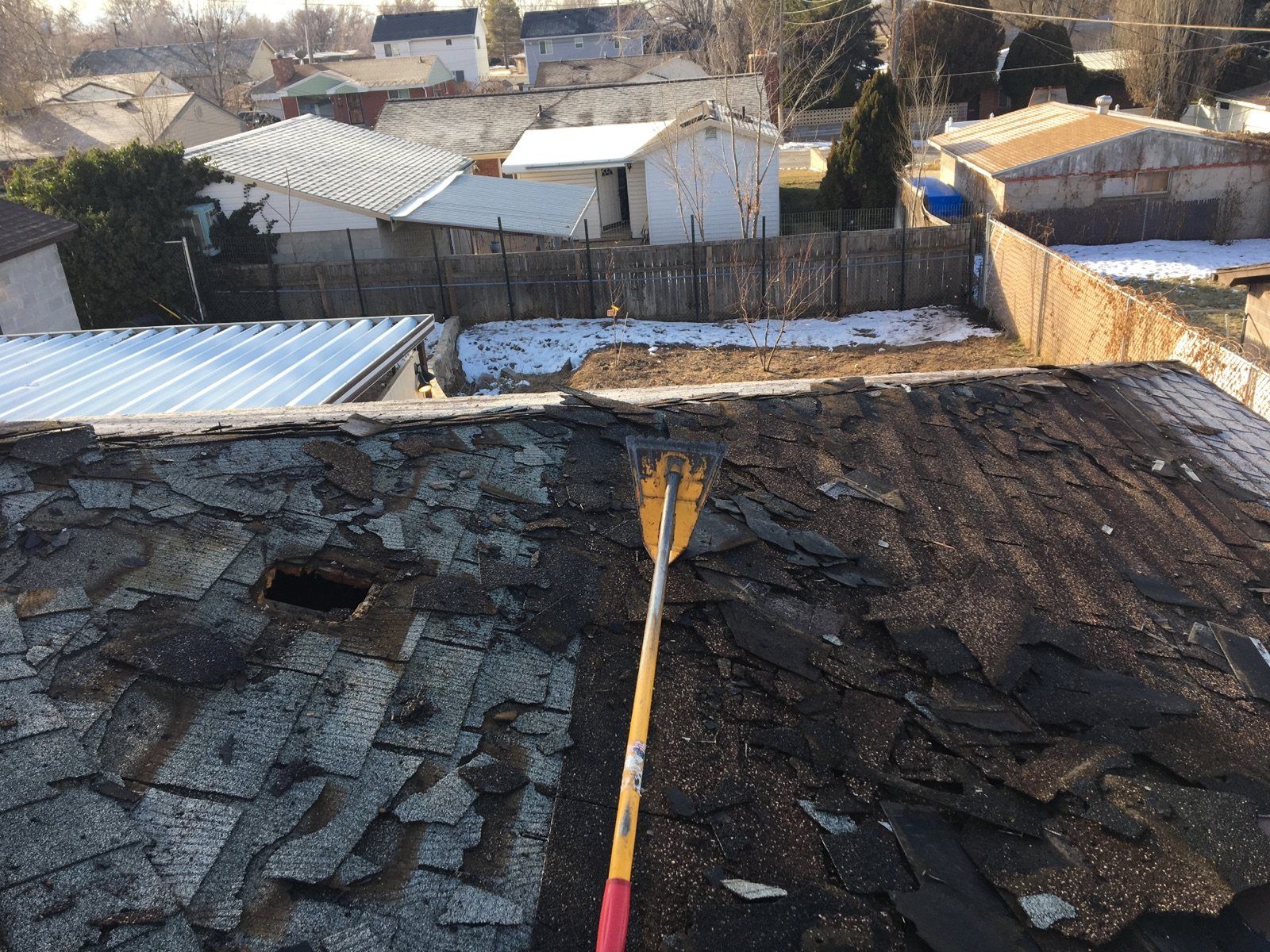
The first photo shows weathered dark three-tab shingles with an open metal valley running diagonally across the frame and one loose shingle piece lying out on the field. A valley takes the water from two roof planes at once, so in a storm it is the busiest channel on the roof and one of the first places we look.
That loose piece came from somewhere, and in wind-driven rain the gap it left is exactly where water gets pushed sideways under the shingle above it. Along an open valley we also check the edges where the shingles are trimmed back from the metal, because an edge that has lifted can steer water across the valley when it should be running down it.
The quick fix after a storm is to seat or replace the missing piece and seal down what has lifted. Whether that is the end of it depends on what is under the valley metal, and on shingles this weathered it may be time for a bigger conversation about the roof.

Closed-cut valleys get the same look
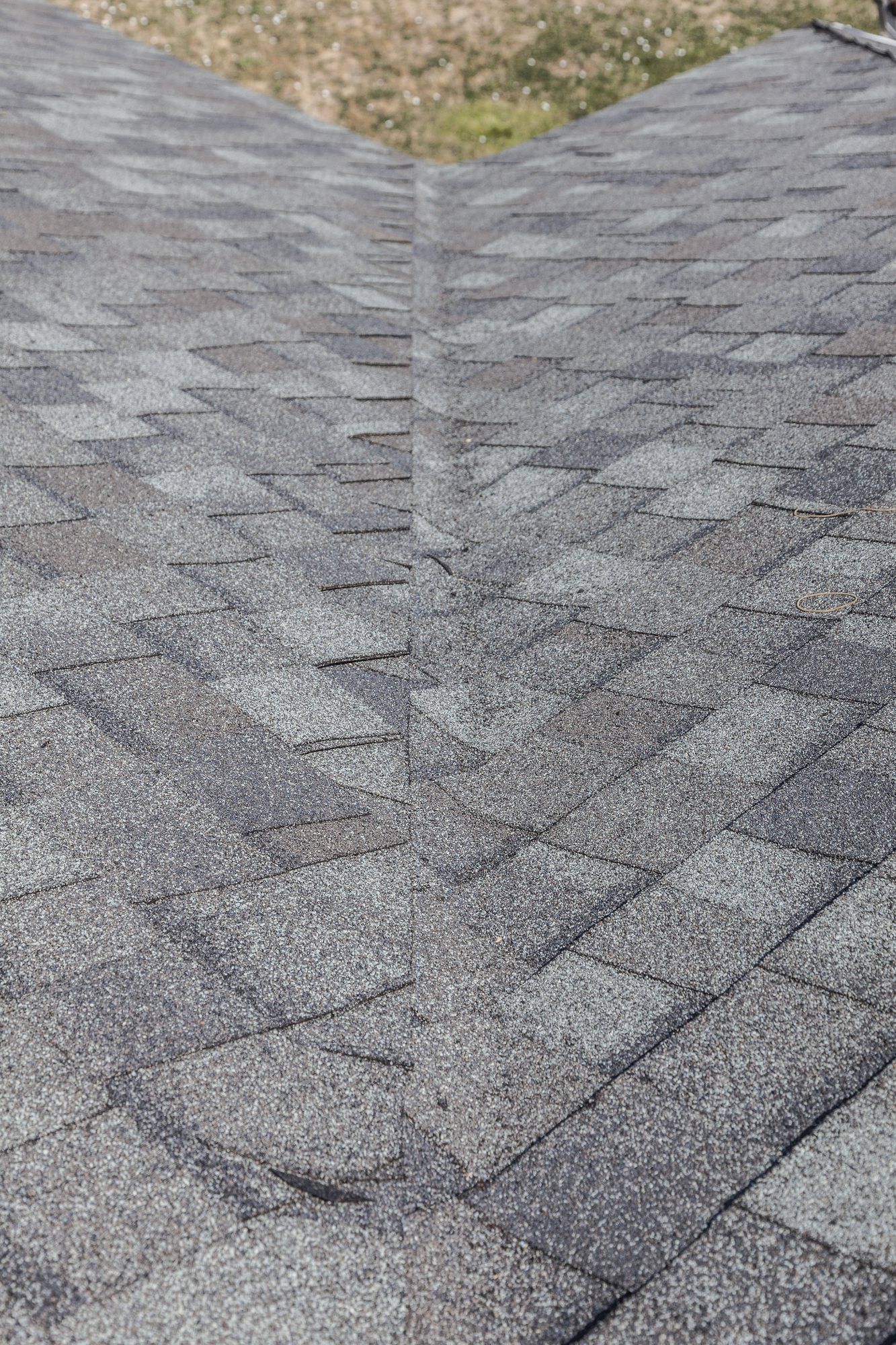
The second photo shows two gray shingle roof planes meeting along a closed-cut valley. The shingles from one side run straight through the valley and up the far plane, and the shingles from the other side are trimmed along a straight line near the center. No metal shows. All storm long, water follows that cut line down to the eave.
After hail or a hard wind, the cut edge is where we look first. Hail cells here usually come across the valley from the west, so west and southwest slopes take the hardest hits, and an angled stone scrapes granules off the upslope edge of a tab while the tab still looks fine from below. If one side of a valley faces west, it can be bruised while the other side is barely touched.
Under any valley, closed or open, there should be a run of ice-and-water shield. When we open one up during a repair and find it missing, we tell you, because that changes what a lasting fix has to include.
Temporary, and we will say so
Some emergency work is a stopgap, and we would rather be honest about that than call it finished. A snowstorm or a downpour is a poor time to do a permanent repair well. Membranes need a dry surface to stick to, and shingles need decent weather to seal down. So we stop the water, make it secure, and come back.
A dry-in is whatever closes the roof to water for now. On a torn field that may be a membrane and a cover fastened down over the opening. On a lifted valley it may be sealant and a few replacement pieces, and against a brick or stone wall it may be metal sealed along its top edge until we can set it into the mortar properly. Either way it is built to hold through the next storm or two while the real repair gets on the calendar, and we talk through the timing of that repair with you before we pack up. You hear which parts are temporary from us on the day, instead of finding out a year later from a new stain.
When we come back for the permanent work, it gets quoted from the roof itself. We walk every slope that took a hit before we put a number on anything, never off a satellite picture, so the repair covers what the storm actually did.
Stop the water today, and fix the roof properly when the sky lets us.
When the damage is bigger than a patch
Sometimes a storm call turns up a roof that was already near its end. If the hole went through soft, dark sheathing, the roof deck replacement page for Herriman explains what happens to the wood. If the shingles are worn bare on the slope facing south to west, our Herriman asphalt shingle roofing page covers a new field. A roof maintenance visit in Herriman after the fix catches loose pieces before the next storm finds them, and if you are building, the Herriman new construction roofing page covers first roofs. The main emergency roof repair page has more on storm work wherever we go.
We are a woman-owned, second-generation family company with 27 years in the trade, and when the weather moves a repair date, you hear it from us. More of our work in town is on the Herriman service area page and in the gallery, and the contact page reaches us any time a leak can wait for a call back.
Where Herriman sits on our map
Herriman is on our regular Salt Lake County route at the south end of the valley, so a storm call there does not wait on a gap in the schedule.
How fast can you get here after a storm?
Storm calls jump the line ahead of scheduled work. We get there, stop the water, and then book the permanent repair for weather that lets us do it right. We do not rush a lasting fix in a downpour.
Should I climb up and put a tarp on myself?
Please do not. Wet or snowy shingles are slick, and storm damage can hide weak spots. Move things away from the drip inside, take pictures from the ground, and call us.
Is the emergency repair the final repair?
Sometimes, when the damage is small. Often it is a dry-in that keeps water out until the weather allows a proper fix, and we tell you which one you have before we leave.
Which side of the house takes the worst hail here?
Storms usually cross the valley from the west, so west and southwest slopes take the angled hits. Those hits scrape granules off the upslope edge of a tab, which is easy to miss from the ground.
Will you help with photos for an insurance claim?
Yes. We photograph the damage on each slope that was hit, and you get those pictures whether or not a claim goes forward.
Why did water show up far from where the roof was damaged?
Wind-driven rain pushes water sideways under shingle laps and behind flashing, so it can travel before it drips. That is why we look past the stain before deciding where the repair goes.
The rest of the Herriman work
Talk to Hancock
Water coming in right now?
Get a leak looked at today. Tell us what you are seeing, and we will stop the water first and plan the real repair after.