
Government Roof Replacement
Full roof replacement on government buildings, planned around the building’s schedule.
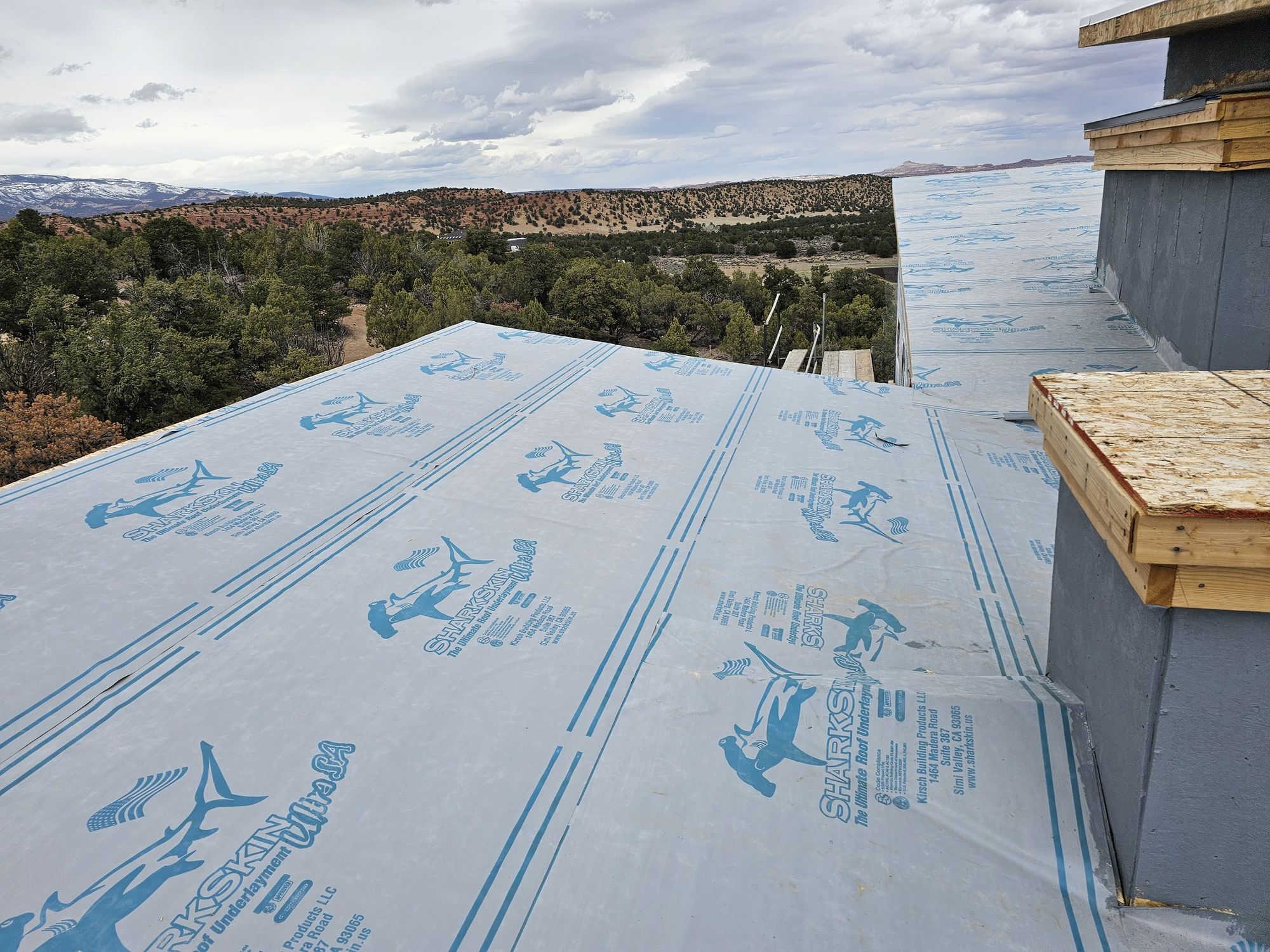
What government roof replacement involves
We take the old roof off in sections, so whatever is opened can be closed up, set the new system, and record each stage for the facility file.
A government building usually cannot sit open to the weather or empty out for a week. The sequence matters as much as the material.
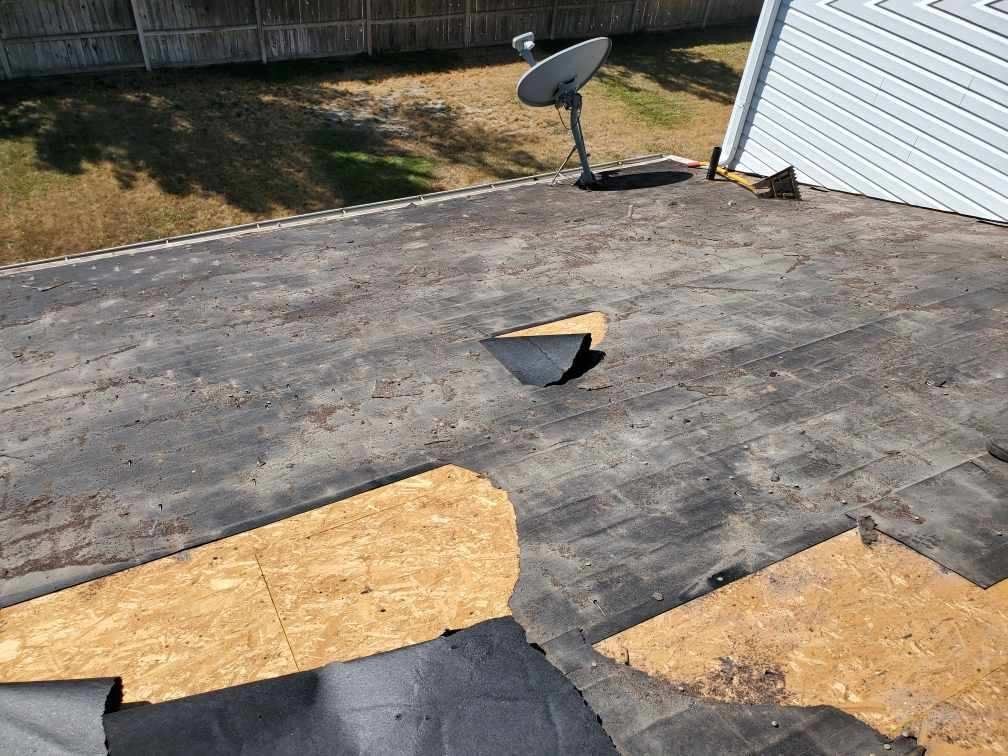
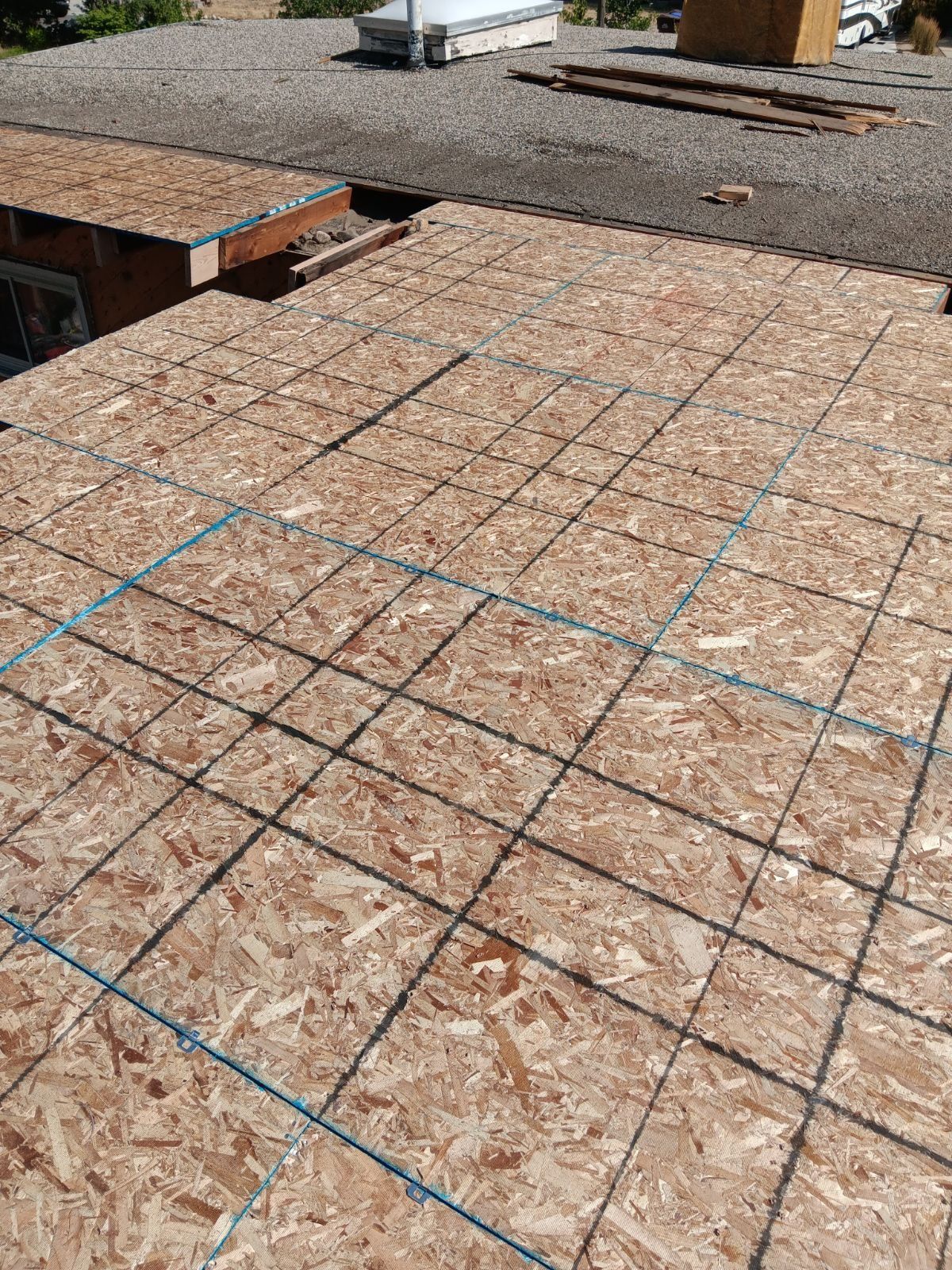
What matters on government roof replacement
Planning around the building
Government buildings stay in use while the roof is worked on. The plan covers where we get onto the roof, where material is staged and how the entrances stay clear, before anything comes off.
A record of the work
Public buildings need a file of what was done. We photograph each stage and record the materials used, so the next person responsible for that roof knows what is up there.
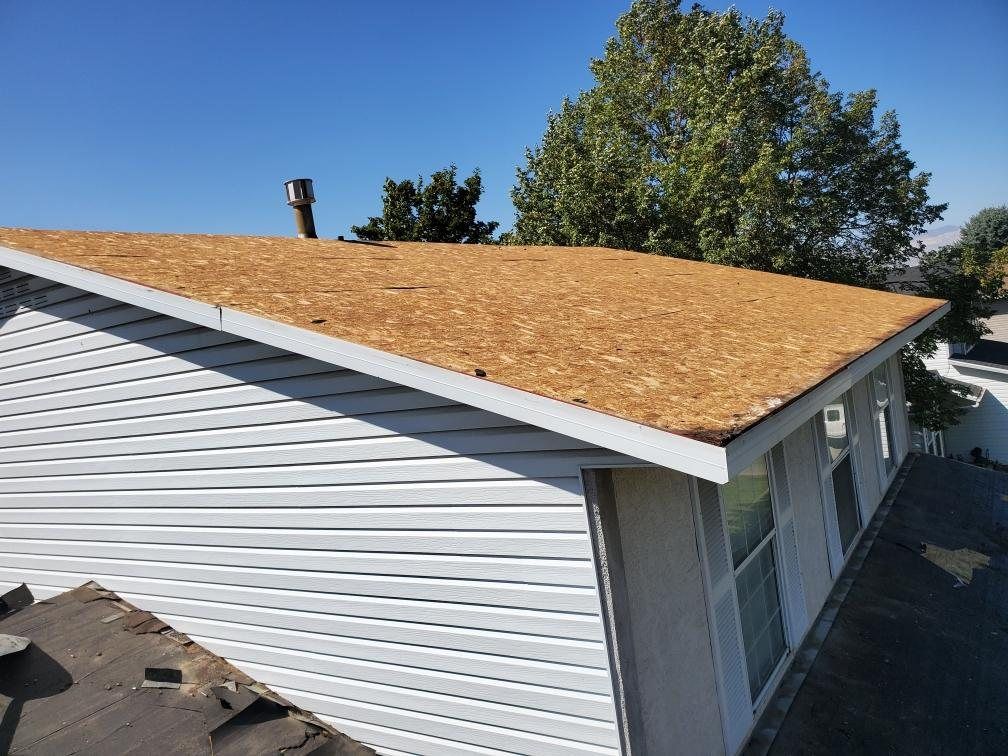
Replacement on a public building
Most government roofs we look at are low-slope membrane or metal, with rooftop units, drains and parapets that all have to be detailed. The replacement starts with a walk of the whole roof and a list of what is on it.
We plan the tear-off in sections so the building stays in use underneath. Photographs at each stage go into the record, so the facility has a file of what was installed and where.
How the system goes together
Low-slope transitions over a porch
The spot that gives homeowners here the most trouble is where a nearly flat porch or addition roof meets a pitched main roof. Shingles need slope to work and a porch often does not have it, so the correct answer is a membrane on the low part carried up under the shingles above, with the transition detailed so nothing depends on a lap.
Shingles on a flat porch will leak
Not immediately, and not in every storm. But water sits on that plane after every event and shingles were never designed to hold water still.
A welded seam versus a glued one
On a single-ply roof, the seams are the whole roof. Heat welding fuses the two sheets into one piece of plastic, and a properly welded seam is stronger than the sheet either side of it. An adhesive seam relies on a bond that ages at a different rate than the membrane does.
How a seam gets proven
A probe run along the edge of every weld while the crew is still on the roof. If the probe catches, the seam gets rewelded then and there, not written down for later.
Cold days need slower welds
The machine settings change with the air temperature or the weld runs cold and looks fine.
What we check
- Field condition and granule loss
- Valleys, ridges and every transition
- Penetrations and their flashing
- Gutter and fascia condition
How we approach it
Look first
We get on the roof and read what is actually happening before quoting anything.
Say what we find
Photographs and a plain explanation, including when the answer is that you do not need us yet.
Built in sequence
Crews we hire and run, working the right detail in the right order.
Leave it clean
Magnet over the yard, container gone, walked with you.
Rain driven sideways into a lap
Shingles are built to shed water running downhill. A thirty mile an hour gust with rain in it does not run downhill, it runs across and up. That is the one condition where a lap that has worked for fifteen years lets water through, and it is the reason a leak can appear in a specific storm and then never again.
Chasing a wind-only leak
You cannot find it on a dry day by looking. You find it by knowing which wall faces the weather and checking every horizontal joint on that face.
Hard freeze after a warm afternoon
The worst single night for a roof up here follows a mild day. Sun works on the snow all afternoon, water runs into every gutter and valley and sits in the low spots, then the temperature drops twenty-five degrees after dark and every bit of that standing water turns to ice with nowhere to go.
Ice finds the path water made
It follows the water backwards, up under a lap, behind a piece of step flashing, into the gap over a fascia board.
One night can undo a season
We see the result in March.
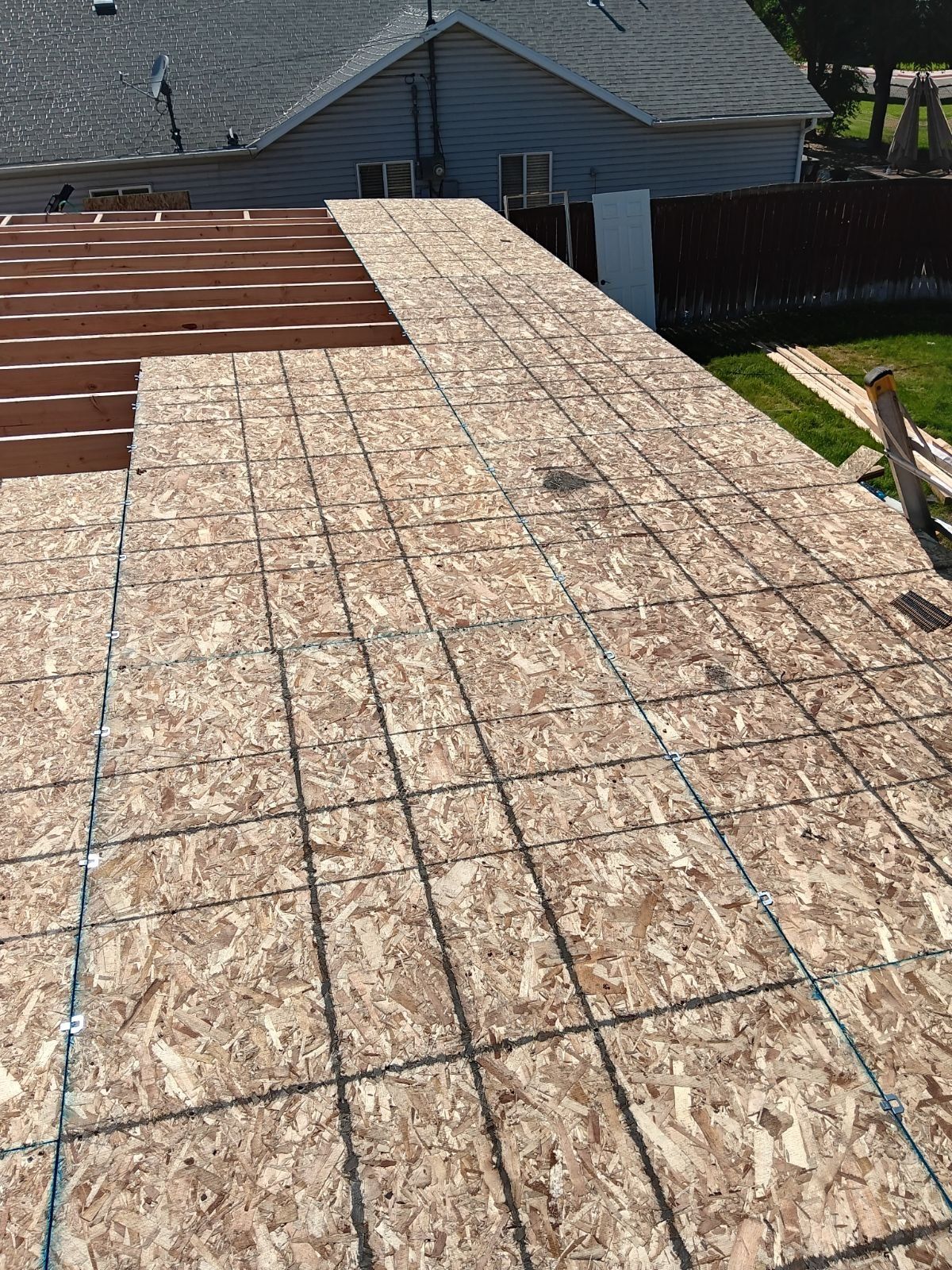
What this looks like on a real roof
There is a version of government roof replacement that gets sold off a clipboard in the driveway and a version that comes off actually reading the roof. The second one costs the same and lasts.
What follows is the part most people never get told: what usually went wrong before we arrived, and what the job looks like when it is done in the right order.
Where roofs go wrong
The shortcut we see most
Rooftop units and drains added over the years, with the roof patched around them instead of reworked. Those patches are where most public-building leaks start.
What good looks like instead
Every penetration, curb and drain flashed into the roof system properly, and a record of it in the facility file.
Signs worth a look
- Water still standing days after a storm
- Ceiling-tile stains near rooftop units
- Seams lifting at the edges and parapets
- The same area repaired more than once
What to expect
Before the job starts
A walk of the whole roof, photographs of what we found, and a plain written scope. We talk through access, staging and the building’s schedule before any work is planned.
While the work is underway
The building stays in use. Material is staged where it is out of the way, entrances stay clear, and the loudest work is planned around the schedule we are given.
When it is done
Photographs of each stage and a record of the materials installed, ready for the facility file.
Related work
Government covers more than one job, and they are not interchangeable. These are the others in the same family, each on its own page.
Questions we get asked
Not the question you had? Call the shop and ask a person. We would rather talk it through than have you guess from a website.
(801) 382-8898Can you work while the building is in use?
Usually. We plan access, staging and the loudest work around the building’s schedule before the job starts.
Do you document the work?
Yes. Each stage is photographed and the materials are recorded, so the facility has a file of what was installed.
Can you look at several of our buildings?
Yes. We can inspect them all and give you a list in order of need, so the budget goes to the roof closest to failing.
How do I know when a roof is getting close?
Granules collecting in the gutters, tabs lifting or curling at the edges, shingles that look bare in patches, and daylight or staining in the attic. Any of those is worth a look.
How long does a roof replacement take?
Most houses in this valley are a one to two day job once the crew is on site. Steeper pitches, multiple layers to strip and complicated roofs with a lot of valleys take longer, and we tell you which yours is before we start.
What happens if you find bad decking?
We show you. The decking is only visible during a tear-off, so that is when soft sheathing gets found and replaced. We photograph it rather than just add it to a list.
Ask about government roof replacement
Call (801) 382-8898 or send a note. We will look at the roof and tell you straight what it needs.