

Summit County, Utah
Roofing in the Park City area
From tear-off to ridge cap across Park City and the streets around it.
What we see on Park City roofs
Snow load up here is not a theoretical number. Roofs carry weight for months, ice builds at the eaves where the attic leaks heat, and anything that sheds onto a walkway has to be planned rather than discovered in February.
We have worked enough of Summit County to know which builders put up which subdivisions and where they cut the same corner twice. That is worth more on a roof than any brochure.

The weather a Park City roof works against
Ice dams start at the eave
The mechanism is simple and it ruins ceilings. Heat escaping the living space warms the deck, snow above melts, the water runs down to the cold overhang past the heated wall line and freezes there. The ridge of ice that builds up backs meltwater under the shingles.
The fix is not a heat cable
Cables buy a season. Sealing the attic bypasses, getting insulation depth right at the top plate, balancing intake and exhaust, and running ice-and-water shield well past the interior wall line is what actually stops it.
The wet spring snow problem
Late season storms carry more water per inch than anything that falls midwinter. That heavy stuff clings to a roof instead of sliding, pushes on gutters, and refreezes at night into a solid mass on the overhang. It is also the load most likely to find a framing weakness.
After a heavy spring storm
Walk the drip line and look for bent gutter hangers and separated seams. Then look at the ceilings inside along exterior walls.
What we check on the deck
Spongy sheathing between rafters, especially over the eave where the ice sat.
Genuine alpine conditions. Snow sits for months, ice builds wherever an attic leaks heat, and shedding onto a walkway has to be designed rather than discovered.
What we find on roofs around Park City
Dry-in is the real milestone
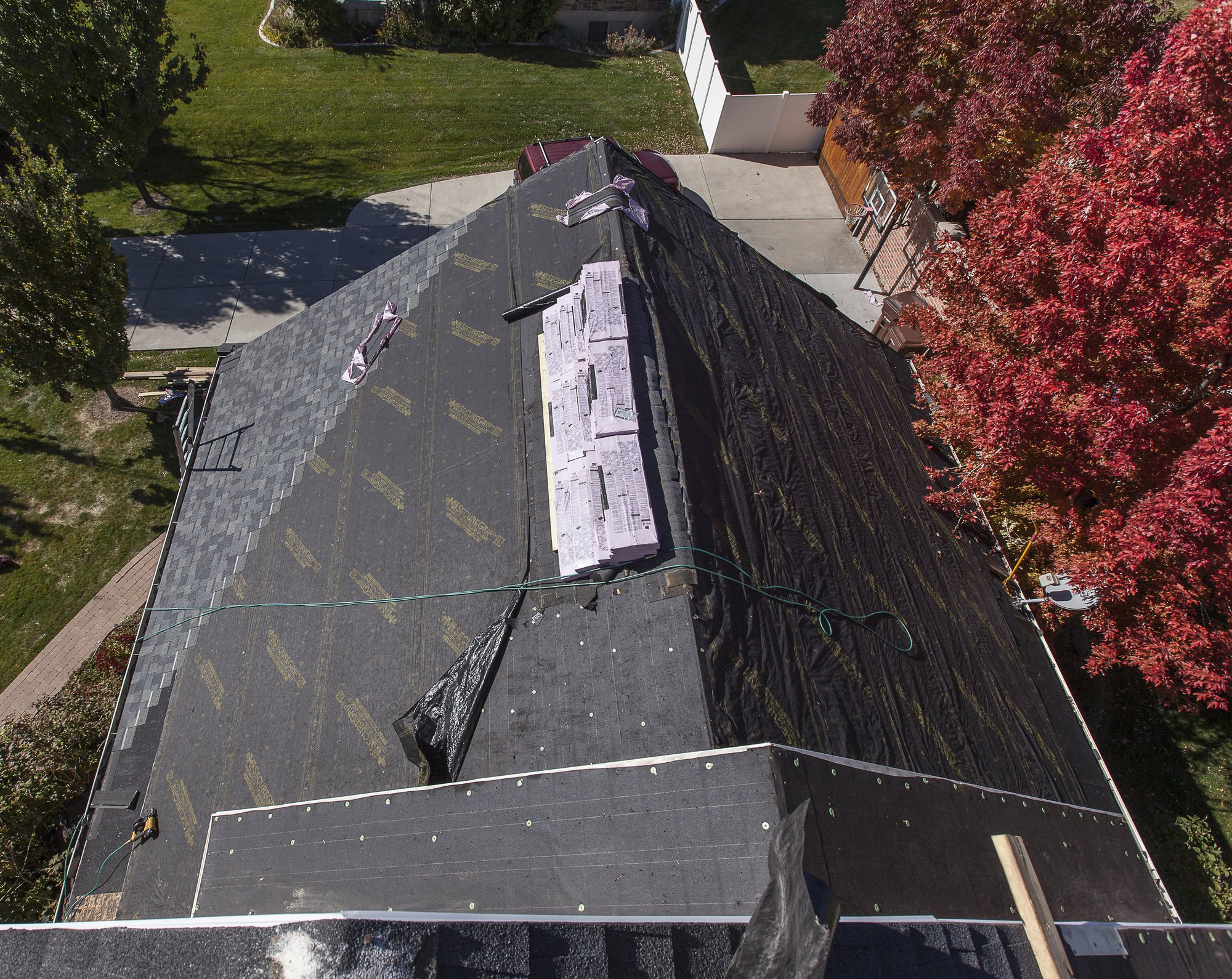
The moment that decides whether a re-roof goes well is not when the last shingle goes down, it is when the deck is covered, taped at the penetrations and sealed at the edges. From that point the house is weather-tight and everything after it is finish work. A crew that understands this never leaves at the end of a day with bare deck showing.
Ice barrier goes down first
Eaves, valleys and every pipe before any field underlayment. Working from the bottom up means every sheet laps over the one below it the way water expects.
Then the metal, then the field
In that order, every time.
Flashing is where roofs leak
Very few roofs fail in the field of the shingles. They fail at the transitions, at a wall, a chimney, a skylight curb, a pipe boot, a valley. Good flashing is metal shaped so water has nowhere to go but out. Bad flashing is sealant spread over a gap and a hope that nobody looks for four years. When we pull a roof apart, the flashing is what tells us whether the last crew was in a hurry.
Step flashing is one piece per course
There is no shortcut version of that detail that works.
Park City is part of our Summit County work. 27 years in the trade, and a full replacement carries our 10-year workmanship warranty.
What we do around Park City
Every service is its own page. These are the ones Park City asks for most.
Roofing
Full replacements and new roofs on Park City homes, deck up.
Repairs
Leaks and failed details, which is most of what Park City calls about.
Upkeep
Inspections, cleaning and sealing before a small thing gets expensive.
Shingles
Architectural laminate, the field material on most of this valley.
Metal
Standing seam and corrugated, common on canyon-side snow load.
Tile
Clay and concrete tile, and the flashing work they need.
Commercial
Membrane systems for flat and low-slope buildings around Park City.
Coatings
Restoration coatings when a commercial roof has life left.
Storm
Hail, wind and the insurance paperwork that follows.
Skylights
Installation and the curb-flashing repairs skylights usually need.
Gutters
Gutters, downspouts and fascia, which are part of the roof.
Government
Schools, city, county, state and federal buildings. Every government service is on the government roofing page.
How the job runs
Repair or replace, honestly
Not every leak is a new roof. A cracked pipe boot, a lifted flashing, a handful of wind-damaged tabs on one slope: those are repairs, and we do them. The line gets crossed when the mat is brittle across the whole roof, when granule loss is general rather than local, or when the repair count keeps climbing.
How we tell you
We say which one it is and why, and if it is a repair we do not walk it up into a replacement.
The insurance path on storm work
When a storm does real damage, the path runs through your carrier, and the order matters. Document the damage first, file the claim, and be on the roof with the adjuster when they come out. We meet adjusters because it is the one chance to point at bruising and lifted tabs while somebody with authority is looking.
What we do not do
We do not tell you a roof is totaled when it is repairable, and we do not promise what an adjuster will decide. That call is theirs.
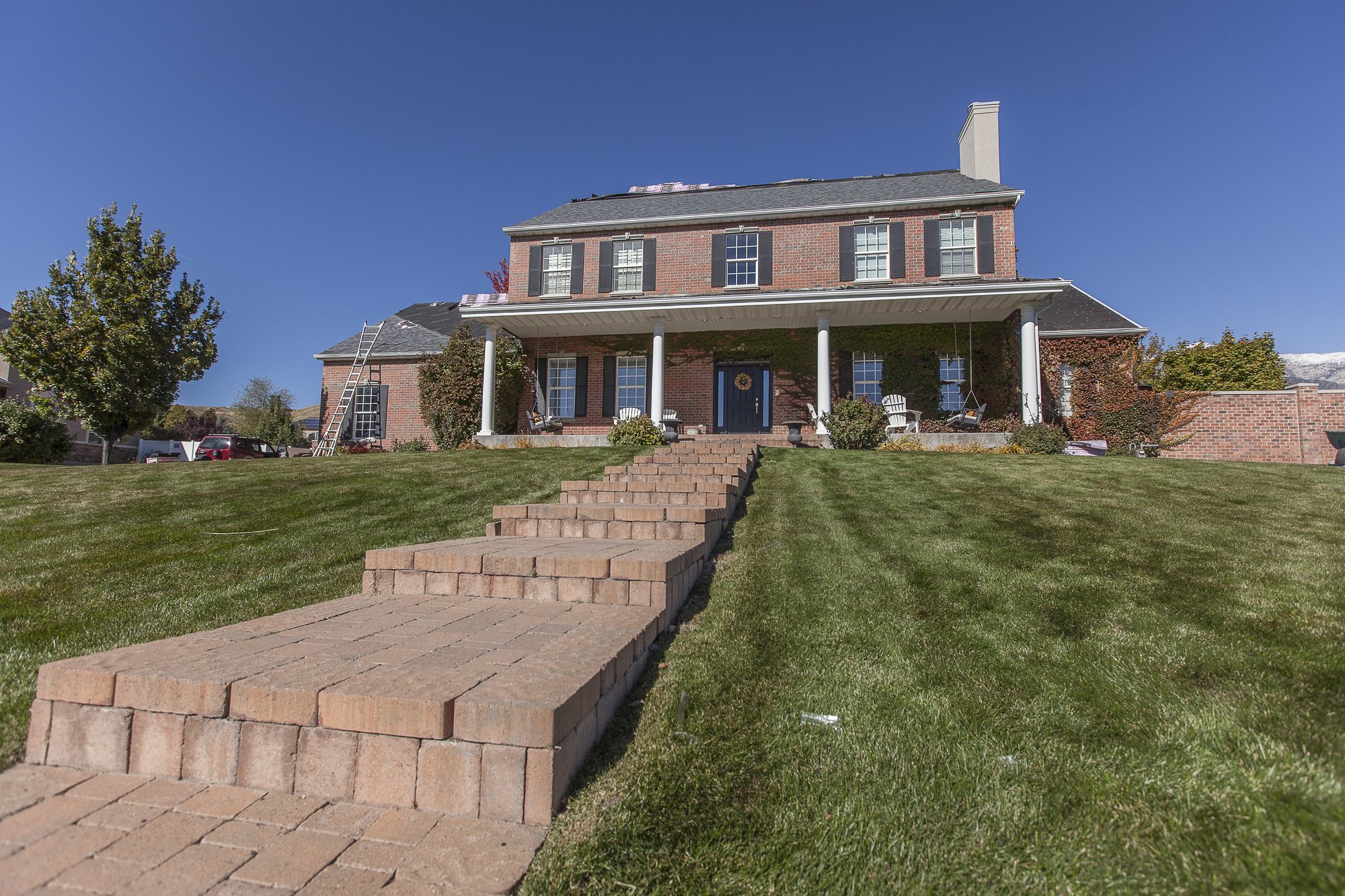
Roofs around Park City
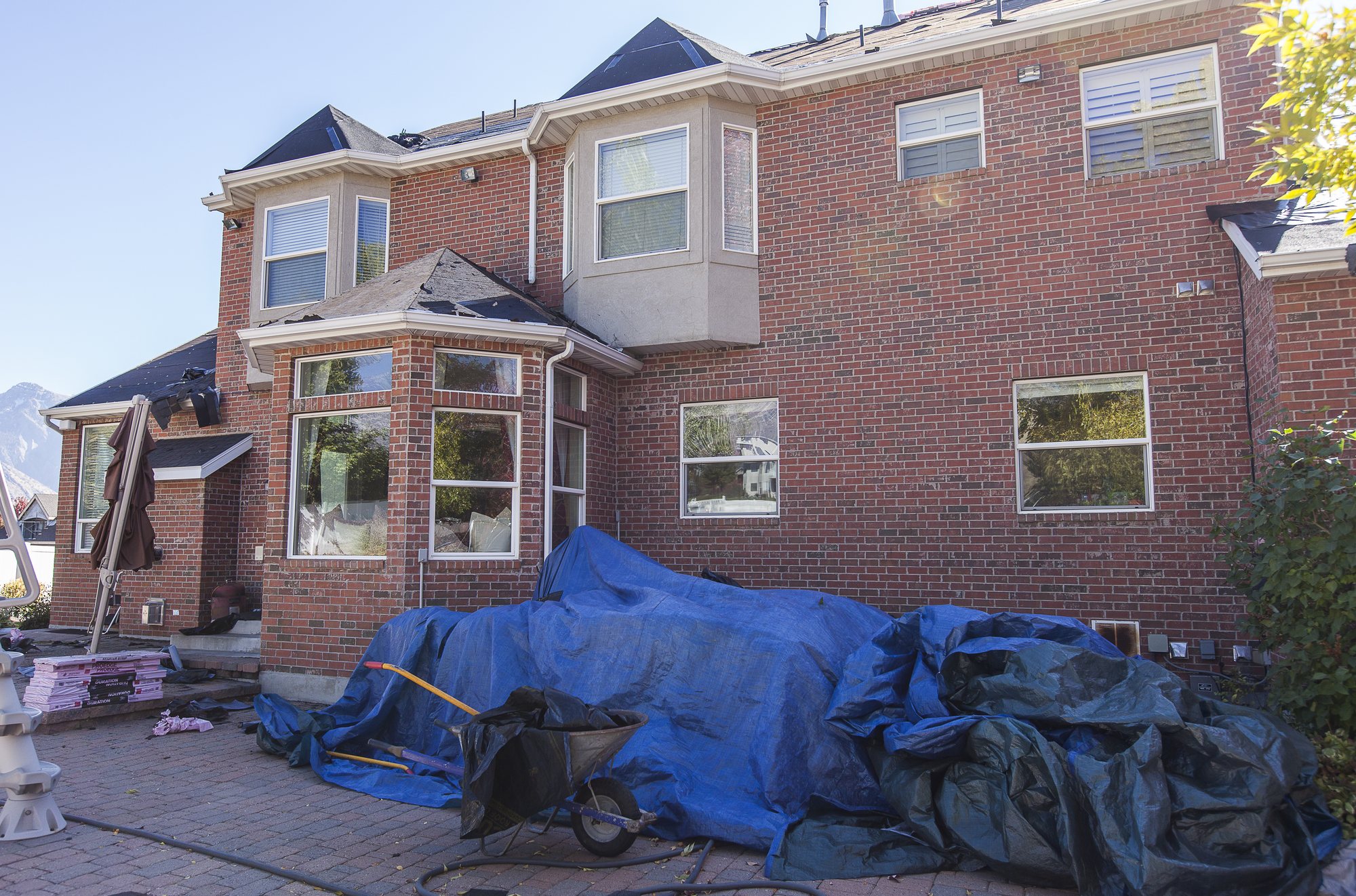
Work from around the valley

Second generation on a roof
This is a family trade here. The owner learned it working for his uncle, who did not tolerate a sloppy valley, and those habits carry into every job the name goes on. Twenty-seven years in the trade is the owner’s own time on roofs, learned before there was a company.
Eight years under this name
The Hancock Signature name has been on trucks for eight of those years. Two different numbers, and we keep them straight because the difference is the whole story.
The crews know Utah code
The crews on your roof are not learning the ice barrier requirement on your house. They know what the inspector in this county is going to look at, how deep the membrane has to run past an interior wall line on a deep overhang, and how ventilation gets counted.
They also know the weather
Which is why they will not open more roof than they can dry in before an afternoon cell comes over the benches.
Questions we get asked
Not the question you had? Call the shop and ask a person. We would rather talk it through than have you guess from a website.
(801) 382-8898Do you actually work in Park City?
Yes. Park City sits inside the ground we cover around Salt Lake City, and the crew is there most weeks rather than once a season.
How fast can you get to Park City after a storm?
Storm calls jump the queue. We get there, stop what is coming in, and schedule the real fix rather than rushing a permanent repair in bad weather.
Will you tell me if I do not need a new roof?
Yes. Plenty of what we look at turns out to be a repair, and we say so. A roof with years left in it gets left alone, and you get the photographs either way.
How long does a roof replacement take?
Most houses in this valley are a one to two day job once the crew is on site. Steeper pitches, multiple layers to strip and complicated roofs with a lot of valleys take longer, and we tell you which yours is before we start.
Do you handle the insurance side?
On hail-damaged roofs, we work with your insurance to get the roof covered. We document the damage thoroughly with photographs, so the claim reflects what is actually on the roof.
What happens if you find bad decking?
We show you. The decking is only visible during a tear-off, so that is when soft sheathing gets found and replaced. We photograph it rather than just add it to a list.
Where Park City sits on our map
Park City sits in Summit County, inside the sixty mile radius we run crews in every week.
Talk to Hancock
Roof work in Park City
Call (801) 382-8898. We will get on the roof, look properly, and tell you what it needs.