

Davis County, Utah
Roofing in the Clinton area
Roof work around Clinton handled by people who live and work up here.
The year a Clinton roof works through
Snow sliding off a pitch is a design question in Clinton, not an accident. A roof that dumps its load onto a walkway, a gas meter or a porch roof needs retention planned into it, and that is a decision made before the shingles go on rather than after somebody gets hit.
On a booked replacement the calendar does most of the work. On the day something fails at a Clinton house, stopping the water comes first and the real repair follows.

The weather a Clinton roof works against
Snow load is a real number
A roof up here carries weight. Wet spring snow runs heavier per foot than the dry powder that falls in January, and a roof that shrugged off three feet in February can groan under eighteen inches in April. What matters is how the load moves off, which comes down to pitch, sheathing condition and whether the framing was built for the zone it sits in.
Where the weight collects
Valleys and the low side of a dormer are where snow piles instead of sliding. We look at those first, because that is where decking softens and fasteners start backing out.
Thermal shock on metal and flashing
Metal moves. On a sunny winter day a standing seam panel or a piece of valley metal can run a hundred degrees warmer than the air, then drop back after dark. That expansion and contraction happens every clear day of the year here. Panels have to be fastened so they can move, clips have to be right, and a valley has to be detailed to slide instead of being pinned tight at both ends.
Pinned metal tears its own holes
When movement is blocked, the fastener holes elongate and that becomes the leak path.
Davis County runs narrow between the lake and the mountain, and the wind funnels through it. The corridor around the base sees gusting that the sheltered streets further east do not.
What we find on roofs around Clinton
Architectural over three-tab
Most homes here that are replacing a roof move to architectural shingles and stay there. The laminated construction is thicker, carries a higher wind rating out of the wrapper, and does not show every wave in old decking the way a three-tab does. Three-tab still has a place on a rental, an outbuilding or a repair that has to match what is already up.
Wind rating is a nailing question
A shingle only earns its rating if it is fastened the way the wrapper says. Six nails in the nail line, not four in the wrong spot.
Pipe boots and roof penetrations
The rubber collar around a plumbing vent is the shortest-lived thing on most roofs. Ultraviolet at this elevation cracks that rubber long before the shingles are tired, and the crack sits directly over an open hole in the deck. Lead boots or a metal collar with a replaceable seal last considerably longer.
Everything that comes through gets a plan
Furnace flues, swamp cooler curbs, satellite mounts, solar standoffs. Each one is a hole somebody has to detail correctly.
Clinton is part of our Davis County work. 27 years in the trade, and a full replacement carries our 10-year workmanship warranty.
What we do around Clinton
Every service is its own page. These are the ones Clinton asks for most.
Roofing
Full replacements and new roofs on Clinton homes, deck up.
Repairs
Leaks and failed details, which is most of what Clinton calls about.
Upkeep
Inspections, cleaning and sealing before a small thing gets expensive.
Shingles
Architectural laminate, the field material on most of this valley.
Metal
Standing seam and corrugated, common on canyon-side snow load.
Tile
Clay and concrete tile, and the flashing work they need.
Commercial
Membrane systems for flat and low-slope buildings around Clinton.
Coatings
Restoration coatings when a commercial roof has life left.
Storm
Hail, wind and the insurance paperwork that follows.
Skylights
Installation and the curb-flashing repairs skylights usually need.
Gutters
Gutters, downspouts and fascia, which are part of the roof.
Government
Schools, city, county, state and federal buildings. Every government service is on the government roofing page.
How the job runs
Emergency work and what it is
When water is coming in right now, the first job is stopping it, not selling anything. That means a tarp run properly with battens rather than draped and weighted with bricks, or a temporary patch that holds until the weather clears enough to do real work. Temporary is temporary and we say so.
Then the real repair
Once it is dry we come back and fix the cause, which is frequently not where the water showed up inside.
Permits and code
Residential re-roofs pull a permit in most jurisdictions we work in, and the inspector is generally checking the same handful of things: ice barrier coverage at the eave, drip edge, proper fastening, and ventilation. We pull the permit as part of the job rather than leaving it on the homeowner.
Code is a floor
It is the minimum a roof is allowed to be, not a description of a good one. Plenty of our details go past it because the weather here asks for more.

Roofs around Clinton
Work from around the valley
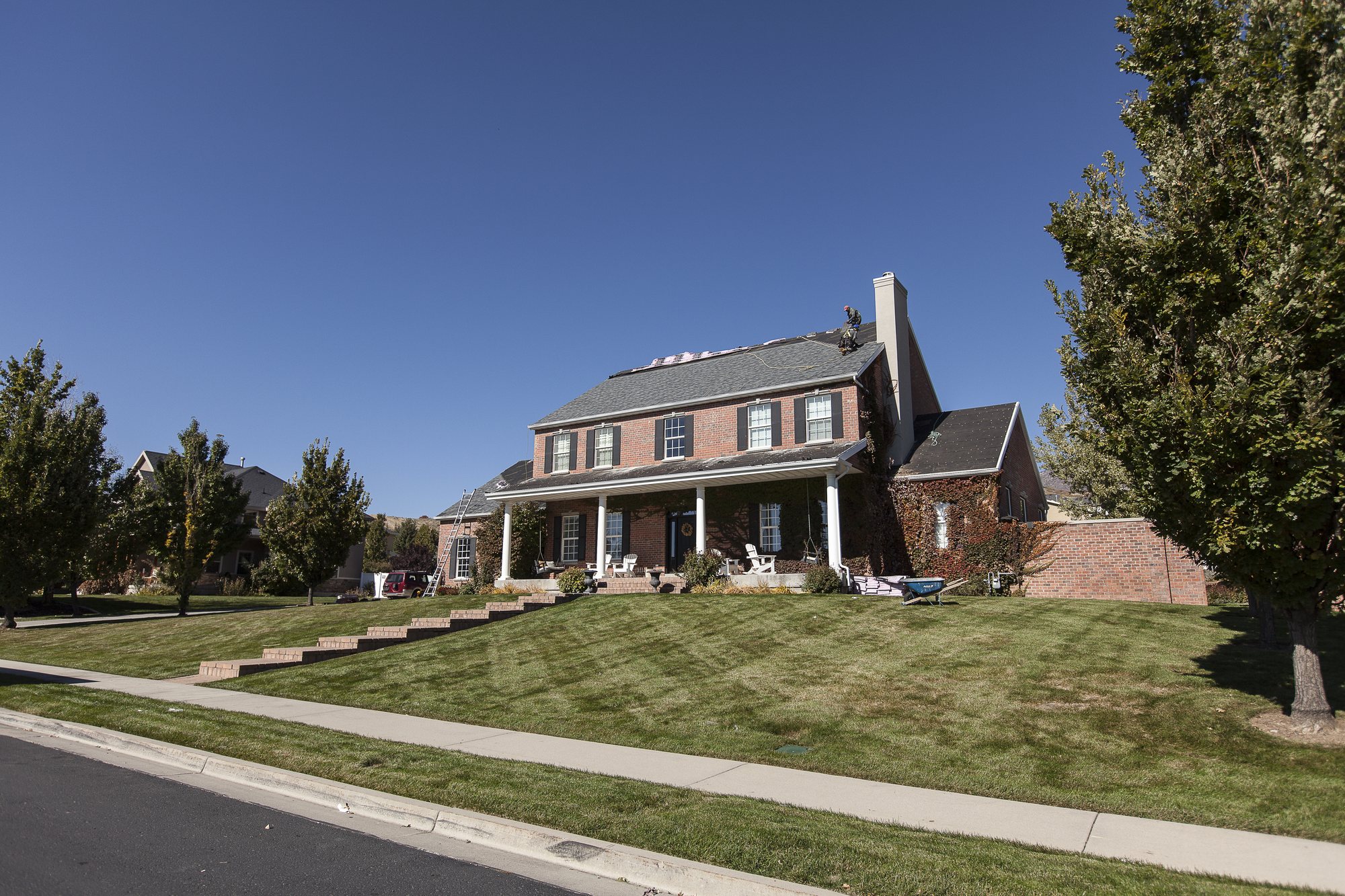
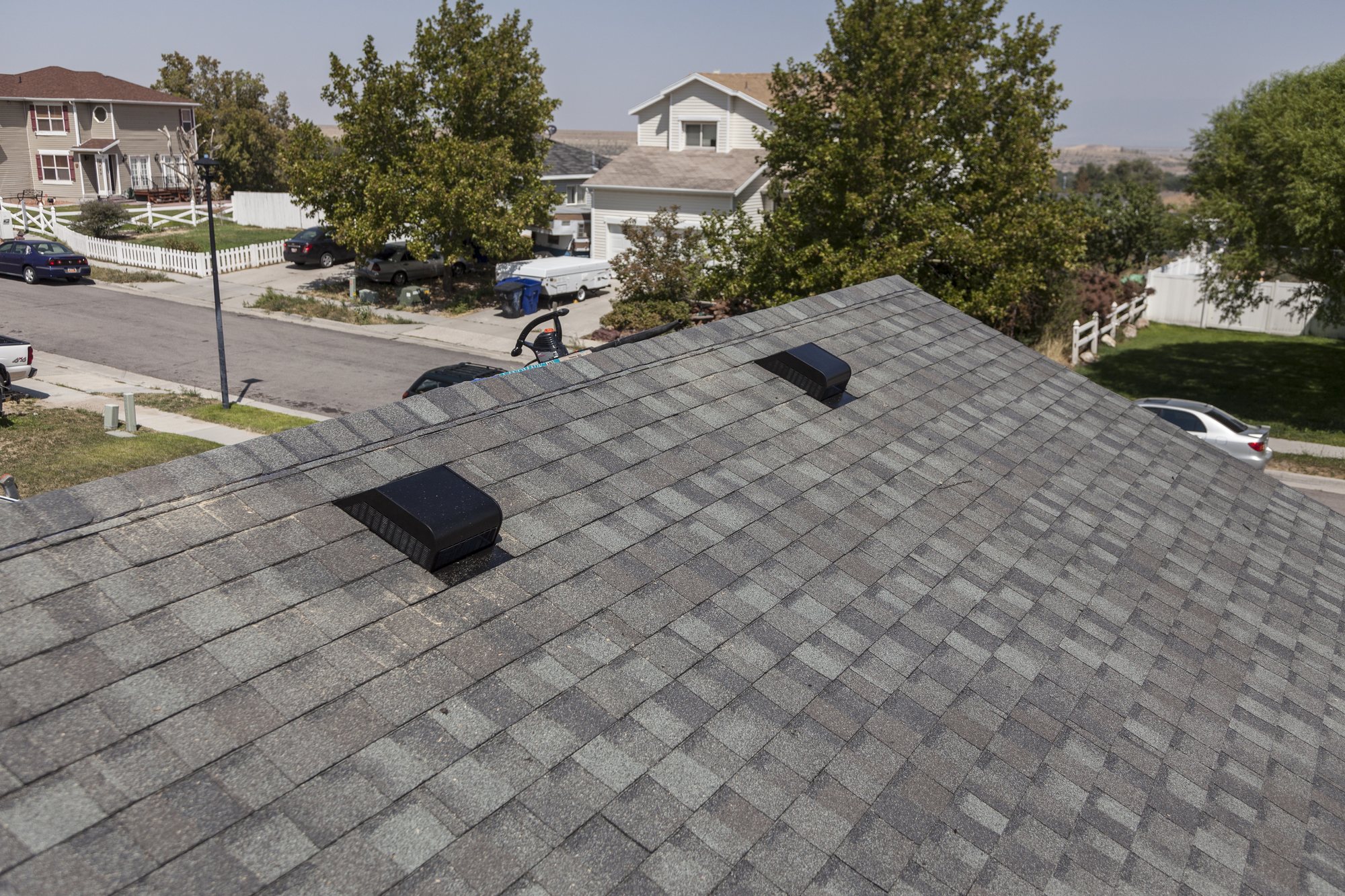
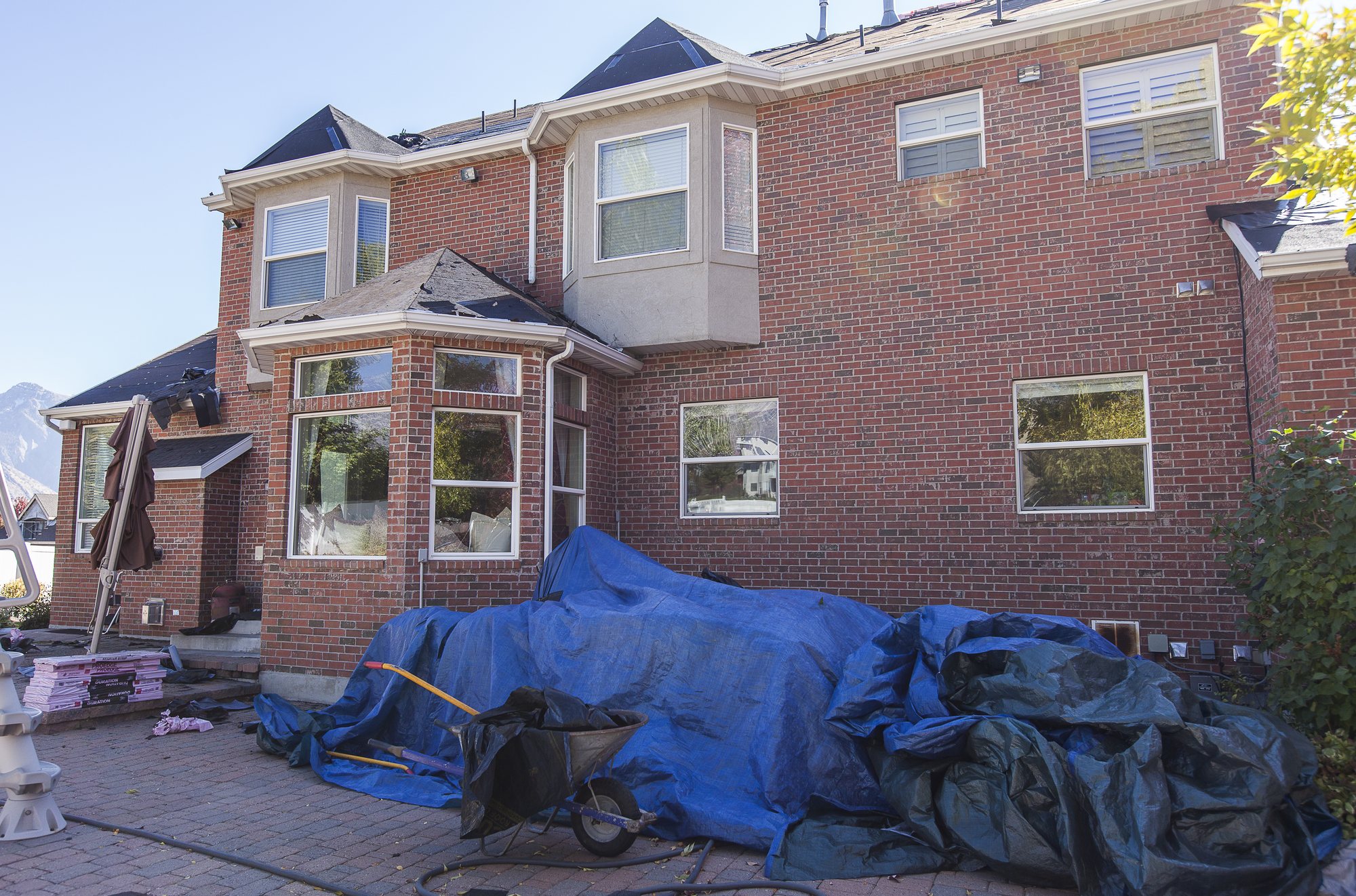
The crews know Utah code
The crews on your roof are not learning the ice barrier requirement on your house. They know what the inspector in this county is going to look at, how deep the membrane has to run past an interior wall line on a deep overhang, and how ventilation gets counted.
They also know the weather
Which is why they will not open more roof than they can dry in before an afternoon cell comes over the benches.
What twenty-seven years fixes
The difference experience actually makes is in the parts of a roof nobody photographs. How a chimney cricket gets built. Whether the step flashing is woven right up a sidewall. How a valley terminates into a gutter. Those details do not show in a listing photo and they decide whether a roof leaks in year six.
Hard to sell, easy to see later
You find out who did it right the winter after a bad storm.
Questions we get asked
Not the question you had? Call the shop and ask a person. We would rather talk it through than have you guess from a website.
(801) 382-8898Do you actually work in Clinton?
Yes. Clinton sits inside the ground we cover around Salt Lake City, and the crew is there most weeks rather than once a season.
How fast can you get to Clinton after a storm?
We make the roof safe first, then come back and do the repair properly when conditions allow.
Do you handle the insurance side?
On hail-damaged roofs, we work with your insurance to get the roof covered. We document the damage thoroughly with photographs, so the claim reflects what is actually on the roof.
What happens if you find bad decking?
We show you. The decking is only visible during a tear-off, so that is when soft sheathing gets found and replaced. We photograph it rather than just add it to a list.
Do you work through the winter?
Yes, with judgment. Shingles need to seal, and in genuine cold that takes longer or needs hand sealing. Emergency work happens whenever it has to. Full replacements get scheduled around the weather rather than forced into it.
What makes a Utah roof different?
Snow load, ice at the eaves, canyon wind and high-altitude sun, all on the same roof. A crew that learned roofing somewhere mild has to learn it again up here.
Where Clinton sits on our map
We work Clinton as part of our Davis County schedule.
Talk to Hancock
Roof work in Clinton
Call (801) 382-8898. If it turns out to be a repair we will say so and do the repair.