
Salt Lake City & surrounding counties
When the decking under the shingles has to go
Shingles get the attention, yet every one of them hangs on the wood beneath. When a tear-off turns up dark, soft or broken sheathing, we cut out what has failed and lay a sound deck before a single new shingle goes on.
Dark patches on a stripped deck
In the second photo the old shingles are off, the torn debris is piled along the far edge above a fenced yard, and the plywood deck is weathered and dark in patches. Dark marks on a stripped deck can mean a few different things. Asphalt from the old shingles bleeds into the wood and leaves a stain. Plywood that has sat under a roof for decades darkens with age even where it never got wet. Real water damage can look almost the same from a few feet away, and nobody can tell them apart by eye.
The difference shows up under pressure. Wood that has been wet for a long time goes soft first, then the layers of the sheet start to come apart, and it shows around the fasteners before anywhere else, where the nails end up sitting in a ring of punky wood that no longer grips them. A stained sheet that is still hard and tight around its nails can stay. A soft one cannot, no matter how clean it looks.
We press on every dark patch once the deck is bare. If it gives under a knuckle or a boot, it comes out.

What the attic can tell you first
Some of this can be spotted before anyone climbs onto the roof. From the attic, look up at the underside of the deck with a flashlight. Rust on the tips of the nails that poke through means moisture has been sitting at those points. Sheathing that has gone dark, or that looks swollen and layered at its edges, has been wet more than once. Daylight showing through the deck is the plainest sign of all.
A slow leak rarely stains a ceiling, because the insulation catches the water and the attic dries out between storms. So a deck can be in poor shape on a house where nobody ever saw a drip. Wind-driven rain is usually how it starts, pushing water sideways under a lap or behind a piece of metal.
What we check on a bare deck
Once the old roof is in the trailer, the deck gets a slow walk from eave to ridge. These are the things that decide whether a sheet stays.

When the deck changes the job
The first photo shows a steep roof stripped down to bare, spaced boards beside a brick chimney, with two of our guys loading tear-off into a dump trailer below.
On many replacements the deck needs a careful walk and little else. The scope changes when the bare wood says otherwise. A few soft sheets near a valley or a vent are a small add. A deck that gives across a whole slope, or boards with open gaps between them, means new sheathing over that whole plane before any membrane goes down. When the attic shows us something like that on the first walk-through, we tell you then, because it changes what we quote.
The tear-off is handled with the deck in mind. Old shingles and underlayment head for the trailer as the crew works across the roof, so the bare wood is clear enough to walk and read. Nothing new goes over a sheet until we have pressed on it.
How a re-deck goes
The old shingles and underlayment come off down to the wood, and the debris goes straight into the trailer.
We walk the whole deck and mark every sheet that is dark, soft or separating.
Bad sections are cut back to the center of a rafter so the new edges land on something solid.
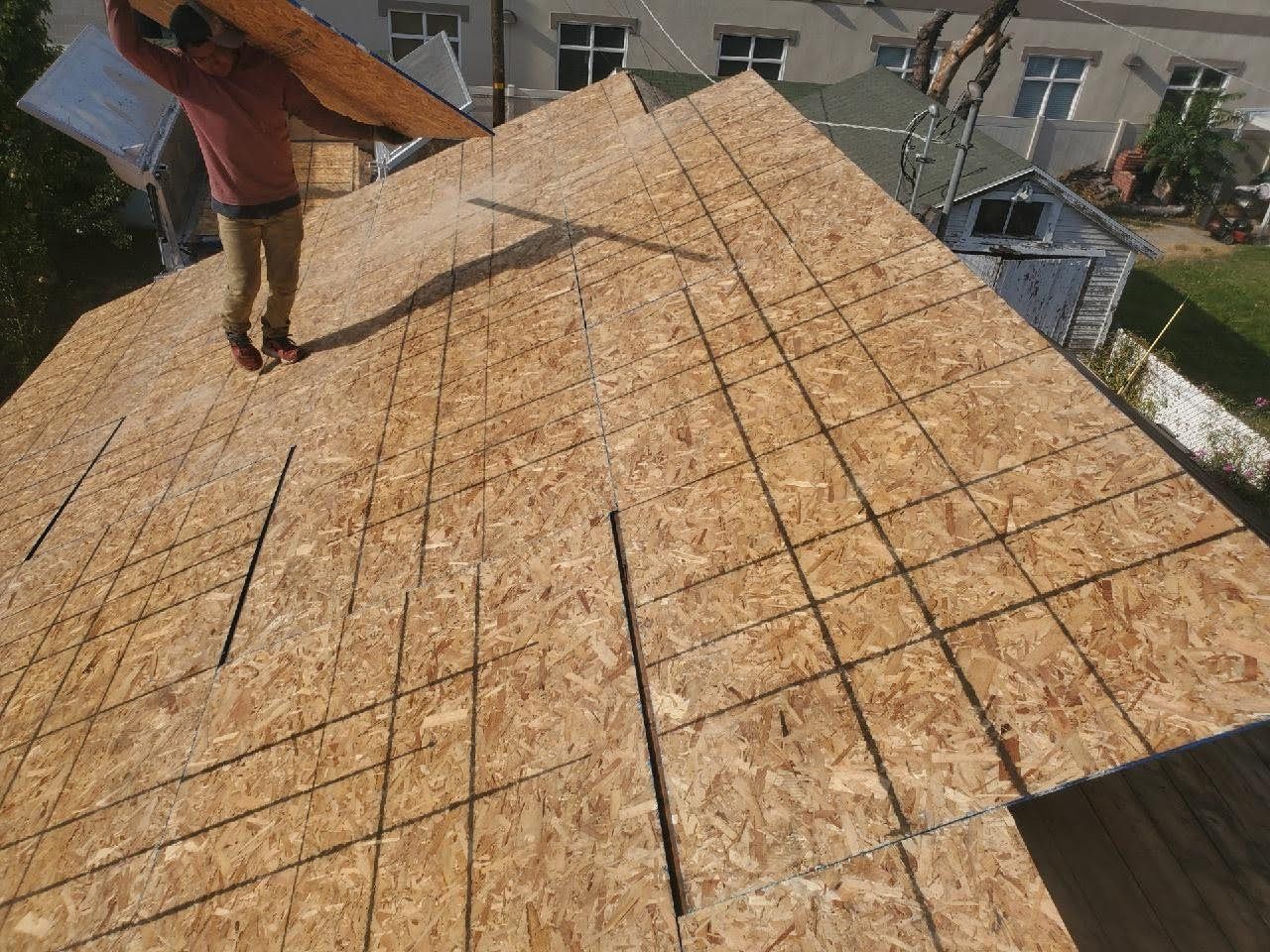
New sheathing goes in and is fastened into the framing, with a small gap between sheets so the wood can move with the seasons.
Ice-and-water shield goes down at the eaves, in the valleys and around every opening, and synthetic underlayment covers the rest.
The new roof goes on over a deck that will hold a nail.
Before the tear-off, and during it
Nobody can see the whole deck until the shingles are off, and we say so up front. We walk the roof before quoting it, check the attic where we can get in, and tell you what we expect to find. If the tear-off turns up more bad wood than anyone expected, we stop and show you, with photographs, before we replace it. You decide with the facts in front of you. If you would like the attic looked at before anything is scheduled, reach out through our contact page.
Most houses in this valley are a one to two day replacement, and a re-deck can add to that, depending on how many sheets come out. We tell you before day one.
A roof is only as good as the wood it is nailed to.
Where this fits with the rest of the roof
A re-deck almost always comes with a full replacement, and that replacement carries our 10-year workmanship warranty. The main roof deck replacement page covers this work anywhere we go. If water is coming in right now, start with our Herriman emergency roof repair page, because the deck question can wait until the house is dry. For the shingles that go on top, see asphalt shingle roofing for Herriman homes.
Building new instead? A first roof starts on fresh sheathing, and the new construction roofing page for Herriman walks through it. Keeping an eye on the deck you already have is part of what a Herriman roof maintenance visit is for.
We are a woman-owned family company, second generation, with 27 years in the trade. The rest of our work in town is on the Herriman service area page and in the gallery. Call (801) 382-8898 or send a note, and we will come look at the roof and the attic under it.
Where Herriman sits on our map
Herriman is at the south end of the valley along the Oquirrhs, and our Salt Lake County route runs through it regularly.
Questions about the wood under the roof
What Herriman homeowners ask when the decking comes up.
(801) 382-8898Can you tell if my decking is bad before the shingles come off?
Sometimes. Rust at the nail tips, dark or swollen sheathing and daylight seen from the attic all point to trouble. The full picture only shows once the old roof is off, and we tell you that before we start.
Do you replace the whole deck or only the bad sections?
Usually only what has failed. We cut bad sheets back to the framing and put in new ones. If most of the deck is soft, or the roof sits on spaced boards, covering the whole thing makes more sense, and we explain why.
Why not put new shingles over soft wood?
A nail driven into soft or separating sheathing does not hold, so the shingles above it lift in the first real wind. The new roof would only be as sound as the worst sheet under it.
How do I know you found what you say you found?
We photograph the bare deck and show you the sheets we marked before they come out. You see what we see, and you decide.
Does replacing decking add time to the job?
It can. Most replacements here take one to two days on site, and re-decking adds to that depending on how much wood comes out. We let you know what to expect before the crew arrives.
What causes a deck to rot on a newer house?
Almost always a slow leak nobody saw. Wind-driven rain can push water under a lap or behind flashing, and the insulation soaks it up before it ever reaches a ceiling.
The rest of the Herriman work
Talk to Hancock
Worried about what is under your shingles?
Plan a replacement with us and we will check the attic first. When the old roof comes off, you will see every sheet we replace before it goes.