

Salt Lake County, Utah
Roofing in the West Valley City area
Roof work around West Valley City handled by people who live and work up here.
The year a West Valley City roof works through
Most of what we work on here went up between the 1970s and the 1990s, which means a lot of roofs are on their second or third covering. That matters, because a tear-off down to the deck on a house with two existing layers is a different job from a straightforward strip.
We have worked enough of Salt Lake County to know which builders put up which subdivisions and where they cut the same corner twice. That is worth more on a roof than any brochure.

The weather a West Valley City roof works against
Inversion keeps a roof damp
Winter here can park a lid of cold air over the valley floor for a week straight. Nothing dries during that stretch. A shaded slope that got wet on Monday is still wet on Friday, the sheathing under it never gives its moisture back to the air, and any lap that was going to wick does its wicking slowly with no interruption.
Gray weeks do quiet damage
Storms get blamed for roofs. Nine flat gray days with the sun never touching the north face do more, and nobody remembers them.
Elevation changes the whole calendar
A roof at the top of a canyon and a roof on the valley floor are on different schedules. Up high the snow arrives in October and is still there in May, the freeze cycles are deeper, and the ultraviolet load in the thin air is harsher year round. Down low there are more melt-and-refreeze swings and fewer feet of standing load.
Same materials, different details
The ice barrier runs further, the ventilation gets sized up, and the fastening schedule tightens as the elevation goes up.
The valley floor sees less snow than the benches above it, but the benches above it are where a lot of the housing is. A roof in Holladay or Cottonwood Heights lives a different winter from one in Kearns, five miles away.
What we find on roofs around West Valley City
Pipe boots and roof penetrations
The rubber collar around a plumbing vent is the shortest-lived thing on most roofs. Ultraviolet at this elevation cracks that rubber long before the shingles are tired, and the crack sits directly over an open hole in the deck. Lead boots or a metal collar with a replaceable seal last considerably longer.
Everything that comes through gets a plan
Furnace flues, swamp cooler curbs, satellite mounts, solar standoffs. Each one is a hole somebody has to detail correctly.
Counterflashing let into the masonry
Where a roof meets brick or stone, the honest detail cuts a groove into a mortar joint, tucks the top edge of the metal into it, and seals the groove. Water running down the wall face hits metal and gets thrown out onto the roof. The shortcut runs the metal flat up the wall and caulks the top edge, which works until the caulk moves.
Surface-mounted is a temporary answer
We will do it that way on an emergency repair and tell you plainly that it needs to be cut in properly when there is time.
West Valley City is part of our Salt Lake County work. 27 years in the trade, and a full replacement carries our 10-year workmanship warranty.
What we do around West Valley City
Every service is its own page. These are the ones West Valley City asks for most.
Roofing
Full replacements and new roofs on West Valley City homes, deck up.
Repairs
Leaks and failed details, which is most of what West Valley City calls about.
Upkeep
Inspections, cleaning and sealing before a small thing gets expensive.
Shingles
Architectural laminate, the field material on most of this valley.
Metal
Standing seam and corrugated, common on canyon-side snow load.
Tile
Clay and concrete tile, and the flashing work they need.
Commercial
Membrane systems for flat and low-slope buildings around West Valley City.
Coatings
Restoration coatings when a commercial roof has life left.
Storm
Hail, wind and the insurance paperwork that follows.
Skylights
Installation and the curb-flashing repairs skylights usually need.
Gutters
Gutters, downspouts and fascia, which are part of the roof.
Government
Schools, city, county, state and federal buildings. Every government service is on the government roofing page.
How the job runs
What happens before the crew arrives
Materials get delivered and staged so nothing has to be carried farther than it needs to be, dumpster or trailer placement gets sorted with you, and we talk through the start before anyone is on the roof. Deliveries do slip, and when one does we tell you rather than leave you guessing.
Neighbors get a heads up
A roofing crew is loud. It is a small courtesy and it goes a long way on a tight street.
Power and water
The crew needs an exterior outlet. That gets confirmed, not assumed.
Sequencing around a mason or a painter
When a chimney needs tuckpointing or a wall needs paint, the order those trades go in decides whether anybody has to come back. Masonry work happens before the roof ties into it so the flashing can be cut into fresh joints. Siding and paint on a wall above a roof plane go in before the final course below them.
We will talk to your other trades
A five minute phone call between two crews saves a week of scheduling around each other, and we would rather make the call than let you relay it.

Roofs around West Valley City
Work from around the valley
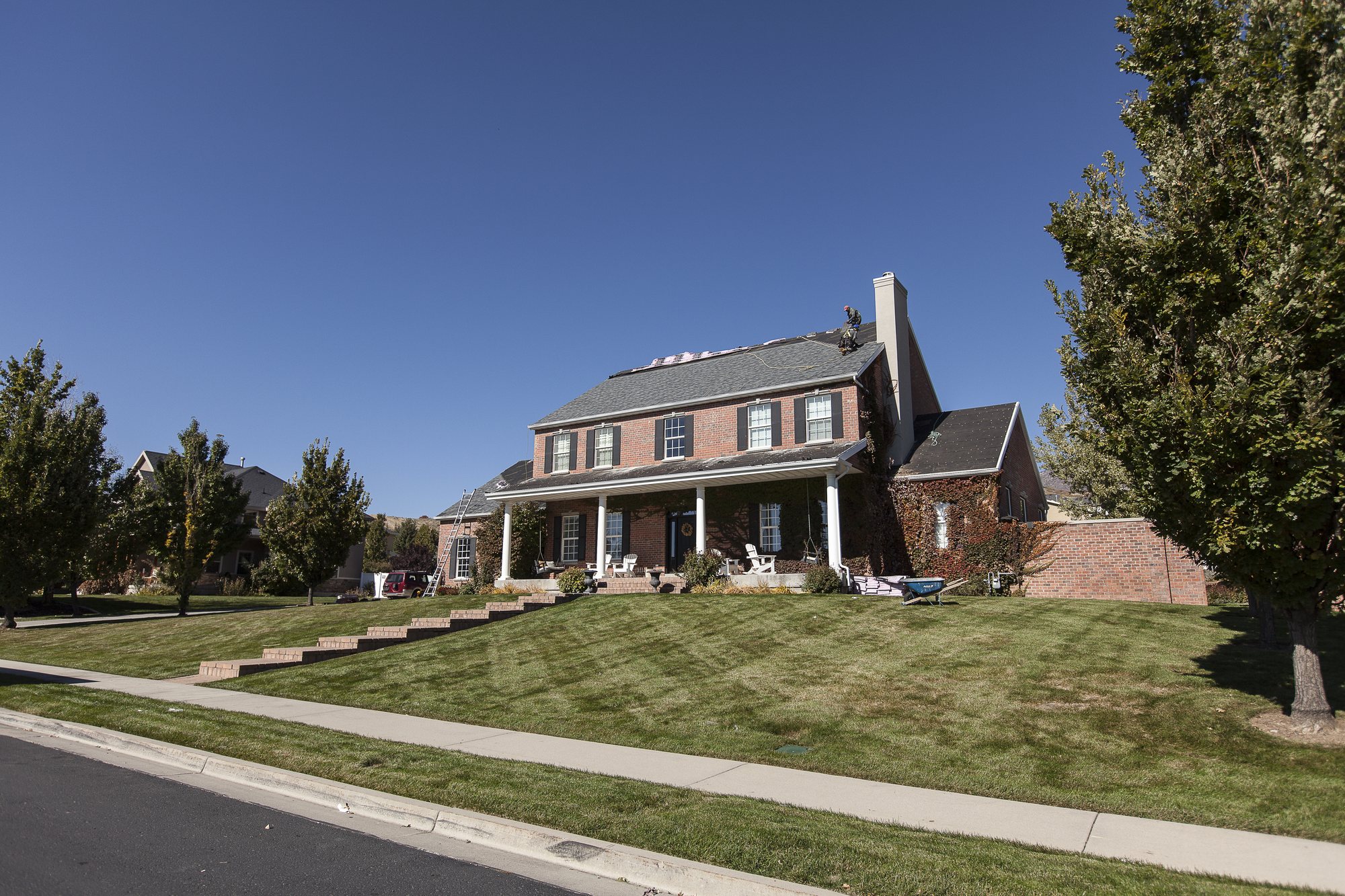

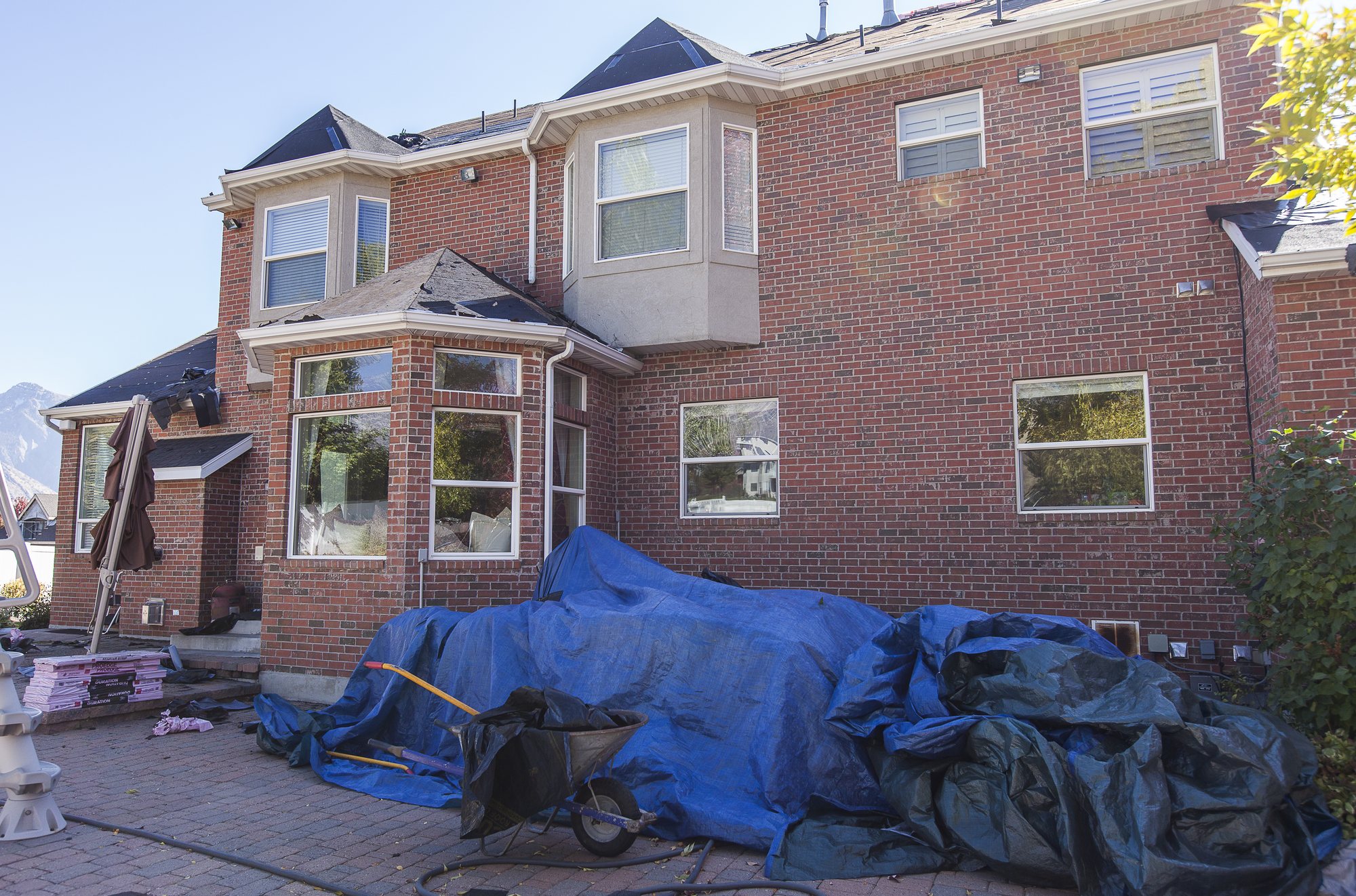
How a callback gets handled
If you call us about a roof we replaced, we come look. There is no screening call to decide whether it is our fault first. We would rather drive out and find that a gutter is clogged than argue on the phone about whether it could possibly be the flashing we installed.
Getting it wrong happens
People install roofs and people make mistakes. What separates shops is what happens in the week after somebody finds one.
We come back
A full replacement carries our 10-year workmanship warranty.
Small on purpose, steady throughout
We take on the work we can staff properly. That is a deliberate limit. A crew stretched across four jobs cuts corners on all of them, and the corners it cuts are the ones under the shingles where nobody will look for a decade.
Hancock runs the job
The person who looked at your roof answers for the work on it.
Questions we get asked
Not the question you had? Call the shop and ask a person. We would rather talk it through than have you guess from a website.
(801) 382-8898Do you actually work in West Valley City?
Yes, and often. West Valley City is part of our regular service area, so it is ground we know well.
How fast can you get to West Valley City after a storm?
Storm calls jump the queue. We get there, stop what is coming in, and schedule the real fix rather than rushing a permanent repair in bad weather.
Do you work through the winter?
Yes, with judgment. Shingles need to seal, and in genuine cold that takes longer or needs hand sealing. Emergency work happens whenever it has to. Full replacements get scheduled around the weather rather than forced into it.
What makes a Utah roof different?
Snow load, ice at the eaves, canyon wind and high-altitude sun, all on the same roof. A crew that learned roofing somewhere mild has to learn it again up here.
How do I know when a roof is getting close?
Granules collecting in the gutters, tabs lifting or curling at the edges, shingles that look bare in patches, and daylight or staining in the attic. Any of those is worth a look.
Will you tell me if I do not need a new roof?
Yes. Plenty of what we look at turns out to be a repair, and we say so. A roof with years left in it gets left alone, and you get the photographs either way.
Where West Valley City sits on our map
Our Salt Lake County route covers West Valley City, so a look at a roof here does not wait on a gap.
Talk to Hancock
Roof work in West Valley City
Call (801) 382-8898 and we will come and read the roof rather than guess at it from the drive.