

Box Elder County, Utah
Roofing in the Mantua area
Tear-offs, repairs and replacements across Mantua, from a crew that works a high mountain valley that holds its snow week in and week out.
What we see on Mantua roofs
The thing that ends most roofs around Mantua is not one storm. It is the freeze and thaw cycle running through the shoulder seasons, working water into every seam and lifting it again overnight, dozens of times a year, until a detail that was merely adequate opens up.
Working Mantua regularly rather than occasionally is what makes an honest read possible. We have been on enough roofs across Box Elder County to know which subdivisions came from the same builder and inherited the same shortcut.

The weather a Mantua roof works against
Wind, water and dust, in that order
Ask what actually kills roofs in this part of the state and the answer runs wind first, then water that could not get away, then the grit that the wind delivered. Each one makes the next worse. A wind-broken seal lets water in. Water carries grit into a lap. Grit holds moisture against the mat. None of it is dramatic and all of it compounds.
Why we start at the edges
Perimeters and penetrations are where all three arrive together, so that is where an honest look begins.
Thermal shock on metal and flashing
Metal moves. On a sunny winter day a standing seam panel or a piece of valley metal can run a hundred degrees warmer than the air, then drop back after dark. That expansion and contraction happens every clear day of the year here. Panels have to be fastened so they can move, clips have to be right, and a valley has to be detailed to slide instead of being pinned tight at both ends.
Pinned metal tears its own holes
When movement is blocked, the fastener holes elongate and that becomes the leak path.
Open valley farm country north of the lake, where wind crosses a long fetch with nothing to break it and the housing sits spread out rather than packed in. Fasteners take a beating this close to the water.
What we find on roofs around Mantua
Six nails in the right line
Every shingle wrapper prints a nailing pattern and a nail line, and that pattern is what the wind rating was earned with. High nailing misses the reinforced strip and leaves the nail head sitting in the exposed area of the shingle below. Four nails where the wrapper asks for six cuts the uplift resistance on the one part of the roof the wind works hardest.
Overdriven is as bad as missing
A gun set too hot cuts through the mat and the shingle is hanging on a hole.
Cheapest detail to get right
And the most common thing done wrong.
Open valley or closed
A closed valley weaves or cuts the shingles across the intersection. An open valley runs metal down the center with the shingles cut back off it. Around here, with the volume of water and ice a valley concentrates, open metal over ice-and-water shield is the detail we reach for on most homes. It moves debris out instead of catching it, and it gives ice a smooth surface instead of a shingle edge to grab.
The W profile
A center rib keeps water from one plane washing up under the shingles on the other.
Mantua is part of our Box Elder County work. 27 years in the trade, and a full replacement carries our 10-year workmanship warranty.
What we do around Mantua
Every service is its own page. These are the ones Mantua asks for most.
Roofing
Full replacements and new roofs on Mantua homes, deck up.
Repairs
Leaks and failed details, which is most of what Mantua calls about.
Upkeep
Inspections, cleaning and sealing before a small thing gets expensive.
Shingles
Architectural laminate, the field material on most of this valley.
Metal
Standing seam and corrugated, common on canyon-side snow load.
Tile
Clay and concrete tile, and the flashing work they need.
Commercial
Membrane systems for flat and low-slope buildings around Mantua.
Coatings
Restoration coatings when a commercial roof has life left.
Storm
Hail, wind and the insurance paperwork that follows.
Skylights
Installation and the curb-flashing repairs skylights usually need.
Gutters
Gutters, downspouts and fascia, which are part of the roof.
Government
Schools, city, county, state and federal buildings. Every government service is on the government roofing page.
How the job runs
The final walk
When the roof is done, we walk it together. Not a handshake at the truck, an actual look at the ridge line, the valleys, the edges, the penetrations and the ground around the house. If something looks off to you, we would much rather hear it standing there than in a phone call three weeks later.
Paperwork in your hands
What was replaced, how much decking, what materials went on, and where the leftover shingles ended up if you kept a bundle for future repairs.
What happens before the crew arrives
Materials get delivered and staged so nothing has to be carried farther than it needs to be, dumpster or trailer placement gets sorted with you, and we talk through the start before anyone is on the roof. Deliveries do slip, and when one does we tell you rather than leave you guessing.
Neighbors get a heads up
A roofing crew is loud. It is a small courtesy and it goes a long way on a tight street.
Power and water
The crew needs an exterior outlet. That gets confirmed, not assumed.

Roofs around Mantua
Work from around the valley
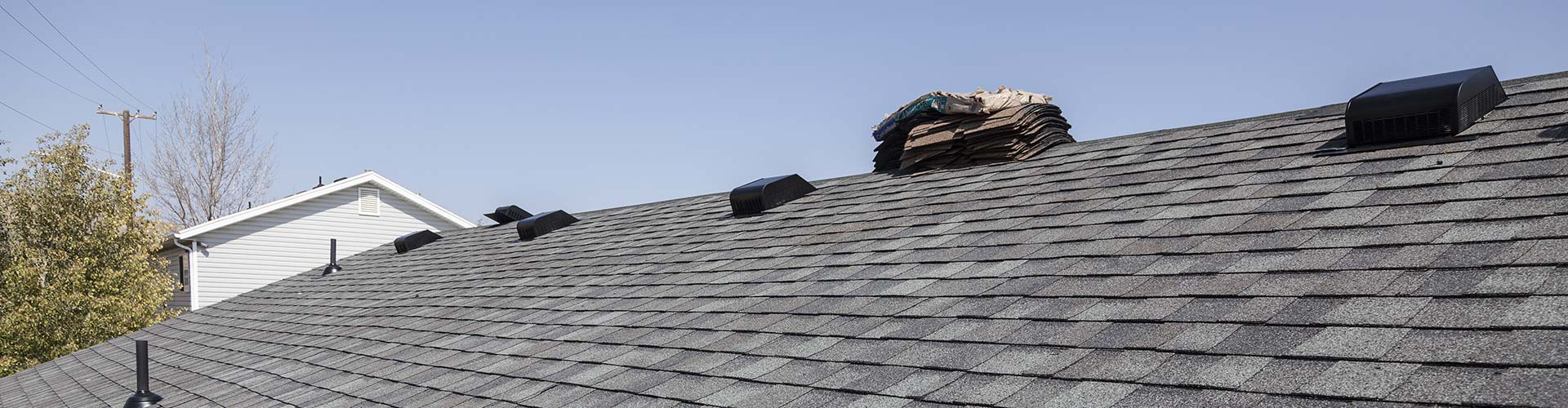


Turning work down
We say no to jobs. Sometimes it is a roof that needs a specialty we do not do well, sometimes it is a schedule we cannot actually hold, and sometimes it is a homeowner who has been told by three companies that they need a full replacement on a roof with good years left. We would rather tell that homeowner the truth and lose the job.
Saying no is the useful signal
Any shop that has never turned down work is telling you something about how it decides.
How a callback gets handled
If you call us about a roof we replaced, we come look. There is no screening call to decide whether it is our fault first. We would rather drive out and find that a gutter is clogged than argue on the phone about whether it could possibly be the flashing we installed.
Getting it wrong happens
People install roofs and people make mistakes. What separates shops is what happens in the week after somebody finds one.
We come back
A full replacement carries our 10-year workmanship warranty.
Questions we get asked
Not the question you had? Call the shop and ask a person. We would rather talk it through than have you guess from a website.
(801) 382-8898Do you actually work in Mantua?
Yes, and often. Mantua is part of our regular service area, so it is ground we know well.
How fast can you get to Mantua after a storm?
We make the roof safe first, then come back and do the repair properly when conditions allow.
What happens if you find bad decking?
We show you. The decking is only visible during a tear-off, so that is when soft sheathing gets found and replaced. We photograph it rather than just add it to a list.
Do you work through the winter?
Yes, with judgment. Shingles need to seal, and in genuine cold that takes longer or needs hand sealing. Emergency work happens whenever it has to. Full replacements get scheduled around the weather rather than forced into it.
What makes a Utah roof different?
Snow load, ice at the eaves, canyon wind and high-altitude sun, all on the same roof. A crew that learned roofing somewhere mild has to learn it again up here.
How do I know when a roof is getting close?
Granules collecting in the gutters, tabs lifting or curling at the edges, shingles that look bare in patches, and daylight or staining in the attic. Any of those is worth a look.
Where Mantua sits on our map
We work Mantua as part of our Box Elder County schedule.
Talk to Hancock
Roof work in Mantua
Call (801) 382-8898 and we will come and read the roof rather than guess at it from the drive.