
Box Elder County, Utah
Roofing in the Fielding area
Roof work around Fielding handled by people who live and work up here.
What we look at first around Fielding
Winter here does the damage in April rather than January. Wet spring snow runs far heavier per foot than dry powder, and a roof in Fielding that carried three feet in February can groan under eighteen inches of the wet stuff two months later. Pitch, sheathing condition and whether the framing was sized for the zone all decide how that load comes off.
We walk a Fielding roof before quoting it rather than pricing it from a satellite image.

The weather a Fielding roof works against
Runoff volume off a steep pitch
When the melt finally comes, a steep roof hands its whole surface to the gutter in a hurry. Pitch does not make water, it concentrates it, and a gutter sized for a gentle slope overshoots on a steep one. The water lands at the foundation instead of going down the leader.
Undersized is the usual answer
Bigger trough, a second downspout, and a deeper gutter apron so the overflow does not run behind the fascia. That is a cheaper fix than a wet basement wall.
Hard freeze after a warm afternoon
The worst single night for a roof up here follows a mild day. Sun works on the snow all afternoon, water runs into every gutter and valley and sits in the low spots, then the temperature drops twenty-five degrees after dark and every bit of that standing water turns to ice with nowhere to go.
Ice finds the path water made
It follows the water backwards, up under a lap, behind a piece of step flashing, into the gap over a fascia board.
One night can undo a season
We see the result in March.
Open valley farm country north of the lake, where wind crosses a long fetch with nothing to break it and the housing sits spread out rather than packed in. Fasteners take a beating this close to the water.
What we find on roofs around Fielding
Ridge cap is its own material
The cap along a ridge or a hip is the most exposed run on any roof and the most abused during installation. Cutting three-tab pieces to serve as cap on an architectural roof is a common shortcut, and the folded pieces crack at the bend within a few seasons up here. Purpose-made hip and ridge stock is thicker, pre-bent, and holds the fold through the cold.
Nail placement is the other half
Fasteners land under the next piece’s overlap, never through the weather surface where they sit exposed to the sky.
Pipe boots and roof penetrations
The rubber collar around a plumbing vent is the shortest-lived thing on most roofs. Ultraviolet at this elevation cracks that rubber long before the shingles are tired, and the crack sits directly over an open hole in the deck. Lead boots or a metal collar with a replaceable seal last considerably longer.
Everything that comes through gets a plan
Furnace flues, swamp cooler curbs, satellite mounts, solar standoffs. Each one is a hole somebody has to detail correctly.
Fielding is part of our Box Elder County work. 27 years in the trade, and a full replacement carries our 10-year workmanship warranty.
What we do around Fielding
Every service is its own page. These are the ones Fielding asks for most.
Roofing
Full replacements and new roofs on Fielding homes, deck up.
Repairs
Leaks and failed details, which is most of what Fielding calls about.
Upkeep
Inspections, cleaning and sealing before a small thing gets expensive.
Shingles
Architectural laminate, the field material on most of this valley.
Metal
Standing seam and corrugated, common on canyon-side snow load.
Tile
Clay and concrete tile, and the flashing work they need.
Commercial
Membrane systems for flat and low-slope buildings around Fielding.
Coatings
Restoration coatings when a commercial roof has life left.
Storm
Hail, wind and the insurance paperwork that follows.
Skylights
Installation and the curb-flashing repairs skylights usually need.
Gutters
Gutters, downspouts and fascia, which are part of the roof.
Government
Schools, city, county, state and federal buildings. Every government service is on the government roofing page.
How the job runs
Working around weather windows
Scheduling roofing here means watching the forecast more than the calendar. We do not open more roof than we can dry in before weather arrives, we do not shingle onto a wet deck, and we will move a start date rather than race a storm. Cold matters too. Shingles need heat to seal their adhesive strips, so late-season work sometimes gets hand-sealed to hold until spring warms them up.
A moved date is not a delay
It is the difference between a roof that was installed right and one that was installed on time.
Permits and code
Residential re-roofs pull a permit in most jurisdictions we work in, and the inspector is generally checking the same handful of things: ice barrier coverage at the eave, drip edge, proper fastening, and ventilation. We pull the permit as part of the job rather than leaving it on the homeowner.
Code is a floor
It is the minimum a roof is allowed to be, not a description of a good one. Plenty of our details go past it because the weather here asks for more.
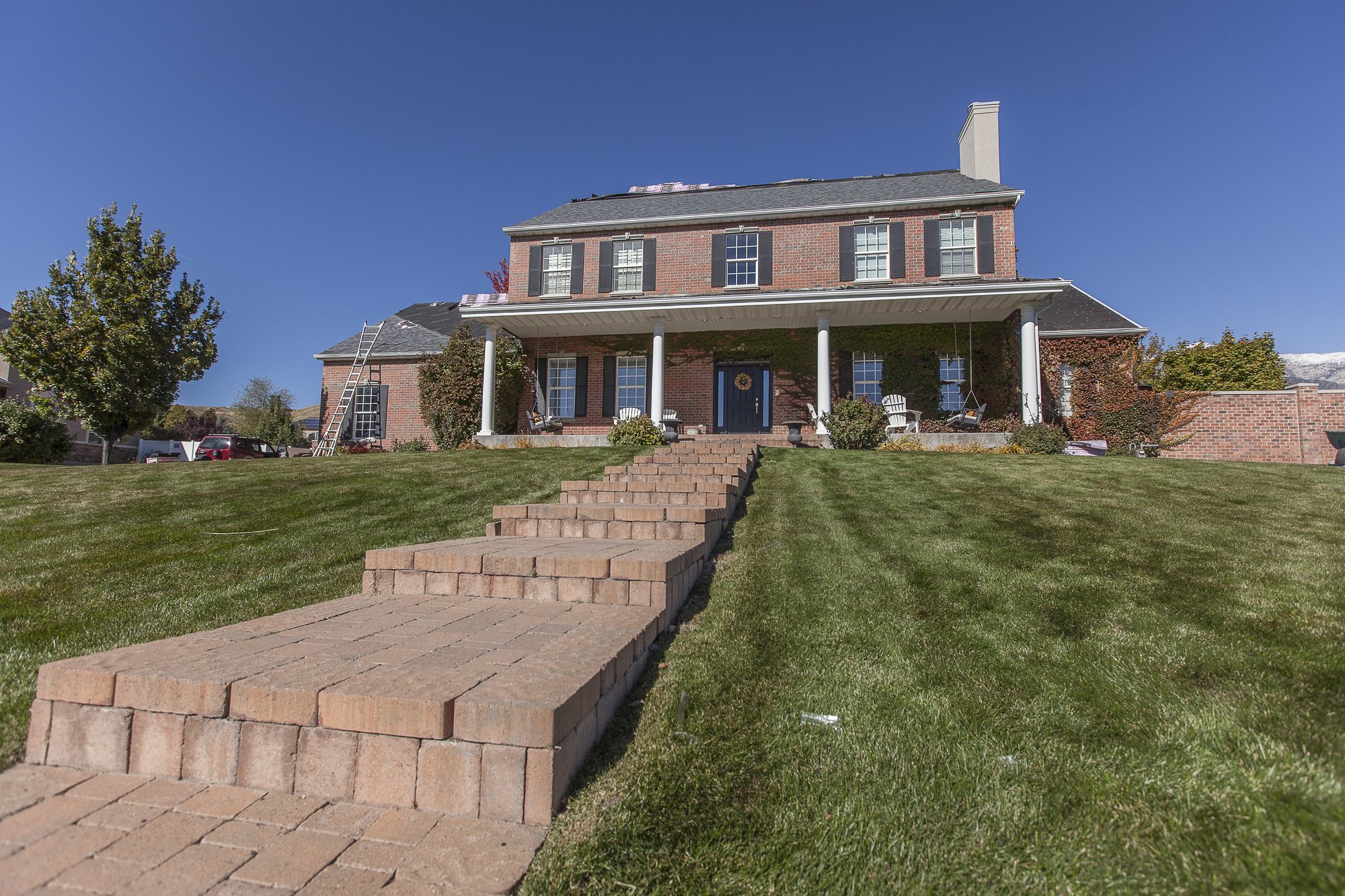
Roofs around Fielding
Work from around the valley


One neighbor at a time
We are not trying to be the biggest roofer along the Wasatch. We work in the towns we live in, we take on what we can do properly in a week, and most of what comes our way comes from somebody who watched us work on their street. That is a slower way to grow a business and it is the reason we are still standing behind roofs we put on years ago.
Word travels on a street
Which keeps us honest better than any advertising would.
Standing behind old work
There are roofs we put on years ago that we still drive past and look at. When one of them needs something, we go. A company that is around long enough to be accountable for its own history behaves differently than one planning to be somebody else’s problem in five years.
Eight winters is the test
Eight years operating under this name is long enough for the early roofs to have been through real weather, which is the only test that counts.
Twenty-seven years before that
The owner’s own time in the trade, kept as a separate number.
Questions we get asked
Not the question you had? Call the shop and ask a person. We would rather talk it through than have you guess from a website.
(801) 382-8898Do you actually work in Fielding?
Yes, and often. Fielding is part of our regular service area, so it is ground we know well.
How fast can you get to Fielding after a storm?
We stop the water first. Temporary work is genuinely temporary and we say so, but it buys the time to do the actual repair right.
Do you work through the winter?
Yes, with judgment. Shingles need to seal, and in genuine cold that takes longer or needs hand sealing. Emergency work happens whenever it has to. Full replacements get scheduled around the weather rather than forced into it.
What makes a Utah roof different?
Snow load, ice at the eaves, canyon wind and high-altitude sun, all on the same roof. A crew that learned roofing somewhere mild has to learn it again up here.
How do I know when a roof is getting close?
Granules collecting in the gutters, tabs lifting or curling at the edges, shingles that look bare in patches, and daylight or staining in the attic. Any of those is worth a look.
Will you tell me if I do not need a new roof?
Yes. Plenty of what we look at turns out to be a repair, and we say so. A roof with years left in it gets left alone, and you get the photographs either way.
Where Fielding sits on our map
Our Box Elder County route covers Fielding, so a look at a roof here does not wait on a gap.
Talk to Hancock
Roof work in Fielding
Call (801) 382-8898 and we will come and read the roof rather than guess at it from the drive.