
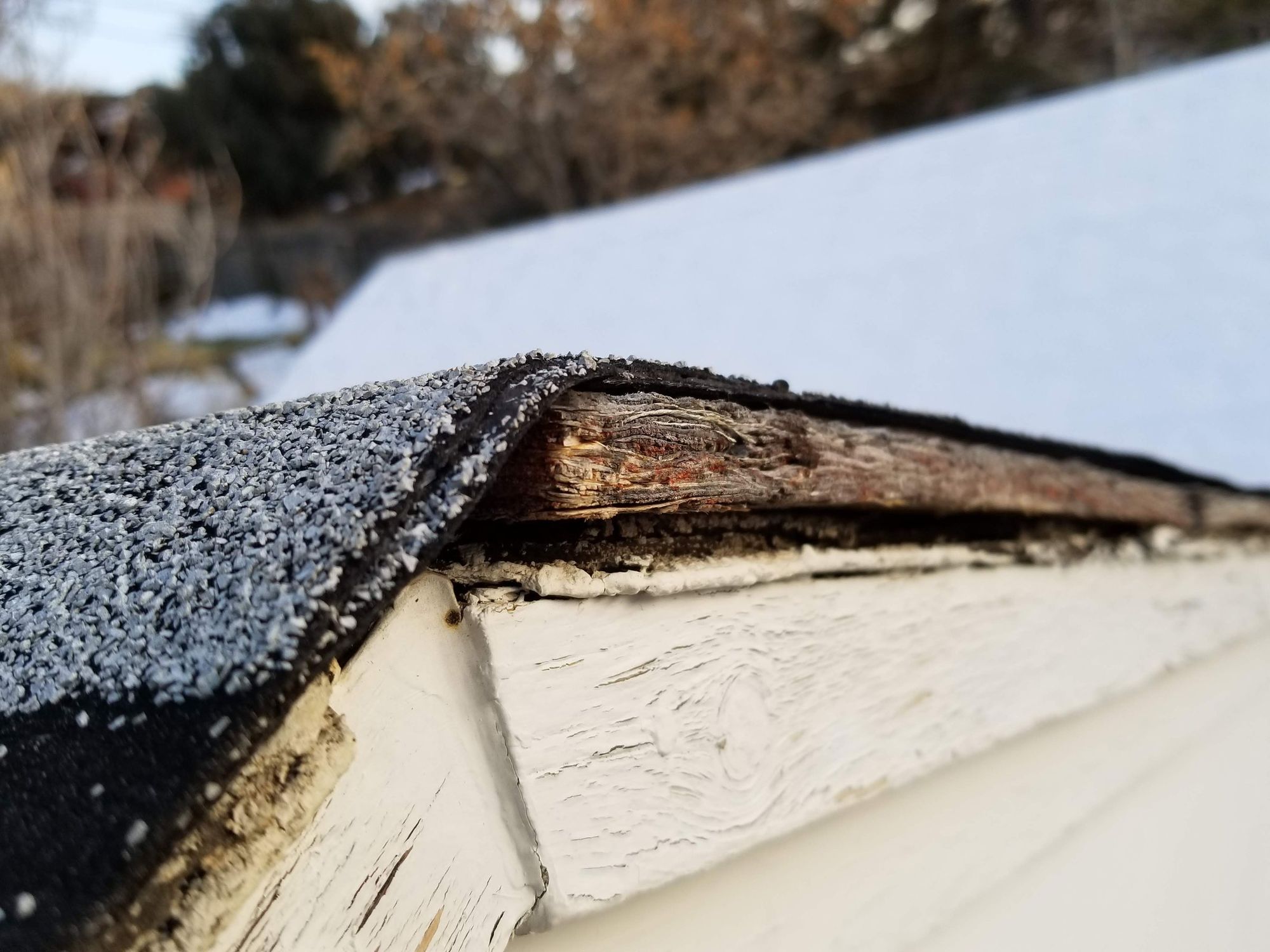
What fascia repair involves
Rotten fascia cut out and replaced so the gutter has something solid to fasten to.
Gutters pull away because the fascia behind them failed first.

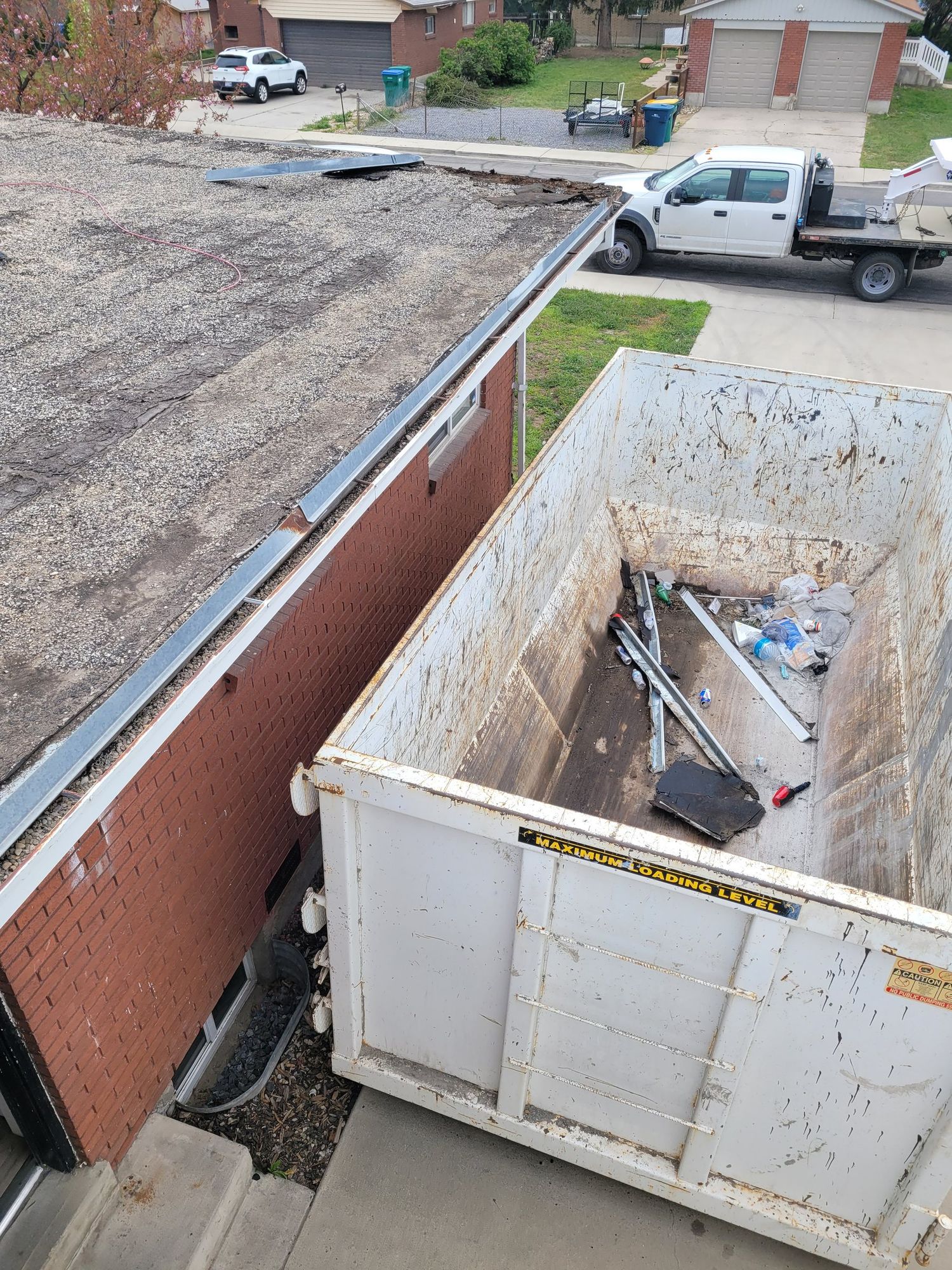
What matters on fascia repair
Finding the actual entry
Water gets in at one place and shows up at another, often several feet away, because it travels along framing and decking before it finds a path down. Repairing the visible stain leaves the entry point open, which is how the same leak gets fixed three times.
When a repair stops making sense
The line is not a number of years. It is whether the mat is still flexible, whether granule loss is local or general, and whether the repair count is climbing. When all three point the same way we say so rather than keep selling repairs.
Fascia Repair on real jobs

How the system goes together
Flashing is where roofs leak
Very few roofs fail in the field of the shingles. They fail at the transitions, at a wall, a chimney, a skylight curb, a pipe boot, a valley. Good flashing is metal shaped so water has nowhere to go but out. Bad flashing is sealant spread over a gap and a hope that nobody looks for four years. When we pull a roof apart, the flashing is what tells us whether the last crew was in a hurry.
Step flashing is one piece per course
There is no shortcut version of that detail that works.
Decking is the part nobody plans for
The sheathing under the roof only gets looked at once every couple of decades, which is when the old roof comes off. Older homes up here might have skip sheathing, plank decking with gaps, or plywood that has been soft over a leak for years. It gets replaced where it is bad, because fasteners do not hold in punky wood and a soft deck telegraphs every wave through a new roof.
It is measured, not guessed
Sheet count gets documented once the roof is open, before anything goes back down.
What we check
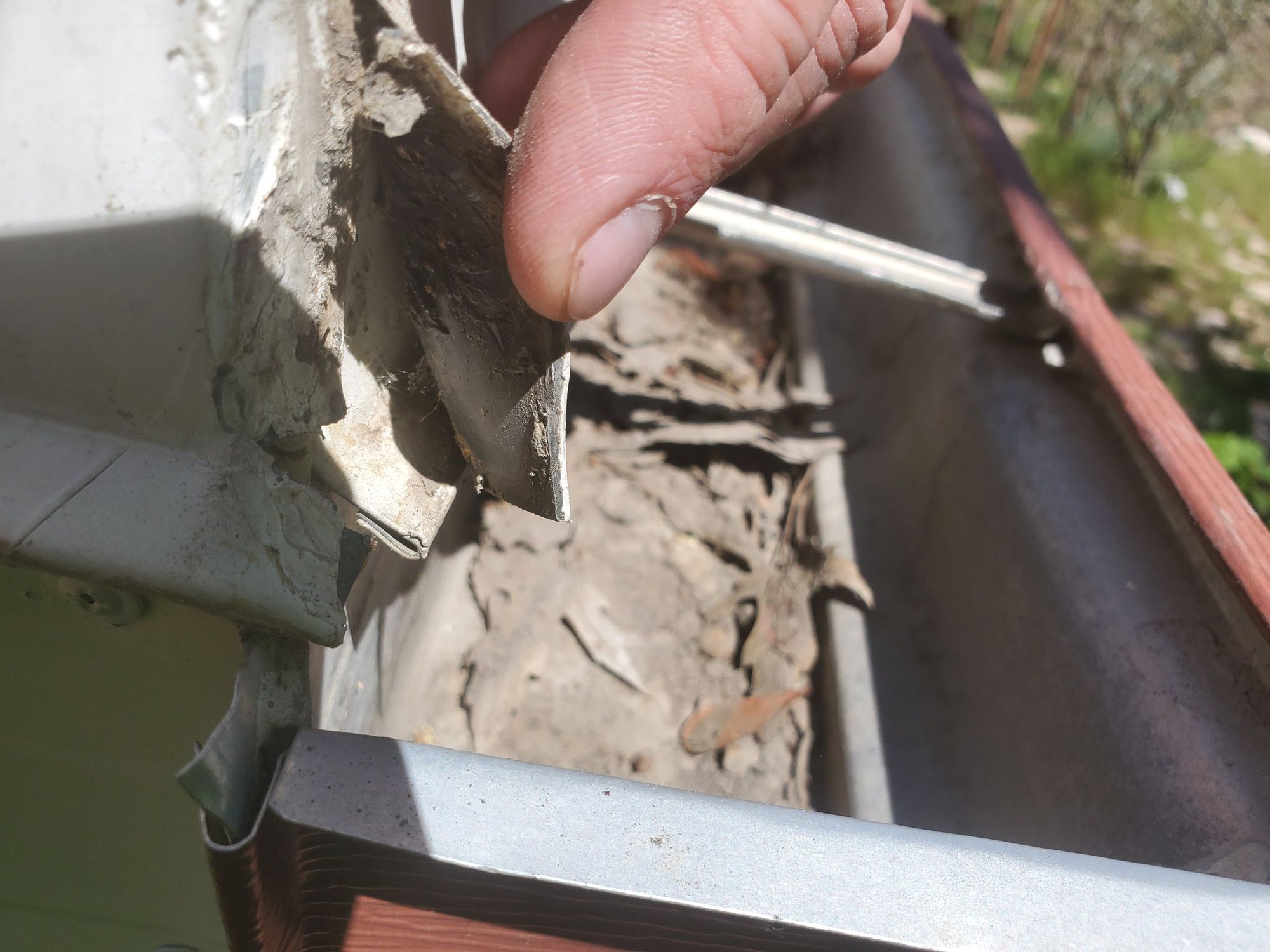
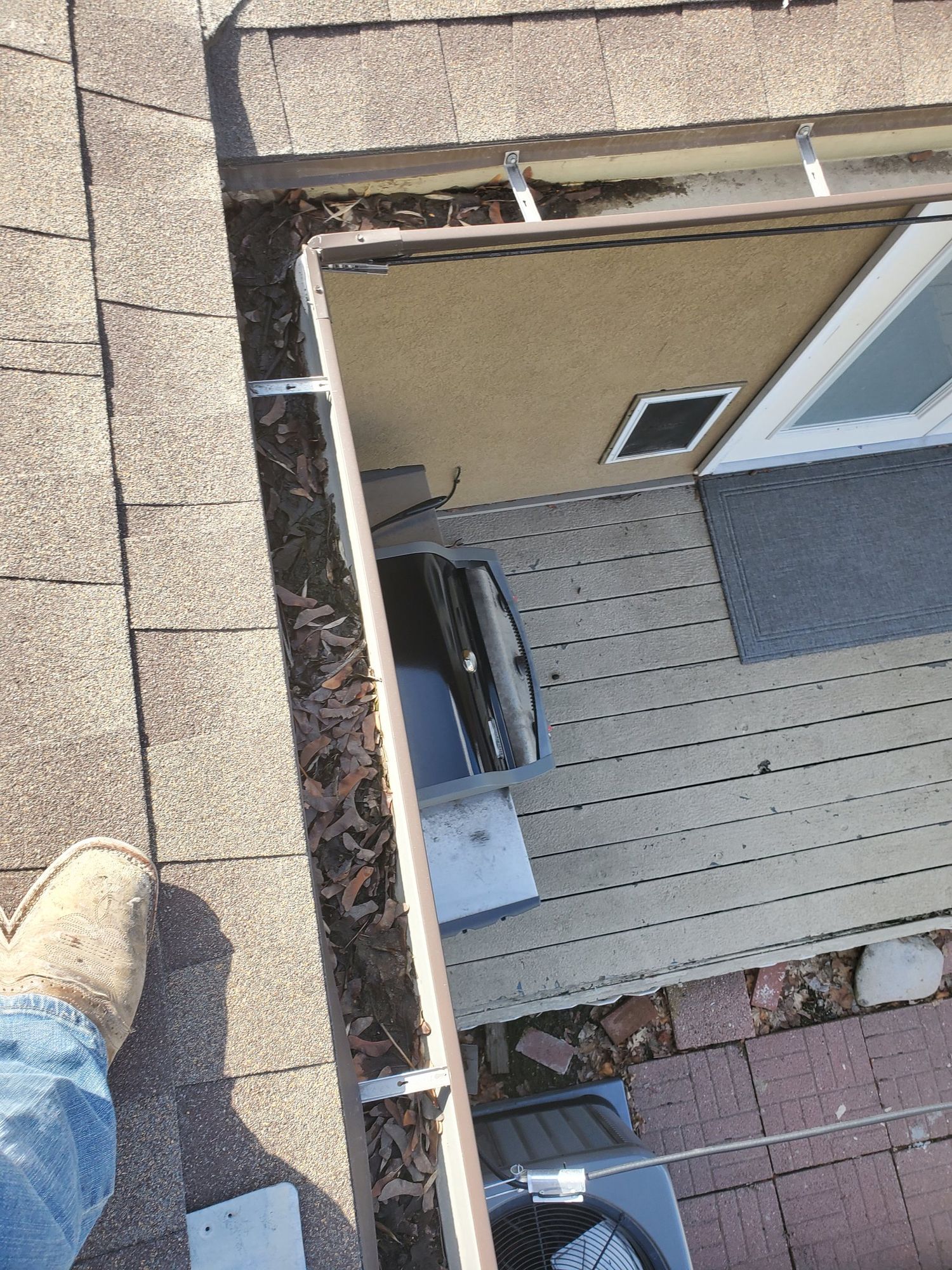
- Soft or rotted fascia board behind the gutter
- Drip edge lapped over the gutter back
- Where overflow has been soaking the eave
- Soffit vents still open after the repair
How we approach it
Look first
We get on the roof and read what is actually happening before quoting anything.
Say what we find
Photographs and a plain explanation, including when the answer is that you do not need us yet.
Built in sequence
Crews we hire and run, working the right detail in the right order.
Leave it clean
Magnet over the yard, container gone, walked with you.
Chimneys and the winter melt
Masonry sits colder than the roof around it and snow banks against the uphill side. Meltwater runs down the brick and looks for a way in. Step flashing, counter flashing tucked into a reglet cut, and a cricket behind a wide chimney are what keep it out. A bead of sealant across a chimney base is a temporary measure that somebody will be redoing in two winters.
Old mortar makes it worse
Where the joints have gone soft, the water gets into the masonry itself and the flashing is only half the job.
Inversion keeps a roof damp
Winter here can park a lid of cold air over the valley floor for a week straight. Nothing dries during that stretch. A shaded slope that got wet on Monday is still wet on Friday, the sheathing under it never gives its moisture back to the air, and any lap that was going to wick does its wicking slowly with no interruption.
Gray weeks do quiet damage
Storms get blamed for roofs. Nine flat gray days with the sun never touching the north face do more, and nobody remembers them.
What this looks like on a real roof
There is a version of fascia repair that gets sold off a clipboard in the driveway and a version that comes off actually reading the roof. The second one costs the same and lasts.
What follows is the part most people never get told: what usually went wrong before we arrived, and what the job looks like when it is done in the right order.
Where roofs go wrong
The shortcut we see most
Sealant troweled over a flashing gap. It buys a season, sometimes two, and it makes the eventual repair harder because the sealant has to come off first.
What good looks like instead
The metal detail rebuilt so water is shed mechanically, with sealant used only where a mechanical detail cannot do the whole job.
Signs worth a look
- A stain that grows after every storm
- Drips that appear hours after the rain stopped
- Shingles missing in a line rather than singly
- Daylight at a penetration when you look up from the attic
What to expect
How we price a repair
After we have been on the roof, not before. A repair that looks like one shingle from the ground is sometimes a rebuilt valley, and quoting it sight unseen helps nobody.
How long a good repair lasts
A properly rebuilt detail lasts as long as the roof around it. That is the point of doing it mechanically rather than with sealant, which is a consumable and behaves like one.
When we will tell you to wait
If a roof has a few years left and the repair is holding, we will say so. Replacing early is money spent before it needed to be.
Related work
Repairs covers more than one job, and they are not interchangeable. These are the others in the same family, each on its own page.
Questions we get asked
Not the question you had? Call the shop and ask a person. We would rather talk it through than have you guess from a website.
(801) 382-8898Is a repair a waste of money on an old roof?
Sometimes, and we will say so. If the mat is brittle across the whole roof or the repair count keeps climbing, a repair is just buying a few months.
Why does my roof leak in one spot but the stain is somewhere else?
Water travels along the framing before it shows on a ceiling. We trace it back to the entry point rather than repair the stain.
Can you match my existing shingles?
Often closely, rarely exactly. Sun fades a roof over the years, so a repair patch usually shows slightly until it weathers in.
What makes a Utah roof different?
Snow load, ice at the eaves, canyon wind and high-altitude sun, all on the same roof. A crew that learned roofing somewhere mild has to learn it again up here.
Will you tell me if I do not need a new roof?
Yes. Plenty of what we look at turns out to be a repair, and we say so. A roof with years left in it gets left alone, and you get the photographs either way.
Do you handle the insurance side?
On hail-damaged roofs, we work with your insurance to get the roof covered. We document the damage thoroughly with photographs, so the claim reflects what is actually on the roof.
Ask about fascia repair
Call (801) 382-8898 or send a note. We will look at the roof and tell you straight what it needs.