

Storm · Salt Lake City & surrounding counties
Insurance Roof Restoration
Working alongside your insurance claim.
What insurance roof restoration involves
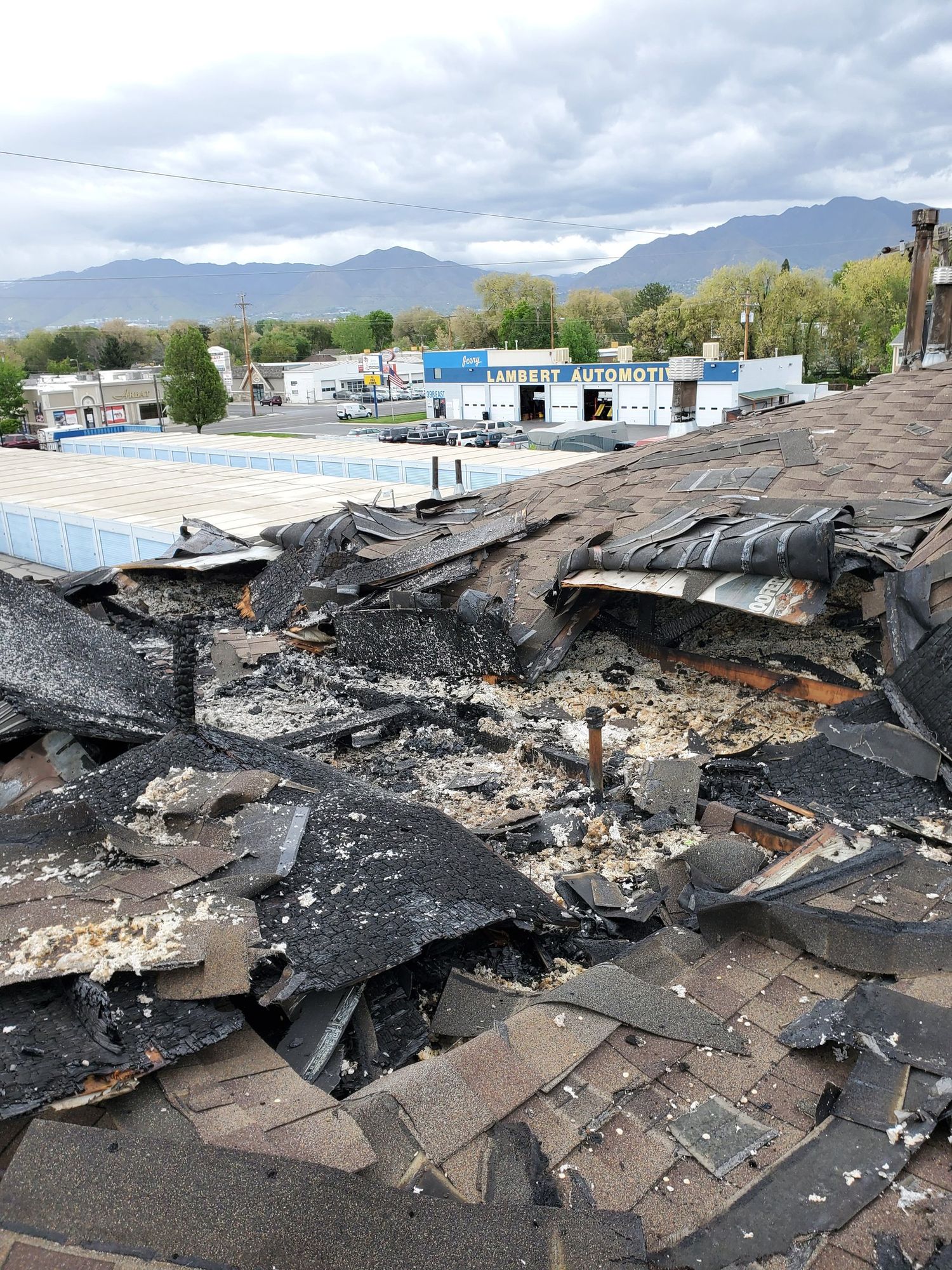
We work with your insurance and document the damage thoroughly so everyone sees the same thing.
We do not promise what an adjuster will decide. We make sure the evidence is complete.

What matters on insurance roof restoration
Reading hail honestly
Hail shows on soft metals first. Vents, flashing and gutter aprons take visible dents before the shingle mat shows bruising, so those are what we check first to date the storm and gauge severity. Bruising on the shingle itself is felt as much as seen.
Wind damage runs in lines
Wind gets under a course and lifts along a run, so the one missing shingle visible from the street is rarely the whole of it. The creased tabs either side of it have broken their seal even though they are still in place, and those fail in the next storm.
Insurance Roof Restoration on real jobs

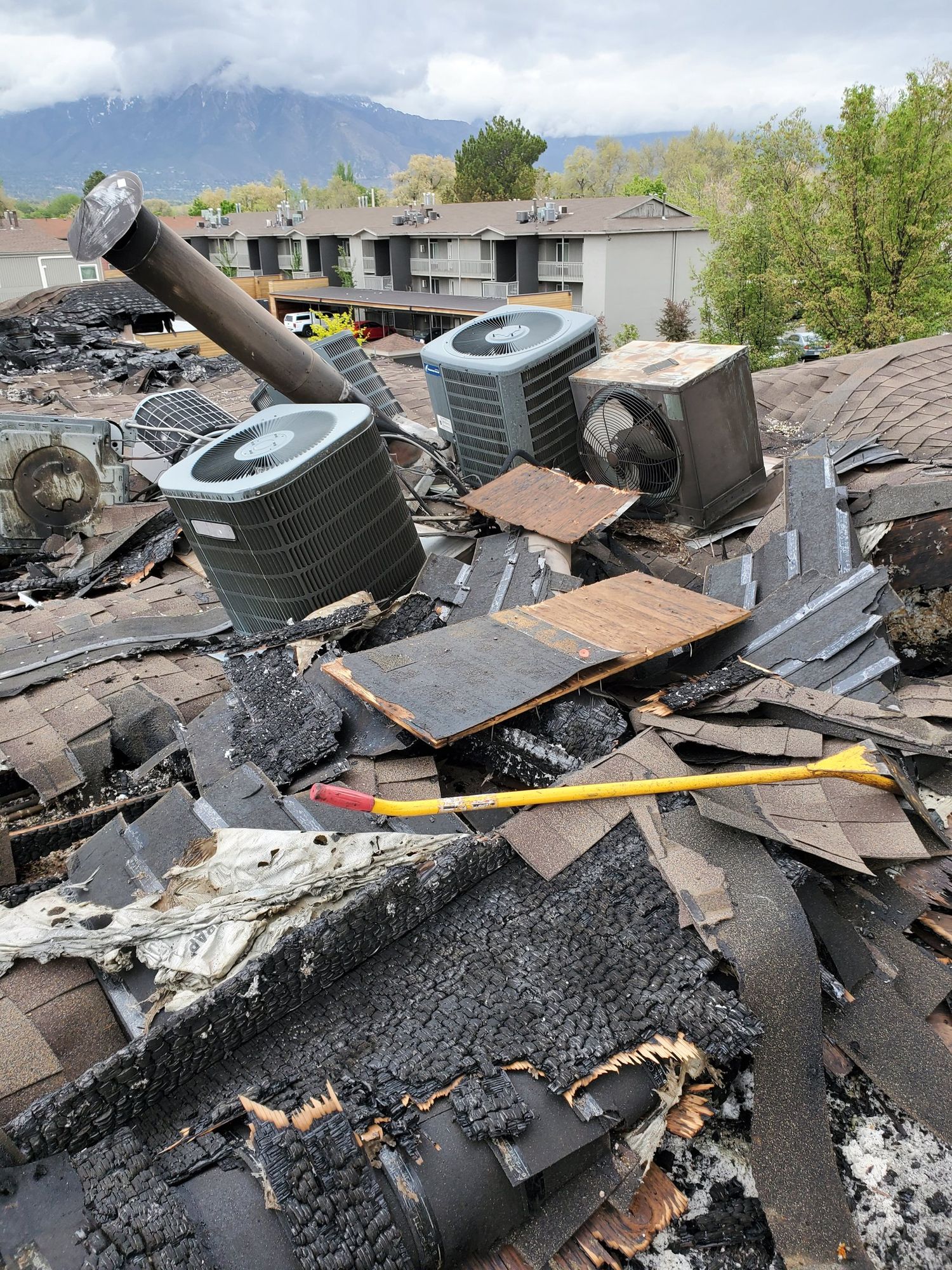
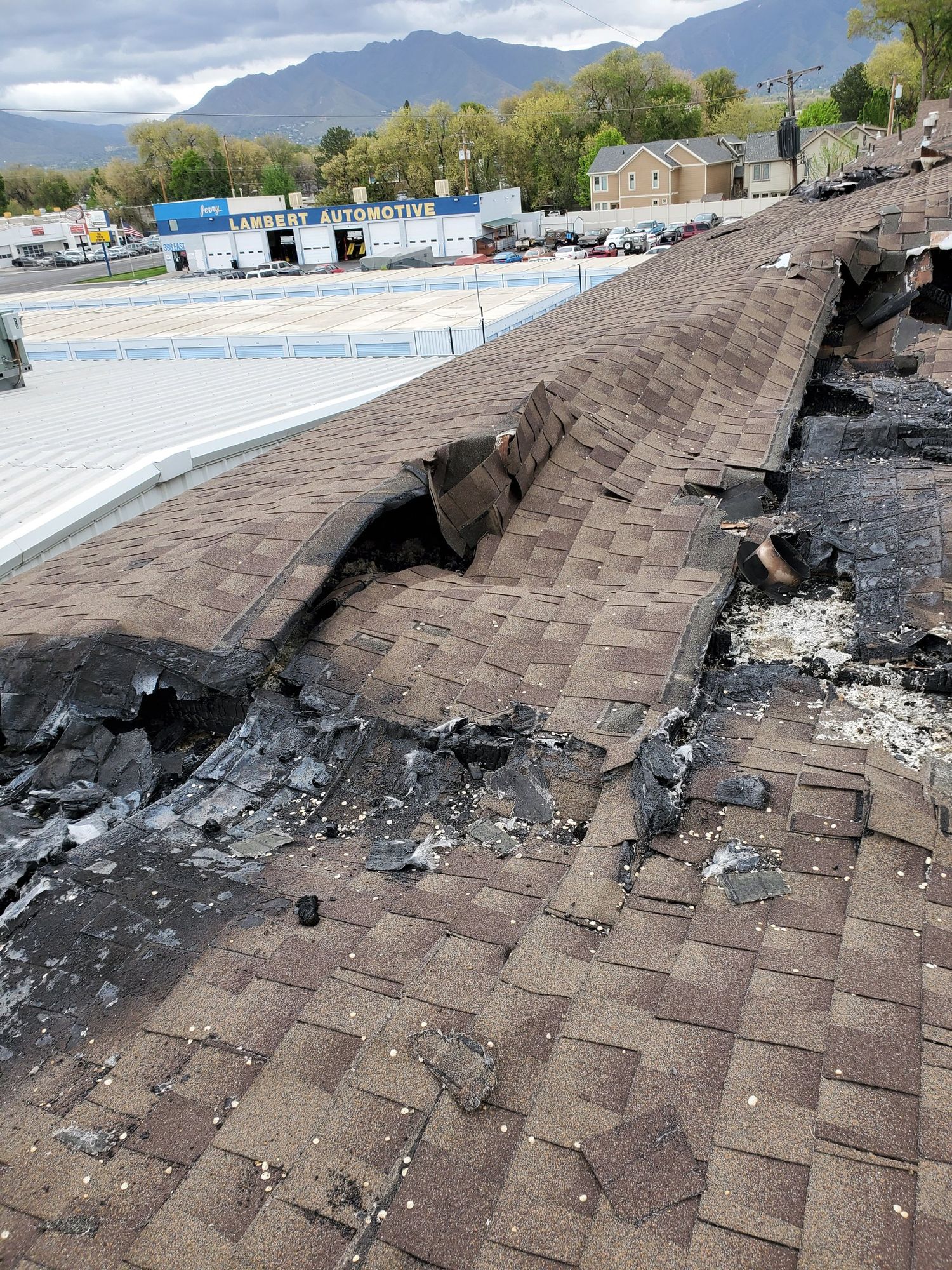
We work Salt Lake City & surrounding counties, 9 counties in all, with 27 years in the trade and the last 8 as Hancock Signature.
How the system goes together
Fasteners rust from the inside out
Screws and nails on a roof within reach of the lake air corrode faster than the same hardware would inland. A plain steel nail head disappears under a shingle and takes years off the roof’s hold without a single visible symptom. Hot-dipped galvanized or stainless where the metal is exposed is a small line item that decides whether the roof reaches its rated life.
Mixed metals make it worse
Aluminum flashing pinned with the wrong screw sets up a reaction that eats the softer metal at every contact point.
We look at the old nails
What came out of the last roof tells you what to put in the new one.
Ridge vent against box vents
A continuous ridge slot pulls air along the entire peak, which is why it outperforms a row of box vents on most houses. Box vents still win in specific situations: a hip roof with almost no ridge to cut, a roof broken into separate attic spaces that do not share air, or a low ridge where a slot would sit under drifted snow all winter.
Never mix the two on one attic
Put both on the same space and the ridge pulls its air from the nearest box vent instead of from the soffit. The attic barely moves and the roof looks correctly vented from the driveway.
What we check
- Granule loss and bruising across the field
- Lifted, creased or missing tabs
- Cracked ridge and hip caps
- Soft decking under the worst of it
How we approach it
Look first
We get on the roof and read what is actually happening before quoting anything.
Say what we find
Photographs and a plain explanation, including when the answer is that you do not need us yet.
Built in sequence
Crews we hire and run, working the right detail in the right order.
Leave it clean
Magnet over the yard, container gone, walked with you.
Snow sliding off steep pitch
Steep roofs shed, which is good for the roof and hard on everything below it. A loaded slope lets go at once and takes gutters, vent caps and the occasional shrub with it. On metal it happens faster because there is nothing to hold it. Homes with steep pitch over a walkway or a doorway get looked at differently than the same roof over an open yard.
Snow retention when it matters
Where a slide is a hazard, cleats or a retention rail spread the load and let it melt off instead of releasing in one sheet.
Microclimate changes street to street
Two homes ten minutes apart can be on completely different roofs in terms of what they endure. Elevation, whether the lot sits in a canyon draw, how much tree cover is overhead, and which direction the main slope faces all change the answer. A roof age that is fine on a shaded north-facing bench home is well past done on an exposed south-facing lot at a higher elevation.
Why we look before we talk
That is the reason we get on a roof before saying anything about it.
What this looks like on a real roof
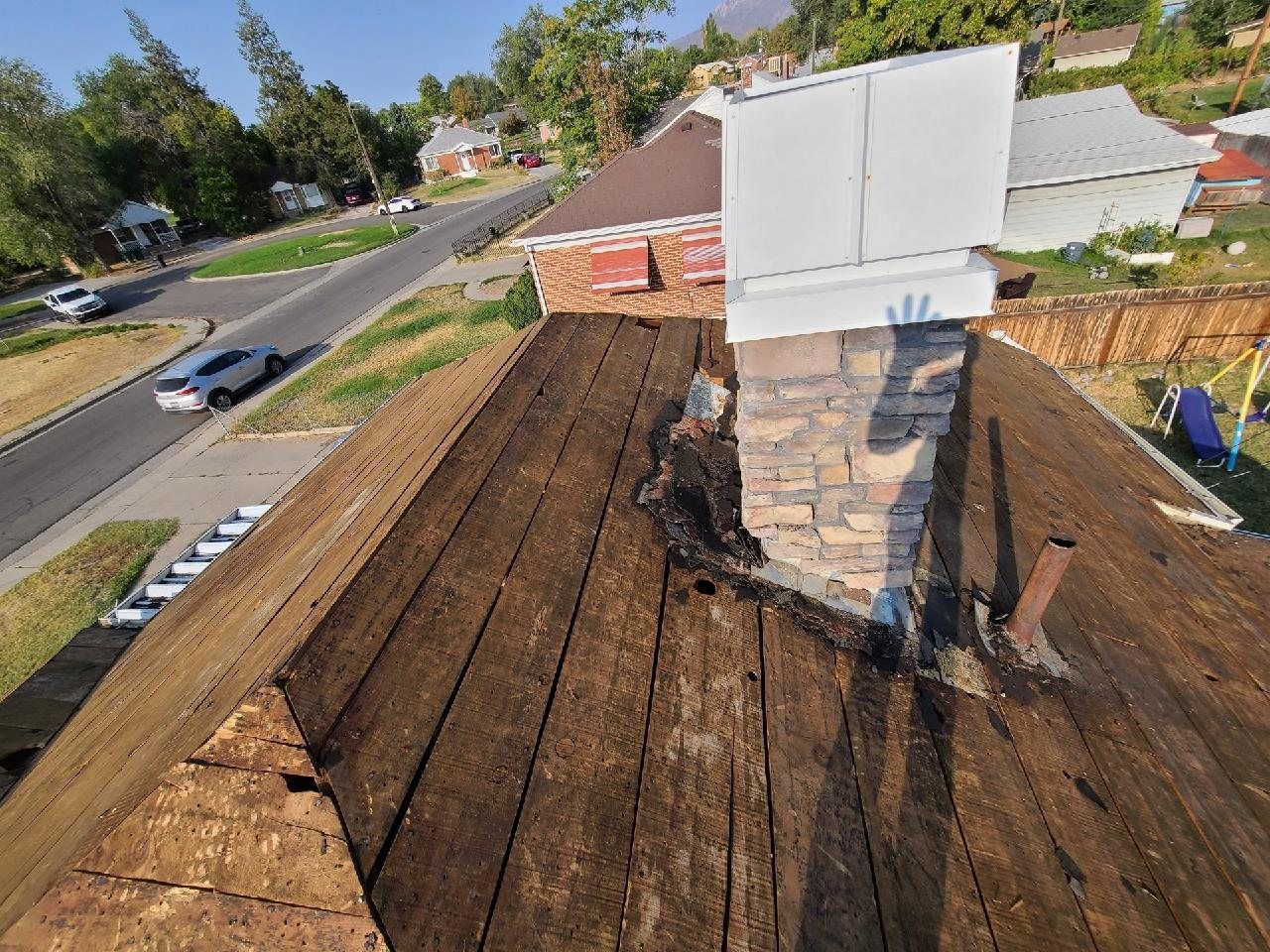
There is a version of insurance roof restoration that gets sold off a clipboard in the driveway and a version that comes off actually reading the roof. The second one costs the same and lasts.
What follows is the part most people never get told: what usually went wrong before we arrived, and what the job looks like when it is done in the right order.
Where roofs go wrong
The shortcut we see most
A claim filed off a ground-level look. Damage gets missed, the scope comes back short, and the homeowner finds out the hard way in the next storm.
What good looks like instead
The whole roof walked and photographed, soft metals checked to date the storm, and the adjuster met on the roof so everyone is reading the same evidence.
Signs worth a look
- Dents in vents, flashing or the gutter apron
- Shingles creased but still in place
- Granule loss concentrated on one slope
- Debris or branch strike marks on the field
What to expect
What to do first
Get the water stopped and get photographs. If something is actively coming in, call and we will make it safe before anything else happens. Documentation of the immediate aftermath is worth having.
How the claim process runs
We document the damage thoroughly, you file, and we work with your insurance from there. On hail-damaged roofs, we work with your insurance to get the roof covered, and the assessment is made from the same evidence we gathered.
Temporary versus permanent
Tarping and emergency sealing buy time and nothing more. Temporary is temporary and we say so. The permanent repair follows once the weather gives us a window.
Related work
Storm covers more than one job, and they are not interchangeable. These are the others in the same family, each on its own page.
Questions we get asked
Not the question you had? Call the shop and ask a person. We would rather talk it through than have you guess from a website.
(801) 382-8898How soon after a storm should I get it looked at?
Soon, while the evidence is fresh and before the next weather makes it worse. Hail in particular shows on soft metals before it shows on the shingles.
Is all storm damage visible from the ground?
No, and that is the problem. Wind damage runs along a line and hail bruising is often invisible until the mat starts to fail. Both need somebody on the roof.
Will my insurance cover it?
On hail-damaged roofs, we work with your insurance to get the roof covered. We document the damage completely so nothing gets missed in the assessment.
Do you handle the insurance side?
On hail-damaged roofs, we work with your insurance to get the roof covered. We document the damage thoroughly with photographs, so the claim reflects what is actually on the roof.
Do you work through the winter?
Yes, with judgment. Shingles need to seal, and in genuine cold that takes longer or needs hand sealing. Emergency work happens whenever it has to. Full replacements get scheduled around the weather rather than forced into it.
How do I know when a roof is getting close?
Granules collecting in the gutters, tabs lifting or curling at the edges, shingles that look bare in patches, and daylight or staining in the attic. Any of those is worth a look.
Talk to Hancock
Ask about insurance roof restoration
Call (801) 382-8898 or send a note. We will look at the roof and tell you straight what it needs.