
Roofing in the Marion area
Replacements, repairs and storm work for Marion homes and buildings.
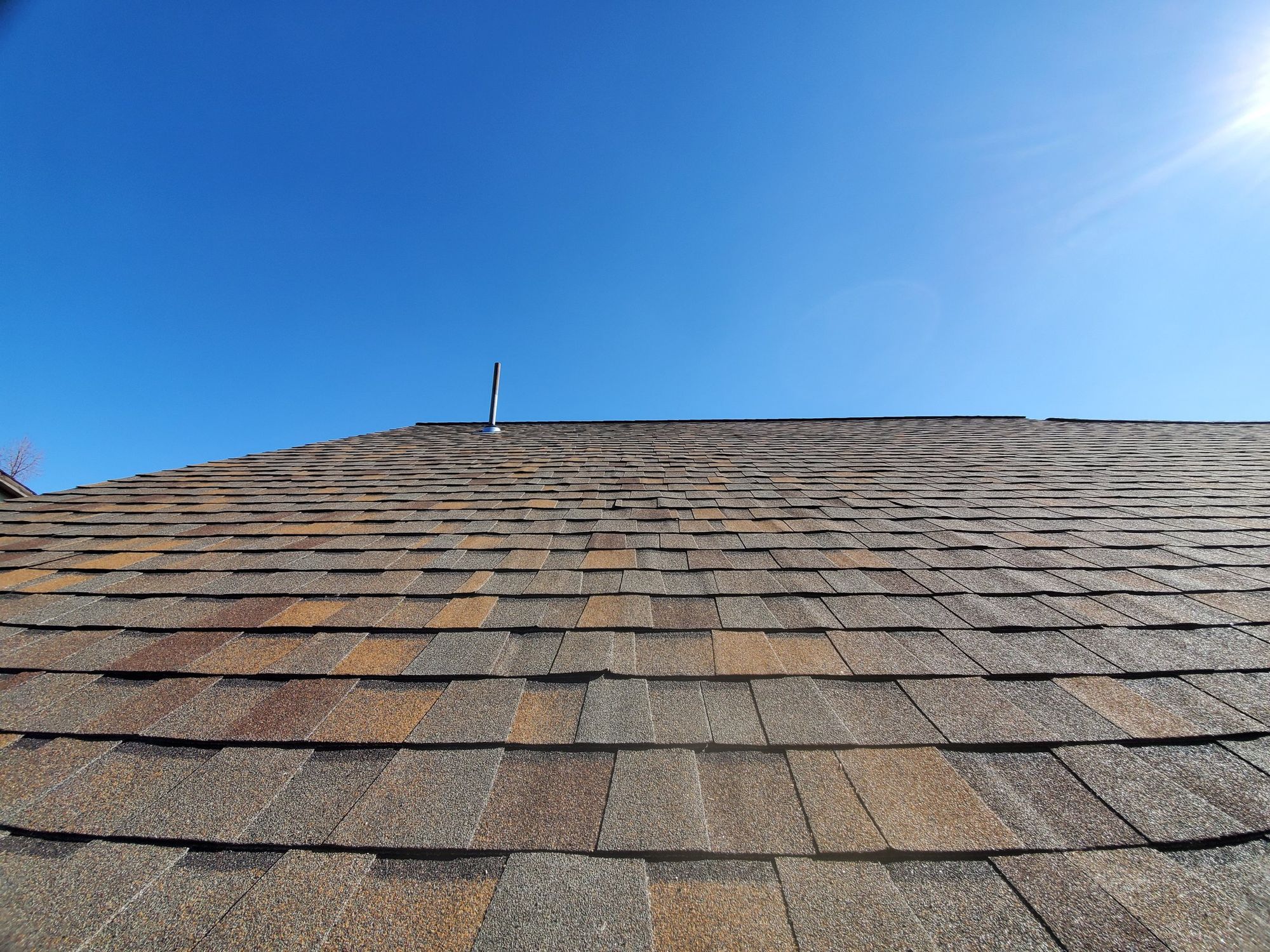
How roofs age around Marion
Housing stock around Marion was mostly built in a handful of waves, which means roofs there tend to reach the end of their first covering within a few years of each other. What looks like one neighbor needing a roof is usually a street reaching the same age.
Marion is part of our regular service area around Salt Lake City, so a roof there gets walked before it gets priced.

The weather a Marion roof works against
Hail does not always look like damage
Hail here can be pea sized and harmless or big enough to bruise a mat. A bruise is a soft spot where the granules are knocked loose and the fiberglass underneath is fractured. You cannot see it from the ground, and from a ladder you often have to feel for it with a thumb.
Soft metal tells the truth
Before we call a roof hit, we check the soft metals: vents, gutter aprons, the fins on a swamp cooler. Dents there are the honest record of what fell.
Thermal shock on metal and flashing
Metal moves. On a sunny winter day a standing seam panel or a piece of valley metal can run a hundred degrees warmer than the air, then drop back after dark. That expansion and contraction happens every clear day of the year here. Panels have to be fastened so they can move, clips have to be right, and a valley has to be detailed to slide instead of being pinned tight at both ends.
Pinned metal tears its own holes
When movement is blocked, the fastener holes elongate and that becomes the leak path.
Genuine alpine conditions. Snow sits for months, ice builds wherever an attic leaks heat, and shedding onto a walkway has to be designed rather than discovered.
What we find on roofs around Marion
Intake and exhaust have to match
Attic ventilation is a balance, and most of the failures we find are unbalanced. Ridge vent with the soffit stuffed full of insulation is exhaust with no intake, so the attic pulls its air from the house instead and drags moisture up with it.
How it shows up
Frost on the sheathing in January, a hot attic in July, curling shingles on the upper courses, and an ice dam at the eave that nobody can explain.
Baffles are cheap
Keeping the insulation off the soffit with a proper chute fixes more roofs than most people would believe.
Dry-in is the real milestone
The moment that decides whether a re-roof goes well is not when the last shingle goes down, it is when the deck is covered, taped at the penetrations and sealed at the edges. From that point the house is weather-tight and everything after it is finish work. A crew that understands this never leaves at the end of a day with bare deck showing.
Ice barrier goes down first
Eaves, valleys and every pipe before any field underlayment. Working from the bottom up means every sheet laps over the one below it the way water expects.
Then the metal, then the field
In that order, every time.
What we do around Marion
Every service is its own page. These are the ones Marion asks for most.
Roofing
Full replacements and new roofs on Marion homes, deck up.
Repairs
Leaks and failed details, which is most of what Marion calls about.
Upkeep
Inspections, cleaning and sealing before a small thing gets expensive.
Shingles
Architectural laminate, the field material on most of this valley.
Metal
Standing seam and corrugated, common on canyon-side snow load.
Tile
Clay and concrete tile, and the flashing work they need.
Commercial
Membrane systems for flat and low-slope buildings around Marion.
Coatings
Restoration coatings when a commercial roof has life left.
Storm
Hail, wind and the insurance paperwork that follows.
Skylights
Installation and the curb-flashing repairs skylights usually need.
Gutters
Gutters, downspouts and fascia, which are part of the roof.
Government
Schools, city, county, state and federal buildings. Every government service is on the government roofing page.
How the job runs
When the weather turns mid-job
Forecasts here are wrong on a regular basis, so the plan assumes it. The plan includes enough underlayment and tarp on site to close up whatever is open, and the call to stop tearing off and start closing up gets made early rather than optimistically. Nobody wins a race against a cell coming over the benches.
What that means for your schedule
A job that was two days becomes three. Every time, we would rather explain a day than explain a wet ceiling.
Working around weather windows
Scheduling roofing here means watching the forecast more than the calendar. We do not open more roof than we can dry in before weather arrives, we do not shingle onto a wet deck, and we will move a start date rather than race a storm. Cold matters too. Shingles need heat to seal their adhesive strips, so late-season work sometimes gets hand-sealed to hold until spring warms them up.
A moved date is not a delay
It is the difference between a roof that was installed right and one that was installed on time.
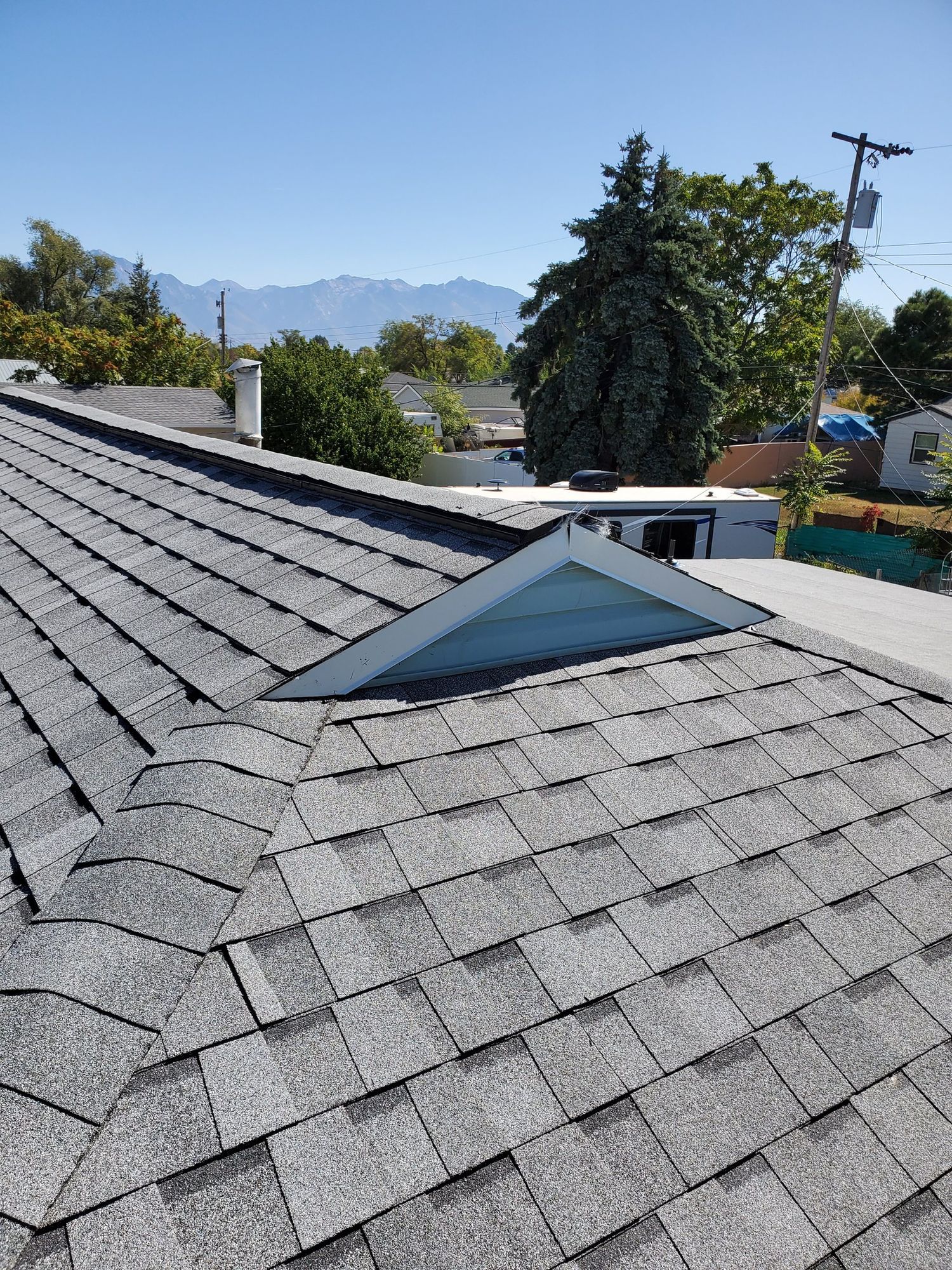
Work from around the valley



Standing behind old work
There are roofs we put on years ago that we still drive past and look at. When one of them needs something, we go. A company that is around long enough to be accountable for its own history behaves differently than one planning to be somebody else’s problem in five years.
Eight winters is the test
Eight years operating under this name is long enough for the early roofs to have been through real weather, which is the only test that counts.
Twenty-seven years before that
The owner’s own time in the trade, kept as a separate number.
We live under these roofs too
Our families are in these same neighborhoods, on the same benches, taking the same wind and the same snow. When we detail an eave a certain way it is because we have seen what the other way does two streets over.
Same weather, same stakes
There is no version of this where we get to install something we would not put on our own house.
It is a small valley
People remember who did their neighbor’s roof.
Questions we get asked
Not the question you had? Call the shop and ask a person. We would rather talk it through than have you guess from a website.
(801) 382-8898Do you actually work in Marion?
Regularly. Marion is ordinary working territory for us, not an outlying job we take when it is quiet.
How fast can you get to Marion after a storm?
We make the roof safe first, then come back and do the repair properly when conditions allow.
Do you handle the insurance side?
On hail-damaged roofs, we work with your insurance to get the roof covered. We document the damage thoroughly with photographs, so the claim reflects what is actually on the roof.
What happens if you find bad decking?
We show you. The decking is only visible during a tear-off, so that is when soft sheathing gets found and replaced. We photograph it rather than just add it to a list.
Do you work through the winter?
Yes, with judgment. Shingles need to seal, and in genuine cold that takes longer or needs hand sealing. Emergency work happens whenever it has to. Full replacements get scheduled around the weather rather than forced into it.
What makes a Utah roof different?
Snow load, ice at the eaves, canyon wind and high-altitude sun, all on the same roof. A crew that learned roofing somewhere mild has to learn it again up here.
Where Marion sits on our map
Our Summit County route covers Marion, so a look at a roof here does not wait on a gap.
Roof work in Marion
Call (801) 382-8898 or send a note, and we will book a time to walk the roof with you.