
Roofing in the Plymouth area
Replacements, repairs and storm work for Plymouth homes and buildings.
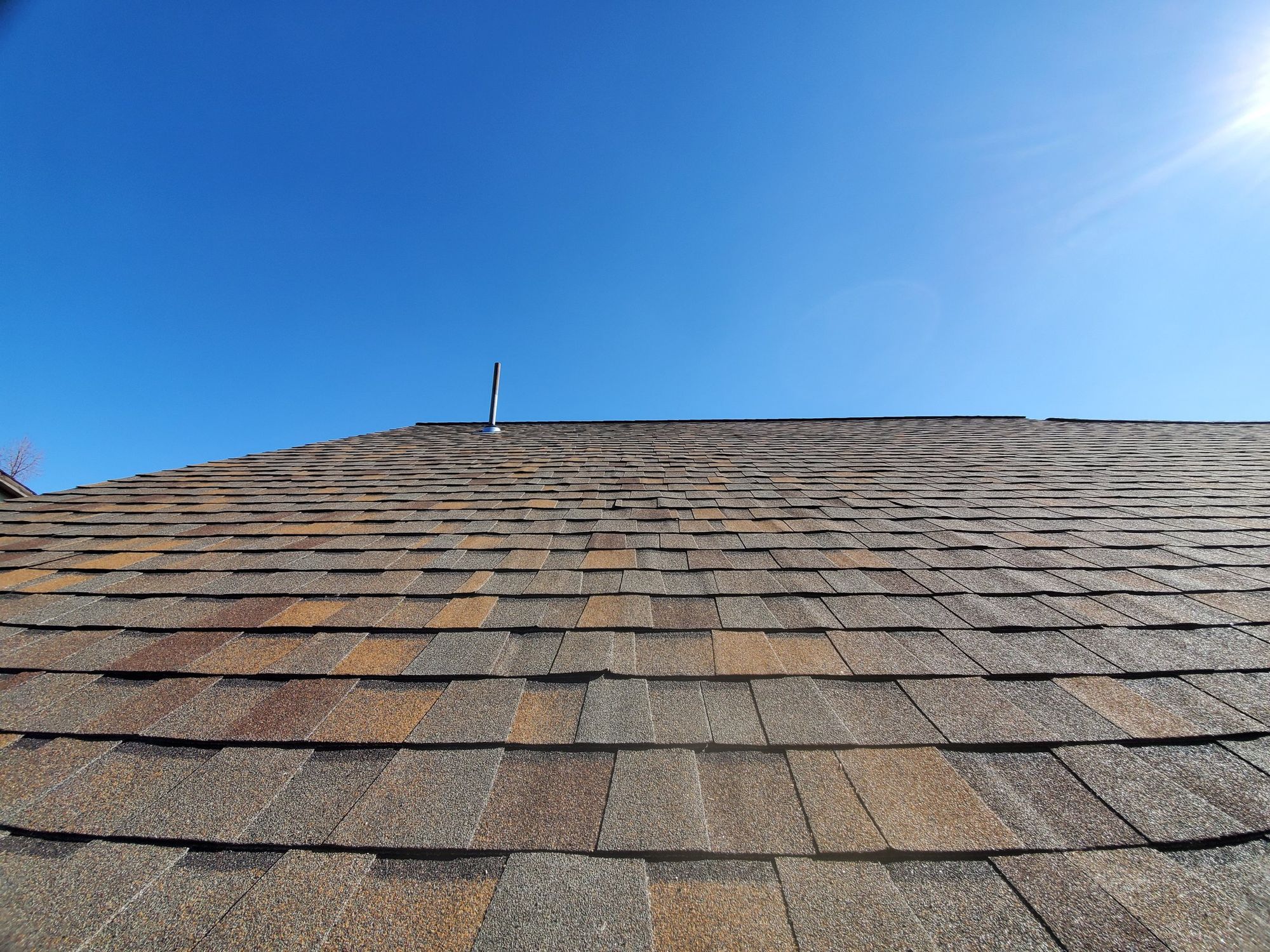
What we see on Plymouth roofs
Wind off the benches gets under a shingle course and lifts along a run. Around Plymouth that shows up as a line of creased tabs rather than one missing shingle, and the creased ones have broken their seal even though they are still sitting where they belong.
A Plymouth roof that opens up in a storm needs a tarp before it needs a sales pitch. We stop the water first, because that is usually the difference between a ceiling and a remodel.

The weather a Plymouth roof works against
Snow load is a real number
A roof up here carries weight. Wet spring snow runs heavier per foot than the dry powder that falls in January, and a roof that shrugged off three feet in February can groan under eighteen inches in April. What matters is how the load moves off, which comes down to pitch, sheathing condition and whether the framing was built for the zone it sits in.
Where the weight collects
Valleys and the low side of a dormer are where snow piles instead of sliding. We look at those first, because that is where decking softens and fasteners start backing out.
Spring wind off the benches
Canyon wind is the thing homeowners here tend to shrug off. It does not arrive as a steady push, it arrives in gusts that lift a shingle tab, break the seal strip, and set it down again looking fine. Three or four of those and the tab is loose, water gets a path, and nobody knows until a ceiling stains.
Rakes and ridges go first
Edges take the uplift. That is why we nail the rake tighter, use a starter course with a factory seal at the eave, and look at ridge caps before anything else after a blow.
Open valley farm country north of the lake, where wind crosses a long fetch with nothing to break it and the housing sits spread out rather than packed in. Fasteners take a beating this close to the water.
What we find on roofs around Plymouth
Fasteners rust from the inside out
Screws and nails on a roof within reach of the lake air corrode faster than the same hardware would inland. A plain steel nail head disappears under a shingle and takes years off the roof’s hold without a single visible symptom. Hot-dipped galvanized or stainless where the metal is exposed is a small line item that decides whether the roof reaches its rated life.
Mixed metals make it worse
Aluminum flashing pinned with the wrong screw sets up a reaction that eats the softer metal at every contact point.
We look at the old nails
What came out of the last roof tells you what to put in the new one.
Six nails in the right line
Every shingle wrapper prints a nailing pattern and a nail line, and that pattern is what the wind rating was earned with. High nailing misses the reinforced strip and leaves the nail head sitting in the exposed area of the shingle below. Four nails where the wrapper asks for six cuts the uplift resistance on the one part of the roof the wind works hardest.
Overdriven is as bad as missing
A gun set too hot cuts through the mat and the shingle is hanging on a hole.
Cheapest detail to get right
And the most common thing done wrong.
What we do around Plymouth
Every service is its own page. These are the ones Plymouth asks for most.
Roofing
Full replacements and new roofs on Plymouth homes, deck up.
Repairs
Leaks and failed details, which is most of what Plymouth calls about.
Upkeep
Inspections, cleaning and sealing before a small thing gets expensive.
Shingles
Architectural laminate, the field material on most of this valley.
Metal
Standing seam and corrugated, common on canyon-side snow load.
Tile
Clay and concrete tile, and the flashing work they need.
Commercial
Membrane systems for flat and low-slope buildings around Plymouth.
Coatings
Restoration coatings when a commercial roof has life left.
Storm
Hail, wind and the insurance paperwork that follows.
Skylights
Installation and the curb-flashing repairs skylights usually need.
Gutters
Gutters, downspouts and fascia, which are part of the roof.
Government
Schools, city, county, state and federal buildings. Every government service is on the government roofing page.
How the job runs
Tear-off versus going over
A second layer over an existing roof is legal in some situations and it is almost never the right answer up here. You cannot see the decking, you cannot correct the flashing, the added weight matters under snow load, and the new shingles run hotter sitting on old asphalt. The only time we would talk about it is a specific situation with sound decking and a customer who understands the tradeoff, and even then a second layer does not carry our workmanship warranty.
Tear-off shows you the truth
Once it is open, the rot, the old repairs and the decking condition are all right there.
Repair or replace, honestly
Not every leak is a new roof. A cracked pipe boot, a lifted flashing, a handful of wind-damaged tabs on one slope: those are repairs, and we do them. The line gets crossed when the mat is brittle across the whole roof, when granule loss is general rather than local, or when the repair count keeps climbing.
How we tell you
We say which one it is and why, and if it is a repair we do not walk it up into a replacement.

Work from around the valley

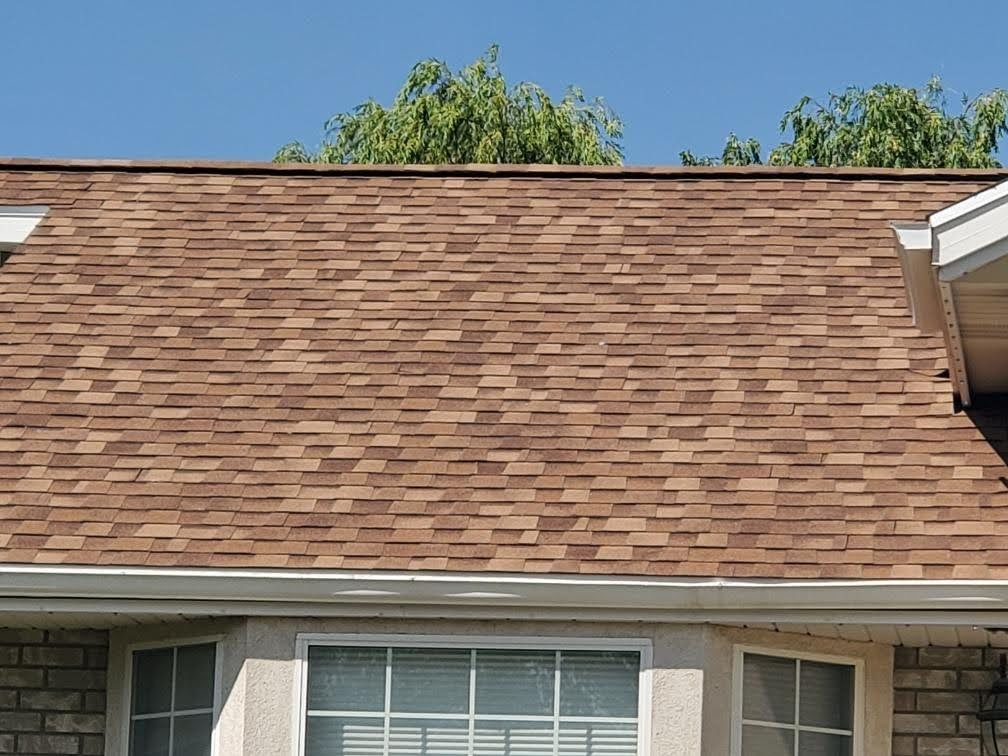

We live under these roofs too
Our families are in these same neighborhoods, on the same benches, taking the same wind and the same snow. When we detail an eave a certain way it is because we have seen what the other way does two streets over.
Same weather, same stakes
There is no version of this where we get to install something we would not put on our own house.
It is a small valley
People remember who did their neighbor’s roof.
Explaining before deciding
We would rather spend twenty minutes on a driveway explaining what a valley does than have you approve something you do not understand. A homeowner who knows why the ice barrier runs four feet past the wall makes better decisions about their own house, including sometimes deciding against what we suggested.
Take the information elsewhere
If you want another opinion, get one. A roof is a large thing to buy on one conversation and we are comfortable being compared.
No expiring pricing
The number holds while you think.
Questions we get asked
Not the question you had? Call the shop and ask a person. We would rather talk it through than have you guess from a website.
(801) 382-8898Do you actually work in Plymouth?
Yes, and often. Plymouth is part of our regular service area, so it is ground we know well.
How fast can you get to Plymouth after a storm?
We stop the water first. Temporary work is genuinely temporary and we say so, but it buys the time to do the actual repair right.
How do I know when a roof is getting close?
Granules collecting in the gutters, tabs lifting or curling at the edges, shingles that look bare in patches, and daylight or staining in the attic. Any of those is worth a look.
Will you tell me if I do not need a new roof?
Yes. Plenty of what we look at turns out to be a repair, and we say so. A roof with years left in it gets left alone, and you get the photographs either way.
How long does a roof replacement take?
Most houses in this valley are a one to two day job once the crew is on site. Steeper pitches, multiple layers to strip and complicated roofs with a lot of valleys take longer, and we tell you which yours is before we start.
Do you handle the insurance side?
On hail-damaged roofs, we work with your insurance to get the roof covered. We document the damage thoroughly with photographs, so the claim reflects what is actually on the roof.
Where Plymouth sits on our map
Our Box Elder County route covers Plymouth, so a look at a roof here does not wait on a gap.
Roof work in Plymouth
Call (801) 382-8898. Photographs of what we find come back to you either way.