

Service areas
Roofing across Wasatch County
Roofing across Wasatch County, from Heber City, Midway.
Working across Wasatch County
Wasatch County covers enough ground that a roof on one side of it faces a different year from a roof on the other. Exposure, elevation and the age of the housing all shift as you move across the county, and so does what a roof needs to survive here.
We cover 2 communities in Wasatch County as part of the ground we cover around Salt Lake City. Being close enough to get there quickly is most of what matters after a storm, and being on roofs across the county regularly is what makes an honest read of a roof possible rather than a guess from the driveway.

What Wasatch County does to a roof
Sun at this elevation
The thing that quietly ages a roof around here is not a storm. It is a mile of thin air between the shingle and the sun, with more clear days than most of the country gets. Ultraviolet breaks down the asphalt binder, the mat loses flexibility, granules let go, and a south or west slope wears out years ahead of the north side of the same house.
Uneven wear is normal
On plenty of homes up here the south face is done and the north face has life left. That is not a defect, it is exposure, and it is worth knowing before anybody talks about replacing everything.
Elevation changes the whole calendar
A roof at the top of a canyon and a roof on the valley floor are on different schedules. Up high the snow arrives in October and is still there in May, the freeze cycles are deeper, and the ultraviolet load in the thin air is harsher year round. Down low there are more melt-and-refreeze swings and fewer feet of standing load.
Same materials, different details
The ice barrier runs further, the ventilation gets sized up, and the fastening schedule tightens as the elevation goes up.
The Heber valley gets mountain winter with a long cold season. Ice barrier at the eaves is a baseline here, not an upgrade.
What we find across the county
Six nails in the right line
Every shingle wrapper prints a nailing pattern and a nail line, and that pattern is what the wind rating was earned with. High nailing misses the reinforced strip and leaves the nail head sitting in the exposed area of the shingle below. Four nails where the wrapper asks for six cuts the uplift resistance on the one part of the roof the wind works hardest.
Overdriven is as bad as missing
A gun set too hot cuts through the mat and the shingle is hanging on a hole.
Cheapest detail to get right
And the most common thing done wrong.
Architectural over three-tab
Most homes here that are replacing a roof move to architectural shingles and stay there. The laminated construction is thicker, carries a higher wind rating out of the wrapper, and does not show every wave in old decking the way a three-tab does. Three-tab still has a place on a rental, an outbuilding or a repair that has to match what is already up.
Wind rating is a nailing question
A shingle only earns its rating if it is fastened the way the wrapper says. Six nails in the nail line, not four in the wrong spot.
Communities we cover in Wasatch County
Every community below has its own page. 2 of them across Wasatch County.
Wasatch County
How we work across the county
How long a bead of sealant lasts
Roof sealant is a consumable. In this climate, with the ultraviolet load and the temperature swing, a good product stays flexible for a handful of years and then shrinks, crazes and pulls away from one side of the joint. That is normal and expected behavior for the material.
Design so sealant is a backup
Every joint that matters should shed water by its shape, with the sealant there as a second line. Where sealant is the only thing standing between water and the deck, somebody has signed you up for a maintenance visit every few years.
Ask what is holding a repair together
If the answer is caulk, ask again.
Dry-in is the real milestone
The moment that decides whether a re-roof goes well is not when the last shingle goes down, it is when the deck is covered, taped at the penetrations and sealed at the edges. From that point the house is weather-tight and everything after it is finish work. A crew that understands this never leaves at the end of a day with bare deck showing.
Ice barrier goes down first
Eaves, valleys and every pipe before any field underlayment. Working from the bottom up means every sheet laps over the one below it the way water expects.
Then the metal, then the field
In that order, every time.
What we check on every roof
- Field condition and granule loss
- Valleys, ridges and every transition
- Penetrations and their flashing
- Gutter and fascia condition
What we do in Wasatch County
Every service below is its own page. Whichever one Wasatch County turns out to need, the roof gets walked before anything is quoted.
Roofing
Full replacements and new roofs on Wasatch County homes, deck up.
Repairs
Leaks and failed details, which is most of what Wasatch County calls about.
Upkeep
Inspections, cleaning and sealing before a small thing gets expensive.
Shingles
Architectural laminate, the field material on most of this valley.
Metal
Standing seam and corrugated, common on canyon-side snow load.
Tile
Clay and concrete tile, and the flashing work they need.
Commercial
Membrane systems for flat and low-slope buildings around Wasatch County.
Coatings
Restoration coatings when a commercial roof has life left.
Storm
Hail, wind and the insurance paperwork that follows.
Skylights
Installation and the curb-flashing repairs skylights usually need.
Gutters
Gutters, downspouts and fascia, which are part of the roof.
Government
Schools, city, county, state and federal buildings. Every government service is on the government roofing page.
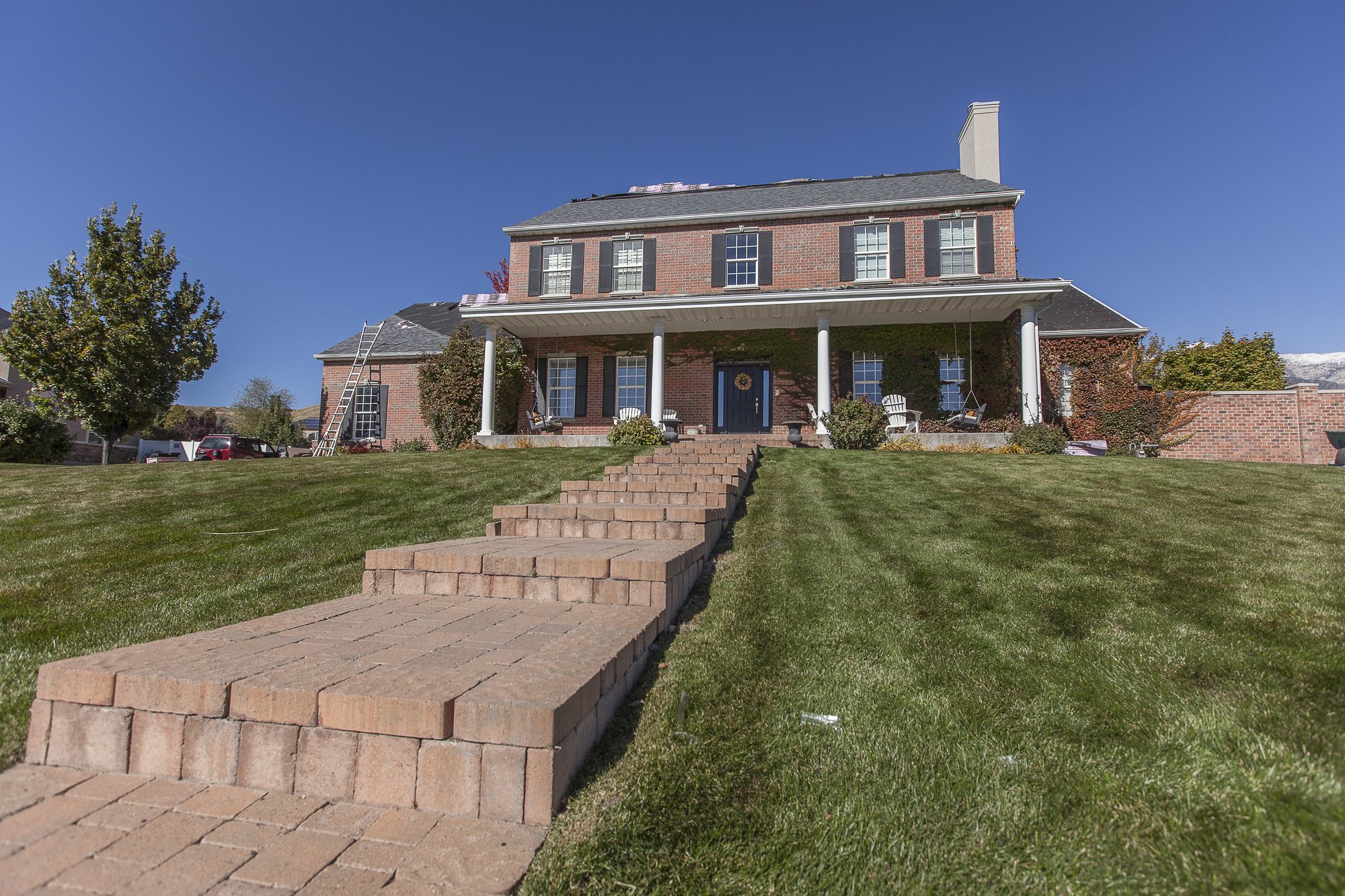
Work from around the county


Questions we get asked
Not the question you had? Call the shop and ask a person. We would rather talk it through than have you guess from a website.
(801) 382-8898Do you actually work in Wasatch County?
We do. Wasatch County falls well inside the radius we run, and being there often is what lets us tell you how the housing around it was built.
How fast can you get to Wasatch County after a storm?
Storm calls jump the queue. We get there, stop what is coming in, and schedule the real fix rather than rushing a permanent repair in bad weather.
What makes a Utah roof different?
Snow load, ice at the eaves, canyon wind and high-altitude sun, all on the same roof. A crew that learned roofing somewhere mild has to learn it again up here.
How do I know when a roof is getting close?
Granules collecting in the gutters, tabs lifting or curling at the edges, shingles that look bare in patches, and daylight or staining in the attic. Any of those is worth a look.
Will you tell me if I do not need a new roof?
Yes. Plenty of what we look at turns out to be a repair, and we say so. A roof with years left in it gets left alone, and you get the photographs either way.
Where Wasatch County sits on our map
Crews reach Wasatch County on the normal week, not as a special run.
Talk to Hancock
Roof work in Wasatch County
Call (801) 382-8898 and we will get on the roof.