
Roofing across Utah County
Roofing across Utah County, from Lehi, American Fork, Orem, Provo and more.
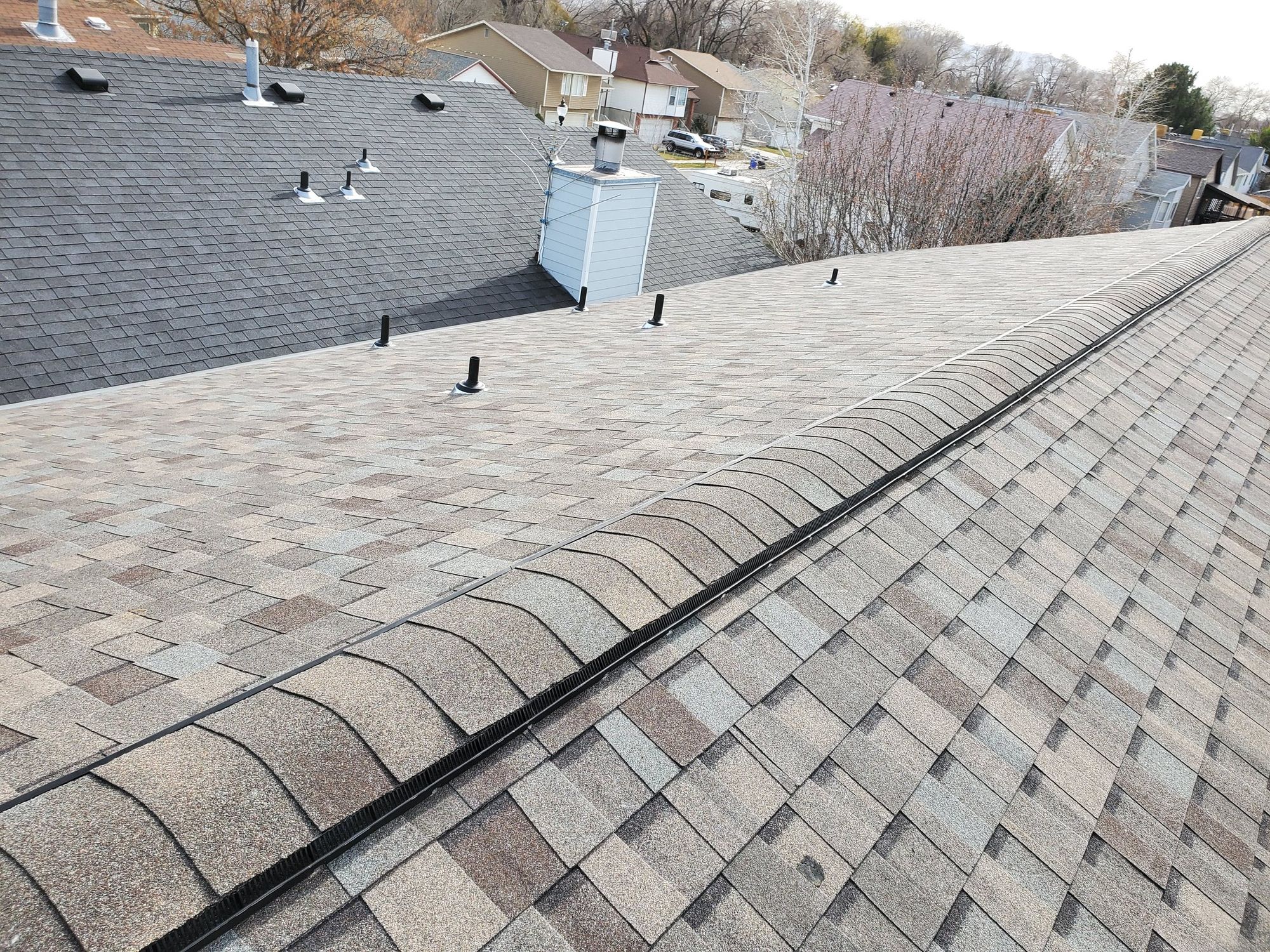
Working across Utah County
Utah County covers enough ground that a roof on one side of it faces a different year from a roof on the other. Exposure, elevation and the age of the housing all shift as you move across the county, and so does what a roof needs to survive here.
We cover 16 communities in Utah County as part of the ground we cover around Salt Lake City. Being close enough to get there quickly is most of what matters after a storm, and being on roofs across the county regularly is what makes an honest read of a roof possible rather than a guess from the driveway.

What Utah County does to a roof
Wind, water and dust, in that order
Ask what actually kills roofs in this part of the state and the answer runs wind first, then water that could not get away, then the grit that the wind delivered. Each one makes the next worse. A wind-broken seal lets water in. Water carries grit into a lap. Grit holds moisture against the mat. None of it is dramatic and all of it compounds.
Why we start at the edges
Perimeters and penetrations are where all three arrive together, so that is where an honest look begins.
Thermal shock on metal and flashing
Metal moves. On a sunny winter day a standing seam panel or a piece of valley metal can run a hundred degrees warmer than the air, then drop back after dark. That expansion and contraction happens every clear day of the year here. Panels have to be fastened so they can move, clips have to be right, and a valley has to be detailed to slide instead of being pinned tight at both ends.
Pinned metal tears its own holes
When movement is blocked, the fastener holes elongate and that becomes the leak path.
Utah County spans the lake plain and the mountain benches, and the growth of the last decade means whole neighbourhoods of roofs are aging out at the same time.
What we find across the county
Flashing is where roofs leak
Very few roofs fail in the field of the shingles. They fail at the transitions, at a wall, a chimney, a skylight curb, a pipe boot, a valley. Good flashing is metal shaped so water has nowhere to go but out. Bad flashing is sealant spread over a gap and a hope that nobody looks for four years. When we pull a roof apart, the flashing is what tells us whether the last crew was in a hurry.
Step flashing is one piece per course
There is no shortcut version of that detail that works.
Decking is the part nobody plans for
The sheathing under the roof only gets looked at once every couple of decades, which is when the old roof comes off. Older homes up here might have skip sheathing, plank decking with gaps, or plywood that has been soft over a leak for years. It gets replaced where it is bad, because fasteners do not hold in punky wood and a soft deck telegraphs every wave through a new roof.
It is measured, not guessed
Sheet count gets documented once the roof is open, before anything goes back down.
Communities we cover in Utah County
Every community below has its own page. 16 of them across Utah County.
Utah County
How we work across the county
Dry-in is the real milestone
The moment that decides whether a re-roof goes well is not when the last shingle goes down, it is when the deck is covered, taped at the penetrations and sealed at the edges. From that point the house is weather-tight and everything after it is finish work. A crew that understands this never leaves at the end of a day with bare deck showing.
Ice barrier goes down first
Eaves, valleys and every pipe before any field underlayment. Working from the bottom up means every sheet laps over the one below it the way water expects.
Then the metal, then the field
In that order, every time.
Fasteners rust from the inside out
Screws and nails on a roof within reach of the lake air corrode faster than the same hardware would inland. A plain steel nail head disappears under a shingle and takes years off the roof’s hold without a single visible symptom. Hot-dipped galvanized or stainless where the metal is exposed is a small line item that decides whether the roof reaches its rated life.
Mixed metals make it worse
Aluminum flashing pinned with the wrong screw sets up a reaction that eats the softer metal at every contact point.
We look at the old nails
What came out of the last roof tells you what to put in the new one.
What we check on every roof
- Field condition and granule loss
- Valleys, ridges and every transition
- Penetrations and their flashing
- Gutter and fascia condition
What we do in Utah County
Every service below is its own page. Whichever one Utah County turns out to need, the roof gets walked before anything is quoted.
Roofing
Full replacements and new roofs on Utah County homes, deck up.
Repairs
Leaks and failed details, which is most of what Utah County calls about.
Upkeep
Inspections, cleaning and sealing before a small thing gets expensive.
Shingles
Architectural laminate, the field material on most of this valley.
Metal
Standing seam and corrugated, common on canyon-side snow load.
Tile
Clay and concrete tile, and the flashing work they need.
Commercial
Membrane systems for flat and low-slope buildings around Utah County.
Coatings
Restoration coatings when a commercial roof has life left.
Storm
Hail, wind and the insurance paperwork that follows.
Skylights
Installation and the curb-flashing repairs skylights usually need.
Gutters
Gutters, downspouts and fascia, which are part of the roof.
Government
Schools, city, county, state and federal buildings. Every government service is on the government roofing page.
Work from around the county

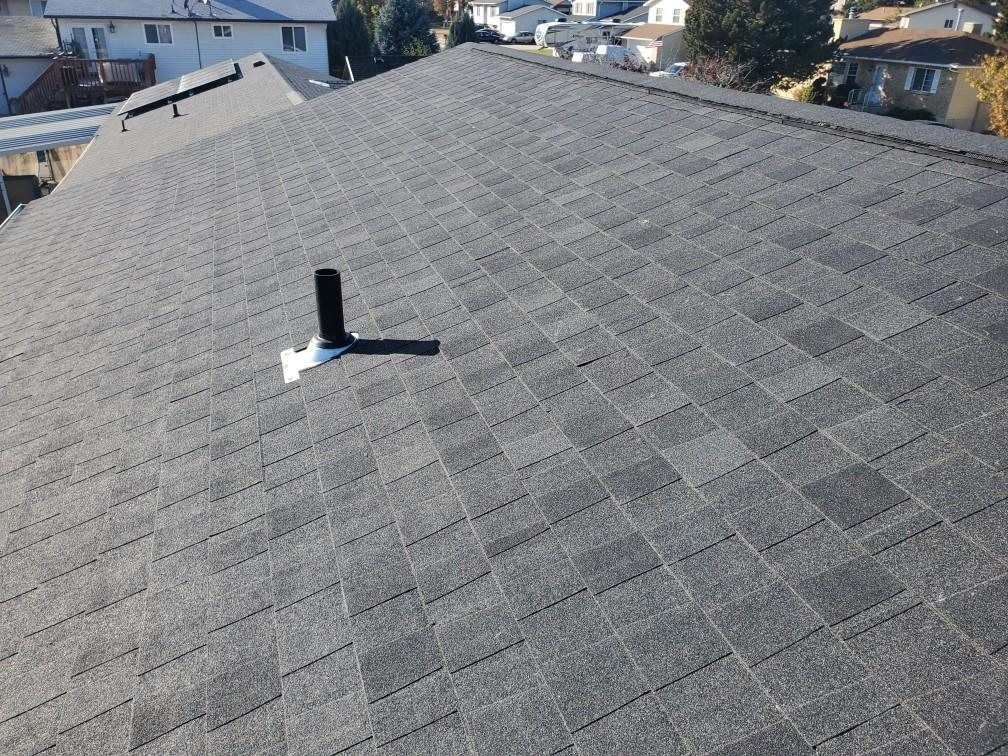

Questions we get asked
Not the question you had? Call the shop and ask a person. We would rather talk it through than have you guess from a website.
(801) 382-8898Do you actually work in Utah County?
Yes. Utah County sits inside the ground we cover around Salt Lake City, and the crew is there most weeks rather than once a season.
How fast can you get to Utah County after a storm?
We make the roof safe first, then come back and do the repair properly when conditions allow.
How long does a roof replacement take?
Most houses in this valley are a one to two day job once the crew is on site. Steeper pitches, multiple layers to strip and complicated roofs with a lot of valleys take longer, and we tell you which yours is before we start.
Do you handle the insurance side?
On hail-damaged roofs, we work with your insurance to get the roof covered. We document the damage thoroughly with photographs, so the claim reflects what is actually on the roof.
What happens if you find bad decking?
We show you. The decking is only visible during a tear-off, so that is when soft sheathing gets found and replaced. We photograph it rather than just add it to a list.
Where Utah County sits on our map
Crews reach Utah County on the normal week, not as a special run.
Roof work in Utah County
Call (801) 382-8898 and we will get on the roof.