
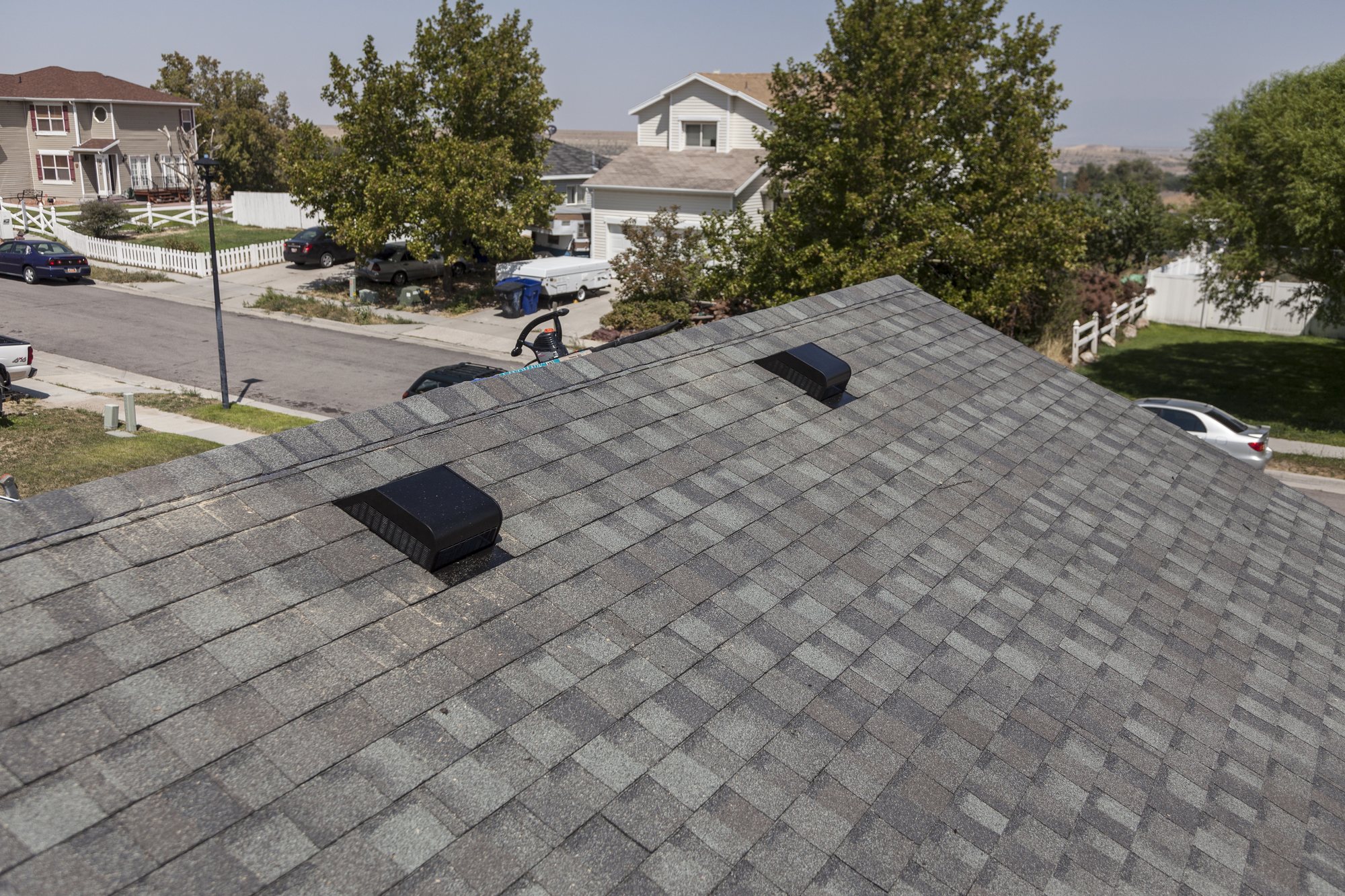
Summit County, Utah
Roofing in the Francis area
Roof work around Francis by a second-generation crew that knows open high valley with long winters.
The year a Francis roof works through
A slow leak around Francis rarely announces itself. It wets sheathing, dries, wets it again, and does that for two or three seasons until the decking has gone soft over an area far larger than the stain downstairs suggests.
We have worked enough of Summit County to know which builders put up which subdivisions and where they cut the same corner twice. That is worth more on a roof than any brochure.

The weather a Francis roof works against
Rain driven sideways into a lap
Shingles are built to shed water running downhill. A thirty mile an hour gust with rain in it does not run downhill, it runs across and up. That is the one condition where a lap that has worked for fifteen years lets water through, and it is the reason a leak can appear in a specific storm and then never again.
Chasing a wind-only leak
You cannot find it on a dry day by looking. You find it by knowing which wall faces the weather and checking every horizontal joint on that face.
A slide onto a walkway
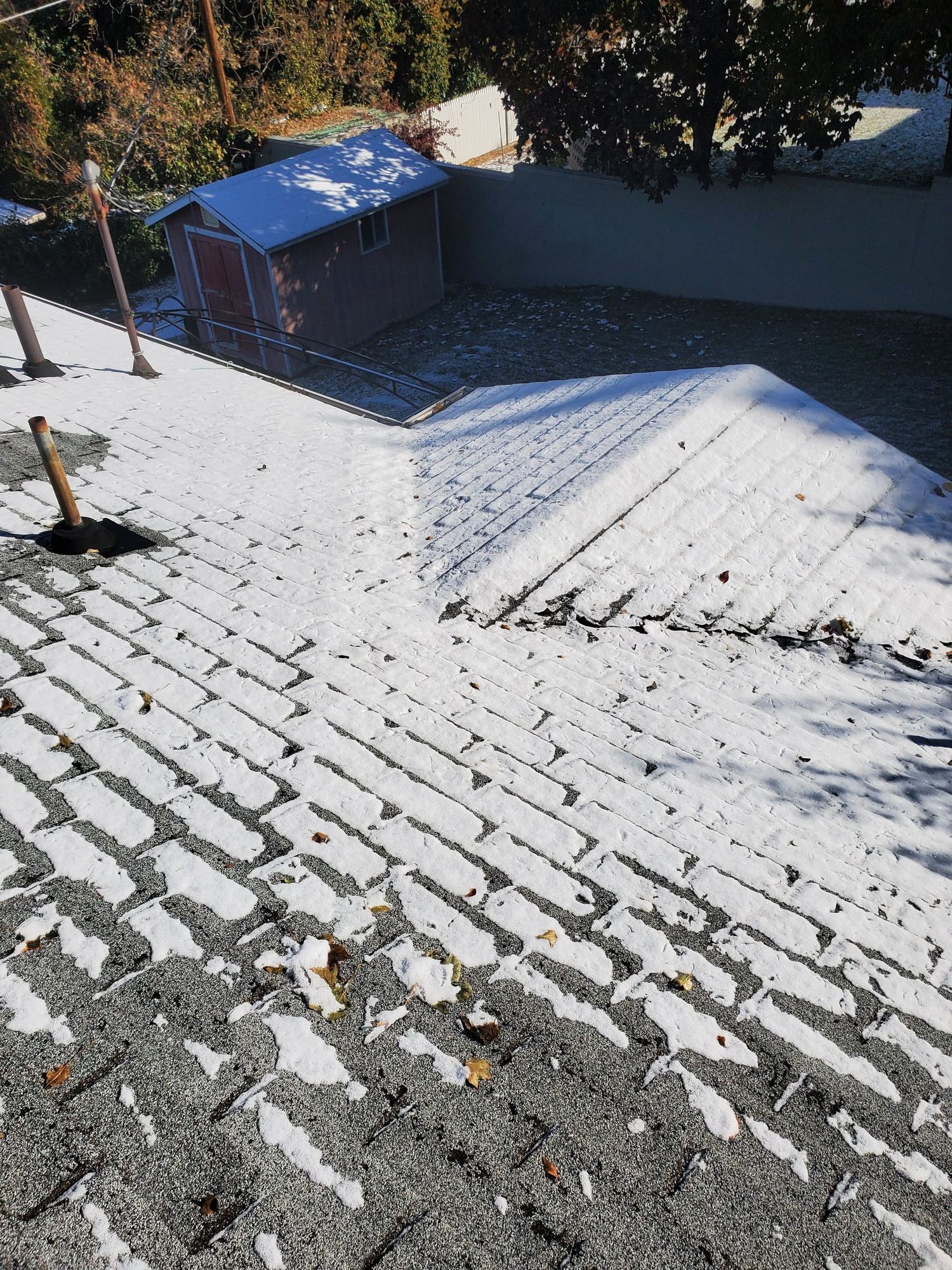
A loaded slope above a front door or a side path is a safety matter before it is a roofing one. Snow releases in one piece, and a hundred pounds landing on a step is how people get hurt. It also tears at the gutter on the way past and bends the hangers out of the fascia.
Fixing it means changing the geometry
Retention hardware, or a small roof over the entry to break the fall, or moving the path. Something has to change, because the slope will keep doing what slopes do.
Genuine alpine conditions. Snow sits for months, ice builds wherever an attic leaks heat, and shedding onto a walkway has to be designed rather than discovered.
What we find on roofs around Francis
What underlayment actually does
Shingles shed water. Underlayment is what handles the water that gets past them, and something always gets past them. Synthetic underlayment has largely replaced felt because it does not wrinkle when it gets damp, does not tear when the wind catches it during installation, and keeps its footing when a crew is working a steep slope.
Felt still shows up
On small repairs and on matching an existing older assembly it is fine. On a full replacement up here there is no reason to go back to it.
Dry-in is the real milestone
The moment that decides whether a re-roof goes well is not when the last shingle goes down, it is when the deck is covered, taped at the penetrations and sealed at the edges. From that point the house is weather-tight and everything after it is finish work. A crew that understands this never leaves at the end of a day with bare deck showing.
Ice barrier goes down first
Eaves, valleys and every pipe before any field underlayment. Working from the bottom up means every sheet laps over the one below it the way water expects.
Then the metal, then the field
In that order, every time.
Francis is part of our Summit County work. 27 years in the trade, and a full replacement carries our 10-year workmanship warranty.
What we do around Francis
Every service is its own page. These are the ones Francis asks for most.
Roofing
Full replacements and new roofs on Francis homes, deck up.
Repairs
Leaks and failed details, which is most of what Francis calls about.
Upkeep
Inspections, cleaning and sealing before a small thing gets expensive.
Shingles
Architectural laminate, the field material on most of this valley.
Metal
Standing seam and corrugated, common on canyon-side snow load.
Tile
Clay and concrete tile, and the flashing work they need.
Commercial
Membrane systems for flat and low-slope buildings around Francis.
Coatings
Restoration coatings when a commercial roof has life left.
Storm
Hail, wind and the insurance paperwork that follows.
Skylights
Installation and the curb-flashing repairs skylights usually need.
Gutters
Gutters, downspouts and fascia, which are part of the roof.
Government
Schools, city, county, state and federal buildings. Every government service is on the government roofing page.
How the job runs
Waste, salvage and what gets hauled
A tear-off generates a surprising volume, and a fair amount of it does not have to go in a landfill. Asphalt shingles can often go to a recycler, sound tile gets set aside for salvage, and scrap metal leaves separately. The rest goes out in the trailer the same day the work ends.
Leftover material is yours to keep
If you want a bundle in the garage for a future repair, say so before the trailer leaves. Matching a color in six years is the hard part, and a few spare shingles solve it.
The yard gets walked at the end
Twice, in two directions.
The final walk
When the roof is done, we walk it together. Not a handshake at the truck, an actual look at the ridge line, the valleys, the edges, the penetrations and the ground around the house. If something looks off to you, we would much rather hear it standing there than in a phone call three weeks later.
Paperwork in your hands
What was replaced, how much decking, what materials went on, and where the leftover shingles ended up if you kept a bundle for future repairs.

Roofs around Francis
Work from around the valley


What the name costs us
When a company is called by a family name there is no distance between the work and the people. A bad roof on a street where our kids go to school is not a line item, it is a conversation at a ball game. That is a real constraint and it is the most useful thing about a shop this size.
Down to earth, and serious about it
Friendly in the driveway, particular on the roof. The two have never been in conflict here.
How a callback gets handled
If you call us about a roof we replaced, we come look. There is no screening call to decide whether it is our fault first. We would rather drive out and find that a gutter is clogged than argue on the phone about whether it could possibly be the flashing we installed.
Getting it wrong happens
People install roofs and people make mistakes. What separates shops is what happens in the week after somebody finds one.
We come back
A full replacement carries our 10-year workmanship warranty.
Questions we get asked
Not the question you had? Call the shop and ask a person. We would rather talk it through than have you guess from a website.
(801) 382-8898Do you actually work in Francis?
Yes, and often. Francis is part of our regular service area, so it is ground we know well.
How fast can you get to Francis after a storm?
We stop the water first. Temporary work is genuinely temporary and we say so, but it buys the time to do the actual repair right.
How do I know when a roof is getting close?
Granules collecting in the gutters, tabs lifting or curling at the edges, shingles that look bare in patches, and daylight or staining in the attic. Any of those is worth a look.
Will you tell me if I do not need a new roof?
Yes. Plenty of what we look at turns out to be a repair, and we say so. A roof with years left in it gets left alone, and you get the photographs either way.
How long does a roof replacement take?
Most houses in this valley are a one to two day job once the crew is on site. Steeper pitches, multiple layers to strip and complicated roofs with a lot of valleys take longer, and we tell you which yours is before we start.
Do you handle the insurance side?
On hail-damaged roofs, we work with your insurance to get the roof covered. We document the damage thoroughly with photographs, so the claim reflects what is actually on the roof.
Where Francis sits on our map
Summit County work, Francis included, is a normal week for this crew rather than a trip.
Talk to Hancock
Roof work in Francis
Call (801) 382-8898 or send a note, and we will book a time to walk the roof with you.