
Salt Lake City & surrounding counties
Attic air that moves the way it should
Most ventilation trouble starts low on the roof, at the soffits where fresh air is meant to come in. We check there before anybody talks about adding vents up top.
An attic should feel like outside
A roof deck sits between two climates. The house below is heated and the sky above is not, and the attic in between is supposed to stay close to the outdoor temperature so snow on the roof waits for the sun to melt it. Moving air does that job. It comes in low at the soffits, rises along the underside of the deck and leaves near the ridge.
When that flow stalls, the attic holds whatever the house gives it. In a Utah winter that means warm, damp air meeting cold wood. Our main roof ventilation page explains the balance between intake and exhaust. This page is about the houses we work on in North Salt Lake, a short drive north of our Salt Lake City shop.
What we check from the attic hatch
Nail tips
On a cold morning, frost on the points of the roofing nails poking through the deck means moist house air is reaching the underside of the roof and freezing there.
Sheathing color
Plywood or OSB that has gone dark and blotchy has been wet more often than it should be.
The soffit side
We put a light down into the eave bays to see whether daylight comes through, or whether insulation has been packed tight against the vents.
Fan ducts
We follow every flexible duct to its end. Plenty of them stop a foot past the fan housing and blow straight into the insulation.
The upstairs
If the top floor stays hot into the evening all summer, the attic above it is holding heat it should be shedding.
One kind of exhaust per attic
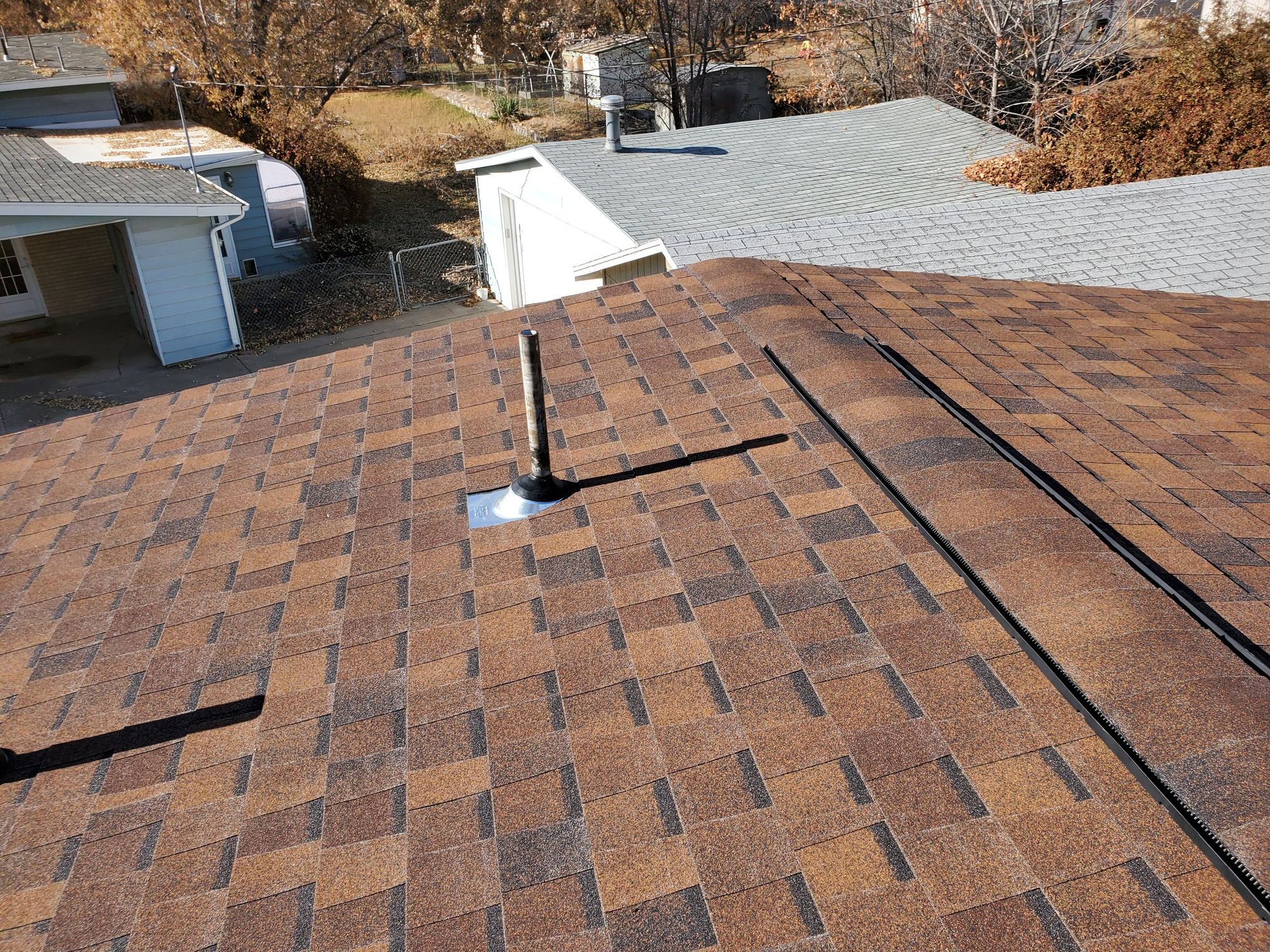
That black strip near the peak is ridge vent going down on a new brown roof, before the cap shingles cover it. It covers a slot cut along the top of the deck, so air leaves along the whole length of the peak, and on a plain gable roof that is usually the best exhaust there is.
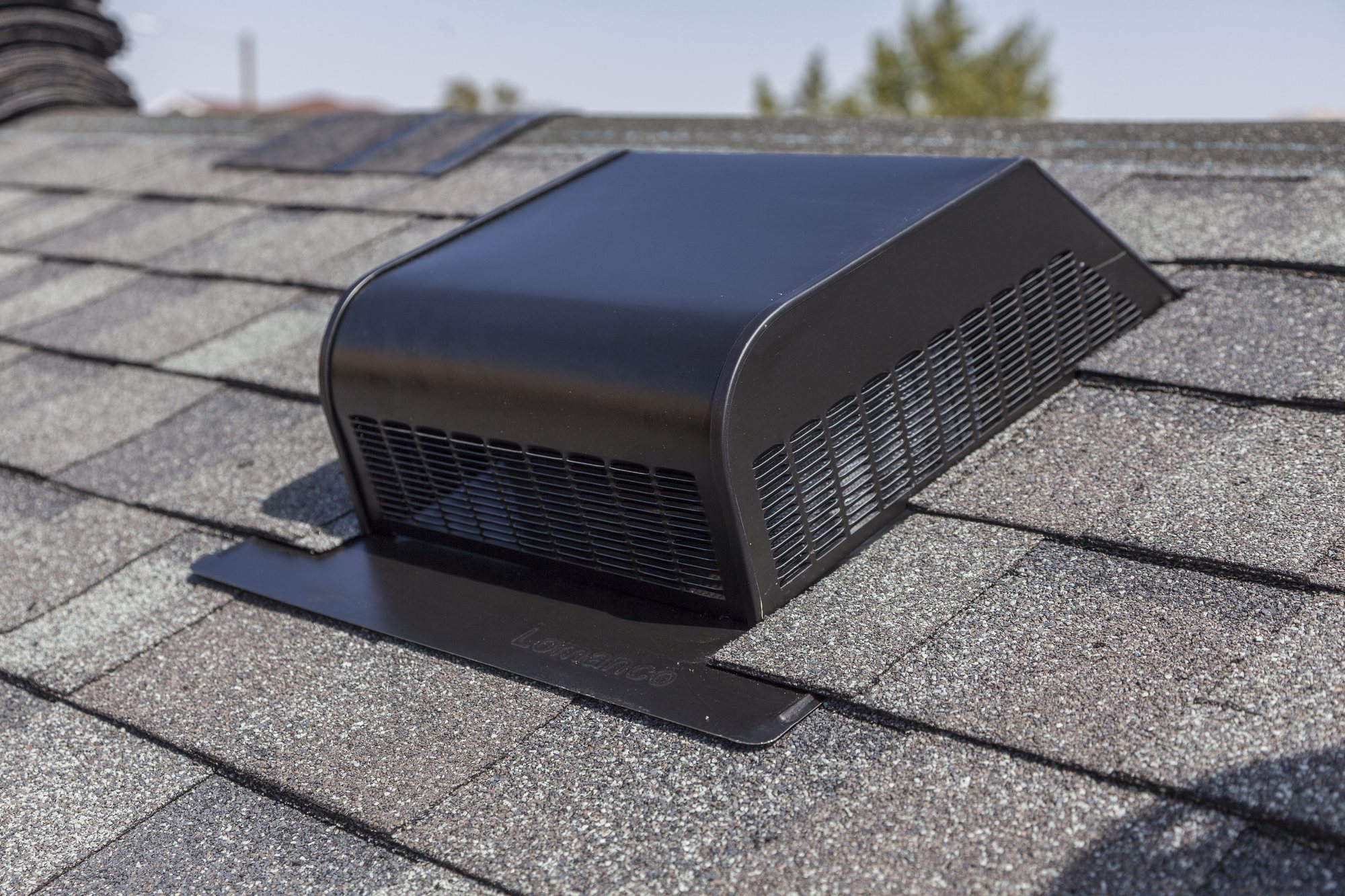
A mixed attic is the mistake we undo most often: a new ridge vent with two or three old box vents left in place a little way down the slope. Air takes the easiest route out. The box vents become the intake for the ridge and the soffits at the eaves sit idle. The lower half of the attic never gets a fresh breath. From the yard it looks like plenty of venting.
So we pick one. Where there is a usable ridge, the box vents come out, the holes get decked over and the ridge does the work. Where there is not, we stay with box vents and add enough of them.
Where the intake gets choked off
Exhaust only works as hard as the intake feeding it. On the houses we open up, the soffits are usually where the trouble starts.
Adding vents at the top of a roof with no air coming in at the bottom changes almost nothing.

Bath fans need a way out
A bathroom fan moves a lot of warm, wet air, and that air has to leave through the roof or a wall. When the duct ends in the attic instead, the moisture settles on the coldest thing it finds, which in January is the underside of the deck and every nail sticking through it. Kitchen fans that vent up do the same, with grease in the mix.
On a mild afternoon that frost melts and drips onto the insulation and the drywall below. Homeowners often call it a roof leak, and the stain looks just like one. The tell is timing: it shows up after a cold, clear stretch with no storm at all.
Each fan should run in a sealed, insulated duct to its own cap on the roof. A flue, a box vent and a pipe boot already share most roofs, each through its own hole with its own flashing, and a fan duct deserves exactly that.
Hillside houses with little ridge to work with
The hillside builds around North Salt Lake often carry complicated roofs, with hips, stepped rooflines and attic pockets over a garage that never connect to the main space. A hip roof can leave only a short stretch of true ridge at the top, too little slot to pull air from the whole attic.
On roofs like that, each attic pocket gets treated as its own system with its own intake and its own exhaust, usually low-profile box vents spaced along the upper slope. Snow drifting against a short ridge is another reason we lean that way on the steeper lots.
Ventilation work often comes up during other jobs. Loose or cracked boots around the vents are covered on our North Salt Lake flashing repair page, and if the roof is due for replacement anyway, a new architectural shingle roof in North Salt Lake is the right moment to set the venting straight. Everything else we do around town is on the North Salt Lake page.
To have someone look at the attic, call (801) 382-8898 or send a note through the contact page. Finished roofs, vents included, are in the gallery.
Where North Salt Lake sits on our map
North Salt Lake borders Salt Lake City on the north, so an attic visit there fits easily into a day on the road.
Can a roof have too much ventilation?
Exhaust with no matching intake can pull heated air up out of the house through gaps around ceiling lights and the attic hatch. We size the exhaust to the intake the eaves can actually supply, so the two stay in balance.
Do you add ventilation without replacing the roof?
Yes. Box vents can be cut in and flashed on an existing roof, and soffit intake can usually be opened from below. A ridge slot can often go into a roof with years left, capped with shingles that match.
Is frost in my attic a ventilation problem?
Usually it is a moisture problem first. Warm air is getting into the attic from the house, often through a fan duct, a hatch with no seal or gaps around wiring. Better ventilation helps carry it off, and stopping it where it comes in helps more.
Why is my upstairs so hot in summer?
A hot attic radiates heat down through the ceiling well into the evening. Blocked soffits and too little exhaust are the common causes, and both show up on a walk through the attic. Insulation matters as well, and we will tell you if that is the bigger piece.
Does poor ventilation shorten a shingle roof’s life?
It can. Shingles baked from underneath dry out and lose granules faster, and a deck that stays damp through the winter softens and lets nails loosen. The easiest time to fix the airflow is during a replacement, while the deck is open.
The rest of the North Salt Lake work
Talk to Hancock
Have us check the attic
Tell us what you have noticed, whether it is frost on the nails, a hot bedroom or a stain on a dry day, and we will start from the hatch.