
Roofing in the Salt Lake City area
Replacements, repairs and storm work, close to home.
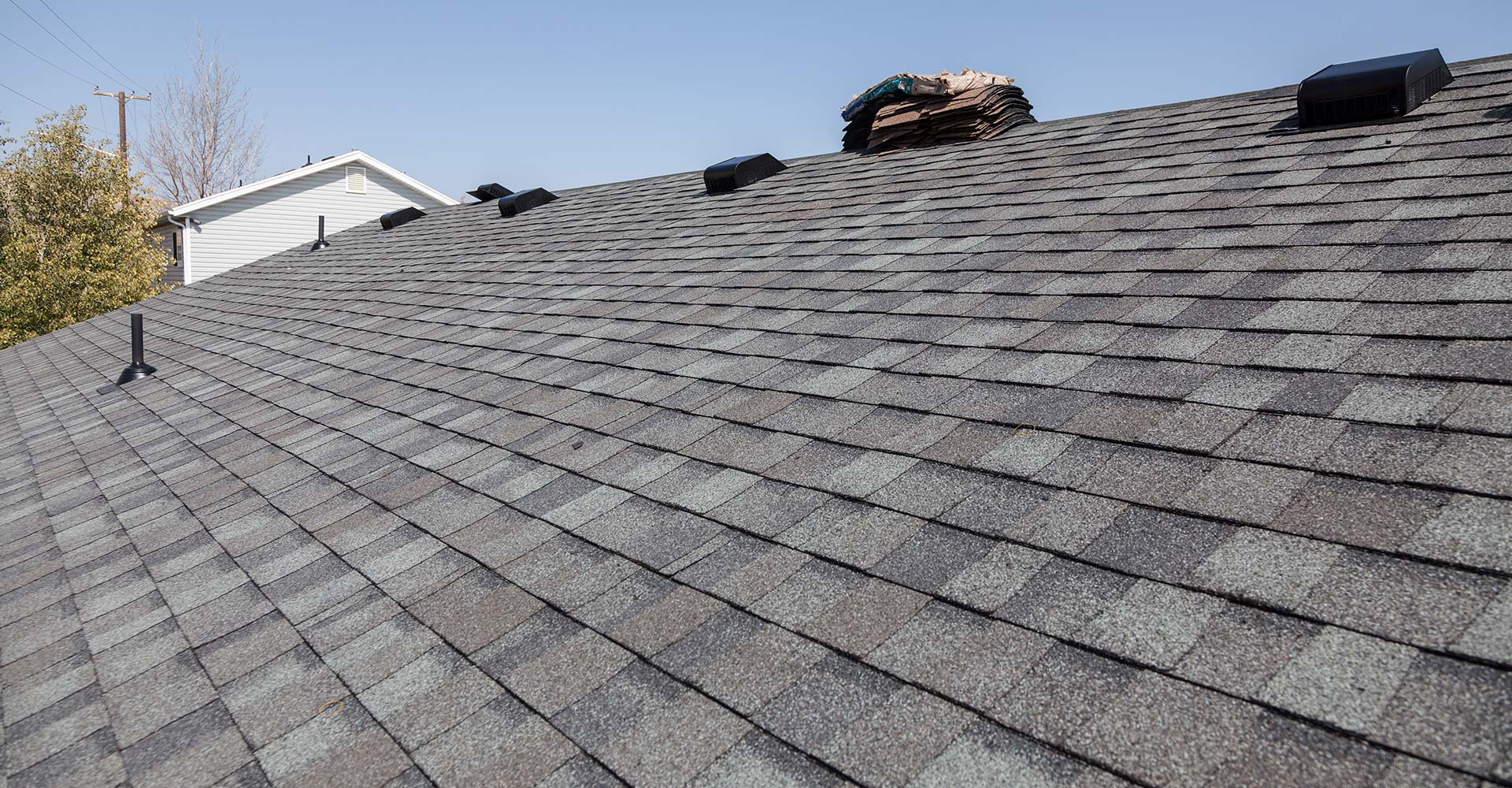
What we look at first around Salt Lake City
This is the middle of the ground we cover, so these are streets we are on every week rather than now and then. Housing runs from 1900s brick near downtown to postwar ranches on the east side, and the two need different things from a roof: the older stock often has decking that was never meant to carry modern shingle weight, and the newer builds tend to have ventilation that was signed off but never balanced.
Being based here means a walk-on-the-roof look costs us a short drive, which is why we quote from the decking rather than a satellite image.

The weather a Salt Lake City roof works against
Hard freeze after a warm afternoon
The worst single night for a roof up here follows a mild day. Sun works on the snow all afternoon, water runs into every gutter and valley and sits in the low spots, then the temperature drops twenty-five degrees after dark and every bit of that standing water turns to ice with nowhere to go.
Ice finds the path water made
It follows the water backwards, up under a lap, behind a piece of step flashing, into the gap over a fascia board.
One night can undo a season
We see the result in March.
Inversion keeps a roof damp
Winter here can park a lid of cold air over the valley floor for a week straight. Nothing dries during that stretch. A shaded slope that got wet on Monday is still wet on Friday, the sheathing under it never gives its moisture back to the air, and any lap that was going to wick does its wicking slowly with no interruption.
Gray weeks do quiet damage
Storms get blamed for roofs. Nine flat gray days with the sun never touching the north face do more, and nobody remembers them.
The valley floor sees less snow than the benches above it, but the benches above it are where a lot of the housing is. A roof in Holladay or Cottonwood Heights lives a different winter from one in Kearns, five miles away.
What we find on roofs around Salt Lake City
Open valley or closed
A closed valley weaves or cuts the shingles across the intersection. An open valley runs metal down the center with the shingles cut back off it. Around here, with the volume of water and ice a valley concentrates, open metal over ice-and-water shield is the detail we reach for on most homes. It moves debris out instead of catching it, and it gives ice a smooth surface instead of a shingle edge to grab.
The W profile
A center rib keeps water from one plane washing up under the shingles on the other.
Architectural over three-tab
Most homes here that are replacing a roof move to architectural shingles and stay there. The laminated construction is thicker, carries a higher wind rating out of the wrapper, and does not show every wave in old decking the way a three-tab does. Three-tab still has a place on a rental, an outbuilding or a repair that has to match what is already up.
Wind rating is a nailing question
A shingle only earns its rating if it is fastened the way the wrapper says. Six nails in the nail line, not four in the wrong spot.
What we do around Salt Lake City
Every service is its own page. These are the ones Salt Lake City asks for most.
Roofing
Full replacements and new roofs on Salt Lake City homes, deck up.
Repairs
Leaks and failed details, which is most of what Salt Lake City calls about.
Upkeep
Inspections, cleaning and sealing before a small thing gets expensive.
Shingles
Architectural laminate, the field material on most of this valley.
Metal
Standing seam and corrugated, common on canyon-side snow load.
Tile
Clay and concrete tile, and the flashing work they need.
Commercial
Membrane systems for flat and low-slope buildings around Salt Lake City.
Coatings
Restoration coatings when a commercial roof has life left.
Storm
Hail, wind and the insurance paperwork that follows.
Skylights
Installation and the curb-flashing repairs skylights usually need.
Gutters
Gutters, downspouts and fascia, which are part of the roof.
Government
Schools, city, county, state and federal buildings. Every government service is on the government roofing page.
How the job runs
Emergency work and what it is
When water is coming in right now, the first job is stopping it, not selling anything. That means a tarp run properly with battens rather than draped and weighted with bricks, or a temporary patch that holds until the weather clears enough to do real work. Temporary is temporary and we say so.
Then the real repair
Once it is dry we come back and fix the cause, which is frequently not where the water showed up inside.
Waste, salvage and what gets hauled
A tear-off generates a surprising volume, and a fair amount of it does not have to go in a landfill. Asphalt shingles can often go to a recycler, sound tile gets set aside for salvage, and scrap metal leaves separately. The rest goes out in the trailer the same day the work ends.
Leftover material is yours to keep
If you want a bundle in the garage for a future repair, say so before the trailer leaves. Matching a color in six years is the hard part, and a few spare shingles solve it.
The yard gets walked at the end
Twice, in two directions.

Work from around the valley



What the name costs us
When a company is called by a family name there is no distance between the work and the people. A bad roof on a street where our kids go to school is not a line item, it is a conversation at a ball game. That is a real constraint and it is the most useful thing about a shop this size.
Down to earth, and serious about it
Friendly in the driveway, particular on the roof. The two have never been in conflict here.
One neighbor at a time
We are not trying to be the biggest roofer along the Wasatch. We work in the towns we live in, we take on what we can do properly in a week, and most of what comes our way comes from somebody who watched us work on their street. That is a slower way to grow a business and it is the reason we are still standing behind roofs we put on years ago.
Word travels on a street
Which keeps us honest better than any advertising would.
Questions we get asked
Not the question you had? Call the shop and ask a person. We would rather talk it through than have you guess from a website.
(801) 382-8898Do you actually work in Salt Lake City?
Yes. This is the center of the ground we cover, and we are on these streets most weeks rather than driving in for a job.
How fast can you get to Salt Lake City after a storm?
As fast as we can get there. Stopping the water comes first and the permanent repair follows.
Do you work through the winter?
Yes, with judgment. Shingles need to seal, and in genuine cold that takes longer or needs hand sealing. Emergency work happens whenever it has to. Full replacements get scheduled around the weather rather than forced into it.
What makes a Utah roof different?
Snow load, ice at the eaves, canyon wind and high-altitude sun, all on the same roof. A crew that learned roofing somewhere mild has to learn it again up here.
How do I know when a roof is getting close?
Granules collecting in the gutters, tabs lifting or curling at the edges, shingles that look bare in patches, and daylight or staining in the attic. Any of those is worth a look.
Will you tell me if I do not need a new roof?
Yes. Plenty of what we look at turns out to be a repair, and we say so. A roof with years left in it gets left alone, and you get the photographs either way.
Where Salt Lake City sits on our map
Salt Lake City sits in the middle of the ground we cover across Salt Lake County.
Roof work in Salt Lake City
Call (801) 382-8898 or send a note, and we will book a time to walk the roof with you.