
Roofing in the Murray area
Honest roof work in Murray, from a family company in its second generation.
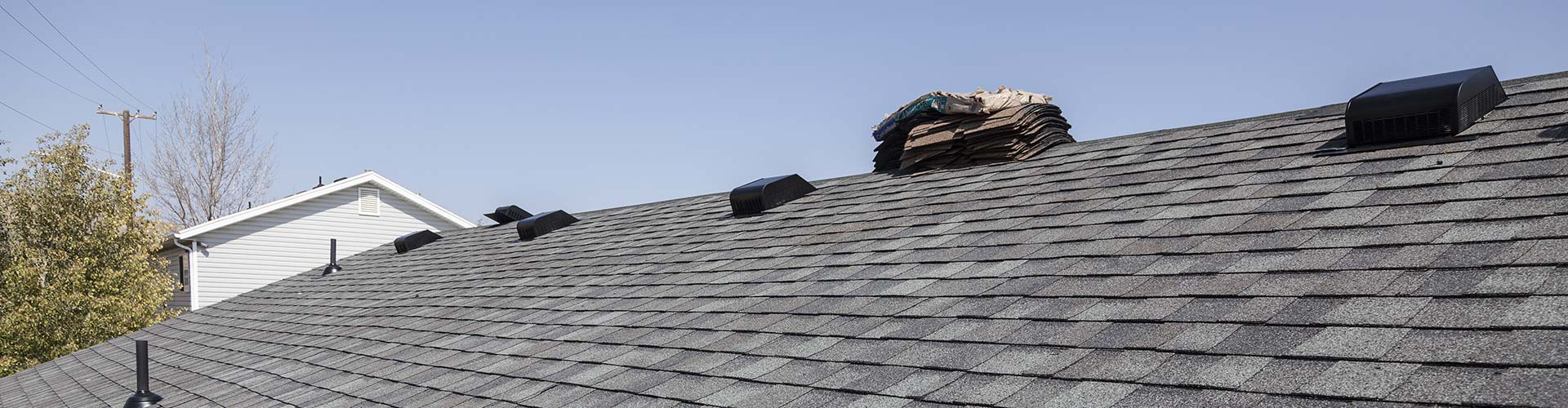
What we see on Murray roofs
Hail is the damage nobody sees from the ground. In Murray we check the soft metals first, because vents, flashing and gutter aprons dent before the shingle mat shows bruising, and those dents date the storm.
Murray sits inside the ground we cover around Salt Lake City. Working it regularly is why we can tell you what a roof needs without hedging.

The weather a Murray roof works against
Snow sliding off steep pitch
Steep roofs shed, which is good for the roof and hard on everything below it. A loaded slope lets go at once and takes gutters, vent caps and the occasional shrub with it. On metal it happens faster because there is nothing to hold it. Homes with steep pitch over a walkway or a doorway get looked at differently than the same roof over an open yard.
Snow retention when it matters
Where a slide is a hazard, cleats or a retention rail spread the load and let it melt off instead of releasing in one sheet.
Spring wind off the benches
Canyon wind is the thing homeowners here tend to shrug off. It does not arrive as a steady push, it arrives in gusts that lift a shingle tab, break the seal strip, and set it down again looking fine. Three or four of those and the tab is loose, water gets a path, and nobody knows until a ceiling stains.
Rakes and ridges go first
Edges take the uplift. That is why we nail the rake tighter, use a starter course with a factory seal at the eave, and look at ridge caps before anything else after a blow.
The valley floor sees less snow than the benches above it, but the benches above it are where a lot of the housing is. A roof in Holladay or Cottonwood Heights lives a different winter from one in Kearns, five miles away.
What we find on roofs around Murray
How long a bead of sealant lasts
Roof sealant is a consumable. In this climate, with the ultraviolet load and the temperature swing, a good product stays flexible for a handful of years and then shrinks, crazes and pulls away from one side of the joint. That is normal and expected behavior for the material.
Design so sealant is a backup
Every joint that matters should shed water by its shape, with the sealant there as a second line. Where sealant is the only thing standing between water and the deck, somebody has signed you up for a maintenance visit every few years.
Ask what is holding a repair together
If the answer is caulk, ask again.
Intake and exhaust have to match
Attic ventilation is a balance, and most of the failures we find are unbalanced. Ridge vent with the soffit stuffed full of insulation is exhaust with no intake, so the attic pulls its air from the house instead and drags moisture up with it.
How it shows up
Frost on the sheathing in January, a hot attic in July, curling shingles on the upper courses, and an ice dam at the eave that nobody can explain.
Baffles are cheap
Keeping the insulation off the soffit with a proper chute fixes more roofs than most people would believe.
What we do around Murray
Every service is its own page. These are the ones Murray asks for most.
Roofing
Full replacements and new roofs on Murray homes, deck up.
Repairs
Leaks and failed details, which is most of what Murray calls about.
Upkeep
Inspections, cleaning and sealing before a small thing gets expensive.
Shingles
Architectural laminate, the field material on most of this valley.
Metal
Standing seam and corrugated, common on canyon-side snow load.
Tile
Clay and concrete tile, and the flashing work they need.
Commercial
Membrane systems for flat and low-slope buildings around Murray.
Coatings
Restoration coatings when a commercial roof has life left.
Storm
Hail, wind and the insurance paperwork that follows.
Skylights
Installation and the curb-flashing repairs skylights usually need.
Gutters
Gutters, downspouts and fascia, which are part of the roof.
Government
Schools, city, county, state and federal buildings. Every government service is on the government roofing page.
How the job runs
Protecting what is under the roof
A tear-off throws debris, and there is a lot of it. Before anything comes off, we tarp landscaping, lay plywood over anything that would take a hit, move what can be moved off the deck and the driveway, and set the dump trailer where it will not crack a concrete apron.
Attic coverage matters too
Old roofs shed dust and nail points into an attic. Anything stored up there gets covered before the first shingle moves.
When the weather turns mid-job
Forecasts here are wrong on a regular basis, so the plan assumes it. The plan includes enough underlayment and tarp on site to close up whatever is open, and the call to stop tearing off and start closing up gets made early rather than optimistically. Nobody wins a race against a cell coming over the benches.
What that means for your schedule
A job that was two days becomes three. Every time, we would rather explain a day than explain a wet ceiling.
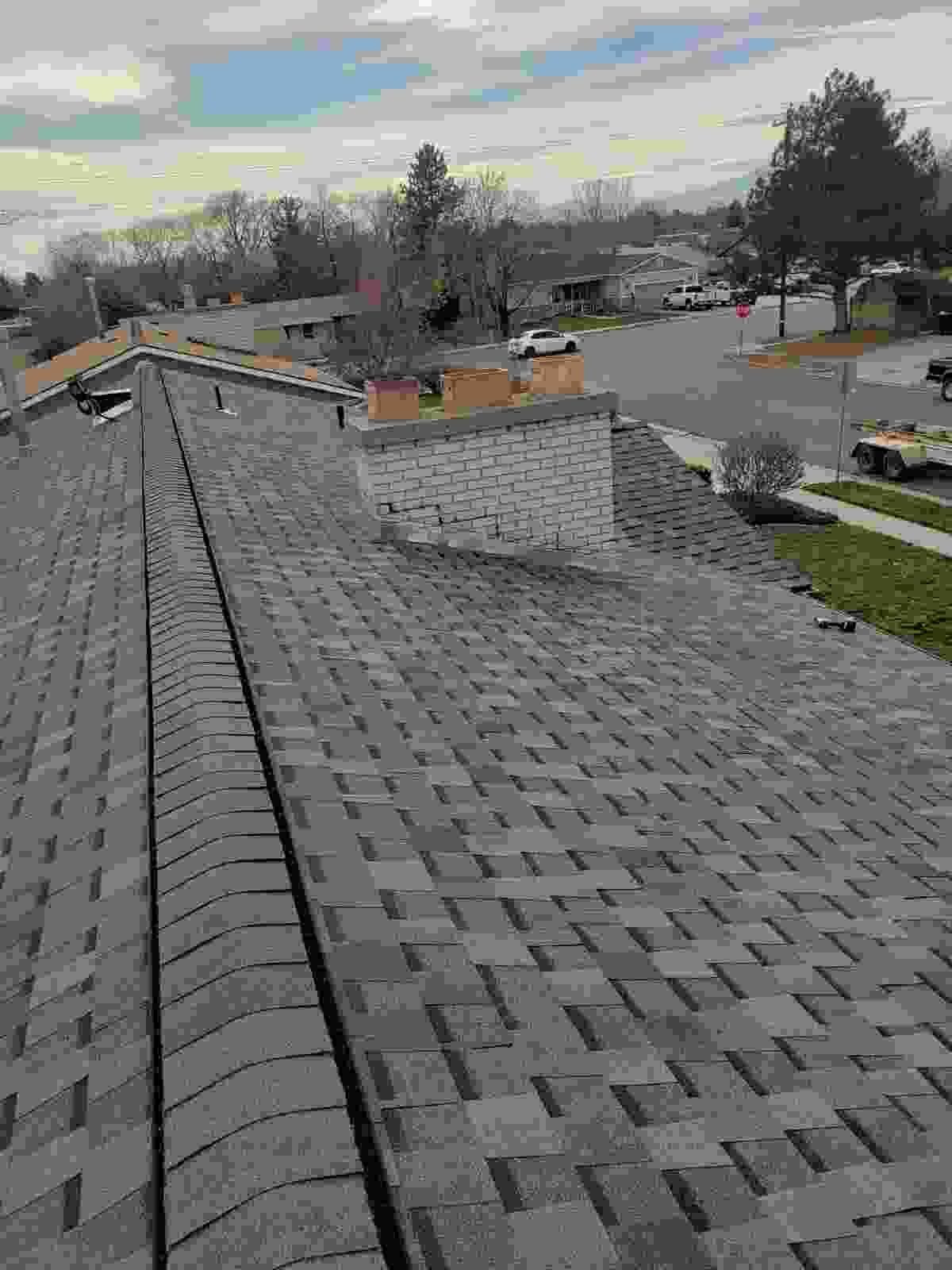
Work from around the valley



A family trade, passed down
The second generation part is not marketing. It means the owner learned this carrying bundles up a ladder for an uncle who checked the work, and it means the standards in this company are older than the company. Eight years as Hancock Signature Roofing, on top of twenty-seven years in the trade before that.
Standards outlive a business card
Which is why the way we flash a wall has not changed with the sign on the truck.
The crews know Utah code
The crews on your roof are not learning the ice barrier requirement on your house. They know what the inspector in this county is going to look at, how deep the membrane has to run past an interior wall line on a deep overhang, and how ventilation gets counted.
They also know the weather
Which is why they will not open more roof than they can dry in before an afternoon cell comes over the benches.
Questions we get asked
Not the question you had? Call the shop and ask a person. We would rather talk it through than have you guess from a website.
(801) 382-8898Do you actually work in Murray?
Yes, and often. Murray is part of our regular service area, so it is ground we know well.
How fast can you get to Murray after a storm?
We stop the water first. Temporary work is genuinely temporary and we say so, but it buys the time to do the actual repair right.
Do you handle the insurance side?
On hail-damaged roofs, we work with your insurance to get the roof covered. We document the damage thoroughly with photographs, so the claim reflects what is actually on the roof.
What happens if you find bad decking?
We show you. The decking is only visible during a tear-off, so that is when soft sheathing gets found and replaced. We photograph it rather than just add it to a list.
Do you work through the winter?
Yes, with judgment. Shingles need to seal, and in genuine cold that takes longer or needs hand sealing. Emergency work happens whenever it has to. Full replacements get scheduled around the weather rather than forced into it.
What makes a Utah roof different?
Snow load, ice at the eaves, canyon wind and high-altitude sun, all on the same roof. A crew that learned roofing somewhere mild has to learn it again up here.
Where Murray sits on our map
We work Murray as part of our Salt Lake County schedule.
Roof work in Murray
Call (801) 382-8898 or send a note, and we will book a time to walk the roof with you.