

Davis County, Utah
Roofing in the Layton area
Roof work around Layton by a second-generation crew that knows the Hill Air Force Base corridor.
What a roof in Layton is actually up against
Layton runs from older housing near the base to new construction out west, and the wind exposure changes noticeably across that spread. Roofs on the open west side see gusting that the older sheltered streets do not.
A Layton roof that opens up in a storm needs a tarp before it needs a sales pitch. We stop the water first, because that is usually the difference between a ceiling and a remodel.

The weather a Layton roof works against
Snow sliding off steep pitch
Steep roofs shed, which is good for the roof and hard on everything below it. A loaded slope lets go at once and takes gutters, vent caps and the occasional shrub with it. On metal it happens faster because there is nothing to hold it. Homes with steep pitch over a walkway or a doorway get looked at differently than the same roof over an open yard.
Snow retention when it matters
Where a slide is a hazard, cleats or a retention rail spread the load and let it melt off instead of releasing in one sheet.
Rain driven sideways into a lap
Shingles are built to shed water running downhill. A thirty mile an hour gust with rain in it does not run downhill, it runs across and up. That is the one condition where a lap that has worked for fifteen years lets water through, and it is the reason a leak can appear in a specific storm and then never again.
Chasing a wind-only leak
You cannot find it on a dry day by looking. You find it by knowing which wall faces the weather and checking every horizontal joint on that face.
Davis County runs narrow between the lake and the mountain, and the wind funnels through it. The corridor around the base sees gusting that the sheltered streets further east do not.
What we find on roofs around Layton
Ice-and-water shield, and where it goes
This is the single most important membrane on a Utah roof. It is a self-adhering sheet that seals around nail shanks, and it belongs at the eave, in every valley, and around every penetration.
The eave measurement people get wrong
Code language is about coverage past the interior wall line, not a flat number of feet. On a house with deep overhangs that means more courses than a builder might assume.
Valleys get it too
A valley carries water from two planes. It gets the membrane whether anybody asks for it or not.
Counterflashing let into the masonry
Where a roof meets brick or stone, the honest detail cuts a groove into a mortar joint, tucks the top edge of the metal into it, and seals the groove. Water running down the wall face hits metal and gets thrown out onto the roof. The shortcut runs the metal flat up the wall and caulks the top edge, which works until the caulk moves.
Surface-mounted is a temporary answer
We will do it that way on an emergency repair and tell you plainly that it needs to be cut in properly when there is time.
Layton is part of our Davis County work. 27 years in the trade, and a full replacement carries our 10-year workmanship warranty.
What we do around Layton
Every service is its own page. These are the ones Layton asks for most.
Roofing
Full replacements and new roofs on Layton homes, deck up.
Repairs
Leaks and failed details, which is most of what Layton calls about.
Upkeep
Inspections, cleaning and sealing before a small thing gets expensive.
Shingles
Architectural laminate, the field material on most of this valley.
Metal
Standing seam and corrugated, common on canyon-side snow load.
Tile
Clay and concrete tile, and the flashing work they need.
Commercial
Membrane systems for flat and low-slope buildings around Layton.
Coatings
Restoration coatings when a commercial roof has life left.
Storm
Hail, wind and the insurance paperwork that follows.
Skylights
Installation and the curb-flashing repairs skylights usually need.
Gutters
Gutters, downspouts and fascia, which are part of the roof.
Government
Schools, city, county, state and federal buildings. Every government service is on the government roofing page.
How the job runs
Tear-off versus going over
A second layer over an existing roof is legal in some situations and it is almost never the right answer up here. You cannot see the decking, you cannot correct the flashing, the added weight matters under snow load, and the new shingles run hotter sitting on old asphalt. The only time we would talk about it is a specific situation with sound decking and a customer who understands the tradeoff, and even then a second layer does not carry our workmanship warranty.
Tear-off shows you the truth
Once it is open, the rot, the old repairs and the decking condition are all right there.
Ventilation gets fixed during the roof
A replacement is the one moment when correcting attic airflow is cheap, because the roof is already open. Cutting a ridge slot, adding the right amount of exhaust, and clearing blocked soffit intake takes a fraction of the time it would take as a separate job later.
We calculate rather than guess
Net free area on the intake side has to at least match the exhaust side, and it usually does not on an older house.
Then the attic stops sweating
Which is often what the homeowner actually called about.
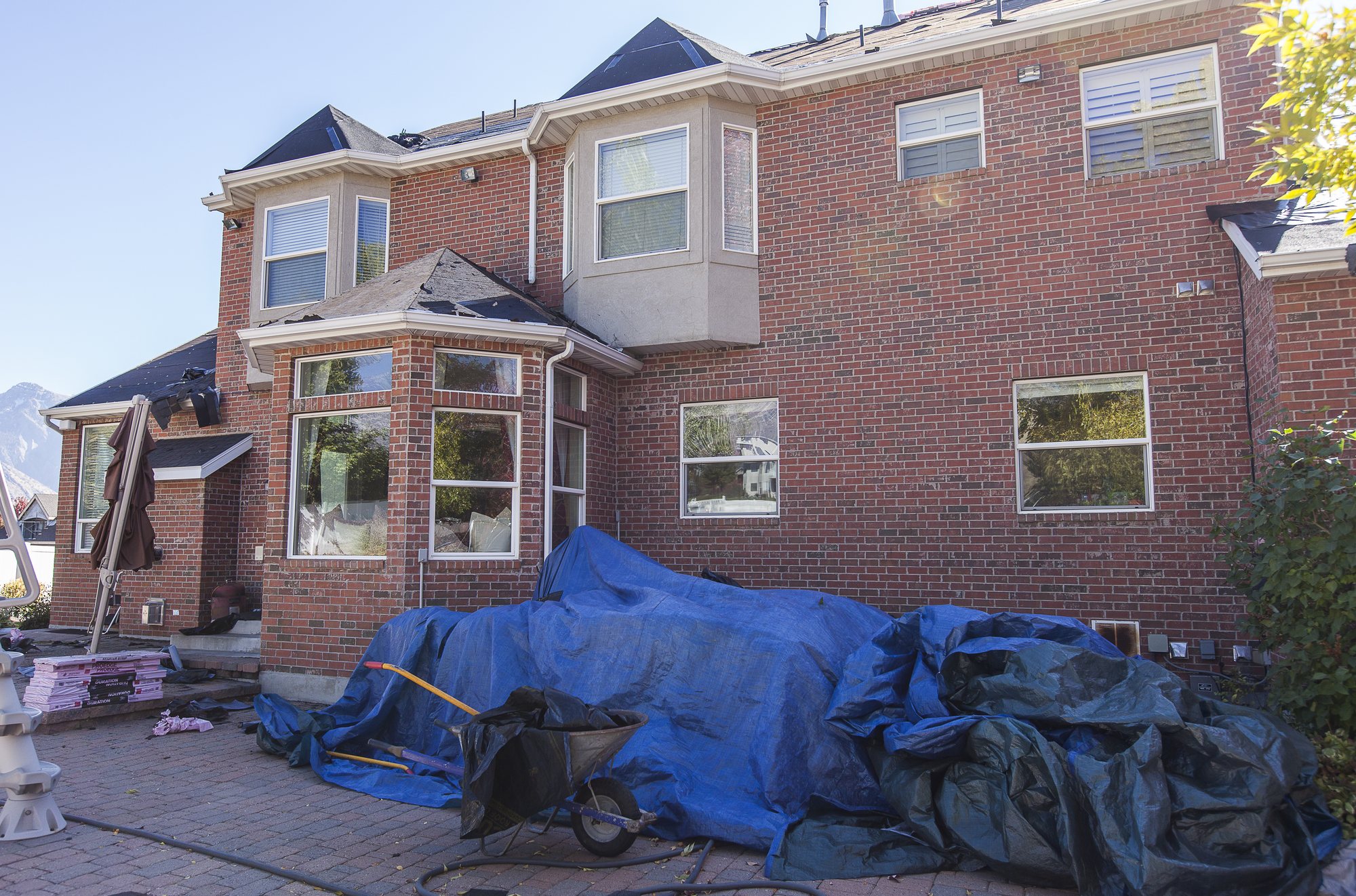
Roofs around Layton
Work from around the valley
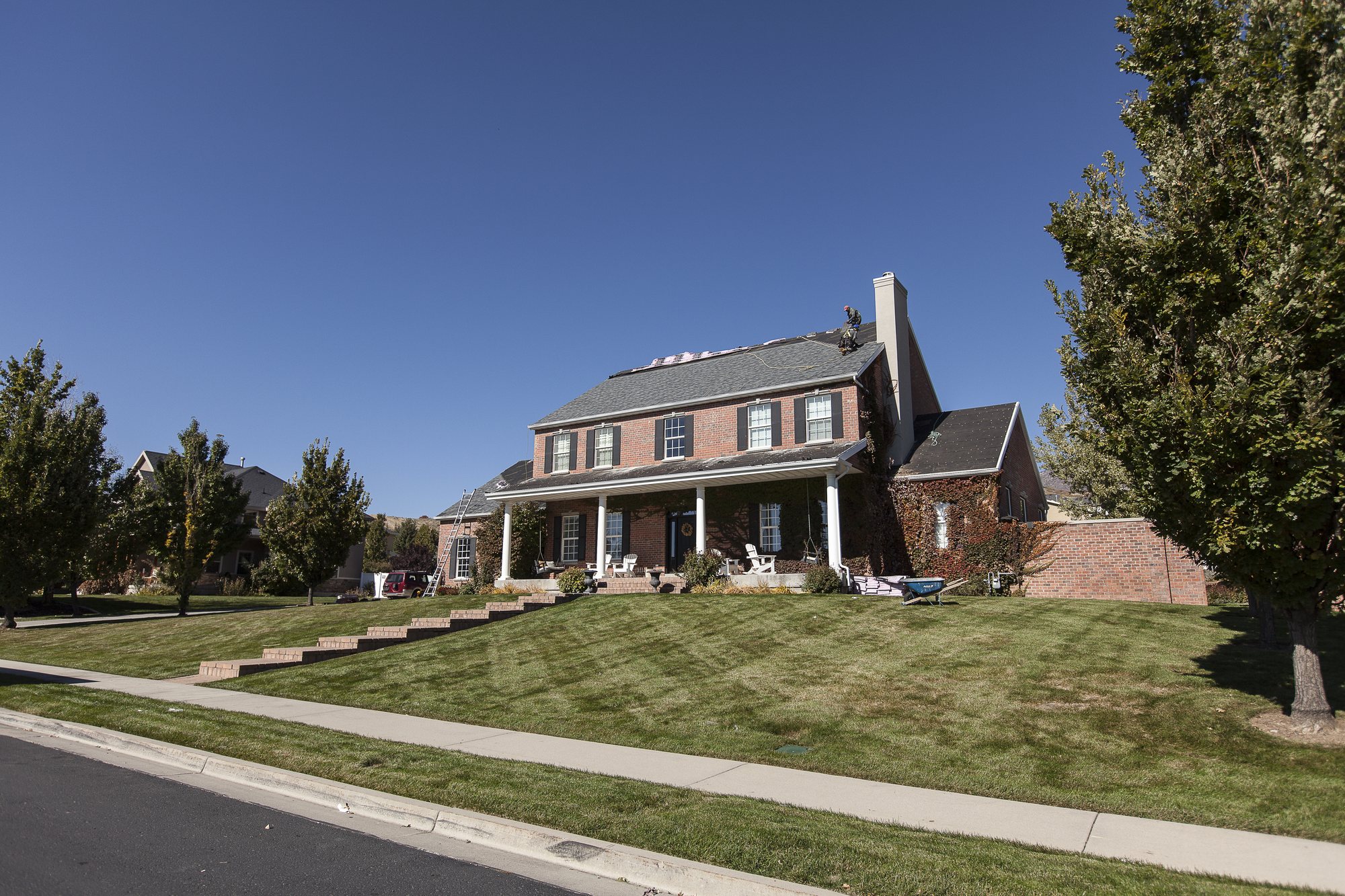


What the name costs us
When a company is called by a family name there is no distance between the work and the people. A bad roof on a street where our kids go to school is not a line item, it is a conversation at a ball game. That is a real constraint and it is the most useful thing about a shop this size.
Down to earth, and serious about it
Friendly in the driveway, particular on the roof. The two have never been in conflict here.
Built for the house itself
We do not run one spec on every roof and call it standardization. A shaded bench home under heavy trees needs different attention than an exposed lot that catches every gust off the mountain. Pitch, exposure, elevation and what is already up there all change the answer.
Which is why we look first
Nobody can tell you what a roof needs from the street or over the phone.
Questions we get asked
Not the question you had? Call the shop and ask a person. We would rather talk it through than have you guess from a website.
(801) 382-8898Do you actually work in Layton?
We do. Layton falls well inside the radius we run, and being there often is what lets us tell you how the housing around it was built.
How fast can you get to Layton after a storm?
We stop the water first. Temporary work is genuinely temporary and we say so, but it buys the time to do the actual repair right.
How long does a roof replacement take?
Most houses in this valley are a one to two day job once the crew is on site. Steeper pitches, multiple layers to strip and complicated roofs with a lot of valleys take longer, and we tell you which yours is before we start.
Do you handle the insurance side?
On hail-damaged roofs, we work with your insurance to get the roof covered. We document the damage thoroughly with photographs, so the claim reflects what is actually on the roof.
What happens if you find bad decking?
We show you. The decking is only visible during a tear-off, so that is when soft sheathing gets found and replaced. We photograph it rather than just add it to a list.
Do you work through the winter?
Yes, with judgment. Shingles need to seal, and in genuine cold that takes longer or needs hand sealing. Emergency work happens whenever it has to. Full replacements get scheduled around the weather rather than forced into it.
Where Layton sits on our map
Layton sits in Davis County, inside the sixty mile radius we run crews in every week.
Talk to Hancock
Roof work in Layton
Call (801) 382-8898. We will get on the roof, look properly, and tell you what it needs.