
Davis County, Utah
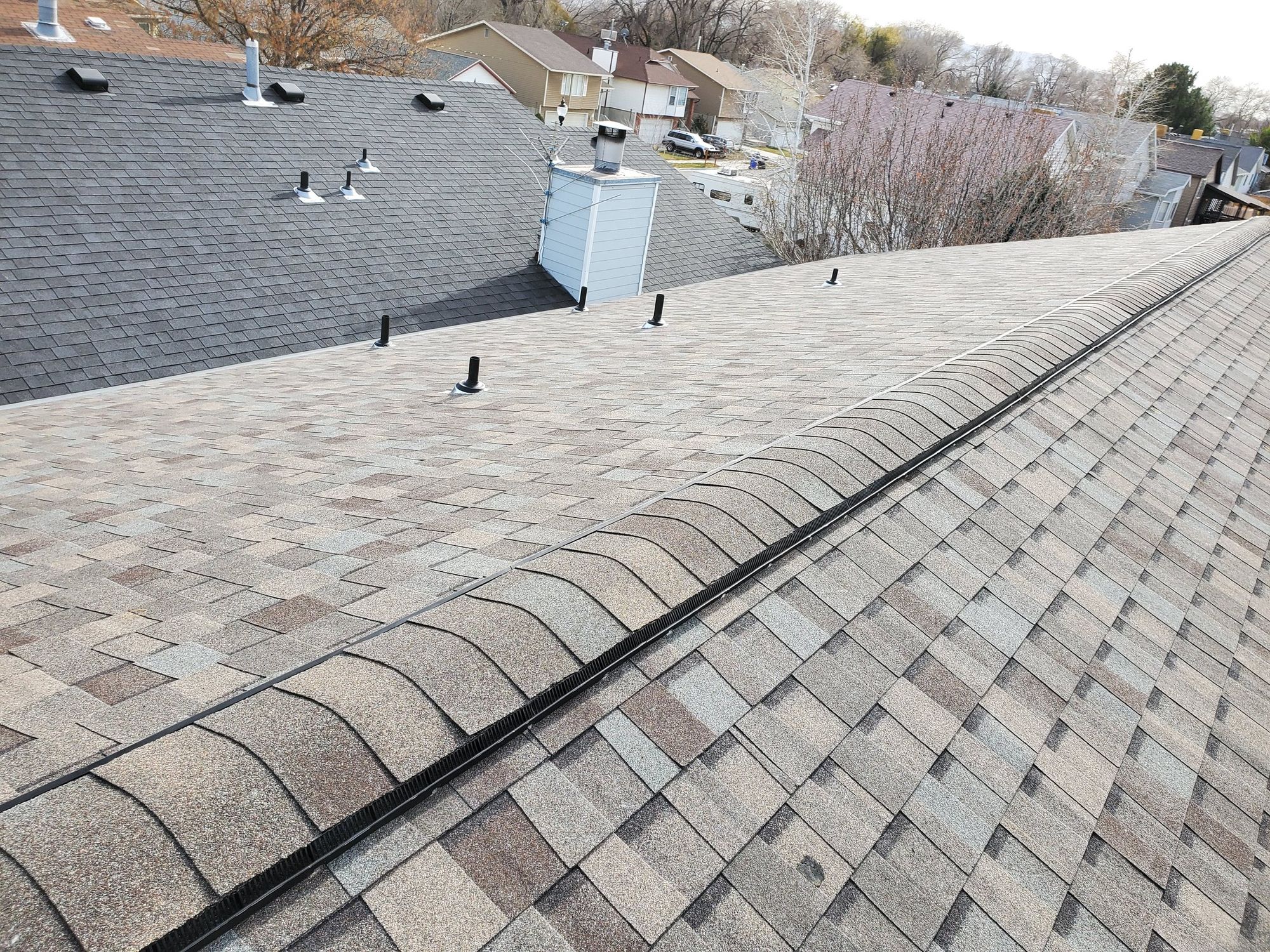
Roofing in the Kaysville area
From tear-off to ridge cap across Kaysville and the streets around it.
The year a Kaysville roof works through
Housing stock around Kaysville was mostly built in a handful of waves, which means roofs there tend to reach the end of their first covering within a few years of each other. What looks like one neighbor needing a roof is usually a street reaching the same age.
We have worked enough of Davis County to know which builders put up which subdivisions and where they cut the same corner twice. That is worth more on a roof than any brochure.

The weather a Kaysville roof works against
Sun at this elevation
The thing that quietly ages a roof around here is not a storm. It is a mile of thin air between the shingle and the sun, with more clear days than most of the country gets. Ultraviolet breaks down the asphalt binder, the mat loses flexibility, granules let go, and a south or west slope wears out years ahead of the north side of the same house.
Uneven wear is normal
On plenty of homes up here the south face is done and the north face has life left. That is not a defect, it is exposure, and it is worth knowing before anybody talks about replacing everything.
The rot that follows a slow leak
The dangerous leak is not the one that stains a ceiling in a week. It is the one that puts a cup of water into a rafter bay every storm for four years. Nothing shows inside because the insulation absorbs it and the attic dries out between events, while the sheathing goes dark, then soft, then delaminates around the fasteners.
How we find it
Daylight through the deck from inside the attic, rust at the nail points, and a sheathing surface that gives under a knuckle.
Wood is the expensive part
Shingles are a material cost. Structure is not.
Davis County runs narrow between the lake and the mountain, and the wind funnels through it. The corridor around the base sees gusting that the sheltered streets further east do not.
What we find on roofs around Kaysville
Dry-in is the real milestone
The moment that decides whether a re-roof goes well is not when the last shingle goes down, it is when the deck is covered, taped at the penetrations and sealed at the edges. From that point the house is weather-tight and everything after it is finish work. A crew that understands this never leaves at the end of a day with bare deck showing.
Ice barrier goes down first
Eaves, valleys and every pipe before any field underlayment. Working from the bottom up means every sheet laps over the one below it the way water expects.
Then the metal, then the field
In that order, every time.
Intake and exhaust have to match
Attic ventilation is a balance, and most of the failures we find are unbalanced. Ridge vent with the soffit stuffed full of insulation is exhaust with no intake, so the attic pulls its air from the house instead and drags moisture up with it.
How it shows up
Frost on the sheathing in January, a hot attic in July, curling shingles on the upper courses, and an ice dam at the eave that nobody can explain.
Baffles are cheap
Keeping the insulation off the soffit with a proper chute fixes more roofs than most people would believe.
Kaysville is part of our Davis County work. 27 years in the trade, and a full replacement carries our 10-year workmanship warranty.
What we do around Kaysville
Every service is its own page. These are the ones Kaysville asks for most.
Roofing
Full replacements and new roofs on Kaysville homes, deck up.
Repairs
Leaks and failed details, which is most of what Kaysville calls about.
Upkeep
Inspections, cleaning and sealing before a small thing gets expensive.
Shingles
Architectural laminate, the field material on most of this valley.
Metal
Standing seam and corrugated, common on canyon-side snow load.
Tile
Clay and concrete tile, and the flashing work they need.
Commercial
Membrane systems for flat and low-slope buildings around Kaysville.
Coatings
Restoration coatings when a commercial roof has life left.
Storm
Hail, wind and the insurance paperwork that follows.
Skylights
Installation and the curb-flashing repairs skylights usually need.
Gutters
Gutters, downspouts and fascia, which are part of the roof.
Government
Schools, city, county, state and federal buildings. Every government service is on the government roofing page.
How the job runs
Attic access before the ladder goes up
A good deal of what we need to know is inside, not outside. We want to see the underside of the deck, the insulation depth at the top plate, whether the soffit chutes are clear, and whether there is a bath fan dumping warm wet air into the attic instead of out through the roof.
Half of roof leaks start in there
A roof fixed without looking at the attic is a roof fixed halfway. Sometimes the answer is that the shingles are fine and the bath fan needs a duct.
Protecting what is under the roof
A tear-off throws debris, and there is a lot of it. Before anything comes off, we tarp landscaping, lay plywood over anything that would take a hit, move what can be moved off the deck and the driveway, and set the dump trailer where it will not crack a concrete apron.
Attic coverage matters too
Old roofs shed dust and nail points into an attic. Anything stored up there gets covered before the first shingle moves.
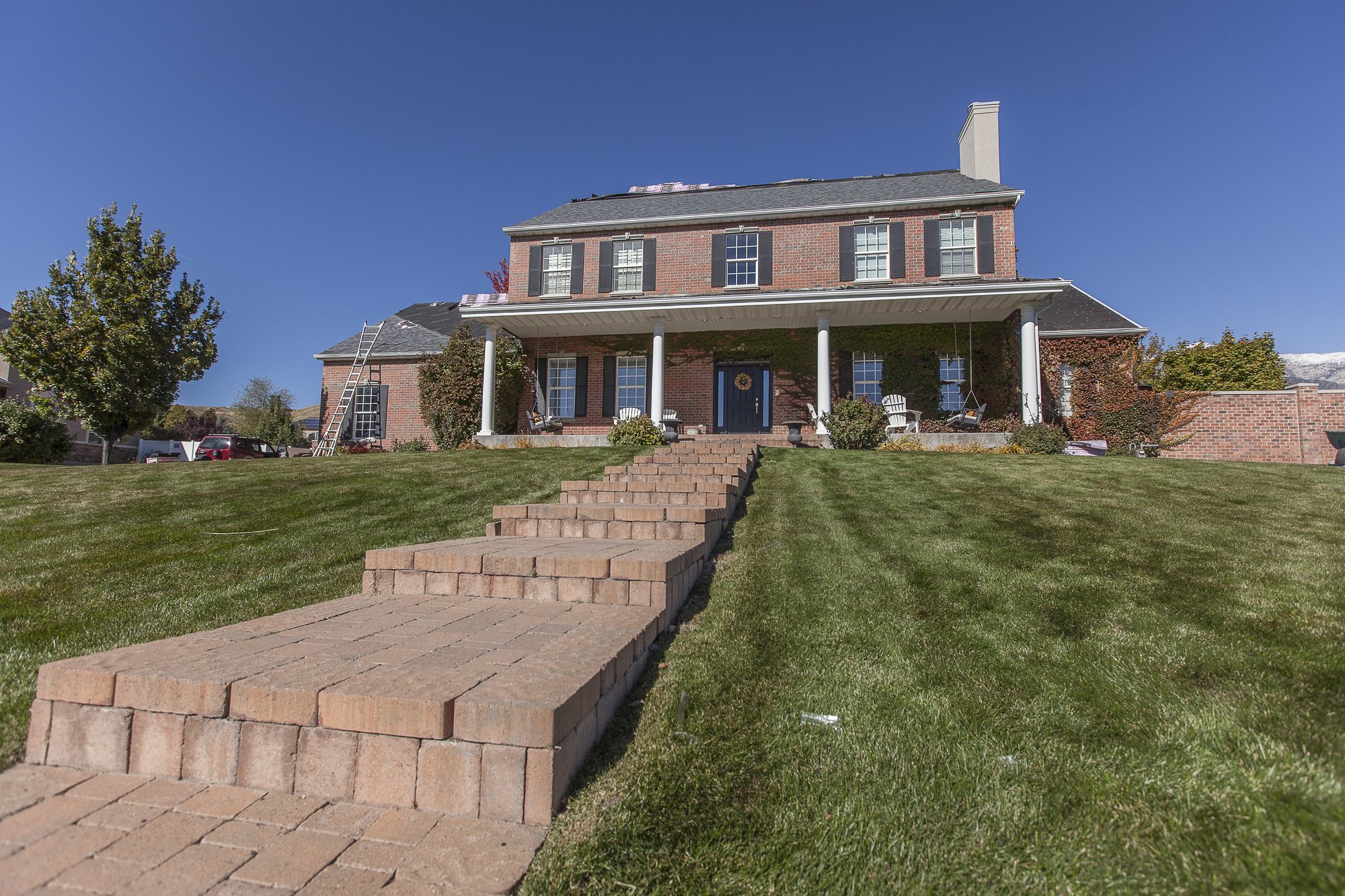
Roofs around Kaysville
Work from around the valley


Twenty-seven years of Utah roofs
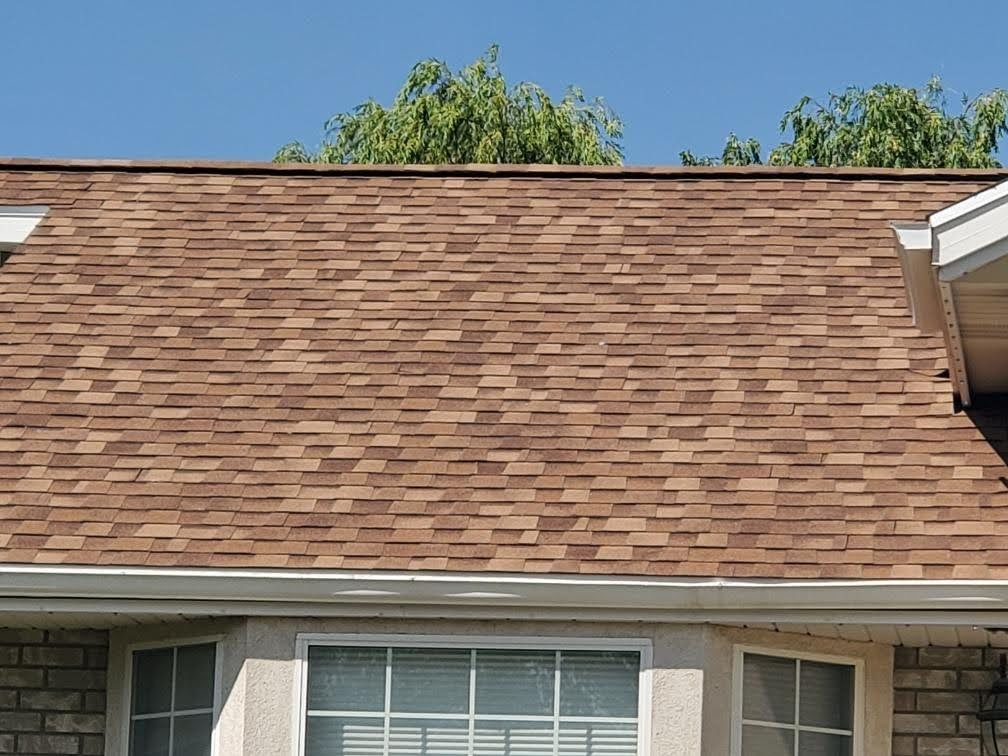
Twenty-seven years working roofs in this state teaches things that do not show up in a manufacturer’s manual. Where ice actually forms on a north-facing eave. How canyon wind hits a rake edge differently than open valley wind. Which shingle colors fade hard at elevation.
Local knowledge is specific
A crew that learned roofing somewhere with mild winters has to learn all of it over again up here.
Eight years as Hancock Signature
The company itself is eight years old, built on that earlier experience.
The crews know Utah code
The crews on your roof are not learning the ice barrier requirement on your house. They know what the inspector in this county is going to look at, how deep the membrane has to run past an interior wall line on a deep overhang, and how ventilation gets counted.
They also know the weather
Which is why they will not open more roof than they can dry in before an afternoon cell comes over the benches.
Questions we get asked
Not the question you had? Call the shop and ask a person. We would rather talk it through than have you guess from a website.
(801) 382-8898Do you actually work in Kaysville?
Yes, and often. Kaysville is part of our regular service area, so it is ground we know well.
How fast can you get to Kaysville after a storm?
We make the roof safe first, then come back and do the repair properly when conditions allow.
Will you tell me if I do not need a new roof?
Yes. Plenty of what we look at turns out to be a repair, and we say so. A roof with years left in it gets left alone, and you get the photographs either way.
How long does a roof replacement take?
Most houses in this valley are a one to two day job once the crew is on site. Steeper pitches, multiple layers to strip and complicated roofs with a lot of valleys take longer, and we tell you which yours is before we start.
Do you handle the insurance side?
On hail-damaged roofs, we work with your insurance to get the roof covered. We document the damage thoroughly with photographs, so the claim reflects what is actually on the roof.
What happens if you find bad decking?
We show you. The decking is only visible during a tear-off, so that is when soft sheathing gets found and replaced. We photograph it rather than just add it to a list.
Where Kaysville sits on our map
Our Davis County route covers Kaysville, so a look at a roof here does not wait on a gap.
Talk to Hancock
Roof work in Kaysville
Call (801) 382-8898 and we will come and read the roof rather than guess at it from the drive.