
Salt Lake City & surrounding counties
Gutter repairs that keep the water moving
The gutters we get called about in North Salt Lake rarely need to come down. One corner drips or one stretch sags and fills with ice, so we fix that stretch and leave the sound metal where it is.
Heat cable buried under a pile of needles
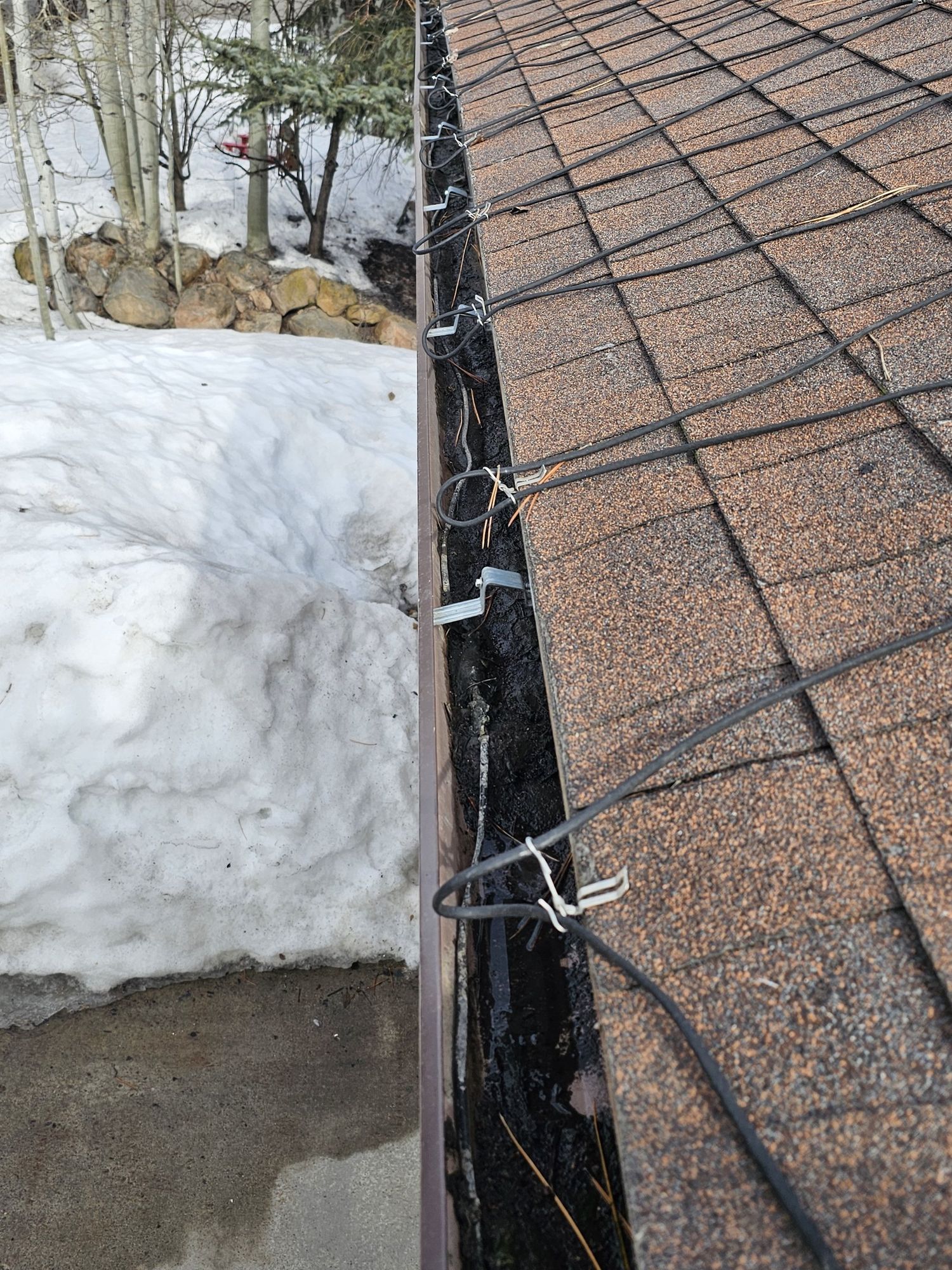
In this photo the gutter is packed with black, rotted debris and pine needles, a heat cable runs along the top of the mess, and snow is piled against the house beside it. That cable was put there to keep a channel open through the winter. Buried like that, it cannot do it.
A heat cable warms a narrow path for melt to run along. When the gutter under it is full of wet needles, the cable warms the top of the pile and the water underneath still freezes solid. The ice spreads out to the sides, fills the trough, and the next melt has nowhere to go but over the front or back up under the roof edge.
So the first thing we do on a gutter repair is empty it and look at the metal underneath. We check the cable clips while we are there, because a cable that has slipped down into the debris is not doing much even after the gutter is cleaned. Ice that keeps building along the eaves can also point to warm air leaking out of the attic, which is a ventilation question more than a gutter one, and we cover it on our North Salt Lake roof ventilation page.
Corners, end caps and the outlet
Where a gutter turns a corner or stops at an end cap, two pieces of metal meet and the joint is held shut with sealant. That bead dries out in our sun and our cold, pulls away from one side, and starts to drip. You see it as a steady line of water off one corner in a rain, or a stain running down the fascia under it.
Smearing more sealant over the old bead is the quick fix, and it does not last, because the new layer is sticking to old caulk instead of clean metal. We take the joint apart where we can, scrape both faces clean, and reseal it so it bonds to the gutter itself. A loose end cap gets refastened before the sealant goes on, so the bead is not doing the job of a rivet.
The outlet, where the downspout drops out of the gutter, gets the same look. It is the busiest spot on the run, and a leak there tends to run straight down the wall.
What we pull out of gutters around here
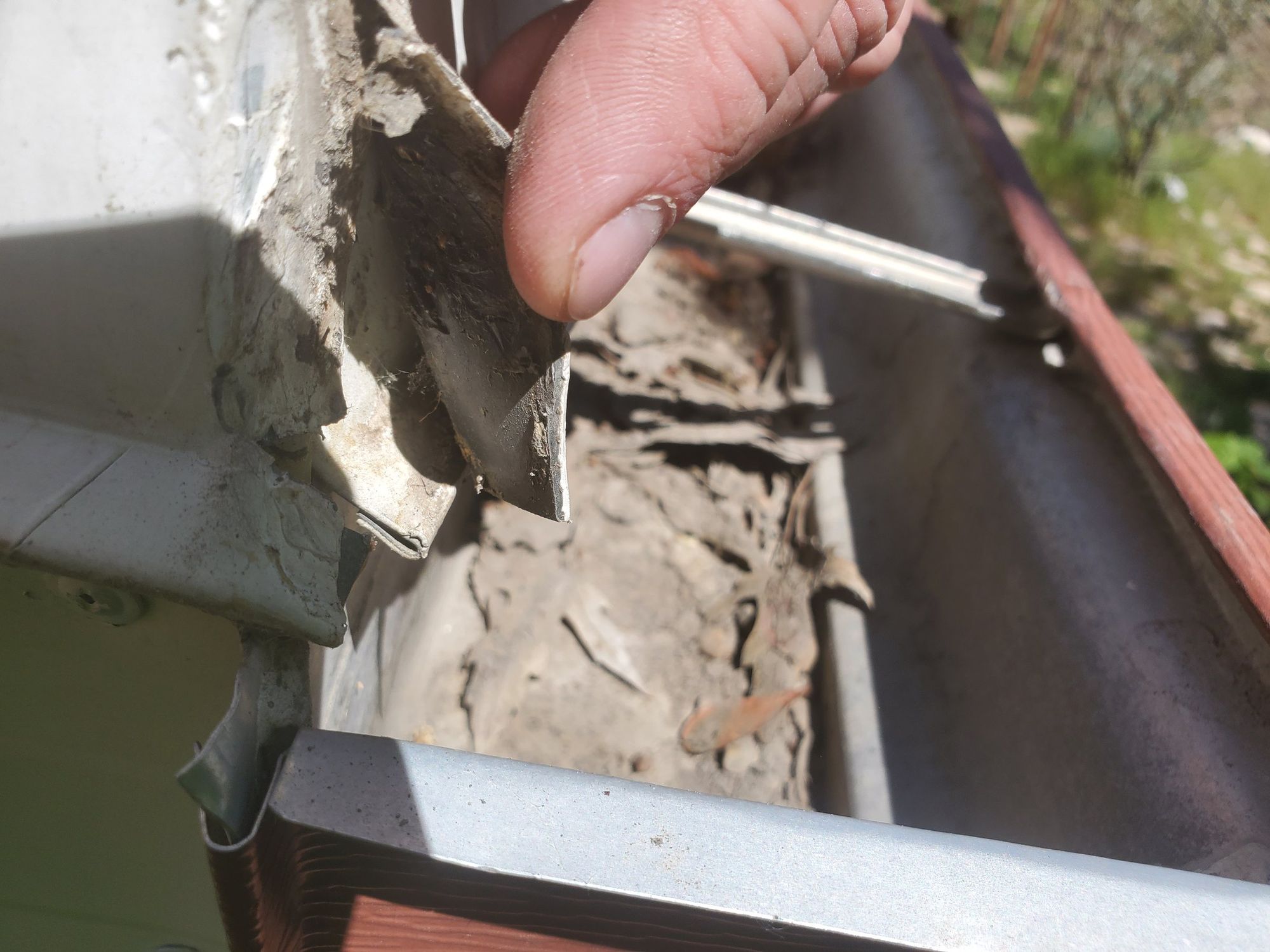
What comes out of a gutter tells us a fair amount about the roof above it. If yours is full of sand-like grit, it is worth a look at our architectural shingle roofing page for North Salt Lake.
Hangers, and the board they hold onto
A gutter full of water and slush is heavy, and every bit of that weight hangs from screws or spikes set into the fascia. When one stretch starts drooping away from the house, a loose hanger is usually why. Most of the time we pull it, move it a few inches to fresh wood, and drive it home with a longer screw.
Sometimes the hanger is fine and the board is not. If a screw spins without biting, or a probe sinks into the wood around it, the fascia has been wet for a long time, usually from water getting behind the gutter. Resetting hangers into soft wood buys very little time. In that case we tell you the board is the actual repair, and we fix it before we rehang anything.
Water that sits in a gutter in March is ice by bedtime.
A low spot that holds water
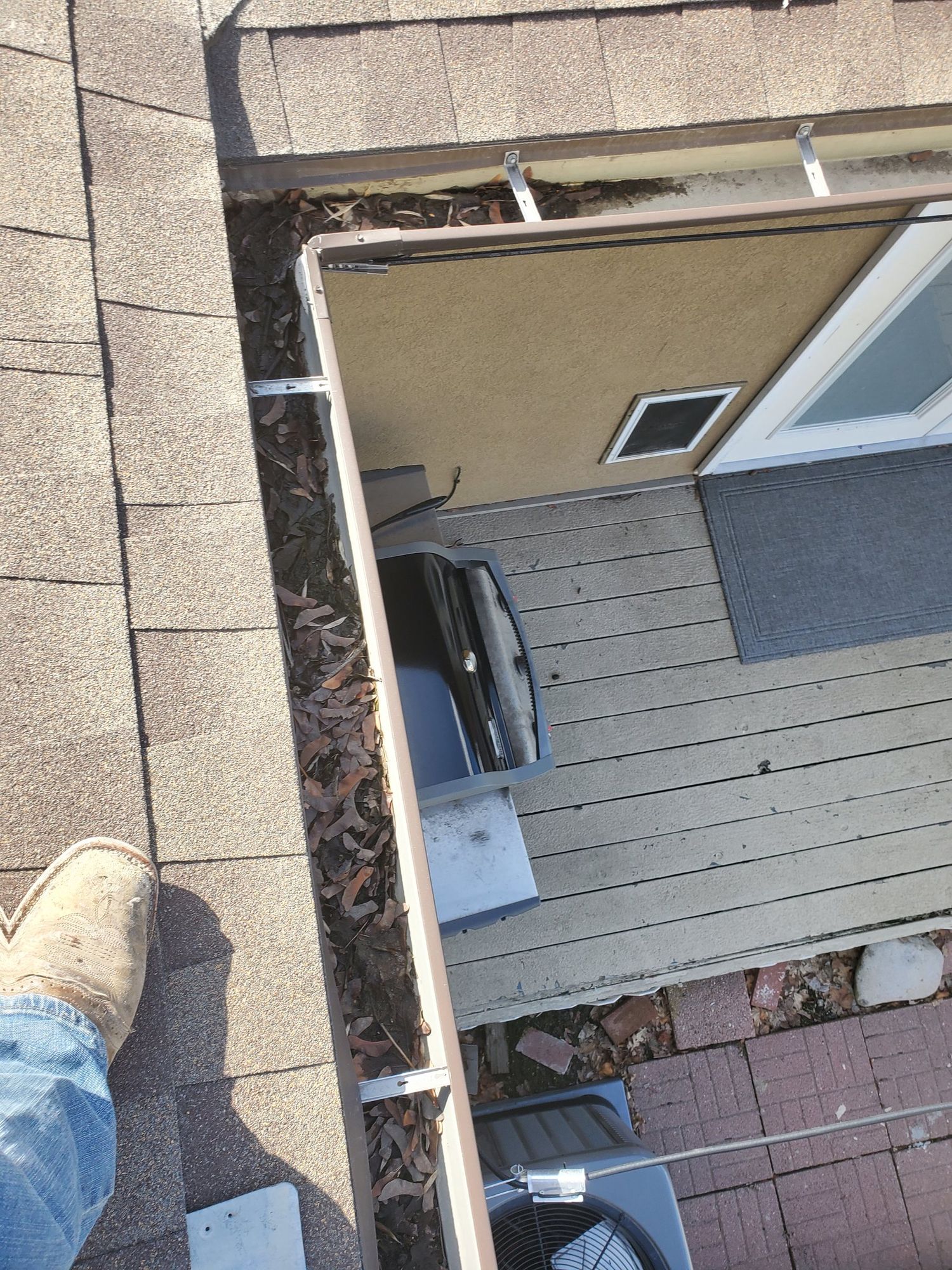
The second photo shows a gutter running along an eave over a back deck, full of dead leaves from one end to the other. Leaves like that settle hardest in whatever stretch sits lowest, and a low stretch is where the trouble starts.
A gutter is supposed to fall gently toward its outlet. When a hanger lets go or the fascia shifts, a section drops out of line and becomes a little pond. In this valley that is a real problem, because a mild afternoon fills that pond with melt off the roof and the hard drop in temperature after sundown turns it to a block of ice. Ice is heavy and it pushes outward, so the seams open a little more each time and the hangers take a beating.
We fix a low spot by loosening the hangers along it, bringing the section back up to a steady fall, and setting fresh fasteners into sound wood. Then a hose goes in at the high end, and we watch until the trough runs empty.
When patching stops making sense
We would rather fix one corner than sell you a whole new gutter. Still, there comes a point. If nearly every joint on a run has been resealed, or the run has been pulled back into line twice and keeps dropping, the patches have stopped paying for themselves. At that point we say so, and we replace runs too. That work is on our main gutter replacement page, and the everyday repairs are on the gutter repair page.
We are a second-generation, woman-owned family crew with 27 years in the trade and 8 years as Hancock Signature Roofing, based in Salt Lake City just south of you. The rest of what we do in town is on the North Salt Lake service area page, and finished work is in the gallery. Call (801) 382-8898 or send a note through the contact page, and we will come take a look at the gutter and the edge of the roof above it.
Where North Salt Lake sits on our map
North Salt Lake sits just past the north edge of Salt Lake City, and we are up there on gutters and roof edges often.
Asked before the ladder comes out
Asked by North Salt Lake homeowners before we get the ladder out.
(801) 382-8898Is a dripping corner worth fixing on its own?
Yes. A corner that drips every storm sends water down the same spot on the fascia and the wall below it. Cleaning the joint and resealing it is a small job, and it saves the board.
Why does my gutter fill with ice when it has heat cable?
Usually the cable is buried under needles and leaves, or it has slipped down into them. It warms the top of the debris while the water below it freezes. Emptying the gutter and resetting the cable on clean metal is the first step.
What are the little grains of sand in my gutter?
Those are granules from your shingles. A few after a new roof are normal. A steady layer of them every time you clean means the shingles are wearing, and it is a good time to have the roof looked at.
Can you fix one sagging section without replacing the run?
Most of the time, yes. We bring that section back to a steady fall, set new fasteners into sound wood, and test it with water. If the fascia behind it is soft, we tell you and fix the board first.
How do I know when it is time for new gutters instead?
When repairs stop holding. Joints resealed again and again, or a run that keeps sagging after it has been reset. We will tell you honestly which side of that line yours is on.
The rest of the North Salt Lake work
Talk to Hancock
A corner dripping or a stretch sagging?
Get a leak looked at before the next freeze. We will clean out the trough, find what is actually failing and fix that piece.