
November 2026
Water coming through the ceiling
It usually starts with a sound. A drip on the hardwood, a tap on a lampshade, a slow patter behind a closet door. Then a brown ring on the drywall that was not there at breakfast. A roof leak always picks a bad moment, and most people spend the first few minutes deciding whether to grab a towel or the phone.
Both, in the right order. If you are reading this with a bucket on the floor, the short version is: protect the people and the electrical first, then the belongings, then call. Our emergency roof repair around Herriman exists for exactly this, and storm calls jump our queue.
Inside the house, first
Look at where the water is landing before anything else. If it is coming through or near a light fixture, a ceiling fan or an outlet, turn that circuit off at the breaker panel and keep people out of the room. Water and wiring together are the one part of a leak that can hurt somebody.
Then catch the water. A bucket or a storage tote under the drip, a towel inside it so the splashing does not carry across the floor. Move furniture, rugs, electronics and anything paper out of the way. A plastic sheet or a shower curtain over what cannot be moved buys time.
When the ceiling bulges
A sagging, bubbled patch of drywall means water is pooling on top of it. Left alone, the weight can bring a section of ceiling down all at once. Put the bucket under the lowest point of the bulge and poke a small hole there with a screwdriver. The water drains in a controlled stream instead of in one heavy rush, and the drywall has a better chance of being patched instead of replaced.
Take pictures before you clean up
Once the water is contained, grab your phone. Photograph the stain, the drip, the bucket, anything wet, and the room as a whole. If there was a storm, step outside and photograph the roof from the yard, any shingles on the lawn, and any damage to gutters or siding. Write down the time the leak started.
This feels like the last thing on your mind while water is running, and it is the first thing an insurance adjuster asks for. Hail and wind claims hinge on showing what happened and when. We deal with the insurance paperwork that follows storm damage all the time, and the homeowner’s own photos from the first hour are some of the most useful evidence in the file.
If you can get into the attic safely, take a flashlight and look too. Wet insulation, a dark trail on the underside of the deck, or daylight where there should not be any helps us find the entry point faster. Step only on the framing, never on the drywall between it.
What to tell us on the phone
The call is where the repair starts, because what you tell us decides what goes on the truck. A crew that shows up with the right tarps, membrane and flashing metal can dry the roof in on the first trip. A crew that guessed has to leave and come back.
Tell us which room the water is in and roughly where on the ceiling or wall. Tell us what the roof is made of if you know: asphalt shingles, metal or tile each need different materials for a temporary cover. Tell us whether there was hail or strong wind, and which direction the storm came from, because rain pushed sideways in Herriman tends to get in on the side the weather hit. Mention a bulging ceiling, water near wiring, or anything on the lawn that came off the roof. If you took photos, say so, and we will ask you to send them.
It also helps to know how to reach the roof: a gate code, a dog in the yard, or a steep drive where a truck should not park.
What a dry-in is
When we get to a leaking roof during or right after bad weather, the goal is to stop what is coming in. We call that a dry-in. It is a temporary cover, done properly so it holds until the real repair.
Depending on the damage, that might be a heavy tarp run up and over the ridge so water cannot get under its top edge, held down with boards fastened along the edges instead of a few bricks the wind will move. On smaller openings it might be a patch of membrane and a temporary flashing, including at a wall joint until the metal can be cut into the masonry properly.
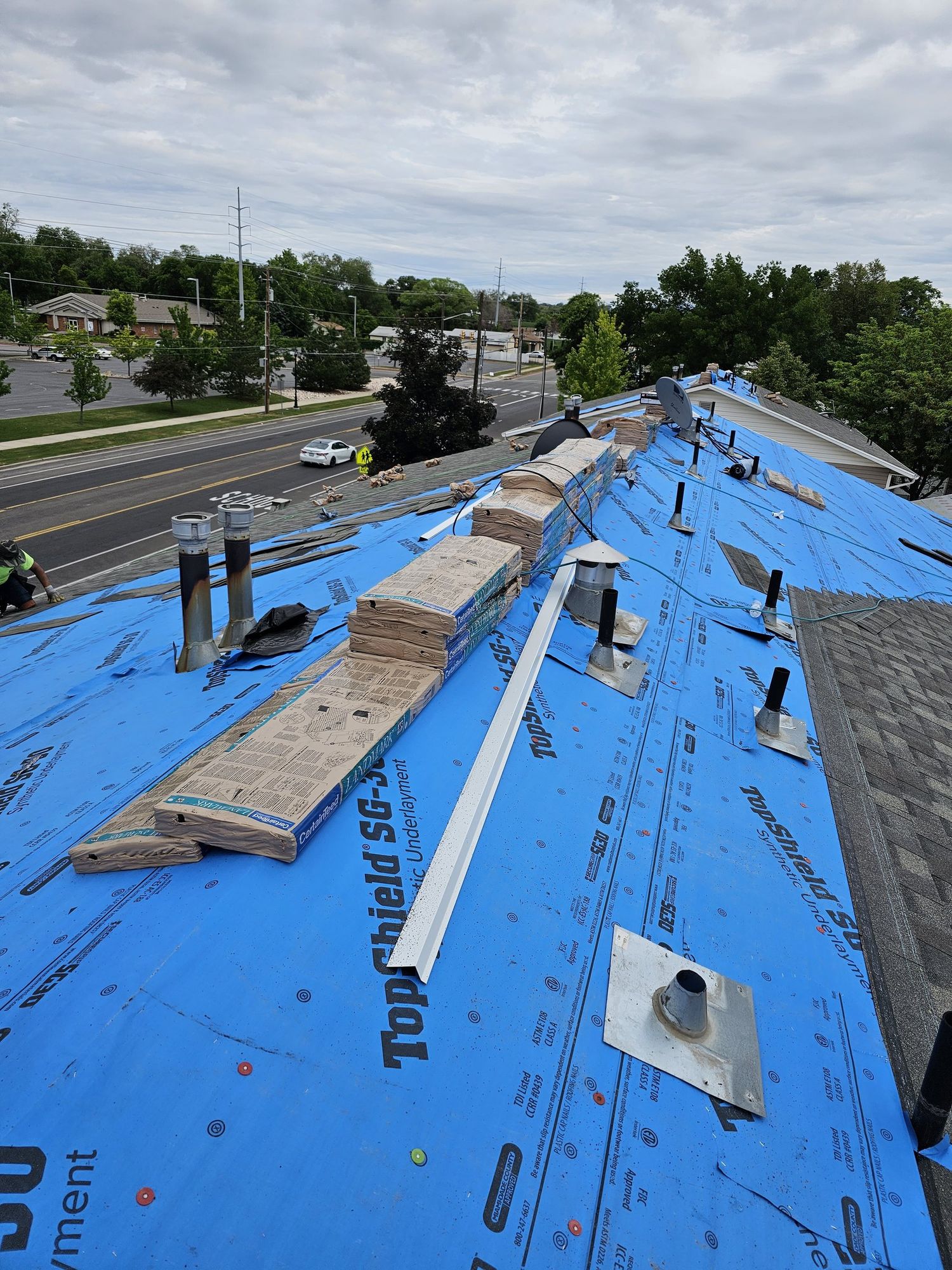
When a whole slope has to be opened, the dry-in is underlayment rather than a tarp. A deck sealed that way reads as one continuous skin: every seam lapped downhill, the pipe boots set back over the vents so nothing stays open, and the shingle bundles waiting on top for dry weather. It is not much to look at, but water has nowhere to go except down the slope and into the gutter.
A good dry-in keeps the house dry for as long as it takes to plan the permanent repair. A bad one, a loose tarp flapping on the ridge, often lets in more water than the original leak.
Why the permanent fix waits
It is tempting to want the whole thing fixed that day. On a dry, calm afternoon with a small, obvious problem, sometimes it can be. In a storm it should not be. Shingles laid on a wet deck trap moisture under them, sealant will not bond in cold rain, and new flashing set in a hurry on a slick roof is exactly the kind of detail that leaks again next season. So the order is always the same: the water gets stopped that day, and the lasting repair goes on the calendar for the first stretch of dry weather.
When the weather clears, we come back and walk every slope of the roof. We find the entry point, look at how far the water traveled, and check the deck underneath for soft wood. Then you get photographs and a straight answer on whether it is a repair or something bigger. The emergency roof repair page covers the service in more detail, and the Herriman page covers the rest of our work in town. Call (801) 382-8898 or send a note through the contact page.
Drying out the inside
A leak is not over the moment the roof stops letting water in. Wet insulation holds moisture against the drywall and the framing for days, so anything in the attic that stayed soaked should be pulled back or replaced, and a fan or two in the room below speeds things along. Drywall that only stained can usually be sealed and painted once it is fully dry. Drywall that sagged or went soft needs to be cut out and replaced. If a damp smell hangs around after a week, look again, because something is still holding water.
Keep the bucket in place for the next storm or two, even after the dry-in. It costs nothing, and it tells you right away whether the cover is doing its job. Before the permanent repair, it is worth clearing and covering whatever sits directly under the work, since old nails and attic dust shake loose when the roof is opened above a room.
When the work is done you get the photographs: the damage, the deck underneath, and the finished repair. If you want to see what finished repairs on other roofs look like before yours starts, our gallery has plenty of them.
Questions people ask with a bucket on the floor
Should I go up on the roof myself?
No. A wet roof is slick, wind makes footing worse, and a ladder on soft ground can kick out. Most of what you could do up there is better done from inside the house anyway: catching water, protecting belongings and taking photographs while you wait for help to arrive.
Will my insurance cover the leak?
That depends on your policy and on what caused it. Storm damage from hail or wind is often covered, while slow wear usually is not. We cannot promise what an adjuster decides, but we document the damage carefully and help with the paperwork that follows a storm claim.
Is a tarp enough to get through a few days?
A tarp put on properly, run over the ridge and fastened with boards along its edges, can hold through a stretch of weather. A tarp weighed down with bricks or left loose usually tears or lifts in the first gust and lets the water right back in.
Why does my leak only happen in some storms?
Often it depends on the wind. Rain that falls straight down runs off the roof normally, while rain pushed sideways from one direction finds the one lap or flashing that is open on that side. Tell us which storms caused it; that narrows the search.
Can a winter leak be the same problem?
Sometimes it is a different one. Snow that melts over the warm part of the roof and refreezes at the cold eave can back water up under the shingles there. Those leaks show up near exterior walls and are worth a look before the next round of snow.
Stop it, then fix it
The first hour is about safety and keeping the damage small. The permanent fix comes after, done in dry weather by people who walked the whole roof first. Reach us at (801) 382-8898 or through the contact page.
Talk to Hancock
Talk to Hancock
Call (801) 382-8898 or send a note and we will get on the roof and tell you what it needs.