
November 2026
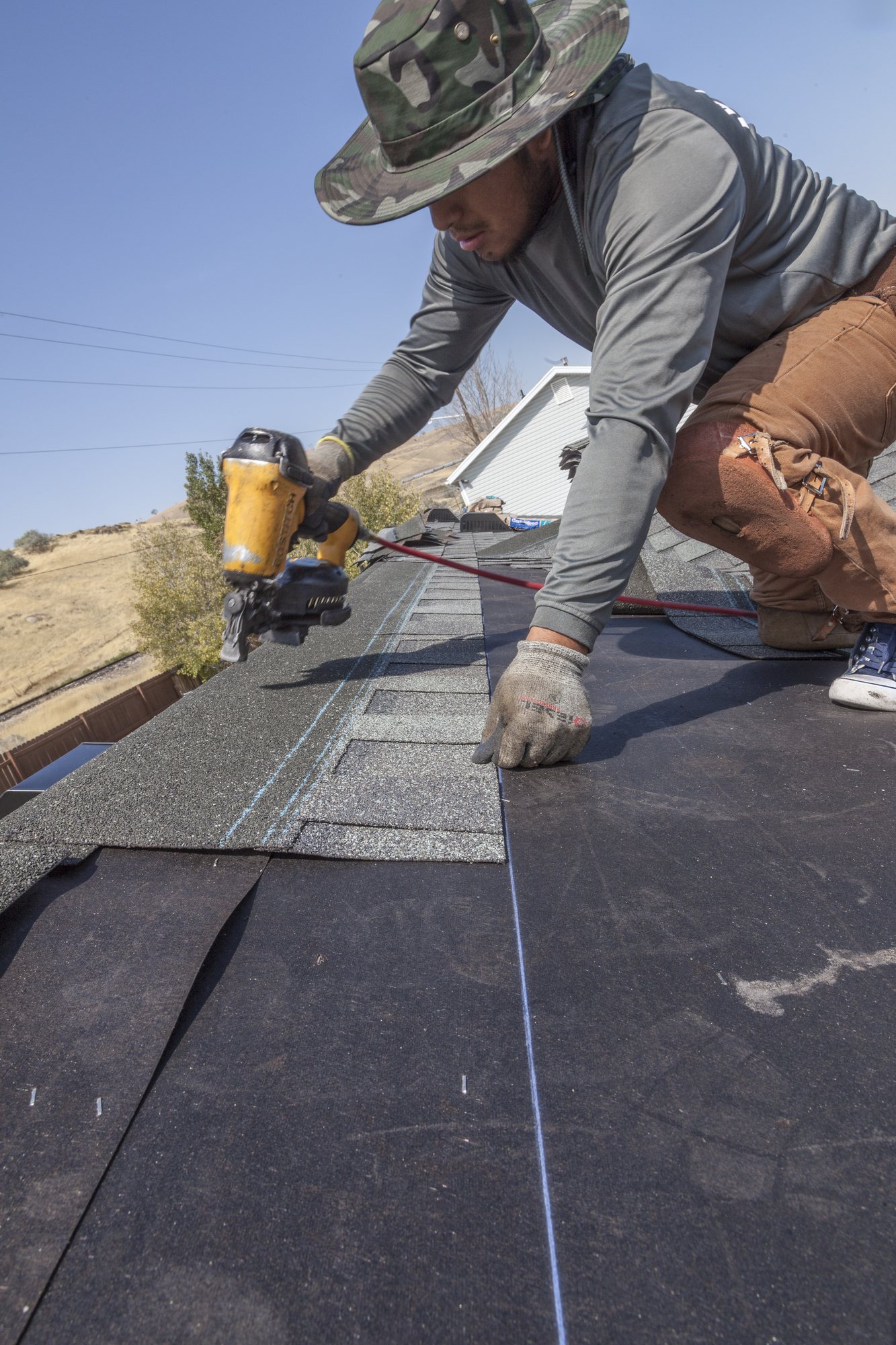
The day the roof crew takes over
On a new house the framers finish, the trusses are braced, the sheathing is on, and for a short stretch the whole building sits open to the weather with nothing but bare wood over it. That gap between framing and a finished roof is where we come in, and it is the part of a build most owners never see up close. They drive by on a Monday and see a wood roof. They drive by on Wednesday and see shingles.
A lot happens in between, in a set order, and the order matters more than any single product. Herriman sits at the south end of the valley against the Oquirrhs, and much of what gets built there is newer construction, so a good share of our new construction roofing around Herriman starts exactly here: a clean deck and a schedule.
Reading the deck we are handed
Before a single roll of anything comes off the trailer, somebody walks the sheathing. The framers did their job, but they were working toward a different finish line, and the roof is the first trade that has to live on top of their work for decades.
We look for panel edges that do not land on a truss, sheets butted tight with no room to move as the wood takes on moisture and dries out again, and nails that missed the framing and are sitting loose in the panel. A sheet with a corner standing proud will telegraph through every layer laid over it. We also look at the deck surface itself. Sheathing that sat through a wet week before we arrived can swell at the edges, and that swelling has to be dealt with before anything goes down.
Most of the time the deck is fine and this takes a few minutes. When it is not, we tell the builder and the owner the same day, with photographs, because a problem found on bare wood is a quick fix and the same problem found after shingles is a tear-off.
The eave goes first, and it goes in layers
The lowest edge of the roof gets the most attention, because it is where water collects, where snow sits, and where ice forms when meltwater refreezes over a cold overhang.
Metal drip edge goes along the eave first, fastened to the deck, so the edge of the wood is covered and water drops clear into the gutter. Over it goes ice-and-water shield, the self-adhering membrane that seals around every nail driven through it. On a Utah roof that membrane belongs at the eave on every house we roof, and how far up the slope it runs is measured from the inside of the house: coverage has to reach past the interior wall line. The membrane goes down in one smooth run with no wrinkles or fish-mouths at the laps, because a wrinkle in a self-sealing layer is a channel water can follow.
Rakes get their metal later
Along the sloped gable edges, the order flips. The underlayment goes down first and the drip edge laps over it, so any water running sideways along the rake stays on top of the membrane. Getting that lap backward is a small mistake that sends water under the underlayment at the corners of the house.
Underlayment over the whole field
Once the eaves are sealed, the rest of the deck gets covered. We use synthetic underlayment on new roofs. It does not wrinkle when it gets damp, does not tear when the wind catches a loose edge, and gives a crew decent footing on a steep pitch. It is the layer that handles whatever water gets past the shingles, and over a few decades something always does.
Rows run horizontally from the bottom up, each one lapping over the one below by the amount printed on the roll, so water always runs from a higher sheet onto a lower one and never into a seam. Fasteners go in on the pattern the manufacturer calls for. Wind-driven rain is the failure people in Herriman do not plan for: water gets pushed sideways under laps and behind metal instead of running down the slope. A properly lapped underlayment is the backstop for exactly that.
At this stage the house is dried in. Rain on Tuesday night slows the crew down and stays outside the house. If weather stops the work before the field is finished, every open edge gets fastened down so the wind cannot get under a loose row overnight.
Valleys, walls and every hole through the roof
The field of a roof is simple. The places where it changes direction or meets something else are where new roofs leak, and they get their protection before the shingles arrive.
Every valley gets a full run of ice-and-water shield down its length, because a valley carries water from two planes at once and concentrates it into one line. Every penetration gets the membrane too: plumbing vents, the furnace and water heater flues, bath and kitchen exhaust, and any skylight curb. Where a roof plane runs into a sidewall, step flashing will go in piece by piece as the shingles go up, each piece lapping the one below and tucking behind the wall wrap.
This is also when we coordinate with the other trades. A vent pipe that shows up after the roof is finished means cutting into a new roof. We would rather ask the plumber and the HVAC crew where their pipes are coming through while the deck is still open and there is only membrane to work around.
Shingles, vents and the cap at the top
Starter goes along the eaves and rakes, then the field courses run up the roof off chalk lines snapped across the underlayment, so the rows stay straight across the whole plane. Fasteners are galvanized, and each shingle gets six nails in the nail line.
Ventilation gets set as the roof closes up. Intake at the eaves and exhaust at or near the ridge have to be balanced for the attic below, and the time to sort that out is while the roof is open and the drawings are on the tailgate. Box vents and ridge vent both need their openings cut in the deck before they are covered.
The last thing on is the hip and ridge cap, laid over the ridge vent where there is one. Each piece covers the nails of the piece before it, and the run is started so the exposed laps face away from the weather, which keeps wind-driven rain from being pushed under the cap edges. A crew that has done this enough finishes the cap and then walks the whole roof one more time, picking up stray nails and checking every flashing before calling it done.
Who hears what along the way
On a new build there are usually two people who care about the roof: the builder running the schedule and the family who will live under it. We keep both in the loop. The builder gets a start date, a day we expect to be dried in, and a heads up the moment weather moves either one. The owner gets photographs of the layers nobody will see again once the shingles cover them, the ice barrier at the eave, the valley membrane, the flashing at the walls. If the house ever needs work years from now, those pictures show the next roofer exactly what is under there.
A finished new roof from us carries our 10-year workmanship warranty, the same as a replacement on an older home. The new construction roofing page covers how we schedule around a builder, and the Herriman service area page covers the rest of what we do on that side of the valley. To talk about a house that is going up now, call (801) 382-8898 or reach us through the contact page.
Questions from people building a house
Can the roof go on before the windows and siding?
Yes, and on most builds it should. Getting the house dried in early protects the framing and the interior work that follows. The one thing we need settled first is where every vent and flue will come through, so we are not cutting into a finished roof later.
Should I be on site while the roof goes on?
You do not have to be. If you want to see the layers, the best time is right after the underlayment and ice barrier are down and before shingles start. We send photographs of that stage either way, so you have a record of what is under the finished roof.
What happens if it rains between framing and roofing?
Sheathing can handle a little rain, but a long soak swells the panel edges. We check the deck when we arrive and let the builder know if anything needs to dry out or be swapped before we cover it. Wet wood sealed under membrane causes trouble later.
Do you work directly with my builder?
Usually, yes. The builder sets the schedule and we fit into it, and we talk with the other trades about vents and penetrations. We also keep the homeowner informed, because the family is the one living under the roof long after the builder has moved on to the next house.
Is a new house roof built differently from a replacement?
The layers are the same. The difference is that a new roof starts on clean, known sheathing with no old nails, patches or rot to find. That makes the deck check faster and lets us plan vents and flashing with the other trades before anything is closed up.
Built in the right order
A first roof only gets built once, and every layer covers the one before it. Get the order right on bare framing and the house starts its life dry. Call (801) 382-8898 or use the contact page to talk about yours, and see finished work in the gallery.
Talk to Hancock
Talk to Hancock
Call (801) 382-8898 or send a note and we will get on the roof and tell you what it needs.