
November 2026
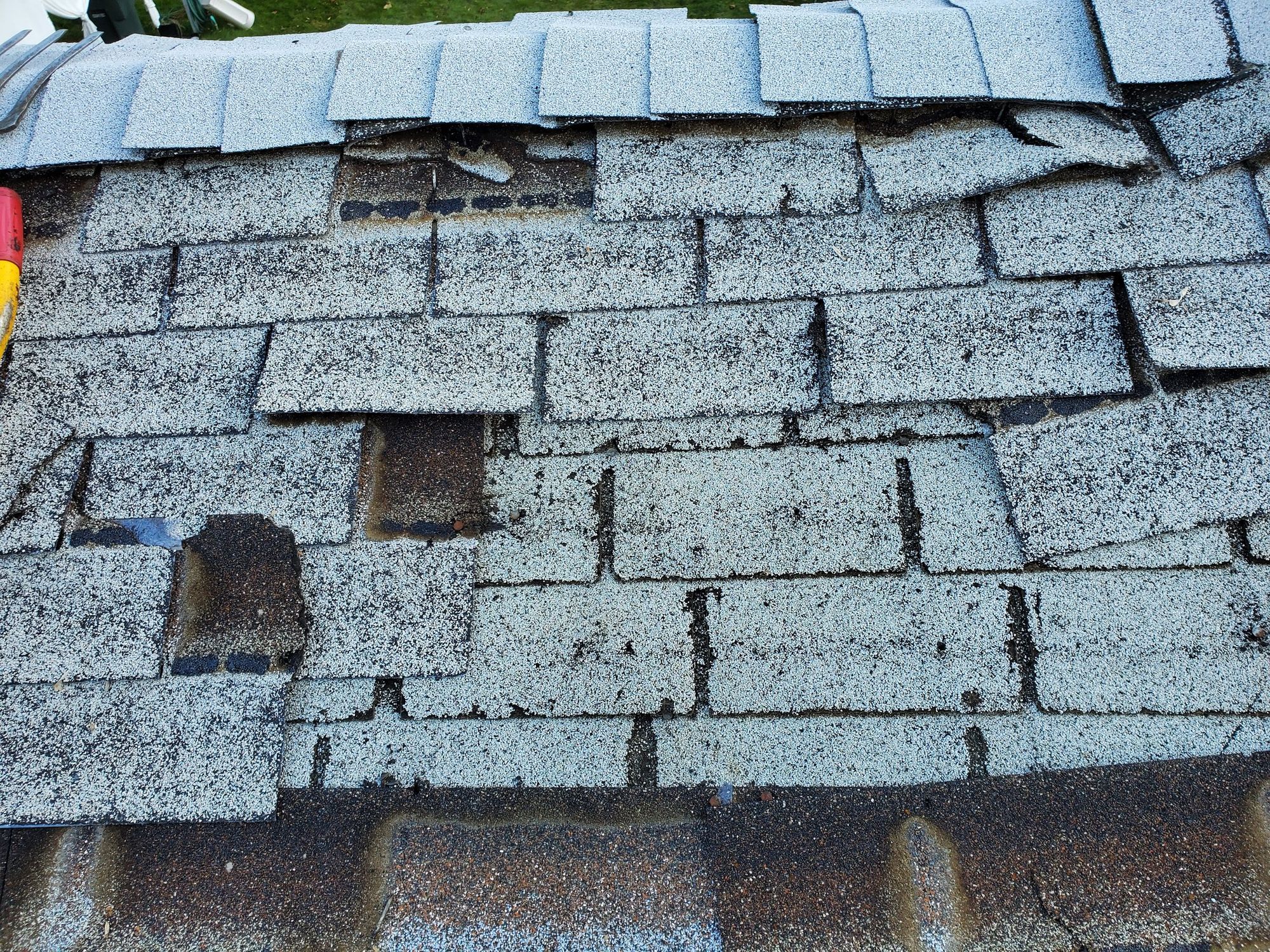
The morning after
Wind does its damage quietly. There is no pile of hail in the yard and no dent in the car, just a roof that may or may not look the same as it did yesterday. A lot of people in North Salt Lake find out about wind damage weeks later, when a stain shows up or a neighbor mentions a shingle in the flower bed.
The town sits where Davis County pinches down between the lake and the mountains, and that narrow strip channels wind harder than the more sheltered ground to the east. A gusty night is reason enough to take a look. This is how we read a roof after one, starting from your yard and ending on the ridge, and how our North Salt Lake wind damage crew decides between a repair and something bigger.
What you can see from the yard
Stay off the roof. A ladder on a windy day, or a shingle surface covered in loose grit, is how homeowners get hurt. Most of what matters at this stage you can see standing in the yard or across the street.
Walk all four sides of the house. Look for pieces of shingle on the ground, in the gutters, or caught in a hedge, and check whether their color matches yours. Look along the ridge for a gap or a cap piece flipped up. Look at the field of the roof for a patch that is a different shade, which usually means a shingle is gone and you are seeing the older one underneath or the black felt.
Check the edges too. Drip edge and rake trim that has lifted, a gutter pulled away from the fascia, a vent cap knocked crooked, a satellite dish or swamp cooler on the roof that has shifted. Anything loose up there becomes a lever the next time the wind comes through.
Take pictures of anything you find, with the date on your phone. Then go inside and look at the ceilings on the top floor, and in the attic if you can get to the hatch easily: daylight through the deck is the one you cannot miss.
What we check once we are up there
A lot of wind damage cannot be seen from the ground at all. These are the things we look for shingle by shingle, usually on the side of the house that faces the wind first.
Tabs that came unsealed
Every shingle is glued to the one below it by a strip of sealant that bonds in the sun. Wind can pop that bond without tearing anything, and the shingle settles back down looking fine. We lift the edges gently along the windward slopes. An unsealed tab moves freely, often with a clean line of dust where the bond used to be, and it will flap on the next windy day until it tears.
Creases at the nail line
When a shingle lifts far enough, it bends back across its own fastening strip and leaves a crease, a straight line where the mat is cracked across the width of the shingle. A creased shingle may still be lying flat, but it has lost most of its strength at the nails, and water finds the crack.
Pieces that are simply gone
Missing shingles are the obvious one. What matters is what is underneath. Sometimes it is underlayment still doing its job. Sometimes it is bare deck boards with the nail holes from the old shingle open to the sky, and that needs covering the same day.
Ridge cap
The ridge takes wind from both sides and sits highest, so it is often the first thing to go. Cap pieces crack, lift at their front edge, or slide off entirely and leave the ridge vent or the top of the deck open. On a roof with a ridge vent, a lost cap leaves the vent’s open slot facing the sky, and the next storm drives rain or snow straight into the attic.
Everything that sticks up
Vent caps, pipe boots, flashing at walls and chimneys, the edge metal. We check each one for movement, because a flashing that was nudged out of its lap will not show a leak until the next snow melts against it.
On houses with rooftop units, like an AC housing or an old evaporative cooler, we check how they are strapped down and whether anything shifted enough to tear the roof around its base. A cooler that has walked a few inches has usually pulled its own flashing with it.
Repair or replacement
A handful of missing or creased shingles on a roof that is otherwise sound is a repair. We slide new shingles in, nail them in the right line, and seal them down. On a laminated roof that is still flexible, that blends in well and holds.
Older three-tab roofs are a different story. After enough summers in the sun, three-tab shingles go stiff, and the ones around a damaged spot crack as soon as you try to lift them to slip a new piece in. Every repair can break a few more. When we find that, we will show you a broken tab in our hand and talk honestly about whether patching makes sense or whether the roof has reached the end.
Damage spread across several slopes, a lot of unsealed tabs on a roof that is already getting on, or creasing in more places than we can count are the other signs that a full replacement is the honest answer. Our wind damage roofing page covers how we handle both.
The first day
If shingles are gone and deck is showing, the first visit is about getting the house dry. We cover open areas with underlayment or a fastened tarp, re-nail anything flapping, and secure loose trim so it does not tear off overnight. That is a dry-in. The real repair comes after.
The permanent work goes on in decent weather, when the shingles will seal and the crew can work the roof safely. Rushing a repair onto a cold, windy roof gets you shingles that never bond, which puts you right back where you started.
A few things not to do
Do not climb up to push a lifted shingle back down. It is likely creased already, and the grit on a disturbed roof is slick. Do not let anyone glue every tab down with a caulk gun and call it fixed, because that hides creases instead of replacing them. And do not sign anything with a crew that knocks on your door the day after a windstorm before your own roofer, whoever that is, has had a look.
Wind repairs are rarely an emergency past the first day. Once the house is dry, there is time to get it right.
Pictures and the insurance question
We photograph everything we find: every missing piece, every crease, the ridge, the attic, with something in the frame for scale. You get all of it. If you decide to open a claim, those pictures show what is actually on the roof, which is what an adjuster needs to see.
Whether wind damage is covered depends on your policy and on what the adjuster finds, and we will not promise you an outcome we do not control. What we can do is make sure the record is accurate. Hail is a different conversation, and our Davis County hail damage page explains how we work with insurance on those roofs.
Something blew loose last night? Call (801) 382-8898. If it can wait a day, the contact page works, and you can tell us what you saw.
After-wind questions
Is it safe to wait until spring?
If nothing is missing and the deck is covered, a few unsealed tabs can often wait for warm weather, when new shingles will seal. If deck is showing or the ridge is open, it needs covering now, whatever the season.
Why did only one side of my roof lose shingles?
Wind hits one face of a house first and hardest, and it peels shingles from the edges inward. The sheltered slopes often come through untouched. That is also why we check every slope, since lifted tabs on the windward side can look fine from below.
Can you match my existing shingles?
Often closely, sometimes exactly. Shingle colors change over the years and an older roof has faded, so a new piece may stand out for a season before it weathers in. Before choosing, we carry a few samples up and compare them against the old roof in daylight.
Do I need to be home when you look?
Not for the outside. We will need you, or a key, for the attic, and we like to walk you through the photos in person when we can. A phone call with the pictures works fine if you are at work.
Will a wind repair void my roof warranty?
A repair done to the manufacturer’s nailing and sealing instructions should not. If we installed the roof, call us first. Our workmanship warranty on a full replacement covers the work we did, and we would rather come look than have someone else open it up.
Look before the next one
Wind comes through this part of the valley often enough that a small problem rarely stays small for long. A walk around the house after a rough night takes a few minutes. If the answer turns out to be a new roof, our architectural shingle work in North Salt Lake is built around holding in exactly this kind of wind.
Ring us at (801) 382-8898 and someone from the family will come read the roof with you, or use the contact page to set a time.
Talk to Hancock
Talk to Hancock
Call (801) 382-8898 or send a note and we will get on the roof and tell you what it needs.