
Hancock Signature Roofing
Government and municipal roofing
Roofing for public buildings and installations across northern Utah.
Working on public buildings
Northern Utah has a dense concentration of federal and state installations, and the buildings on them need roofs like anything else.
Municipal and government work runs on documentation and schedule as much as on materials. We photograph thoroughly, plan to the window we are given, and leave the site clean.
We cover the corridors these facilities sit in, from the Davis county bases north to the west desert ranges.
Government roofing services
Every government service we do, each on its own page.
Government
- Government Roof ReplacementFull roof replacement on government buildings, planned around the building’s schedule.
- Government Roof RepairRepairs on government roofs, traced to where the water actually gets in.
- Government Commercial RoofingCommercial roof systems for government facilities, specified for the building.
- Municipality RoofingRoofing for city halls, public works buildings and other municipal facilities.
- Municipal Roof ReplacementFull roof replacement on municipal buildings, sequenced so the building stays in use.
- County Roof ReplacementRoof replacement on county buildings, from courthouses to road shops.
- State Roof ReplacementRoof replacement on state facilities, planned around fixed work windows.
- Federal Roof ReplacementRoof replacement on federal buildings, with the documentation and site conduct the work calls for.
- School Roof ReplacementSchool roof replacement planned around the school calendar.
- Public Building Roof RepairRoof repair for libraries, rec centers and other public buildings.
- Government Emergency Roof RepairEmergency roof repair on government buildings: the water gets stopped first.
- Government Storm Damage RoofingStorm and hail damage on government roofs, documented and repaired.
- Government Metal RoofingMetal roofing on government and public buildings.
- Government TPO RoofingTPO membrane on government flat roofs.
- Government EPDM RoofingEPDM membrane roofing on government buildings.
- Government Flat RoofingFlat and low-slope roofing on government buildings.
- Government Roof CoatingsRoof coatings that add years to sound government roofs.
- Government Roof WaterproofingWaterproofing for government roofs, decks and parapets.
- Government Roof InspectionsRoof inspections for government facilities, with photographs and a written record.
- Government Roof MaintenanceScheduled roof maintenance for government buildings.
- Government Roof RestorationRoof restoration for government roofs with years left in them.
The installations up here
Northern Utah carries a dense concentration of federal and state facilities, from the Davis county bases to the west desert ranges and the training areas south of the valley. The buildings on them need roofs like any others.
How public work differs
Documentation, scheduling and site conduct carry as much weight as the roofing itself. Work windows are fixed, access is controlled, and the record of what was done has to be complete rather than remembered.
Systems we install
Membrane and metal on the low-slope and standing-seam buildings, conventional shingle on the housing and support structures. The specification follows the building, its use and the exposure it sits in.
What we find on roofs around here
What we find most often
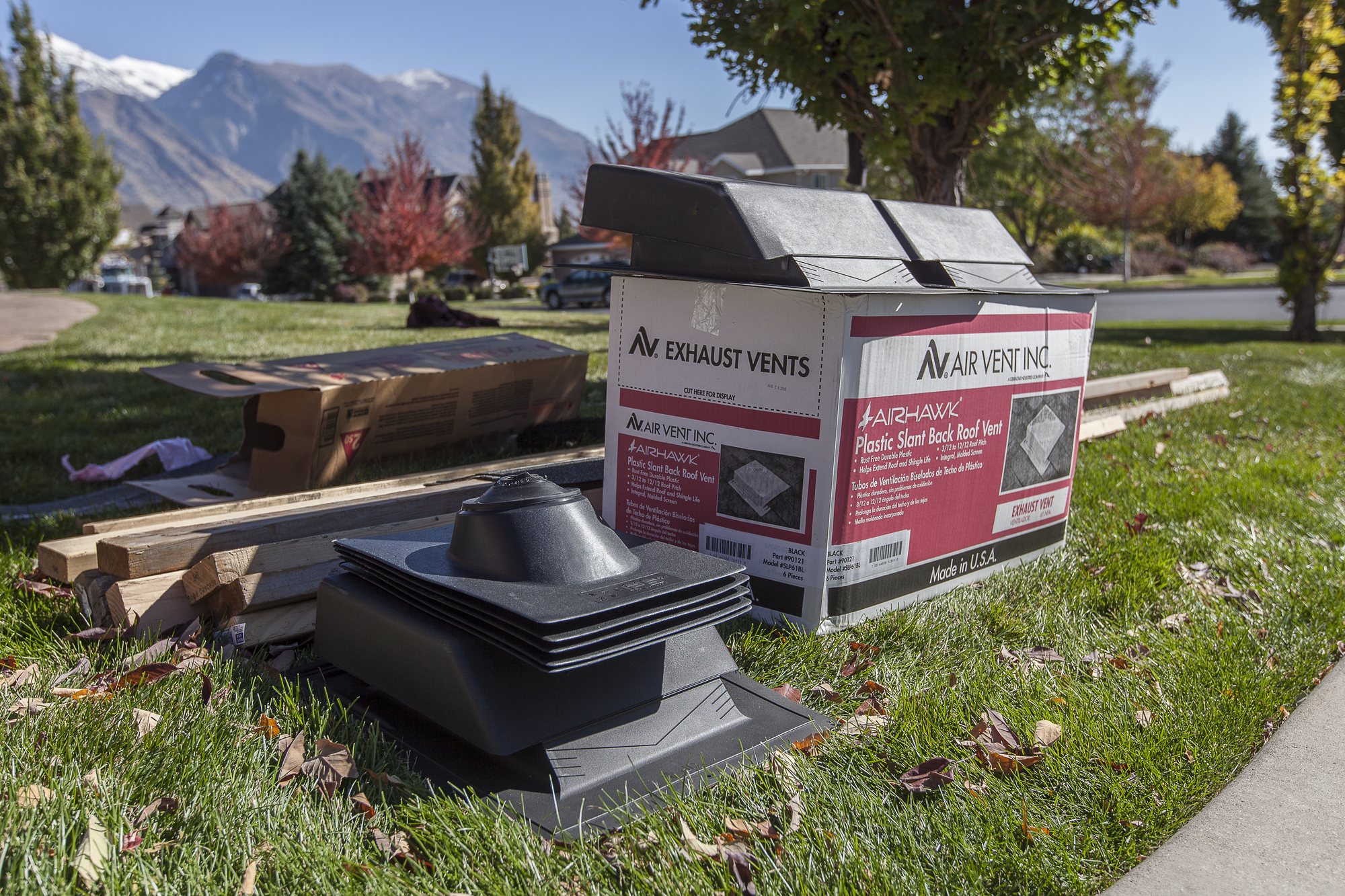
On houses in this valley the three recurring findings are unbalanced ventilation, flashing that was sealed rather than formed, and decking that went soft under a valley nobody could see into. All three are invisible from the ground and all three are cheap to fix while the roof is already open.
What the age of the house tells us
A house built in the 1950s, one built in the 1980s and one built last year each fail differently. Older stock tends to have thinner decking and original framing that was never sized for a second layer of shingles. Houses from the building booms tend to share a builder’s ventilation shortcut across a whole subdivision. New construction usually fails at a detail somebody rushed to hit a schedule.
The year a Utah roof works through
Ice dams start at the eave
The mechanism is simple and it ruins ceilings. Heat escaping the living space warms the deck, snow above melts, the water runs down to the cold overhang past the heated wall line and freezes there. The ridge of ice that builds up backs meltwater under the shingles.
The fix is not a heat cable
Cables buy a season. Sealing the attic bypasses, getting insulation depth right at the top plate, balancing intake and exhaust, and running ice-and-water shield well past the interior wall line is what actually stops it.
Elevation changes the whole calendar
A roof at the top of a canyon and a roof on the valley floor are on different schedules. Up high the snow arrives in October and is still there in May, the freeze cycles are deeper, and the ultraviolet load in the thin air is harsher year round. Down low there are more melt-and-refreeze swings and fewer feet of standing load.
Same materials, different details
The ice barrier runs further, the ventilation gets sized up, and the fastening schedule tightens as the elevation goes up.
What we check
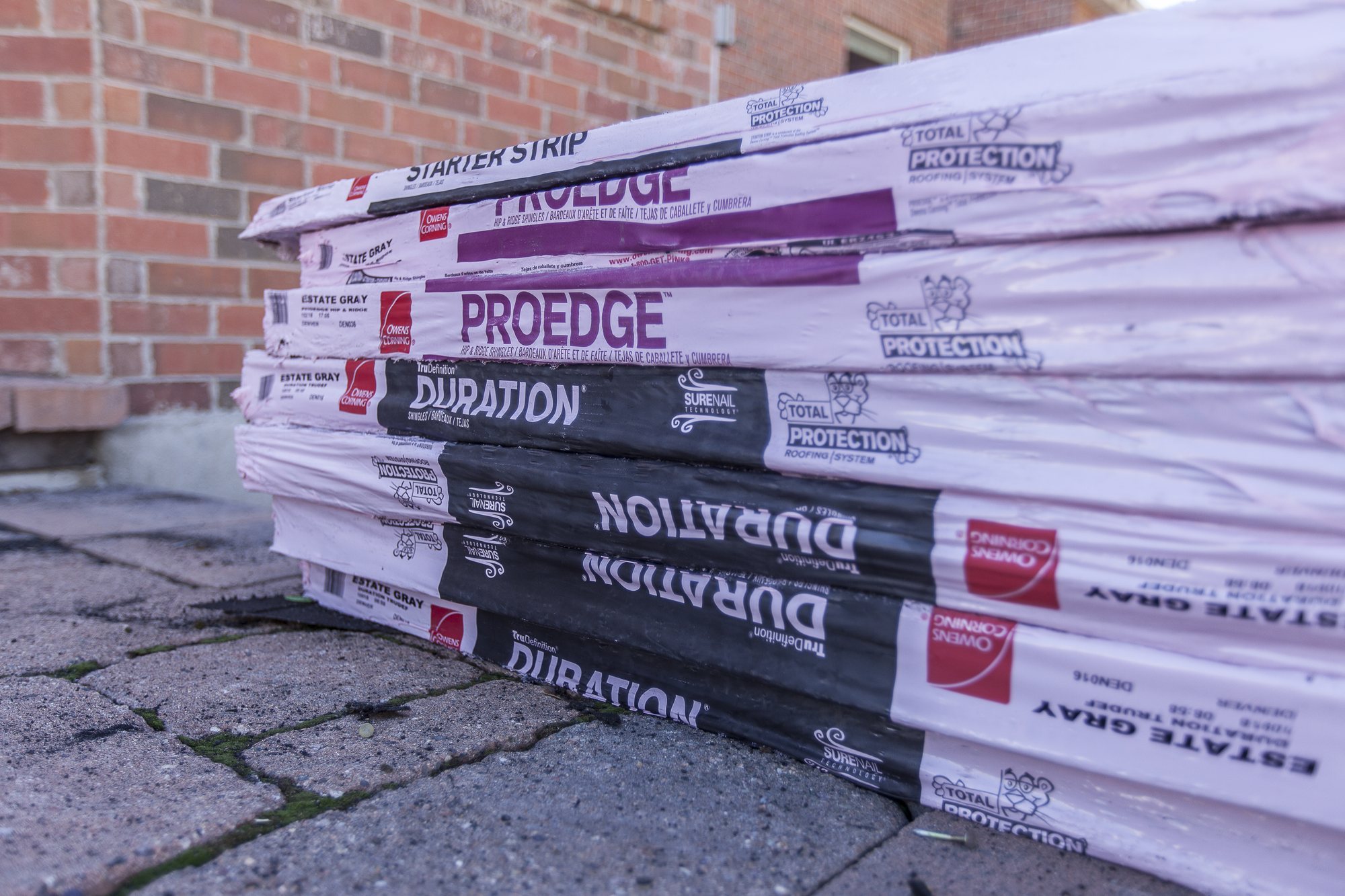
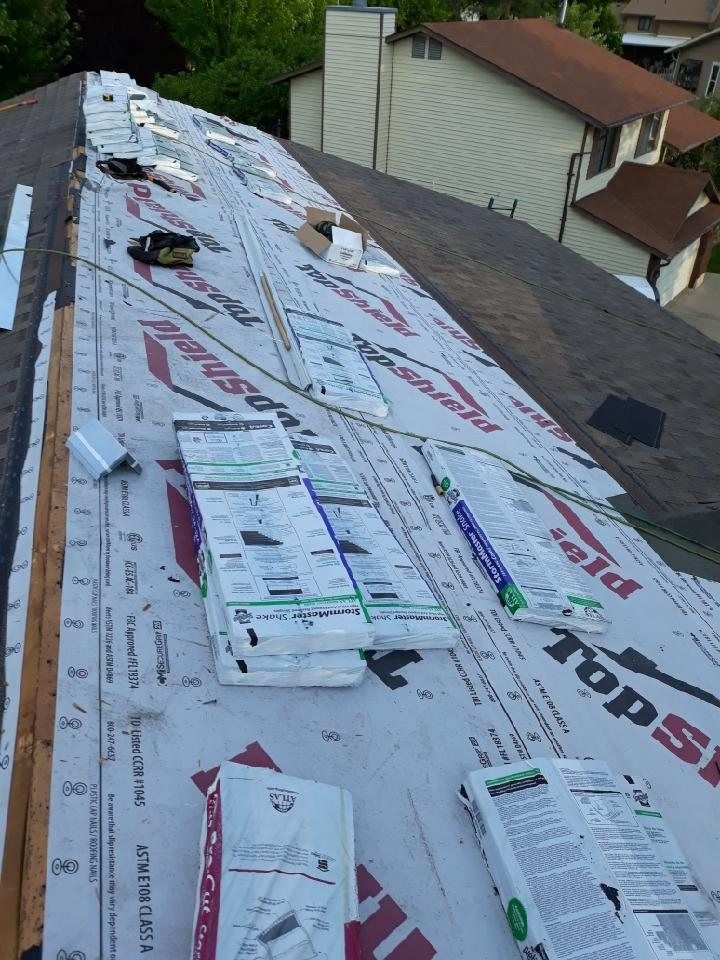
- Bundle count against measured area
- Color lot consistency across bundles
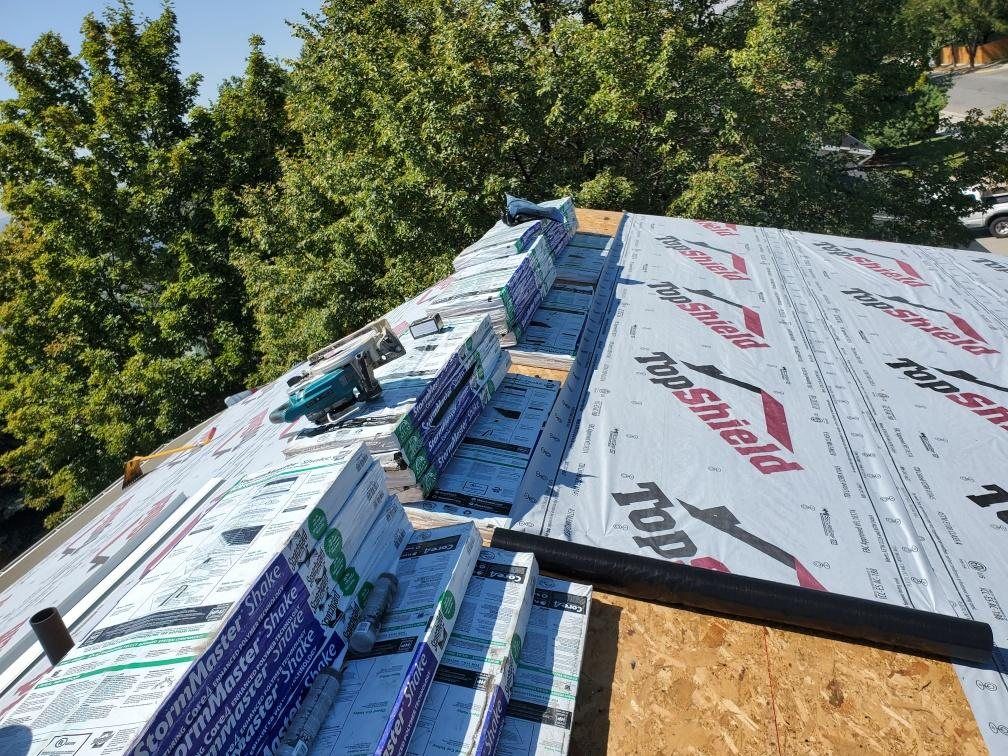
- Staging weight distributed across the roof
- Manufacturer pattern for the chosen product
Where roofs go wrong
The shortcut we see most
Shingles laid over a second existing layer to save a tear-off. It hides the decking, adds weight the framing was not sized for, and guarantees that the next roof is a bigger job than this one should have been.
What good looks like instead
Down to the deck, sheathing repaired where it is soft, ice barrier where the eaves need it, and the flashing formed rather than sealed.
Signs worth a look
- Granules collecting in the gutters or at the downspout discharge
- Tabs lifting or curling along a rake or ridge
- Shingles that look bare or patchy from the street
- Staining or daylight visible in the attic
We work Salt Lake City & surrounding counties: 9 counties and 103 communities, with 27 years in the trade.
From recent jobs

What to expect
How long it takes
Most houses in this valley are one to two days on site once the crew arrives. What stretches it is pitch, the number of existing layers to strip, and how many valleys and penetrations the roof has. We tell you which of those apply to yours before the schedule is set.
What happens to your yard
Tarps go down over landscaping and the drive before anything comes off the roof. Material is staged where it will not crack concrete. At the end of every day the site gets cleared, and when the job is finished a magnet goes over the whole yard for nails.
What you should expect from us
A walk of the roof before anything is quoted, photographs of what we found, a plain explanation of what needs doing and what does not, and Hancock answering for the job through to the finish.
Why Hancock
We are not salespeople
Nobody here is going to sit at your kitchen table and work a close. We get on the roof, we tell you what is up there, and we leave you with the information. If the roof has five good years left, that is what we will say, and we would rather you call us in five years than feel pushed today.
No pressure, no expiring offers
Roofs do not need urgency manufactured for them. When one needs replacing, it is obvious.
We know the inspectors here
Working the same jurisdictions for years means knowing what each building department actually looks at and how they want it shown. That is not about getting anything past anybody, it is the opposite. It means the ice barrier is already where the inspector expects it and the ventilation math is already on the paperwork, so nothing gets opened back up.
A failed inspection costs you time
Usually a week, sometimes a shingle course. Easier to do it right on Tuesday.
Where Salt Lake Valley sits on our map
Salt Lake Valley work is scheduled like the rest of the valley.
Where we work
Nine counties around Salt Lake City, plus every community inside them.
Salt Lake County
Davis County
Weber County
Box Elder County
Tooele County
Utah County
Summit County
Wasatch County
Morgan County
Questions we get asked
Not the question you had? Call the shop and ask a person. We would rather talk it through than have you guess from a website.
(801) 382-8898How long does a roof replacement take?
Most houses in this valley are a one to two day job once the crew is on site. Steeper pitches, multiple layers to strip and complicated roofs with a lot of valleys take longer, and we tell you which yours is before we start.
Do you work through the winter?
Yes, with judgment. Shingles need to seal, and in genuine cold that takes longer or needs hand sealing. Emergency work happens whenever it has to. Full replacements get scheduled around the weather rather than forced into it.
Will you tell me if I do not need a new roof?
Yes. Plenty of what we look at turns out to be a repair, and we say so. A roof with years left in it gets left alone, and you get the photographs either way.
What happens if you find bad decking?
We show you. The decking is only visible during a tear-off, so that is when soft sheathing gets found and replaced. We photograph it rather than just add it to a list.
How do I know when a roof is getting close?
Granules collecting in the gutters, tabs lifting or curling at the edges, shingles that look bare in patches, and daylight or staining in the attic. Any of those is worth a look.
Talk to Hancock
Talk to Hancock
Call (801) 382-8898 or send a note.