

Taylorsville, Utah
Roof Replacement around Taylorsville
A full tear-off and rebuild when patching stops making sense.
Roof Replacement for Taylorsville homes and buildings
We strip the old roof to the deck, replace any sheathing that has gone soft, set new drip edge and flashing where it is needed, lay underlayment and ice barrier where the eaves need it, then shingle from the starter course up.
Ice at the eaves is the Taylorsville problem that gets misdiagnosed most often. It looks like a roofing failure and it is almost always a ventilation failure: warm air escaping into the attic melts snow up the slope, the water runs down to the cold overhang, and it refreezes there and backs up under the shingles.
A replacement is the one time the whole assembly is open. Ventilation, flashing and decking all get fixed at once instead of one at a time.
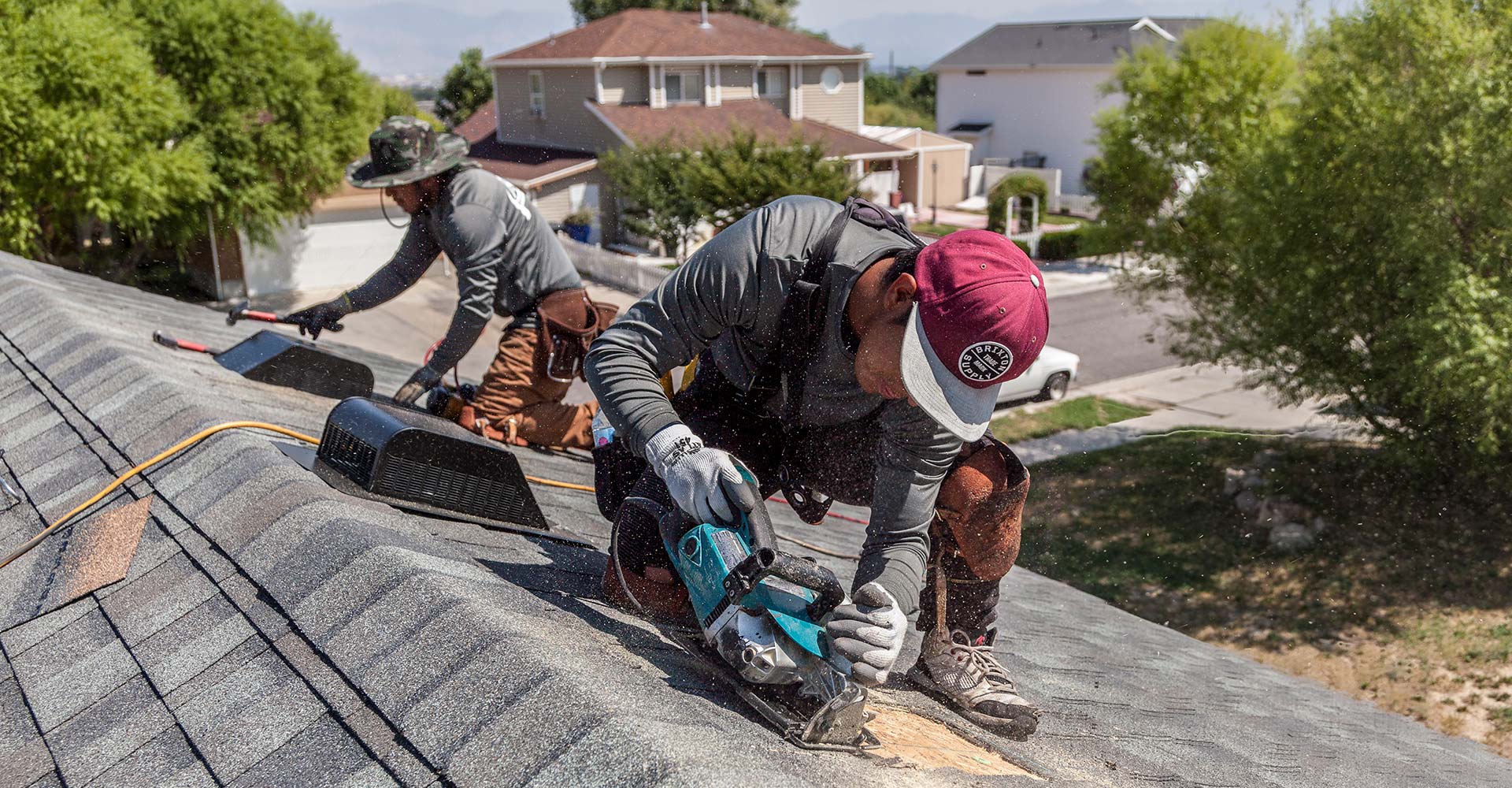
What matters on roof replacement
What we find most often
On houses in this valley the three recurring findings are unbalanced ventilation, flashing that was sealed rather than formed, and decking that went soft under a valley nobody could see into. All three are invisible from the ground and all three are cheap to fix while the roof is already open.
What the age of the house tells us
A house built in the 1950s, one built in the 1980s and one built last year each fail differently. Older stock tends to have thinner decking and original framing that was never sized for a second layer of shingles. Houses from the building booms tend to share a builder’s ventilation shortcut across a whole subdivision. New construction usually fails at a detail somebody rushed to hit a schedule.
Roof Replacement around Taylorsville

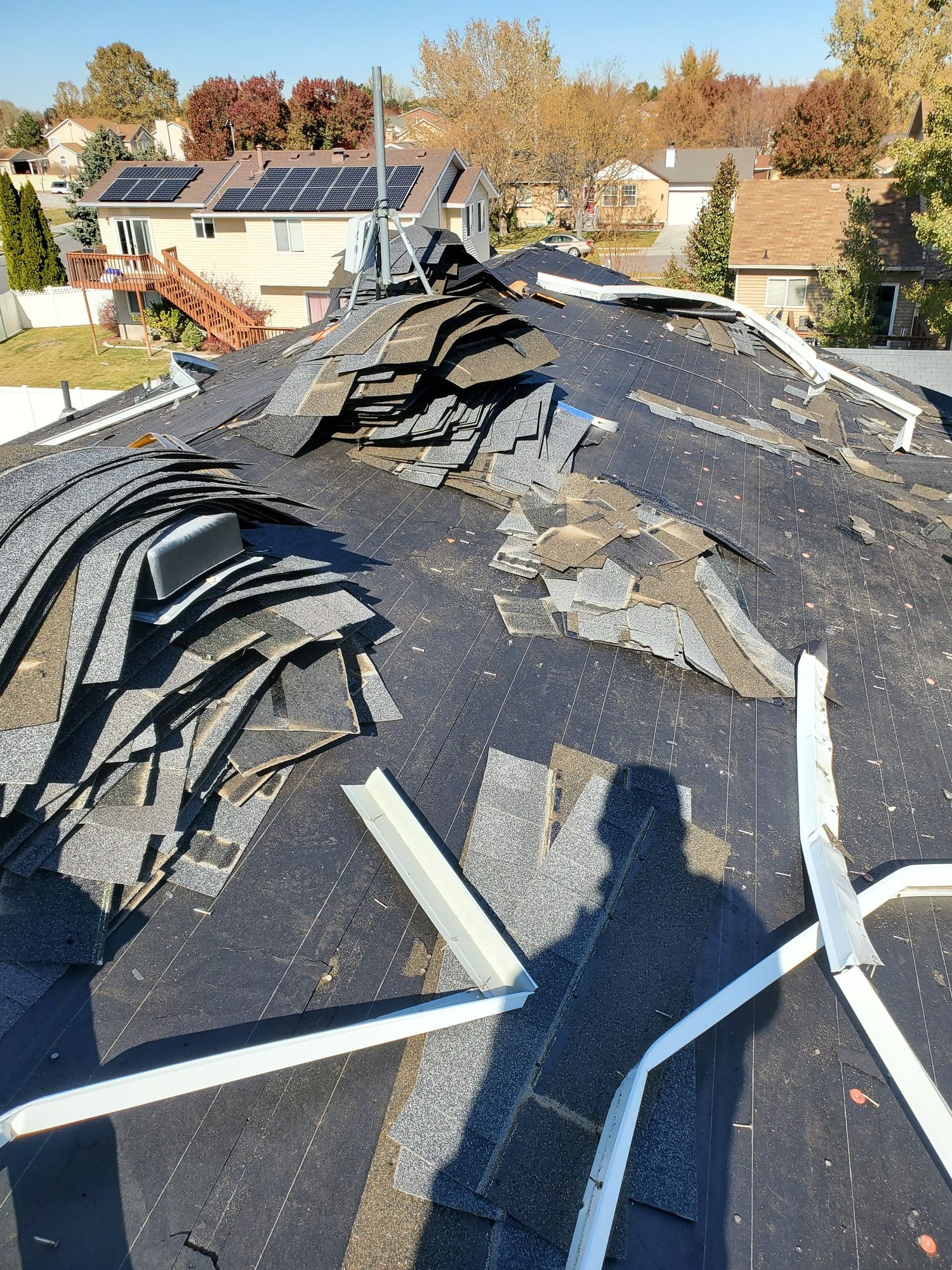
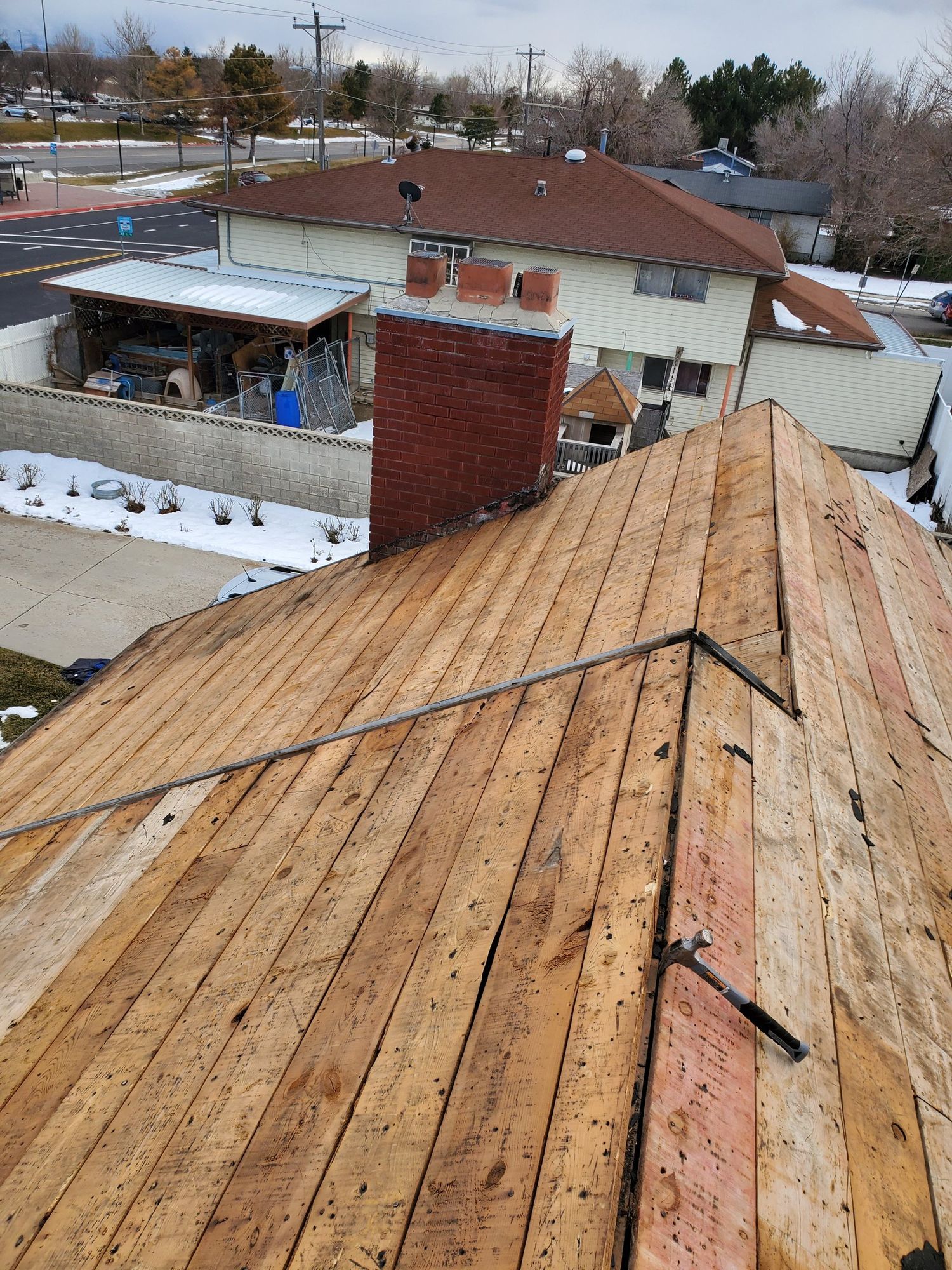
How the system goes together
Counterflashing let into the masonry
Where a roof meets brick or stone, the honest detail cuts a groove into a mortar joint, tucks the top edge of the metal into it, and seals the groove. Water running down the wall face hits metal and gets thrown out onto the roof. The shortcut runs the metal flat up the wall and caulks the top edge, which works until the caulk moves.
Surface-mounted is a temporary answer
We will do it that way on an emergency repair and tell you plainly that it needs to be cut in properly when there is time.
Dry-in is the real milestone
The moment that decides whether a re-roof goes well is not when the last shingle goes down, it is when the deck is covered, taped at the penetrations and sealed at the edges. From that point the house is weather-tight and everything after it is finish work. A crew that understands this never leaves at the end of a day with bare deck showing.
Ice barrier goes down first
Eaves, valleys and every pipe before any field underlayment. Working from the bottom up means every sheet laps over the one below it the way water expects.
Then the metal, then the field
In that order, every time.
What we check
- Decking condition underfoot across the whole plane
- Fastener pattern on the existing sheathing
- Whether there are one or two existing layers
- Flashing that will need rebuilding rather than reusing
What the job looks like
Get on the roof
We walk it rather than look from the drive, check the decking underfoot, the flashings and the ventilation, and photograph what we find before any number is discussed.
Show you what we saw
The photographs come back to you with a plain read of what the roof needs and, just as often, what it does not need yet.
Crew on site
The crews we hire work under Hancock’s direction, staged so landscaping and the drive are protected, working the detail in the order it is supposed to go on rather than the order that is quickest.
Leave it clean
Site cleared at the end of every day, a magnet run over the whole yard for nails at the finish, and the roof walked with you before we go.
Dry for months, then all at once
This climate does not rain steadily, it saves up. Long dry stretches let dust pack into valleys and gutters, then a single cell drops an inch in half an hour. A valley that was clean in May is holding pine duff and grit by August, and that debris dams the water right where the roof concentrates it.
What we clear before storm season
Valleys, gutter runs, the back side of chimneys, and the low end of any cricket. Ten minutes of clearing beats a drywall repair.
Elevation changes the whole calendar
A roof at the top of a canyon and a roof on the valley floor are on different schedules. Up high the snow arrives in October and is still there in May, the freeze cycles are deeper, and the ultraviolet load in the thin air is harsher year round. Down low there are more melt-and-refreeze swings and fewer feet of standing load.
Same materials, different details
The ice barrier runs further, the ventilation gets sized up, and the fastening schedule tightens as the elevation goes up.
Where roofs go wrong
The shortcut we see most
Shingles laid over a second existing layer to save a tear-off. It hides the decking, adds weight the framing was not sized for, and guarantees that the next roof is a bigger job than this one should have been.
What good looks like instead
Down to the deck, sheathing repaired where it is soft, ice barrier where the eaves need it, and the flashing formed rather than sealed.
Signs worth a look
- Granules collecting in the gutters or at the downspout discharge
- Tabs lifting or curling along a rake or ridge
- Shingles that look bare or patchy from the street
- Staining or daylight visible in the attic
Part of our Salt Lake County work, out of Salt Lake City & surrounding counties. A full replacement carries our 10-year workmanship warranty.
What to expect
How long it takes
Most houses in this valley are one to two days on site once the crew arrives. What stretches it is pitch, the number of existing layers to strip, and how many valleys and penetrations the roof has. We tell you which of those apply to yours before the schedule is set.
What happens to your yard
Tarps go down over landscaping and the drive before anything comes off the roof. Material is staged where it will not crack concrete. At the end of every day the site gets cleared, and when the job is finished a magnet goes over the whole yard for nails.
What you should expect from us
A walk of the roof before anything is quoted, photographs of what we found, a plain explanation of what needs doing and what does not, and Hancock answering for the job through to the finish.

On a Taylorsville roof

Getting to Taylorsville
A Taylorsville roof that opens up in a storm needs a tarp before it needs a sales pitch. We stop the water first, because that is usually the difference between a ceiling and a remodel.
That proximity is most of what matters when weather moves through. Taylorsville sits in Salt Lake County, and we are on roofs across it regularly enough to know how the housing there was built.
Questions we get asked
Not the question you had? Call the shop and ask a person. We would rather talk it through than have you guess from a website.
(801) 382-8898Do you actually work in Taylorsville?
Yes, and often. Taylorsville is part of our regular service area, so it is ground we know well.
How fast can you get to Taylorsville after a storm?
We stop the water first. Temporary work is genuinely temporary and we say so, but it buys the time to do the actual repair right.
What happens if you find bad decking?
We show you. The decking is only visible during a tear-off, so that is when soft sheathing gets found and replaced. We photograph it rather than just add it to a list.
Do you work through the winter?
Yes, with judgment. Shingles need to seal, and in genuine cold that takes longer or needs hand sealing. Emergency work happens whenever it has to. Full replacements get scheduled around the weather rather than forced into it.
What makes a Utah roof different?
Snow load, ice at the eaves, canyon wind and high-altitude sun, all on the same roof. A crew that learned roofing somewhere mild has to learn it again up here.
Where Taylorsville sits on our map
Crews reach Taylorsville on the normal week, not as a special run.
Talk to Hancock
Roof Replacement in Taylorsville
Call (801) 382-8898.