
Provo, Utah
Flat Roofing around Provo
Low-slope roofs where water has to be driven off, not shed.
Flat Roofing for Provo homes and buildings
Membrane systems with the drainage and terminations detailed for a roof that holds water if you let it.
Provo has a wide mix, from century-old homes near the center to dense newer construction, and a lot of rentals where a small leak goes unreported until it is a big one.
On a flat roof the drainage plan is the roof. Everything else is material choice.
What matters on flat roofing
Drainage before material
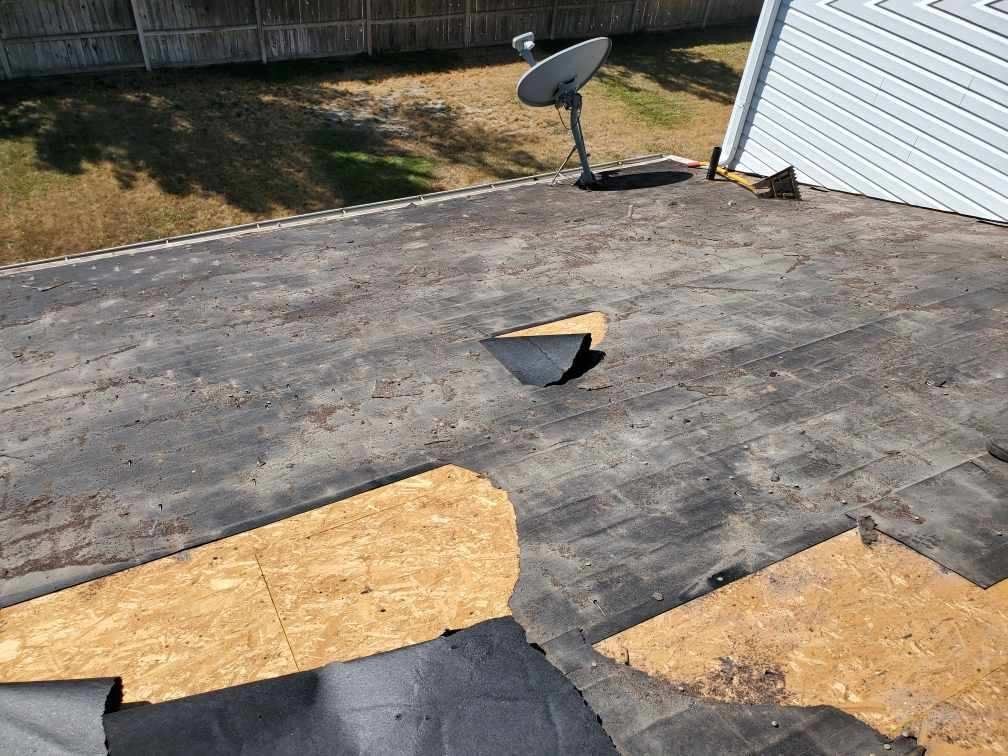
The first question on any low-slope roof is where the water goes. Ponding is what kills membranes, and a roof that holds water for days after a storm will fail early regardless of which sheet is on it. We look at the slope, the drains and the terminations before we talk about material.
Seams and terminations
Field failures on commercial roofs are rare. Failures at seams, curbs, drains and the parapet edge are common. A hot-air welded seam that has been probed is a continuous sheet. Anything taped or glued and unverified is a scheduled leak.
Flat Roofing around Provo


How the system goes together
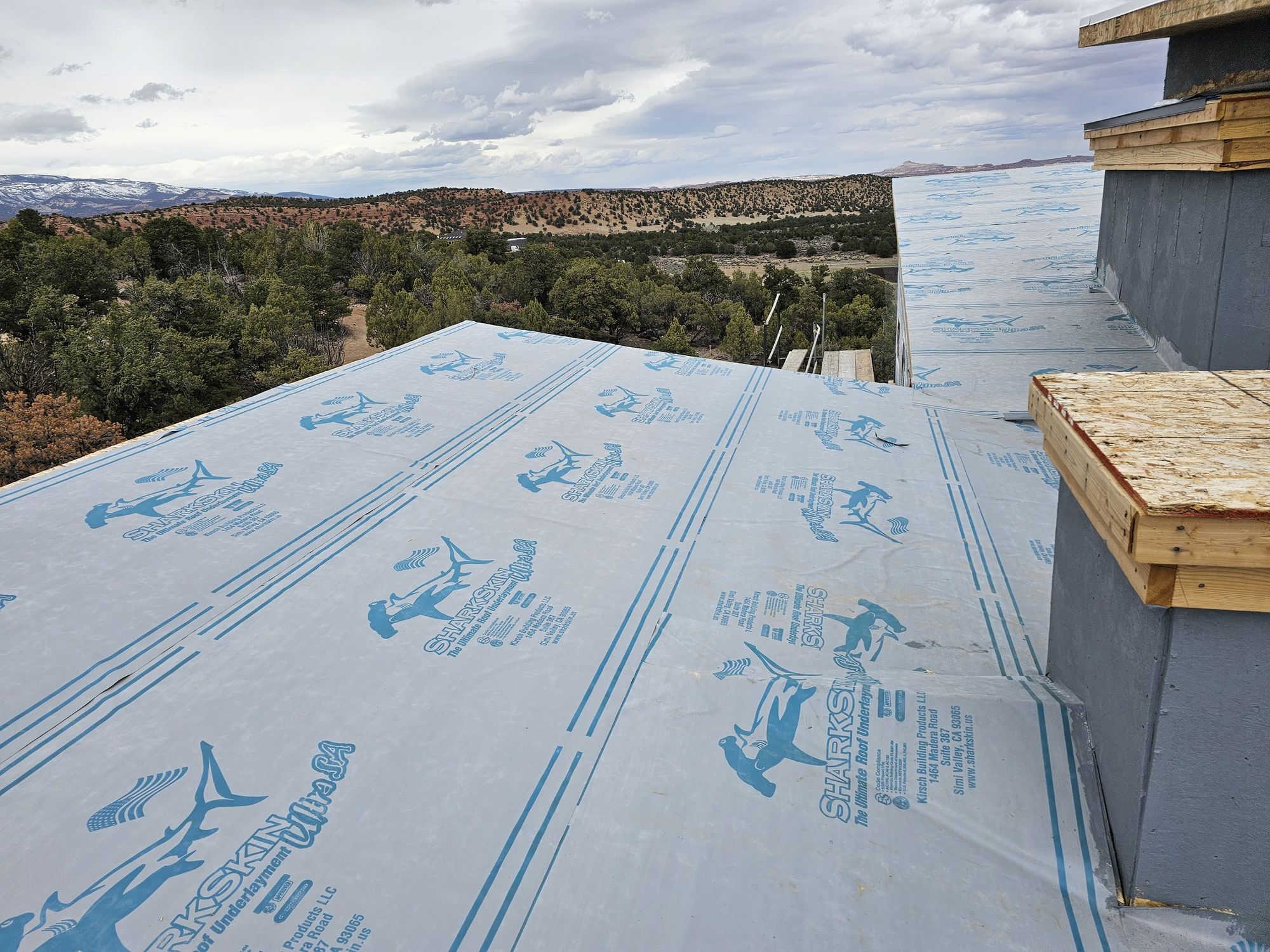
Ice-and-water shield, and where it goes
This is the single most important membrane on a Utah roof. It is a self-adhering sheet that seals around nail shanks, and it belongs at the eave, in every valley, and around every penetration.
The eave measurement people get wrong
Code language is about coverage past the interior wall line, not a flat number of feet. On a house with deep overhangs that means more courses than a builder might assume.
Valleys get it too
A valley carries water from two planes. It gets the membrane whether anybody asks for it or not.
Coatings on a low-slope roof
A roof coating is a maintenance system, not a replacement. On a sound membrane or a metal roof with good fasteners, a properly prepped coating adds reflectivity and buys real years. Over a wet insulation layer or a membrane that has already delaminated, it is paint over a problem.
Prep is the whole job
Cleaning, seam treatment, and fixing what is actually broken take longer than rolling the coating on.
When coating is wrong
If a roof is done, coating it just delays the same conversation.
What we check
- Field condition and granule loss
- Valleys, ridges and every transition
- Penetrations and their flashing
- Gutter and fascia condition
What the job looks like
Get on the roof
We walk it rather than look from the drive, check the decking underfoot, the flashings and the ventilation, and photograph what we find before any number is discussed.
Show you what we saw
The photographs come back to you with a plain read of what the roof needs and, just as often, what it does not need yet.
Crew on site
The crews we hire work under Hancock’s direction, staged so landscaping and the drive are protected, working the detail in the order it is supposed to go on rather than the order that is quickest.
Leave it clean
Site cleared at the end of every day, a magnet run over the whole yard for nails at the finish, and the roof walked with you before we go.
Inversion keeps a roof damp
Winter here can park a lid of cold air over the valley floor for a week straight. Nothing dries during that stretch. A shaded slope that got wet on Monday is still wet on Friday, the sheathing under it never gives its moisture back to the air, and any lap that was going to wick does its wicking slowly with no interruption.
Gray weeks do quiet damage
Storms get blamed for roofs. Nine flat gray days with the sun never touching the north face do more, and nobody remembers them.
Snow sliding off steep pitch
Steep roofs shed, which is good for the roof and hard on everything below it. A loaded slope lets go at once and takes gutters, vent caps and the occasional shrub with it. On metal it happens faster because there is nothing to hold it. Homes with steep pitch over a walkway or a doorway get looked at differently than the same roof over an open yard.
Snow retention when it matters
Where a slide is a hazard, cleats or a retention rail spread the load and let it melt off instead of releasing in one sheet.
Where roofs go wrong
The shortcut we see most
A membrane laid over wet insulation because tearing off would have cost a day. The roof looks finished, the moisture stays underneath, and the sheet fails early from below.
What good looks like instead
Moisture surveyed, wet sections cut out and replaced, drainage corrected, then the membrane installed and its seams probed.
Signs worth a look
- Ponding water still standing two days after rain
- Seams that have lifted or opened at an edge
- Blisters or ridging across the field
- Interior staining near drains, curbs or the parapet
Part of our Utah County work, out of Salt Lake City & surrounding counties. A full replacement carries our 10-year workmanship warranty.
What to expect
Scheduling around your operation
Most commercial work can be staged so the disruptive part happens when the building is quiet. Tear-off noise, crane or hoist time and material deliveries all get planned against your hours rather than ours.
What the roof survey covers
Before specifying anything we survey the existing assembly: slope and drainage, moisture in the insulation, the condition of seams and terminations, and how the roof is being used. A roof somebody walks on weekly needs a different answer from one nobody touches.
Documentation
Commercial and public work runs on records. We photograph the existing condition, the work in progress and the finished assembly, so there is a file rather than a recollection.
On a Provo roof
Getting to Provo
Because we are on Utah County roofs most weeks, we know how the housing around Provo was put together, which is a different thing from knowing how roofs work in general.
That proximity is most of what matters when weather moves through. Provo sits in Utah County, and we are on roofs across it regularly enough to know how the housing there was built.
Questions we get asked
Not the question you had? Call the shop and ask a person. We would rather talk it through than have you guess from a website.
(801) 382-8898Do you actually work in Provo?
Yes, and often. Provo is part of our regular service area, so it is ground we know well.
How fast can you get to Provo after a storm?
We stop the water first. Temporary work is genuinely temporary and we say so, but it buys the time to do the actual repair right.
How do I know when a roof is getting close?
Granules collecting in the gutters, tabs lifting or curling at the edges, shingles that look bare in patches, and daylight or staining in the attic. Any of those is worth a look.
Will you tell me if I do not need a new roof?
Yes. Plenty of what we look at turns out to be a repair, and we say so. A roof with years left in it gets left alone, and you get the photographs either way.
How long does a roof replacement take?
Most houses in this valley are a one to two day job once the crew is on site. Steeper pitches, multiple layers to strip and complicated roofs with a lot of valleys take longer, and we tell you which yours is before we start.
Where Provo sits on our map
Provo work is scheduled like the rest of the valley.
Talk to Hancock
Flat Roofing in Provo
Call (801) 382-8898.