
Storm · Salt Lake City & surrounding counties
Roof Snow Repair
Repairs after snow load has done damage.
What roof snow repair involves
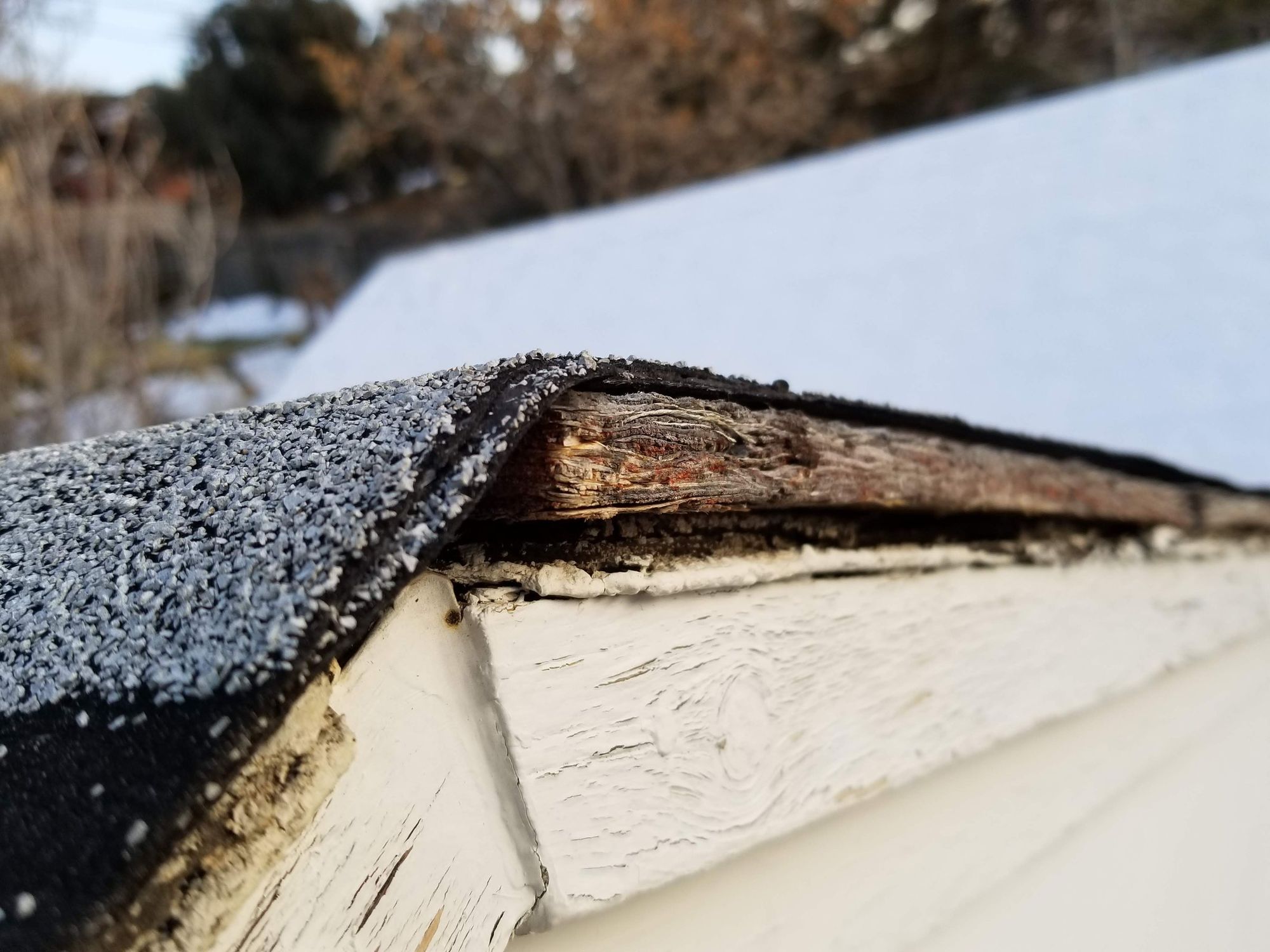
We look at what the weight moved, check the framing feel and rebuild what it broke.
Wet spring snow runs far heavier per foot than January powder. April does the damage.
What matters on roof snow repair
Reading hail honestly
Hail shows on soft metals first. Vents, flashing and gutter aprons take visible dents before the shingle mat shows bruising, so those are what we check first to date the storm and gauge severity. Bruising on the shingle itself is felt as much as seen.
Wind damage runs in lines
Wind gets under a course and lifts along a run, so the one missing shingle visible from the street is rarely the whole of it. The creased tabs either side of it have broken their seal even though they are still in place, and those fail in the next storm.
We work Salt Lake City & surrounding counties, 9 counties in all, with 27 years in the trade and the last 8 as Hancock Signature.
How the system goes together
Flashing is where roofs leak
Very few roofs fail in the field of the shingles. They fail at the transitions, at a wall, a chimney, a skylight curb, a pipe boot, a valley. Good flashing is metal shaped so water has nowhere to go but out. Bad flashing is sealant spread over a gap and a hope that nobody looks for four years. When we pull a roof apart, the flashing is what tells us whether the last crew was in a hurry.
Step flashing is one piece per course
There is no shortcut version of that detail that works.
Counterflashing let into the masonry
Where a roof meets brick or stone, the honest detail cuts a groove into a mortar joint, tucks the top edge of the metal into it, and seals the groove. Water running down the wall face hits metal and gets thrown out onto the roof. The shortcut runs the metal flat up the wall and caulks the top edge, which works until the caulk moves.
Surface-mounted is a temporary answer
We will do it that way on an emergency repair and tell you plainly that it needs to be cut in properly when there is time.
What we check
- Ice barrier coverage past the warm wall line
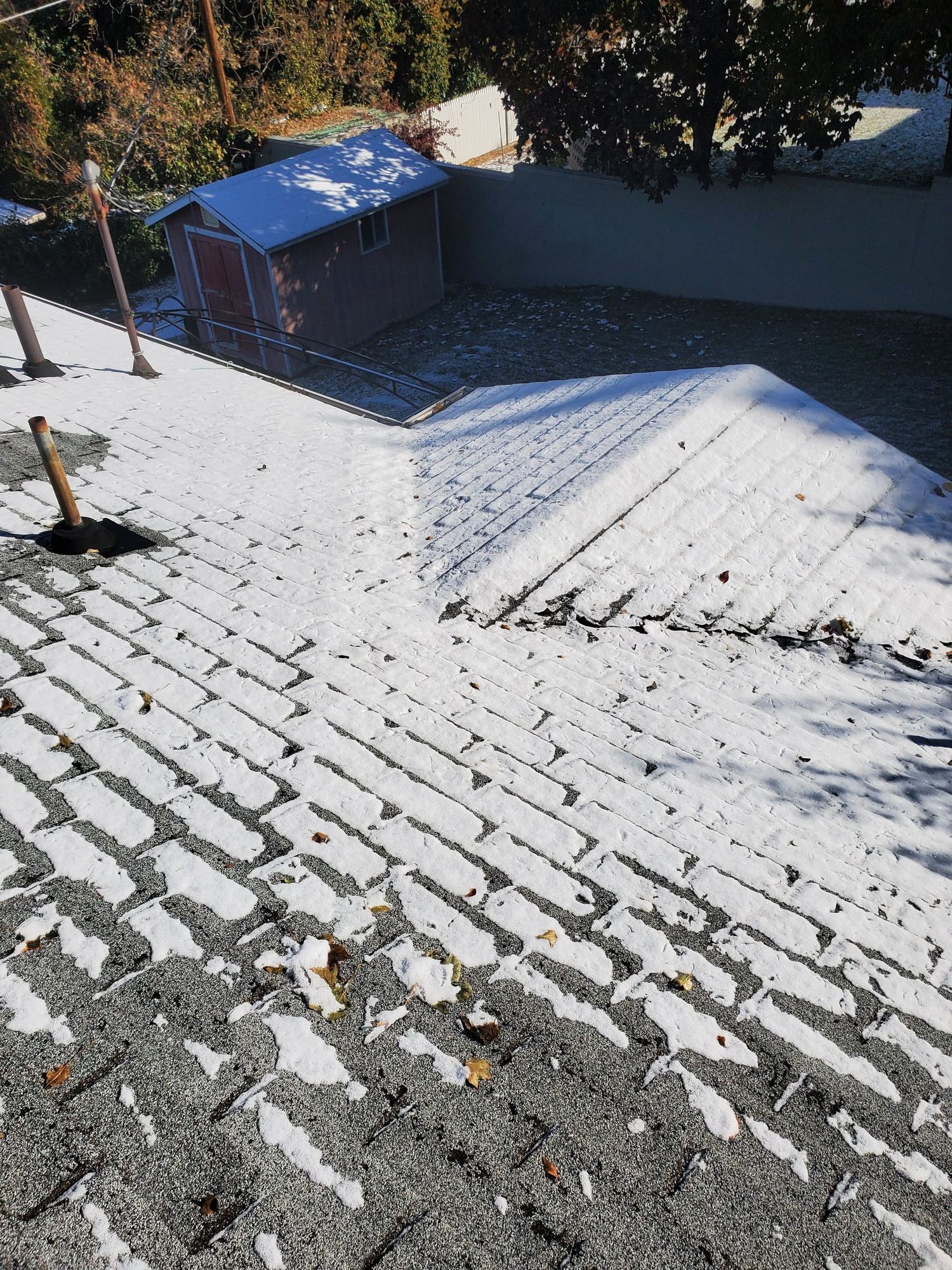
- Where the ice dams form and why
- Attic ventilation behind the eave
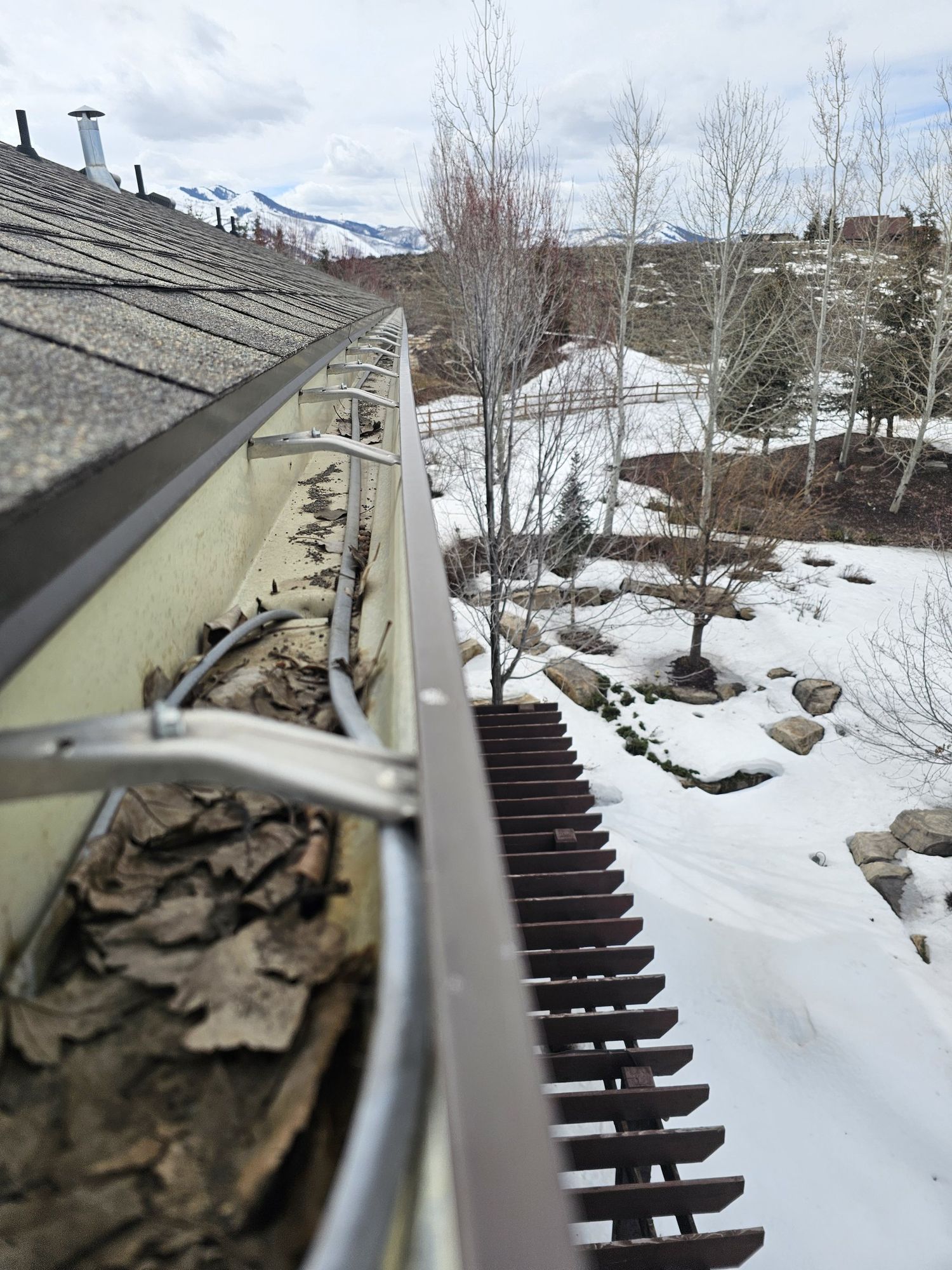
- Gutters and heat cable after the thaw
How we approach it
Look first
We get on the roof and read what is actually happening before quoting anything.
Say what we find
Photographs and a plain explanation, including when the answer is that you do not need us yet.
Built in sequence
Crews we hire and run, working the right detail in the right order.
Leave it clean
Magnet over the yard, container gone, walked with you.
Spring wind off the benches
Canyon wind is the thing homeowners here tend to shrug off. It does not arrive as a steady push, it arrives in gusts that lift a shingle tab, break the seal strip, and set it down again looking fine. Three or four of those and the tab is loose, water gets a path, and nobody knows until a ceiling stains.
Rakes and ridges go first
Edges take the uplift. That is why we nail the rake tighter, use a starter course with a factory seal at the eave, and look at ridge caps before anything else after a blow.
Chimneys and the winter melt
Masonry sits colder than the roof around it and snow banks against the uphill side. Meltwater runs down the brick and looks for a way in. Step flashing, counter flashing tucked into a reglet cut, and a cricket behind a wide chimney are what keep it out. A bead of sealant across a chimney base is a temporary measure that somebody will be redoing in two winters.
Old mortar makes it worse
Where the joints have gone soft, the water gets into the masonry itself and the flashing is only half the job.
Where roofs go wrong
The shortcut we see most
A claim filed off a ground-level look. Damage gets missed, the scope comes back short, and the homeowner finds out the hard way in the next storm.
What good looks like instead
The whole roof walked and photographed, soft metals checked to date the storm, and the adjuster met on the roof so everyone is reading the same evidence.
Signs worth a look
- Dents in vents, flashing or the gutter apron
- Shingles creased but still in place
- Granule loss concentrated on one slope
- Debris or branch strike marks on the field
What to expect
What to do first
Get the water stopped and get photographs. If something is actively coming in, call and we will make it safe before anything else happens. Documentation of the immediate aftermath is worth having.
How the claim process runs
We document the damage thoroughly, you file, and we work with your insurance from there. On hail-damaged roofs, we work with your insurance to get the roof covered, and the assessment is made from the same evidence we gathered.
Temporary versus permanent
Tarping and emergency sealing buy time and nothing more. Temporary is temporary and we say so. The permanent repair follows once the weather gives us a window.
Related work
Storm covers more than one job, and they are not interchangeable. These are the others in the same family, each on its own page.
Questions we get asked
Not the question you had? Call the shop and ask a person. We would rather talk it through than have you guess from a website.
(801) 382-8898How soon after a storm should I get it looked at?
Soon, while the evidence is fresh and before the next weather makes it worse. Hail in particular shows on soft metals before it shows on the shingles.
Is all storm damage visible from the ground?
No, and that is the problem. Wind damage runs along a line and hail bruising is often invisible until the mat starts to fail. Both need somebody on the roof.
Will my insurance cover it?
On hail-damaged roofs, we work with your insurance to get the roof covered. We document the damage completely so nothing gets missed in the assessment.
Do you handle the insurance side?
On hail-damaged roofs, we work with your insurance to get the roof covered. We document the damage thoroughly with photographs, so the claim reflects what is actually on the roof.
Do you work through the winter?
Yes, with judgment. Shingles need to seal, and in genuine cold that takes longer or needs hand sealing. Emergency work happens whenever it has to. Full replacements get scheduled around the weather rather than forced into it.
How do I know when a roof is getting close?
Granules collecting in the gutters, tabs lifting or curling at the edges, shingles that look bare in patches, and daylight or staining in the attic. Any of those is worth a look.
Talk to Hancock
Ask about roof snow repair
Call (801) 382-8898 or send a note. We will look at the roof and tell you straight what it needs.