
October 2026
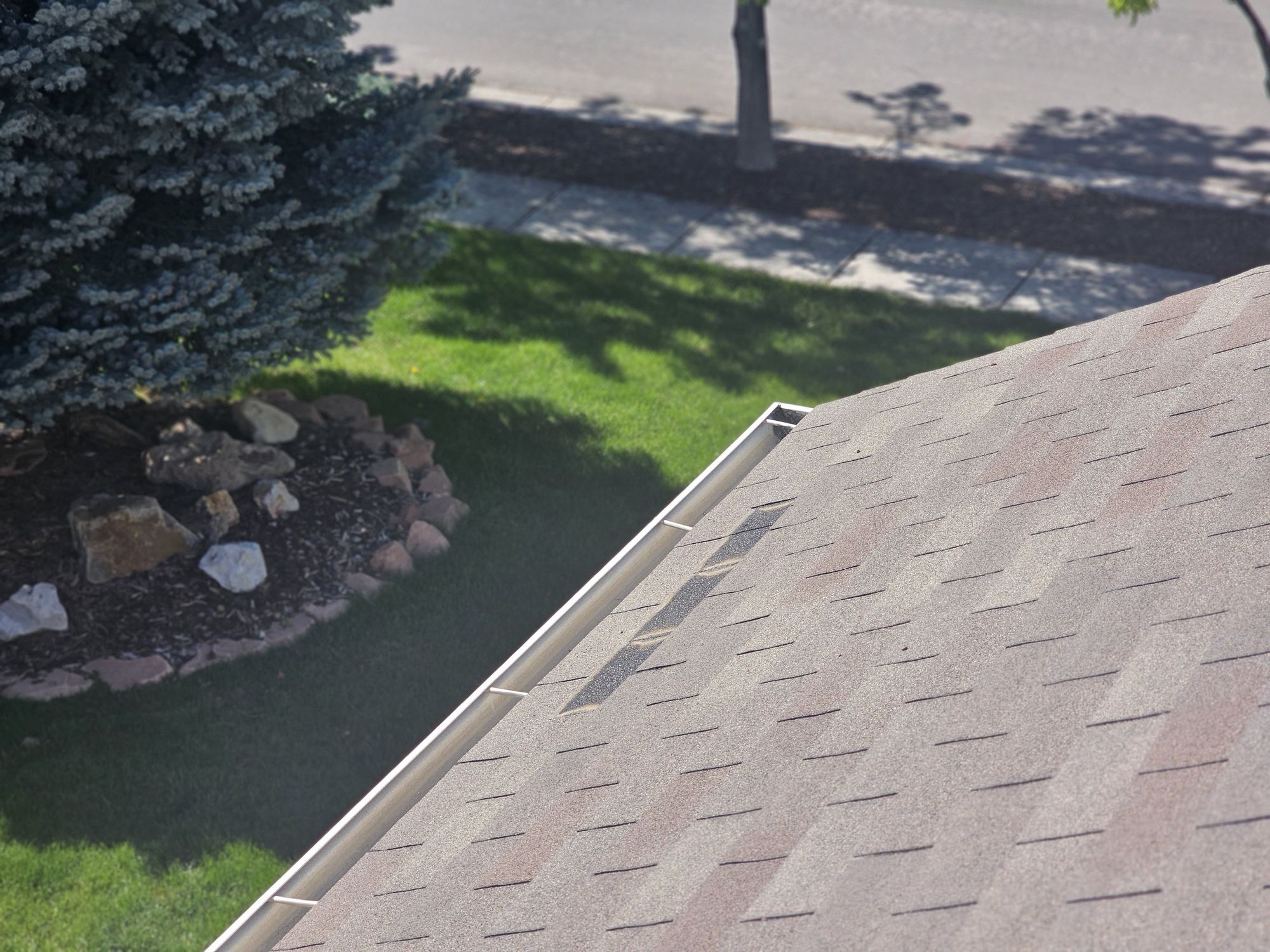
One more patch, or a new run
Gutters get patched a lot. A tube of sealant on a leaky corner, a couple of new hangers where it sagged, a downspout reattached after a heavy snow pulled it loose. Plenty of those fixes are exactly right, and our gutter repair work handles them every week.
At some point, though, a run has had enough patches that the next one is money spent on a gutter that is already finished. The hard part for most homeowners is telling which side of that line they are on. Here is how we look at it when we are standing on a ladder next to yours.
Signs a run is finished
No single sign settles it by itself. When we see two or three of these on the same stretch, we usually recommend replacing it.
Seams that keep opening
Sectional gutters are joined every so often, and every joint is sealed. On an older run those joints need resealing again and again, because the metal on either side keeps moving with the temperature. When the corners and joints are smeared with layer after layer of old sealant and still drip, the metal at those joints has usually started to corrode under the patches.
Hangers that will not hold
If hangers keep pulling out, the problem is often the wood behind them rather than the hangers. Screws into a soft fascia board strip out under the weight of water and ice. Adding more hangers into the same soft wood buys a little time. The real fix is the board, and that changes the conversation about the gutter.
A run that holds water
A gutter should slope gently toward its downspout so it empties after a storm. Over the years hangers loosen, the fascia shifts, and a run develops low spots that stay full. Standing water rusts steel, adds weight, and freezes solid in winter. Re-pitching works when the gutter is straight and sound. When it has bowed or sagged between hangers, it rarely sits right again.
Bent and crushed sections
A ladder leaned against it, a big slide of snow off the roof, a branch in a windstorm. Dented sections restrict flow, and a crushed or torn end pulls loose from its cap. One damaged piece can sometimes be swapped out. A run that is dented in several places along its length is usually done.
Seamless or sectional
Most old gutters on older houses are sectional: ten-foot lengths joined end to end, with a sealed seam at every joint. Seamless gutters are formed on site from a coil of metal, cut to the exact length of each run, so the only joints left are at the corners and the outlets.
Fewer joints means fewer places to leak, and that is the main reason seamless has become the normal choice for a full replacement. Sectional still has a place. A short run over a porch, or a repair that has to match an existing system on the rest of the house, can be done in sections and look right.
Aluminum, steel, and how thick
Aluminum is what most houses get. It does not rust, it comes prefinished in a range of colors, and it is light enough to hang on a modest fascia. The thing to ask about is thickness. Thin aluminum dents when a ladder leans on it and bends under a slab of ice. A heavier gauge holds its shape through the winters here far better, and the difference in cost is small next to the cost of hanging a second gutter.
Steel is stiffer and stands up to a falling snow slab better than aluminum, which can matter on a steep roof that dumps snow all at once. It rusts once the coating is scratched through, so cut ends and scratches need attention. For most houses in the valley, a good heavy aluminum is the right call.
Five inch or six inch
The two common sizes for houses are five inch and six inch, measured across the top of the gutter. Five inch handles a typical roof. Six inch carries a good deal more water, and we reach for it when a run drains a big slope, a steep one, or a valley that pours two roof sections into one corner. That corner is where an undersized gutter overflows first. Bigger gutters usually come with bigger downspouts, which matter as much as the gutter itself, and the South Salt Lake gutter replacement page covers how we size a run for the roof above it.
Snow that slides off the roof
On a steep, slick roof, a winter’s worth of snow can let go in one sheet on a warm day. A gutter in its path takes the whole slab, and that is how a lot of runs get bent flat or torn off their hangers in a single afternoon. A new gutter hung the same way will meet the same slab next winter.
There are a few ways to handle it. Hanging the gutter a little lower relative to the roof edge lets sliding snow clear it. Snow guards along the lower courses of the roof hold the snow in place so it melts off slowly instead of sliding. On some houses the fix is a stiffer gutter and closer hangers. We look at which slopes face south and dump snow before we hang anything.
Hanger spacing for ice
A gutter full of ice in February weighs far more than one full of rain. Hangers that would hold a gutter fine in a mild climate can pull out or bend here. We space hangers closer together than the minimum, and closer still on runs below valleys or under slopes that hold snow. A long run under a valley often gets a second downspout as well, so that corner never has to hold a winter’s worth of melt at once. The hangers need solid wood to screw into, so the fascia gets checked before anything goes up, and our fascia repair page covers that part of the job.
What the day itself looks like
Taking down an old run is quick. The hangers come out, the gutter comes down in pieces, and we get our first clear look at the board that has been hidden behind it for years. That is usually where the surprises are, so we walk the full length before anything new goes up, and you hear about any soft wood right then, with pictures.
Once the board is sound, the new run gets laid out with a string line so the pitch is consistent from the high end to the outlet. Hangers go in, outlets are cut, corners are joined and sealed, downspouts go back on, and we run water through it with a hose to watch it drain before we pack up. Most houses take a day or less. Where the downspouts let out matters just as much, and our downspout installation page covers that side of the work.
If you are tired of patching the same stretch, call (801) 382-8898 and have us look at it, or send a note through the contact page.
Questions about replacing gutters
Do new gutters come in colors?
Yes. Prefinished aluminum comes in a range of colors, so a new run can match the trim, the fascia or the roof. White and the browns are the common picks. Matching an older system that has faded can take holding a sample against the house.
How long should a new gutter last?
A heavy-gauge aluminum run that is hung on sound wood and kept clean will last a long time, often as long as the roof above it. Thin gutters on soft fascia under a snow-dumping slope are the ones that come down early.
Should I replace gutters before or after a new roof?
After, or at the same time. The roof edge, drip edge and fascia all get worked on during a replacement, and a new gutter should go up against the finished edge. Hanging new gutters first means taking them down again.
Do I need heat cable in my new gutters?
Some houses do, usually ones with a shaded north eave where ice builds every winter. Heat cable keeps a channel open so melt can drain. It treats the symptom, and if ice is building because the attic is losing heat, that is worth fixing too.
Are gutter guards worth adding?
They can cut down on cleaning, especially under trees. They do not eliminate it, and fine grit still gets through some styles. We would rather put up a well-pitched gutter that is easy to clean than sell a guard as a cure for a bad run.
A gutter is part of the roof
It is easy to think of gutters as an add-on, but they decide where a whole roof’s worth of water goes. When we replace a run we treat it as roof work: the edge, the board and the drainage all get looked at together.
If your gutters have been patched one too many times, call the shop at (801) 382-8898 and we will come take a look. You can also reach us on the contact page.
Talk to Hancock
Talk to Hancock
Call (801) 382-8898 or send a note and we will get on the roof and tell you what it needs.