
September 2026
It is louder than you think and shorter than you think
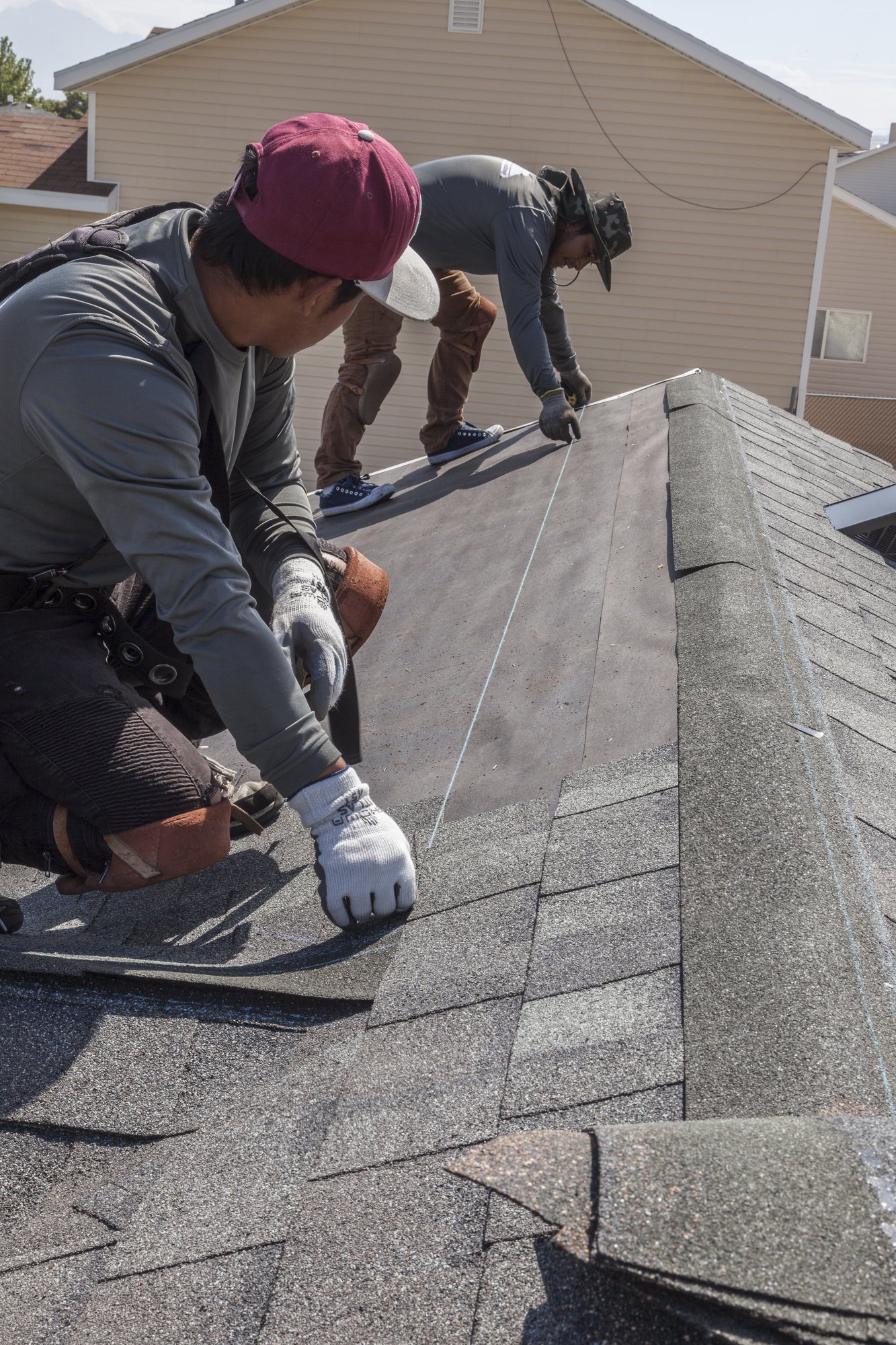
The two things homeowners tell us afterward are always the same. They did not expect the noise, and they did not expect to be looking at a finished roof by late afternoon. A crew taking a roof off a house is a genuinely loud event, and a typical Salt Lake valley house is a one day job.
So here is the day, start to finish, written out so that nothing about it is a surprise. This is the article we would rather you read a week before we show up than the morning of.
Before the day
Material delivery
Shingles usually arrive a day or two ahead, either stacked on the driveway or loaded onto the roof by a conveyor. If it is going on the roof, we spread it across several slopes rather than stacking it in one place, because a pallet of shingles is a real concentrated load.
Tell us where you need to be able to park. A delivery truck dropping material in the wrong half of a driveway is an annoyance we can avoid with one phone call.
The dumpster or the trailer
A tear-off produces a lot of weight. On most houses we run a dump trailer, easier on a driveway and easier to move, and on bigger jobs a roll-off container. Either way it sits close to the house, with plywood under the wheels and tongue to spread the load.
If you have a concrete driveway you are particular about, say so and we will stage from the street instead.
What you do the night before
- Move the cars out. Park on the street, both of them, and let us know if a neighbor’s car usually sits near the house.
- Take things off the walls. Framed pictures, mirrors, loaded shelves upstairs. The hammering vibrates through the framing and things walk off their hooks. This is the one people skip and regret.
- Clear the attic if you can. Grit comes through the sheathing joints. Cover or remove anything up there you care about, and the same for a garage with open rafters.
- Move patio furniture, grills and planters away from the walls of the house, out to the middle of the yard or into the garage.
- Take down anything on the fence near where the work is happening.
- Plan for pets. This matters more than anything else on the list. The noise frightens animals badly, and there will be a gate open most of the day. A dog at a friend’s house or in a room on the far side of the house with the door shut.
- Plan for anybody who works from home or sleeps days. There is no quiet version of a tear-off. If somebody in the house cannot be there for it, arrange the day out.
The day, hour by hour
Early morning
We start early, around seven, for a reason beyond habit. Asphalt is easier to handle and less prone to scuffing in the cool of the morning, and on a July job the afternoon on a dark roof is brutal. The first hour is protection and setup: tarps against the walls and over the landscaping, plywood against anything fragile, ladders set, trailer positioned.
We knock before we start, and if you want to be told exactly what is about to happen, ask the lead. That is part of his job.
Tear-off
This is the loud part and it runs several hours. Shovels and pry bars going, shingles and felt coming off in sheets, and most of it going straight over the edge into the trailer. Nails get pulled or driven flush as the deck is exposed.
We do it in sections rather than stripping the whole house at once. That way, if weather turns, we are never exposed on more roof than we can dry in.
The deck inspection, and the conversation about it
Once a section is bare, we look at the wood. This is the only time in a roof’s life anybody sees it, and it is where the honest conversations happen. Soft sheathing around a vent pipe, delaminated plies where a nail spins instead of biting, a valley bottom gone dark, plank decking with gaps that needs an overlay.
If we find something you hear about it that day, with photographs, before it goes in the trailer. Not a description on an invoice afterward. If it moves the schedule or the number, work pauses and we talk. The per-sheet decking number is in your paperwork before the job starts, so that part is never a negotiation with your roof open.
Dry-in
Then the protective layers go down on the bare deck. Ice and water membrane at the eaves, running far enough past the interior wall line to matter, plus every valley and around every penetration. Synthetic underlayment across the field. Drip edge at the eaves and up the rakes, in the correct sequence.
Once a section is dried in, it is weather-tight. That is the point in the day where a rain shower stops being a problem.
Flashing and details
New step flashing along the walls, new valley metal, new pipe collars, chimney counterflashing and base pan. A cricket behind any chimney wide enough to need one. Ridge slotted correctly if it was not, soffit chutes set from above while the deck is open, any bath fan dumping into the attic given a real duct and cap.
This is the unglamorous portion and where a roof is won or lost. It is also invisible when the job is done, which is why we photograph it as we go and give you the pictures.
Shingles
Starter course at the eaves and rakes, then the field, then hip and ridge cap and ridge vent. Nailing in the manufacturer’s nail zone, six fasteners per shingle for the high wind specification, driven flush. This part goes faster than people expect and it is the satisfying part of the day to watch.
Cleanup
Then the part that determines what you actually think of us. Tarps come up carefully so debris does not dump into the beds. Gutters cleared of grit. The yard, driveway and street gone over with rolling magnets, more than once, in more than one direction. Downspouts checked. Trailer hauled out.
We walk the property with you before we leave, and if you find a nail next week, call and somebody comes back with a magnet. That happens on every job and it is not an argument.
A crew’s cleanup tells you how they did everything you cannot see. It is the one part of a roof a homeowner can judge directly.
How long it takes
A straightforward single story or two story house in the valley, one day. Steeper pitch, multiple slopes, dormers, several chimneys, a wide tile or metal job, or significant decking replacement, two to three. Anything with a complicated low slope section tied into a pitched roof takes longer because those transitions are careful work.
If it is going to be more than a day, you will know before we start, and the roof gets dried in every evening. We do not leave a house open overnight.
What we ask of you
Not much. Be reachable by phone for the decking conversation if there is one. Keep pets and kids off the property while the crew works, because there is material coming off a roof and nails on the ground until the magnets run. And if something bothers you during the day, say it to the lead right then rather than saving it. Every problem we have had on a job got smaller when somebody mentioned it early.
You do not need to be home. Plenty of homeowners are at work all day and come back to a finished roof, and that is fine as long as we can reach you.
After the crew leaves
A few things are normal in the first weeks. You will find some granules in the gutters and on the driveway, which is loose material shedding off new shingles and it stops. On a hot day the shingles will lie down and the seal strips bond, so a roof installed in cool weather can look slightly less flat for a few days until the sun sets it. Some dust settles out of the attic for a day or two.
Things that are not normal, and are a phone call: a stain appearing inside, shingles lifting, debris left in a gutter, or anything you can see from the ground that looks wrong. Call, or leave it on our contact page, and we come look. That is what a local shop is for, and it is the reason to hire one.
You get your paperwork, your material coverage registration, and the photographs from the day, including the deck and the flashing. Keep those somewhere findable. They are worth real money at resale and they matter if there is ever an insurance question.
Questions we get before replacement day
Do I need to be home while you work?
No, as long as we can reach you by phone if we open the deck and find something. Plenty of our jobs happen while people are at work. What we do need is the driveway clear, the pets handled, and access to an outside faucet and the yard.
Will the hammering damage my drywall or my ceilings?
Cracks are uncommon and not unheard of, particularly in older plaster or in a house with existing settlement cracks. The vibration is real. Take things off upstairs walls, and if you have plaster ceilings you are worried about, tell us and we will talk it through before the day.
What happens to my landscaping?
We tarp the beds and lean plywood against anything delicate, and we keep the shingle drop zones away from plantings where the roof geometry allows. Some bruising to a shrub under an eave is possible. Walk us around before we start and point at what matters to you, and we will work around it.
How do you handle satellite dishes and solar?
A satellite dish comes off and goes back on, though re-aiming is between you and your provider, so a lot of people use the day to get rid of one they stopped using. Solar is different: panels need the installer or a qualified contractor to remove and reset, and that gets coordinated before we schedule. Tell us early if you have panels.
What if it rains in the middle of the tear-off?
We work in sections precisely so that we can dry in what is open quickly. Underlayment goes down and the roof is weather-tight, then we wait it out or come back the next day. In eight years under this name we have not left a homeowner with water coming into the house from a job in progress, and we plan every day to keep it that way.
Ask us anything before the day
Nobody should be uneasy about a crew showing up at their house. If there is something specific about your property, a difficult driveway, a neighbor’s wall, a kid who naps at one, a dog that panics, tell us and we will plan around it.
The job is run by a second-generation family business out of Salt Lake City, with twenty-seven years in the trade behind it and eight under the Hancock Signature name. The people whose name is on the truck answer for the work, and we live under these same roofs across the valley. Call (801) 382-8898 with a question about your job or reach us on the contact page. If you have a replacement coming up and want to walk through the schedule and the staging before anything gets ordered, send us a note and we will set up a time.
Talk to Hancock
Talk to Hancock
Call (801) 382-8898 or send a note and we will get on the roof and tell you what it needs.