
Roofing in the American Fork area
Family-run roofing for American Fork, from a family business in the Salt Lake City area.
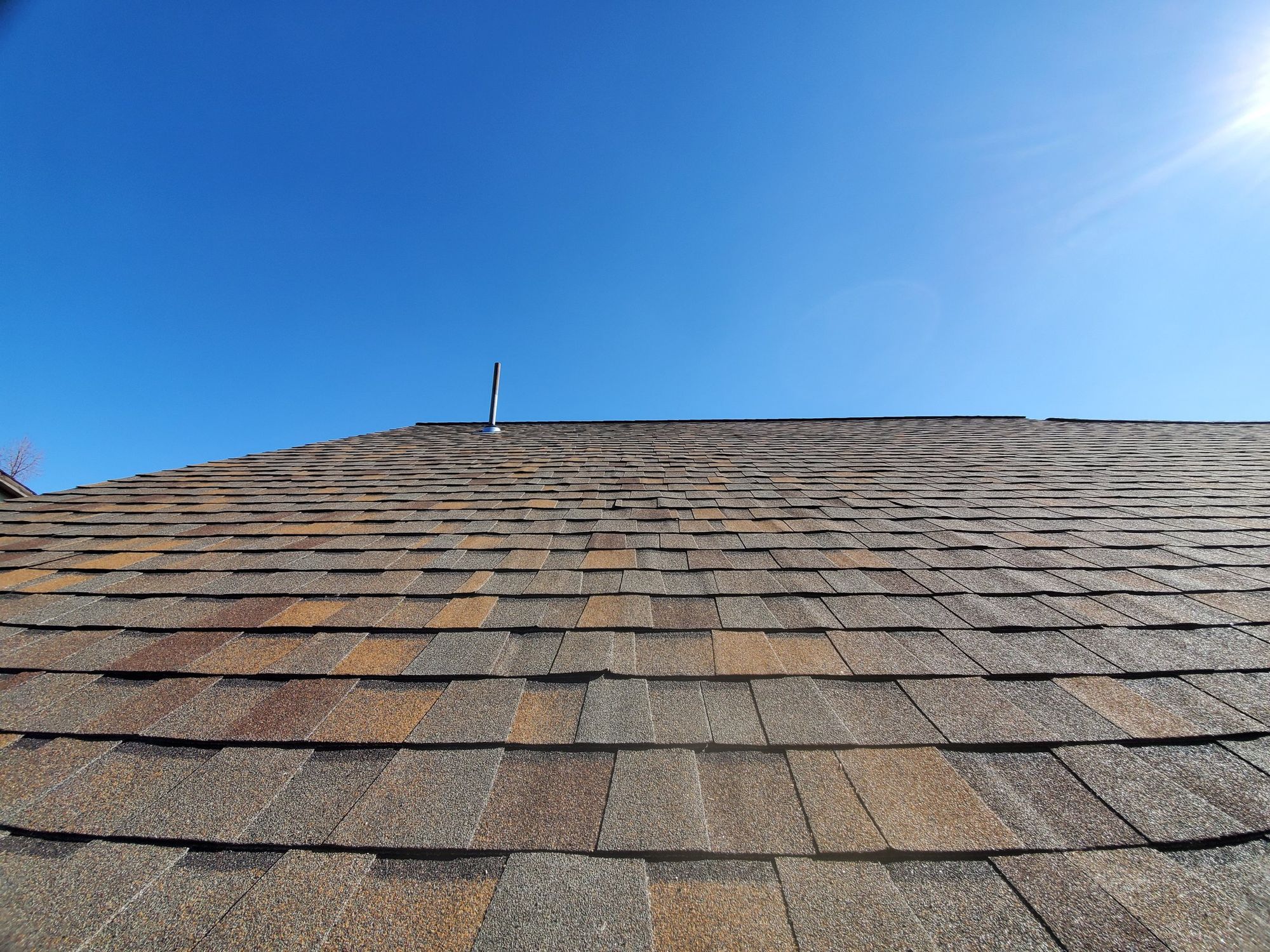
The year a American Fork roof works through
Sun does more damage at this elevation than people expect. Thinner air means harder ultraviolet, and a south or west slope in American Fork will age visibly faster than the north side of the same house. That is why we read a roof plane by plane rather than giving it one verdict.
American Fork sits inside the ground we cover around Salt Lake City. Working it regularly is why we can tell you what a roof needs without hedging.

The weather a American Fork roof works against
Bands off the lake
Homes on the north end of the valley catch snow bands that come off the water and dump on a narrow strip while the next town over gets nothing. That snow arrives wet and it arrives fast. A roof in one of those corridors takes more events per winter than the numbers for the metro would suggest.
It is a per-street question
Two miles can be the difference between an average snow year and a hard one. Which is why a roof age that seems fine on paper sometimes is not.
We ask about the last few winters
Homeowners in a band know they are in one.
Southwest exposure ages fastest
If you only had time to look at one slope on a house here, look at the one facing between south and west. It takes the high sun through the middle of the day and it takes the afternoon heat, so the binder in the asphalt gives up there first. Cupped tabs, bare patches of mat, and a granule line in the gutter under that slope alone.
A roof can be two ages
And knowing that keeps a repair from turning into a replacement it did not need to be.
Utah County spans the lake plain and the mountain benches, and the growth of the last decade means whole neighbourhoods of roofs are aging out at the same time.
What we find on roofs around American Fork
What underlayment actually does
Shingles shed water. Underlayment is what handles the water that gets past them, and something always gets past them. Synthetic underlayment has largely replaced felt because it does not wrinkle when it gets damp, does not tear when the wind catches it during installation, and keeps its footing when a crew is working a steep slope.
Felt still shows up
On small repairs and on matching an existing older assembly it is fine. On a full replacement up here there is no reason to go back to it.
Ridge cap is its own material
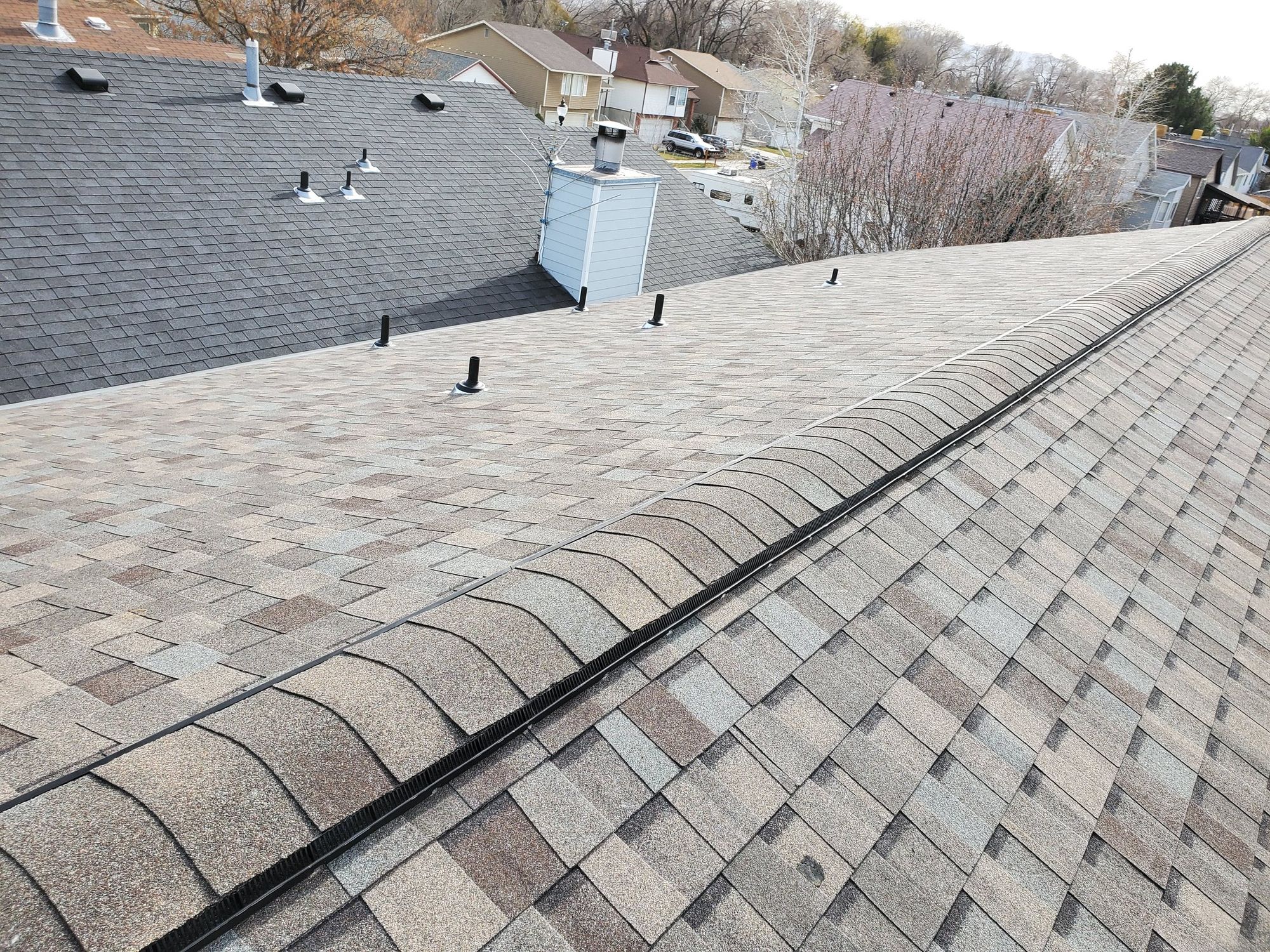
The cap along a ridge or a hip is the most exposed run on any roof and the most abused during installation. Cutting three-tab pieces to serve as cap on an architectural roof is a common shortcut, and the folded pieces crack at the bend within a few seasons up here. Purpose-made hip and ridge stock is thicker, pre-bent, and holds the fold through the cold.
Nail placement is the other half
Fasteners land under the next piece’s overlap, never through the weather surface where they sit exposed to the sky.
What we do around American Fork
Every service is its own page. These are the ones American Fork asks for most.
Roofing
Full replacements and new roofs on American Fork homes, deck up.
Repairs
Leaks and failed details, which is most of what American Fork calls about.
Upkeep
Inspections, cleaning and sealing before a small thing gets expensive.
Shingles
Architectural laminate, the field material on most of this valley.
Metal
Standing seam and corrugated, common on canyon-side snow load.
Tile
Clay and concrete tile, and the flashing work they need.
Commercial
Membrane systems for flat and low-slope buildings around American Fork.
Coatings
Restoration coatings when a commercial roof has life left.
Storm
Hail, wind and the insurance paperwork that follows.
Skylights
Installation and the curb-flashing repairs skylights usually need.
Gutters
Gutters, downspouts and fascia, which are part of the roof.
Government
Schools, city, county, state and federal buildings. Every government service is on the government roofing page.
How the job runs
Waste, salvage and what gets hauled
A tear-off generates a surprising volume, and a fair amount of it does not have to go in a landfill. Asphalt shingles can often go to a recycler, sound tile gets set aside for salvage, and scrap metal leaves separately. The rest goes out in the trailer the same day the work ends.
Leftover material is yours to keep
If you want a bundle in the garage for a future repair, say so before the trailer leaves. Matching a color in six years is the hard part, and a few spare shingles solve it.
The yard gets walked at the end
Twice, in two directions.
After the crew leaves
A roof is not finished the day the truck pulls out. If something shows up after the first real weather, call us, and a problem with our workmanship gets treated as part of the same job rather than a new one.
Keep the paperwork
Material documentation matters if you ever sell the house or file a claim.
Call us first
Even if it turns out to be something else on the house, we would rather look and tell you it is not the roof.

Work from around the valley


Turning work down
We say no to jobs. Sometimes it is a roof that needs a specialty we do not do well, sometimes it is a schedule we cannot actually hold, and sometimes it is a homeowner who has been told by three companies that they need a full replacement on a roof with good years left. We would rather tell that homeowner the truth and lose the job.
Saying no is the useful signal
Any shop that has never turned down work is telling you something about how it decides.
Two numbers, kept separate
People ask how long we have been doing this and there are honestly two answers. Twenty-seven years is how long the owner has been working roofs, starting in the family trade. Eight years is how long Hancock Signature Roofing has been its own company. We never add those together to make a bigger number, because a roofer who inflates the easy facts will inflate the hard ones.
Ask us anything checkable
We would rather answer a specific question than hand out a brochure.
Questions we get asked
Not the question you had? Call the shop and ask a person. We would rather talk it through than have you guess from a website.
(801) 382-8898Do you actually work in American Fork?
Yes, and often. American Fork is part of our regular service area, so it is ground we know well.
How fast can you get to American Fork after a storm?
Storm calls jump the queue. We get there, stop what is coming in, and schedule the real fix rather than rushing a permanent repair in bad weather.
Do you handle the insurance side?
On hail-damaged roofs, we work with your insurance to get the roof covered. We document the damage thoroughly with photographs, so the claim reflects what is actually on the roof.
What happens if you find bad decking?
We show you. The decking is only visible during a tear-off, so that is when soft sheathing gets found and replaced. We photograph it rather than just add it to a list.
Do you work through the winter?
Yes, with judgment. Shingles need to seal, and in genuine cold that takes longer or needs hand sealing. Emergency work happens whenever it has to. Full replacements get scheduled around the weather rather than forced into it.
What makes a Utah roof different?
Snow load, ice at the eaves, canyon wind and high-altitude sun, all on the same roof. A crew that learned roofing somewhere mild has to learn it again up here.
Where American Fork sits on our map
We work American Fork as part of our Utah County schedule.
Roof work in American Fork
Call (801) 382-8898. We will get on the roof, look properly, and tell you what it needs.