
Roofing across Weber County
Roofing across Weber County, from Ogden, Roy, South Ogden, North Ogden and more.
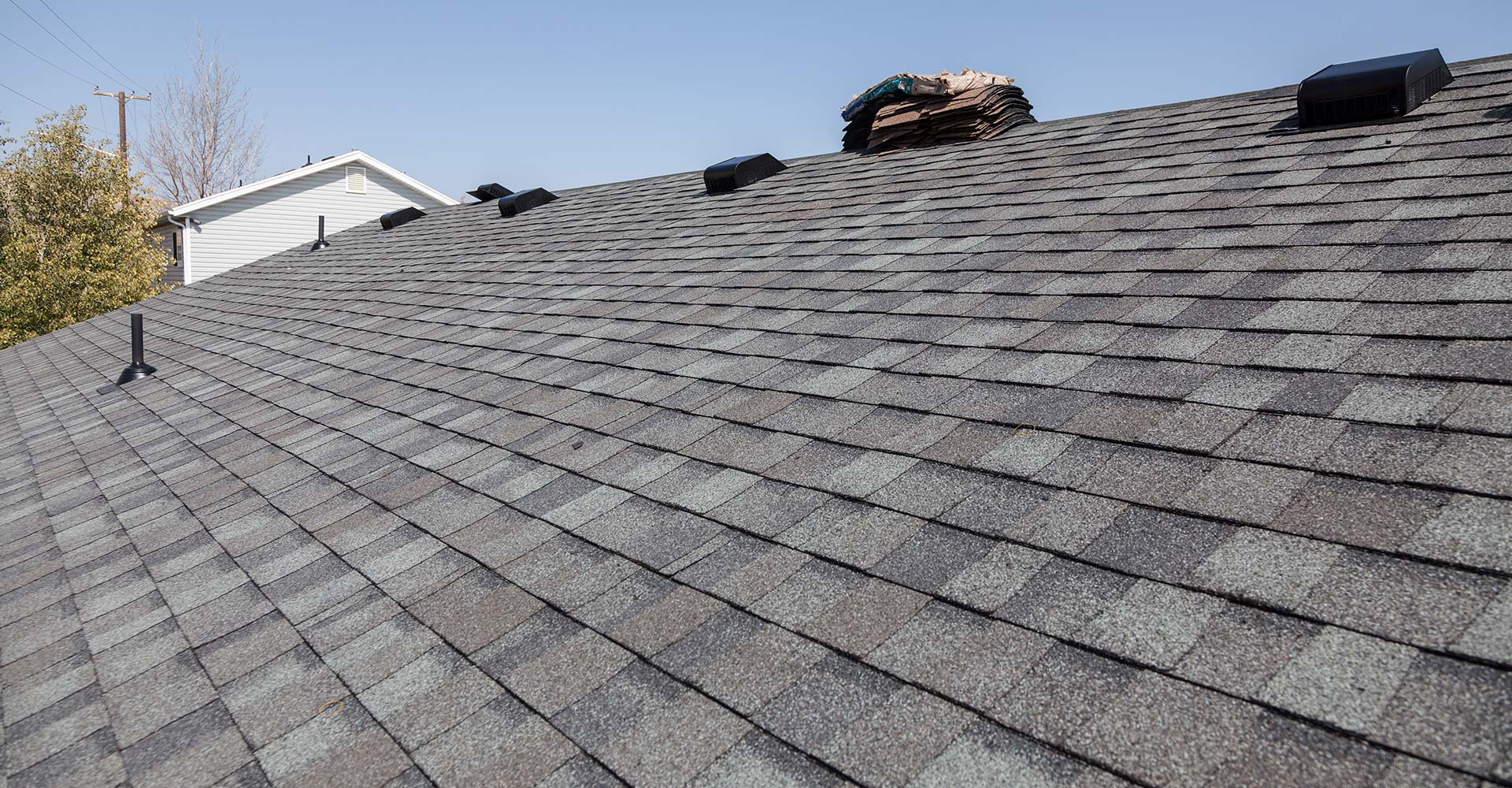
Working across Weber County
Weber County covers enough ground that a roof on one side of it faces a different year from a roof on the other. Exposure, elevation and the age of the housing all shift as you move across the county, and so does what a roof needs to survive here.
We cover 13 communities in Weber County as part of the ground we cover around Salt Lake City. Being close enough to get there quickly is most of what matters after a storm, and being on roofs across the county regularly is what makes an honest read of a roof possible rather than a guess from the driveway.

What Weber County does to a roof
Snow load is a real number
A roof up here carries weight. Wet spring snow runs heavier per foot than the dry powder that falls in January, and a roof that shrugged off three feet in February can groan under eighteen inches in April. What matters is how the load moves off, which comes down to pitch, sheathing condition and whether the framing was built for the zone it sits in.
Where the weight collects
Valleys and the low side of a dormer are where snow piles instead of sliding. We look at those first, because that is where decking softens and fasteners start backing out.
Two seasons of roof weather
Roofs here really only get two conditions and both are hard. There is the cold half, where everything is about snow load, ice at the eave and condensation under the deck. Then there is the hot dry half, where ultraviolet and surface heat cook the asphalt and the only water that arrives comes fast and sideways. Systems that do fine in a mild climate get worn from both ends up here.
Building for both
The details that handle winter and the details that handle summer are different details, and a roof has to carry both sets.
Ogden’s older housing stock has steeper pitches and more complicated rooflines than most of the valley, which means more valleys, more flashing, and more places for a rushed job to show.
What we find across the county
How long a bead of sealant lasts
Roof sealant is a consumable. In this climate, with the ultraviolet load and the temperature swing, a good product stays flexible for a handful of years and then shrinks, crazes and pulls away from one side of the joint. That is normal and expected behavior for the material.
Design so sealant is a backup
Every joint that matters should shed water by its shape, with the sealant there as a second line. Where sealant is the only thing standing between water and the deck, somebody has signed you up for a maintenance visit every few years.
Ask what is holding a repair together
If the answer is caulk, ask again.
Ridge vent against box vents
A continuous ridge slot pulls air along the entire peak, which is why it outperforms a row of box vents on most houses. Box vents still win in specific situations: a hip roof with almost no ridge to cut, a roof broken into separate attic spaces that do not share air, or a low ridge where a slot would sit under drifted snow all winter.
Never mix the two on one attic
Put both on the same space and the ridge pulls its air from the nearest box vent instead of from the soffit. The attic barely moves and the roof looks correctly vented from the driveway.
Communities we cover in Weber County
Every community below has its own page. 13 of them across Weber County.
Weber County
How we work across the county
Pipe boots and roof penetrations
The rubber collar around a plumbing vent is the shortest-lived thing on most roofs. Ultraviolet at this elevation cracks that rubber long before the shingles are tired, and the crack sits directly over an open hole in the deck. Lead boots or a metal collar with a replaceable seal last considerably longer.
Everything that comes through gets a plan
Furnace flues, swamp cooler curbs, satellite mounts, solar standoffs. Each one is a hole somebody has to detail correctly.
Counterflashing let into the masonry
Where a roof meets brick or stone, the honest detail cuts a groove into a mortar joint, tucks the top edge of the metal into it, and seals the groove. Water running down the wall face hits metal and gets thrown out onto the roof. The shortcut runs the metal flat up the wall and caulks the top edge, which works until the caulk moves.
Surface-mounted is a temporary answer
We will do it that way on an emergency repair and tell you plainly that it needs to be cut in properly when there is time.
What we check on every roof
- Field condition and granule loss
- Valleys, ridges and every transition
- Penetrations and their flashing
- Gutter and fascia condition
What we do in Weber County
Every service below is its own page. Whichever one Weber County turns out to need, the roof gets walked before anything is quoted.
Roofing
Full replacements and new roofs on Weber County homes, deck up.
Repairs
Leaks and failed details, which is most of what Weber County calls about.
Upkeep
Inspections, cleaning and sealing before a small thing gets expensive.
Shingles
Architectural laminate, the field material on most of this valley.
Metal
Standing seam and corrugated, common on canyon-side snow load.
Tile
Clay and concrete tile, and the flashing work they need.
Commercial
Membrane systems for flat and low-slope buildings around Weber County.
Coatings
Restoration coatings when a commercial roof has life left.
Storm
Hail, wind and the insurance paperwork that follows.
Skylights
Installation and the curb-flashing repairs skylights usually need.
Gutters
Gutters, downspouts and fascia, which are part of the roof.
Government
Schools, city, county, state and federal buildings. Every government service is on the government roofing page.
Work from around the county



Questions we get asked
Not the question you had? Call the shop and ask a person. We would rather talk it through than have you guess from a website.
(801) 382-8898Do you actually work in Weber County?
Yes, and often. Weber County is part of our regular service area, so it is ground we know well.
How fast can you get to Weber County after a storm?
We stop the water first. Temporary work is genuinely temporary and we say so, but it buys the time to do the actual repair right.
Do you work through the winter?
Yes, with judgment. Shingles need to seal, and in genuine cold that takes longer or needs hand sealing. Emergency work happens whenever it has to. Full replacements get scheduled around the weather rather than forced into it.
What makes a Utah roof different?
Snow load, ice at the eaves, canyon wind and high-altitude sun, all on the same roof. A crew that learned roofing somewhere mild has to learn it again up here.
How do I know when a roof is getting close?
Granules collecting in the gutters, tabs lifting or curling at the edges, shingles that look bare in patches, and daylight or staining in the attic. Any of those is worth a look.
Where Weber County sits on our map
Weber County is inside the sixty mile radius we cover around Salt Lake City.
Roof work in Weber County
Call (801) 382-8898 and we will get on the roof.