
Roofing in the Harrisville area
From tear-off to ridge cap across Harrisville and the streets around it.
Why Harrisville roofs fail where they fail
Valley inversion sits in through midwinter around Harrisville, and damp that never quite burns off works on a roof differently from cold alone. Fasteners near the lake corrode faster than the same fasteners twenty miles inland, and a nail head that has given up its coating is a slow leak waiting for a thaw.
Harrisville is part of our regular service area around Salt Lake City, so a roof there gets walked before it gets priced.

The weather a Harrisville roof works against
Sun at this elevation
The thing that quietly ages a roof around here is not a storm. It is a mile of thin air between the shingle and the sun, with more clear days than most of the country gets. Ultraviolet breaks down the asphalt binder, the mat loses flexibility, granules let go, and a south or west slope wears out years ahead of the north side of the same house.
Uneven wear is normal
On plenty of homes up here the south face is done and the north face has life left. That is not a defect, it is exposure, and it is worth knowing before anybody talks about replacing everything.
Thermal shock on metal and flashing
Metal moves. On a sunny winter day a standing seam panel or a piece of valley metal can run a hundred degrees warmer than the air, then drop back after dark. That expansion and contraction happens every clear day of the year here. Panels have to be fastened so they can move, clips have to be right, and a valley has to be detailed to slide instead of being pinned tight at both ends.
Pinned metal tears its own holes
When movement is blocked, the fastener holes elongate and that becomes the leak path.
Ogden’s older housing stock has steeper pitches and more complicated rooflines than most of the valley, which means more valleys, more flashing, and more places for a rushed job to show.
What we find on roofs around Harrisville
Ridge vent against box vents
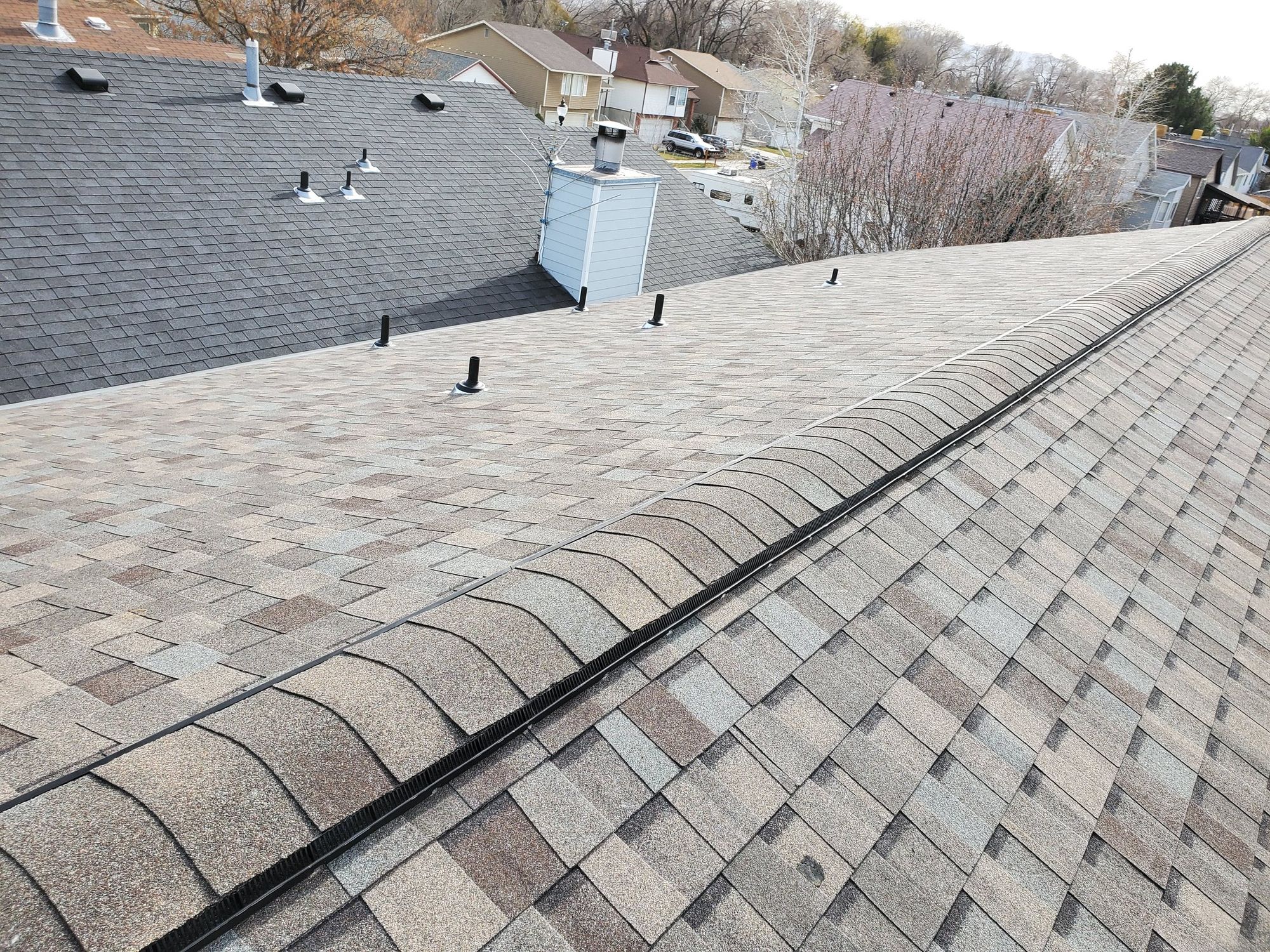
A continuous ridge slot pulls air along the entire peak, which is why it outperforms a row of box vents on most houses. Box vents still win in specific situations: a hip roof with almost no ridge to cut, a roof broken into separate attic spaces that do not share air, or a low ridge where a slot would sit under drifted snow all winter.
Never mix the two on one attic
Put both on the same space and the ridge pulls its air from the nearest box vent instead of from the soffit. The attic barely moves and the roof looks correctly vented from the driveway.
Flashing is where roofs leak
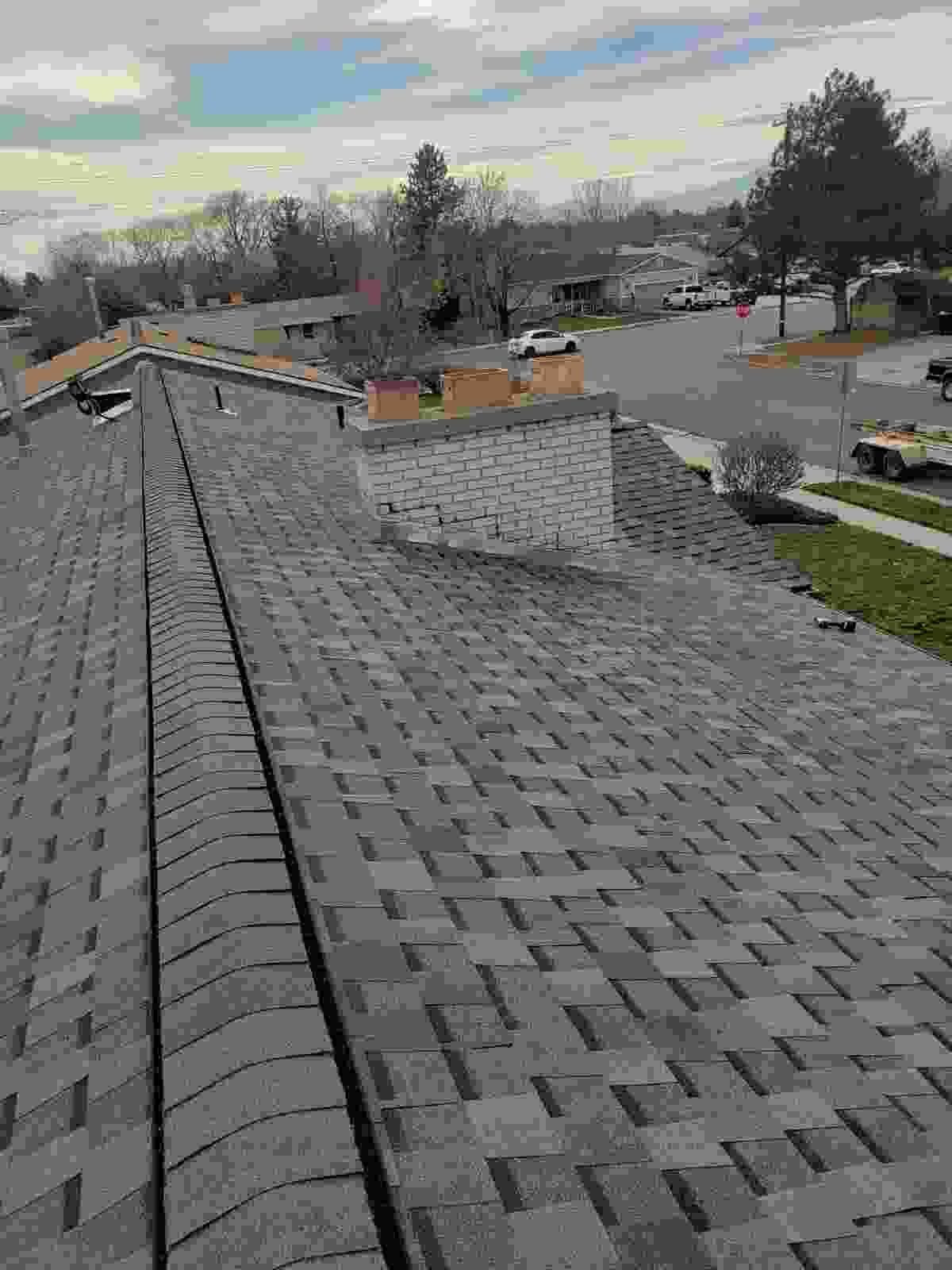
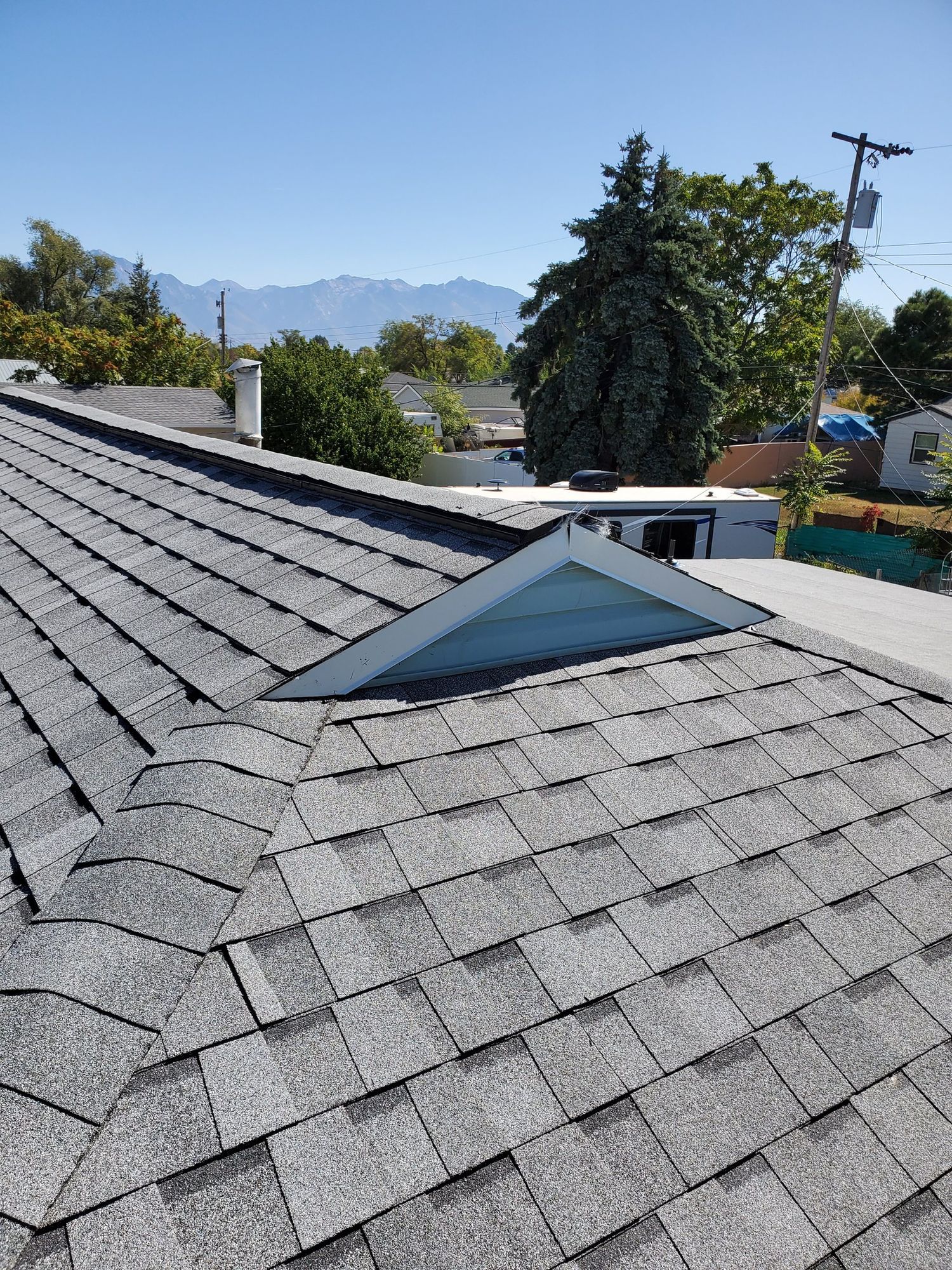
Very few roofs fail in the field of the shingles. They fail at the transitions, at a wall, a chimney, a skylight curb, a pipe boot, a valley. Good flashing is metal shaped so water has nowhere to go but out. Bad flashing is sealant spread over a gap and a hope that nobody looks for four years. When we pull a roof apart, the flashing is what tells us whether the last crew was in a hurry.
Step flashing is one piece per course
There is no shortcut version of that detail that works.
What we do around Harrisville
Every service is its own page. These are the ones Harrisville asks for most.
Roofing
Full replacements and new roofs on Harrisville homes, deck up.
Repairs
Leaks and failed details, which is most of what Harrisville calls about.
Upkeep
Inspections, cleaning and sealing before a small thing gets expensive.
Shingles
Architectural laminate, the field material on most of this valley.
Metal
Standing seam and corrugated, common on canyon-side snow load.
Tile
Clay and concrete tile, and the flashing work they need.
Commercial
Membrane systems for flat and low-slope buildings around Harrisville.
Coatings
Restoration coatings when a commercial roof has life left.
Storm
Hail, wind and the insurance paperwork that follows.
Skylights
Installation and the curb-flashing repairs skylights usually need.
Gutters
Gutters, downspouts and fascia, which are part of the roof.
Government
Schools, city, county, state and federal buildings. Every government service is on the government roofing page.
How the job runs
Protecting what is under the roof
A tear-off throws debris, and there is a lot of it. Before anything comes off, we tarp landscaping, lay plywood over anything that would take a hit, move what can be moved off the deck and the driveway, and set the dump trailer where it will not crack a concrete apron.
Attic coverage matters too
Old roofs shed dust and nail points into an attic. Anything stored up there gets covered before the first shingle moves.
When the weather turns mid-job
Forecasts here are wrong on a regular basis, so the plan assumes it. The plan includes enough underlayment and tarp on site to close up whatever is open, and the call to stop tearing off and start closing up gets made early rather than optimistically. Nobody wins a race against a cell coming over the benches.
What that means for your schedule
A job that was two days becomes three. Every time, we would rather explain a day than explain a wet ceiling.
Work from around the valley


What the name costs us
When a company is called by a family name there is no distance between the work and the people. A bad roof on a street where our kids go to school is not a line item, it is a conversation at a ball game. That is a real constraint and it is the most useful thing about a shop this size.
Down to earth, and serious about it
Friendly in the driveway, particular on the roof. The two have never been in conflict here.
What you can check on us
Anybody can write anything on a website, so the useful facts are the ones you can verify. Twenty-seven years in the trade for the owner. Eight years operating under the Hancock Signature name. Woman owned, family run, second generation in construction. Those are checkable and they are the ones we lead with.
We will not pad the list
There are claims we could make that we have not confirmed yet, so they are not on here. When they are confirmed they will be.
Questions we get asked
Not the question you had? Call the shop and ask a person. We would rather talk it through than have you guess from a website.
(801) 382-8898Do you actually work in Harrisville?
We do. Harrisville falls well inside the radius we run, and being there often is what lets us tell you how the housing around it was built.
How fast can you get to Harrisville after a storm?
Storm calls jump the queue. We get there, stop what is coming in, and schedule the real fix rather than rushing a permanent repair in bad weather.
Do you work through the winter?
Yes, with judgment. Shingles need to seal, and in genuine cold that takes longer or needs hand sealing. Emergency work happens whenever it has to. Full replacements get scheduled around the weather rather than forced into it.
What makes a Utah roof different?
Snow load, ice at the eaves, canyon wind and high-altitude sun, all on the same roof. A crew that learned roofing somewhere mild has to learn it again up here.
How do I know when a roof is getting close?
Granules collecting in the gutters, tabs lifting or curling at the edges, shingles that look bare in patches, and daylight or staining in the attic. Any of those is worth a look.
Will you tell me if I do not need a new roof?
Yes. Plenty of what we look at turns out to be a repair, and we say so. A roof with years left in it gets left alone, and you get the photographs either way.
Where Harrisville sits on our map
Our Weber County route covers Harrisville, so a look at a roof here does not wait on a gap.
Roof work in Harrisville
Call (801) 382-8898. Photographs of what we find come back to you either way.