
Roofing in the Taylorsville area
Replacements, repairs and storm work for Taylorsville homes and buildings.
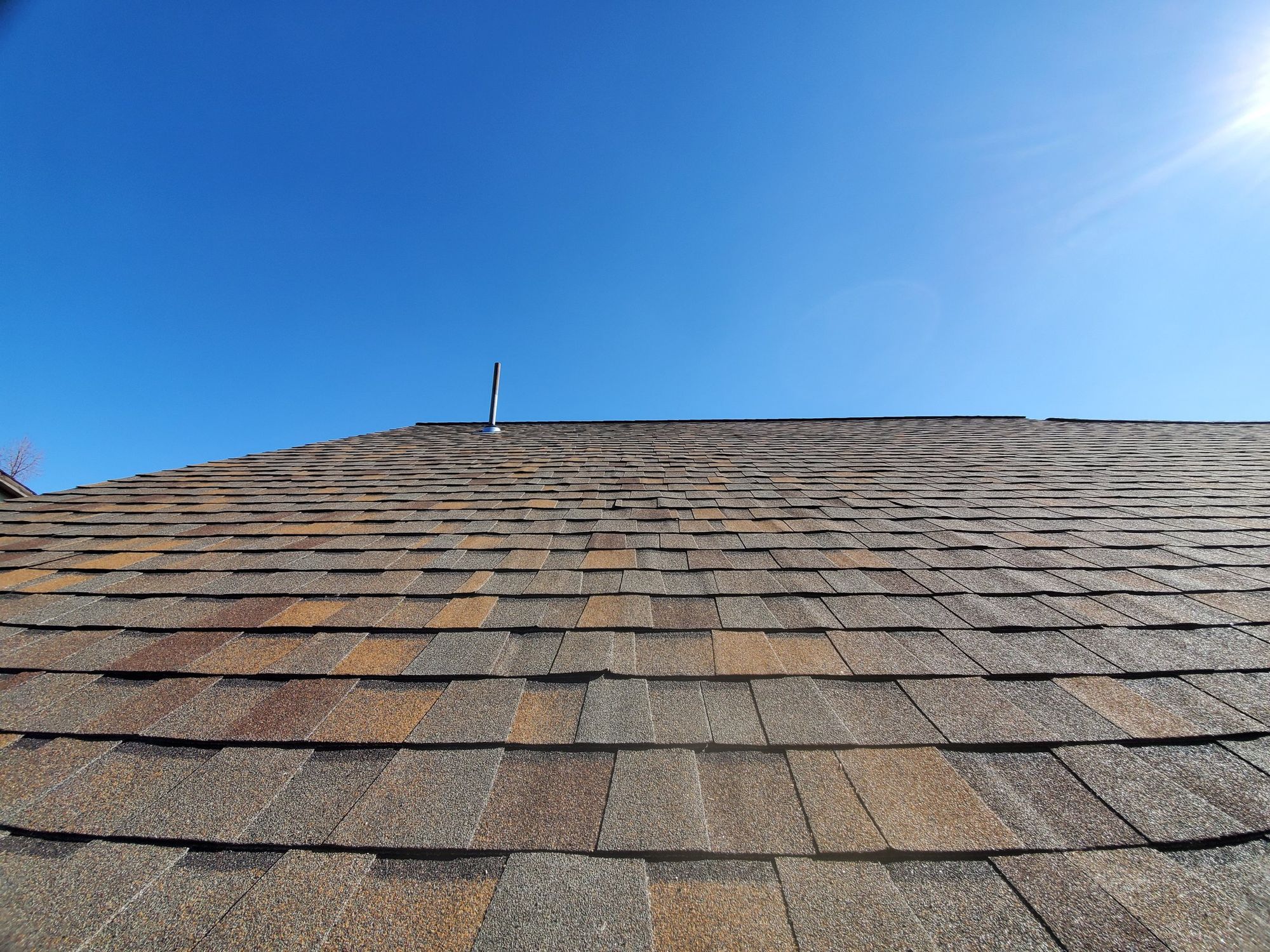
Why Taylorsville roofs fail where they fail
Ice at the eaves is the Taylorsville problem that gets misdiagnosed most often. It looks like a roofing failure and it is almost always a ventilation failure: warm air escaping into the attic melts snow up the slope, the water runs down to the cold overhang, and it refreezes there and backs up under the shingles.
A Taylorsville roof that opens up in a storm needs a tarp before it needs a sales pitch. We stop the water first, because that is usually the difference between a ceiling and a remodel.

The weather a Taylorsville roof works against
A slide onto a walkway
A loaded slope above a front door or a side path is a safety matter before it is a roofing one. Snow releases in one piece, and a hundred pounds landing on a step is how people get hurt. It also tears at the gutter on the way past and bends the hangers out of the fascia.
Fixing it means changing the geometry
Retention hardware, or a small roof over the entry to break the fall, or moving the path. Something has to change, because the slope will keep doing what slopes do.
Two seasons of roof weather
Roofs here really only get two conditions and both are hard. There is the cold half, where everything is about snow load, ice at the eave and condensation under the deck. Then there is the hot dry half, where ultraviolet and surface heat cook the asphalt and the only water that arrives comes fast and sideways. Systems that do fine in a mild climate get worn from both ends up here.
Building for both
The details that handle winter and the details that handle summer are different details, and a roof has to carry both sets.
The valley floor sees less snow than the benches above it, but the benches above it are where a lot of the housing is. A roof in Holladay or Cottonwood Heights lives a different winter from one in Kearns, five miles away.
What we find on roofs around Taylorsville
Fasteners rust from the inside out
Screws and nails on a roof within reach of the lake air corrode faster than the same hardware would inland. A plain steel nail head disappears under a shingle and takes years off the roof’s hold without a single visible symptom. Hot-dipped galvanized or stainless where the metal is exposed is a small line item that decides whether the roof reaches its rated life.
Mixed metals make it worse
Aluminum flashing pinned with the wrong screw sets up a reaction that eats the softer metal at every contact point.
We look at the old nails
What came out of the last roof tells you what to put in the new one.
Open valley or closed
A closed valley weaves or cuts the shingles across the intersection. An open valley runs metal down the center with the shingles cut back off it. Around here, with the volume of water and ice a valley concentrates, open metal over ice-and-water shield is the detail we reach for on most homes. It moves debris out instead of catching it, and it gives ice a smooth surface instead of a shingle edge to grab.
The W profile
A center rib keeps water from one plane washing up under the shingles on the other.
What we do around Taylorsville
Every service is its own page. These are the ones Taylorsville asks for most.
Roofing
Full replacements and new roofs on Taylorsville homes, deck up.
Repairs
Leaks and failed details, which is most of what Taylorsville calls about.
Upkeep
Inspections, cleaning and sealing before a small thing gets expensive.
Shingles
Architectural laminate, the field material on most of this valley.
Metal
Standing seam and corrugated, common on canyon-side snow load.
Tile
Clay and concrete tile, and the flashing work they need.
Commercial
Membrane systems for flat and low-slope buildings around Taylorsville.
Coatings
Restoration coatings when a commercial roof has life left.
Storm
Hail, wind and the insurance paperwork that follows.
Skylights
Installation and the curb-flashing repairs skylights usually need.
Gutters
Gutters, downspouts and fascia, which are part of the roof.
Government
Schools, city, county, state and federal buildings. Every government service is on the government roofing page.
How the job runs
Protecting a tile or stamped drive
A loaded dump trailer parked on a decorative driveway cracks it, and the crack shows up a week after everybody has left. We look at the drive before deciding where anything heavy sits, lay planking under the wheels and the tongue jack when there is no other option, and park on the street when the street will do.
Same thing for a paver walkway
Debris chutes get positioned so nothing lands on set pavers, because a dropped bundle of old tile will break one and matching a paver is its own project.
Ask us to move the trailer
If the spot we picked bothers you, say so. It takes two minutes.
Documenting the decking
Once the old roof is off, the deck gets walked and anything soft, delaminated or split is marked. Sheets get counted and photographed before replacement, because decking is the one part of a roof that cannot be priced honestly in advance and it is also the easiest place for a dishonest contractor to pad a bill. Photos with the count settle it.
Skip sheathing on older homes
Plank decking with gaps has to be sheeted over before asphalt can go down. We tell you that before we start if we can see it from the attic.

Work from around the valley



Down to earth, and particular
Friendly does not mean casual about the work. We will joke with you in the driveway and we will also tear out a valley that was ninety percent right and redo it. Those two things live comfortably together in a family shop.
What particular looks like
Six nails in the line. Step flashing one piece per course. The magnet run twice.
What friendly looks like
You get a real person on the phone and a straight answer.
Small on purpose, steady throughout
We take on the work we can staff properly. That is a deliberate limit. A crew stretched across four jobs cuts corners on all of them, and the corners it cuts are the ones under the shingles where nobody will look for a decade.
Hancock runs the job
The person who looked at your roof answers for the work on it.
Questions we get asked
Not the question you had? Call the shop and ask a person. We would rather talk it through than have you guess from a website.
(801) 382-8898Do you actually work in Taylorsville?
We do. Taylorsville falls well inside the radius we run, and being there often is what lets us tell you how the housing around it was built.
How fast can you get to Taylorsville after a storm?
We stop the water first. Temporary work is genuinely temporary and we say so, but it buys the time to do the actual repair right.
What happens if you find bad decking?
We show you. The decking is only visible during a tear-off, so that is when soft sheathing gets found and replaced. We photograph it rather than just add it to a list.
Do you work through the winter?
Yes, with judgment. Shingles need to seal, and in genuine cold that takes longer or needs hand sealing. Emergency work happens whenever it has to. Full replacements get scheduled around the weather rather than forced into it.
What makes a Utah roof different?
Snow load, ice at the eaves, canyon wind and high-altitude sun, all on the same roof. A crew that learned roofing somewhere mild has to learn it again up here.
How do I know when a roof is getting close?
Granules collecting in the gutters, tabs lifting or curling at the edges, shingles that look bare in patches, and daylight or staining in the attic. Any of those is worth a look.
Where Taylorsville sits on our map
Our Salt Lake County route covers Taylorsville, so a look at a roof here does not wait on a gap.
Roof work in Taylorsville
Call (801) 382-8898 and we will come and read the roof rather than guess at it from the drive.