
Roofing in the Syracuse area
A family roofing company that reads a Syracuse roof before pricing it.
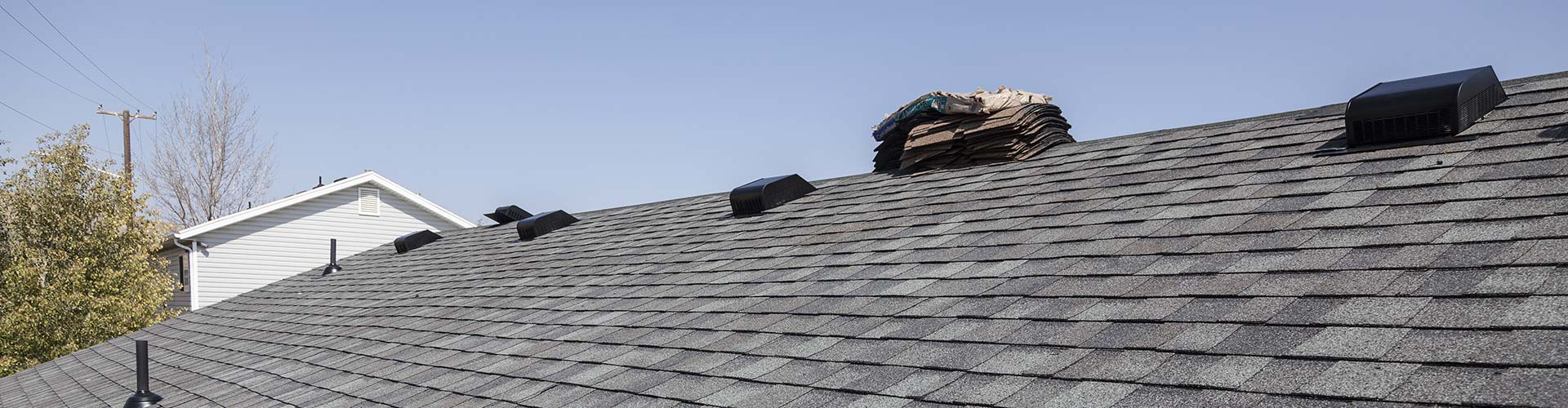
What this valley does to a roof
West-facing slopes take the worst of it in Syracuse. Afternoon sun at this elevation works on the mat all summer, then hail comes out of the same quarter in the shoulder seasons, so one plane of a roof routinely ages years ahead of the others.
Syracuse sits inside the ground we cover around Salt Lake City. Working it regularly is why we can tell you what a roof needs without hedging.

The weather a Syracuse roof works against
The rot that follows a slow leak
The dangerous leak is not the one that stains a ceiling in a week. It is the one that puts a cup of water into a rafter bay every storm for four years. Nothing shows inside because the insulation absorbs it and the attic dries out between events, while the sheathing goes dark, then soft, then delaminates around the fasteners.
How we find it
Daylight through the deck from inside the attic, rust at the nail points, and a sheathing surface that gives under a knuckle.
Wood is the expensive part
Shingles are a material cost. Structure is not.
Inversion keeps a roof damp
Winter here can park a lid of cold air over the valley floor for a week straight. Nothing dries during that stretch. A shaded slope that got wet on Monday is still wet on Friday, the sheathing under it never gives its moisture back to the air, and any lap that was going to wick does its wicking slowly with no interruption.
Gray weeks do quiet damage
Storms get blamed for roofs. Nine flat gray days with the sun never touching the north face do more, and nobody remembers them.
Davis County runs narrow between the lake and the mountain, and the wind funnels through it. The corridor around the base sees gusting that the sheltered streets further east do not.
What we find on roofs around Syracuse
Open valley or closed
A closed valley weaves or cuts the shingles across the intersection. An open valley runs metal down the center with the shingles cut back off it. Around here, with the volume of water and ice a valley concentrates, open metal over ice-and-water shield is the detail we reach for on most homes. It moves debris out instead of catching it, and it gives ice a smooth surface instead of a shingle edge to grab.
The W profile
A center rib keeps water from one plane washing up under the shingles on the other.
Decking is the part nobody plans for
The sheathing under the roof only gets looked at once every couple of decades, which is when the old roof comes off. Older homes up here might have skip sheathing, plank decking with gaps, or plywood that has been soft over a leak for years. It gets replaced where it is bad, because fasteners do not hold in punky wood and a soft deck telegraphs every wave through a new roof.
It is measured, not guessed
Sheet count gets documented once the roof is open, before anything goes back down.
What we do around Syracuse
Every service is its own page. These are the ones Syracuse asks for most.
Roofing
Full replacements and new roofs on Syracuse homes, deck up.
Repairs
Leaks and failed details, which is most of what Syracuse calls about.
Upkeep
Inspections, cleaning and sealing before a small thing gets expensive.
Shingles
Architectural laminate, the field material on most of this valley.
Metal
Standing seam and corrugated, common on canyon-side snow load.
Tile
Clay and concrete tile, and the flashing work they need.
Commercial
Membrane systems for flat and low-slope buildings around Syracuse.
Coatings
Restoration coatings when a commercial roof has life left.
Storm
Hail, wind and the insurance paperwork that follows.
Skylights
Installation and the curb-flashing repairs skylights usually need.
Gutters
Gutters, downspouts and fascia, which are part of the roof.
Government
Schools, city, county, state and federal buildings. Every government service is on the government roofing page.
How the job runs
The insurance path on storm work
When a storm does real damage, the path runs through your carrier, and the order matters. Document the damage first, file the claim, and be on the roof with the adjuster when they come out. We meet adjusters because it is the one chance to point at bruising and lifted tabs while somebody with authority is looking.
What we do not do
We do not tell you a roof is totaled when it is repairable, and we do not promise what an adjuster will decide. That call is theirs.
Photographs at every stage
We shoot the roof before anything comes off, we shoot the bare deck with anything we are replacing marked, we shoot the ice barrier and the metal before the shingles cover them, and we shoot the finished roof. The photos that matter most are the middle ones, because those are of the parts nobody can see once the job is done.
You get the whole set
Not a curated few. If something in there raises a question, ask it.
It keeps everybody honest
Including us.
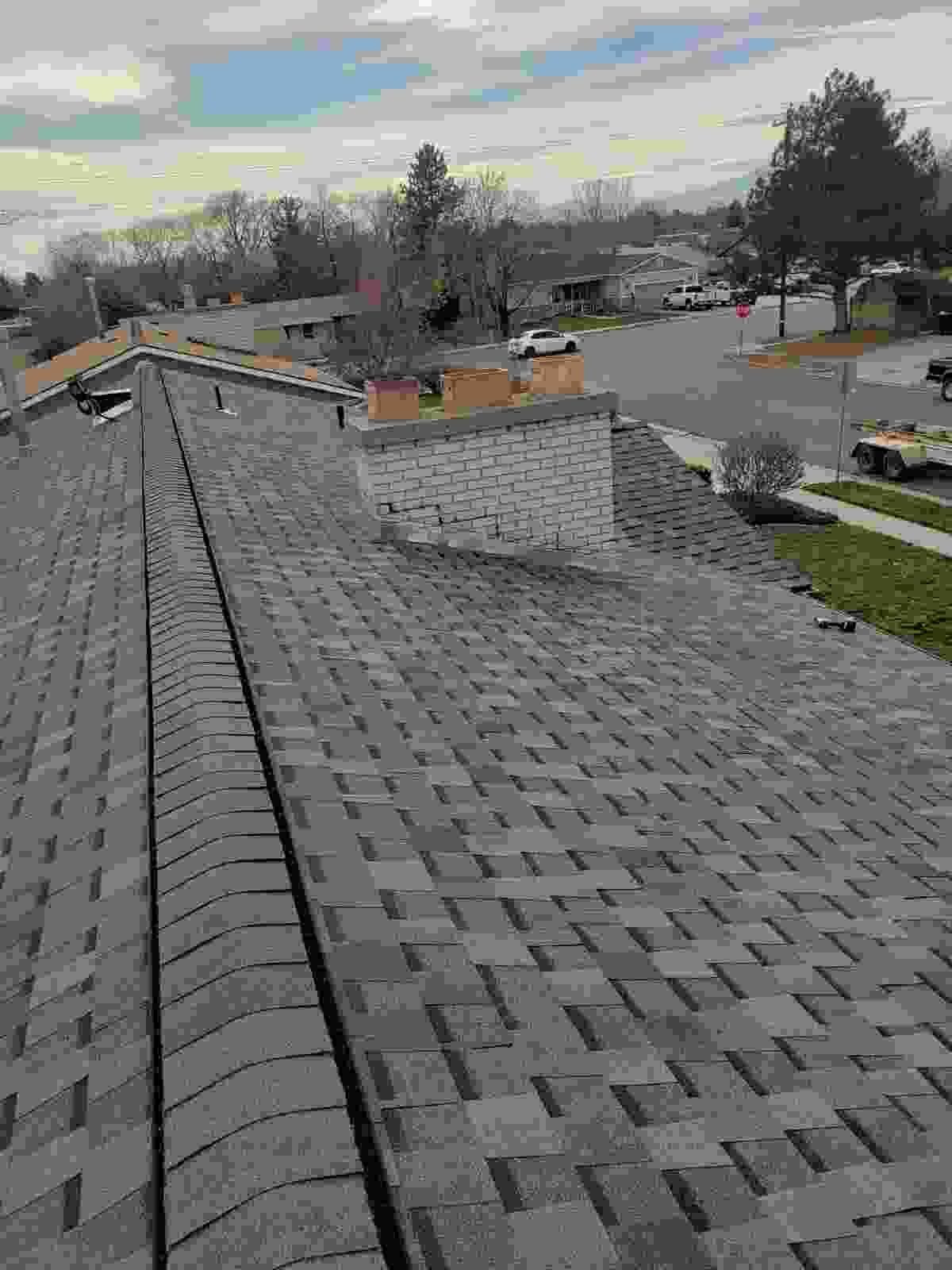
Work from around the valley



We live under these roofs too
Our families are in these same neighborhoods, on the same benches, taking the same wind and the same snow. When we detail an eave a certain way it is because we have seen what the other way does two streets over.
Same weather, same stakes
There is no version of this where we get to install something we would not put on our own house.
It is a small valley
People remember who did their neighbor’s roof.
Standing behind old work
There are roofs we put on years ago that we still drive past and look at. When one of them needs something, we go. A company that is around long enough to be accountable for its own history behaves differently than one planning to be somebody else’s problem in five years.
Eight winters is the test
Eight years operating under this name is long enough for the early roofs to have been through real weather, which is the only test that counts.
Twenty-seven years before that
The owner’s own time in the trade, kept as a separate number.
Questions we get asked
Not the question you had? Call the shop and ask a person. We would rather talk it through than have you guess from a website.
(801) 382-8898Do you actually work in Syracuse?
Regularly. Syracuse is ordinary working territory for us, not an outlying job we take when it is quiet.
How fast can you get to Syracuse after a storm?
As fast as we can get there. Stopping the water comes first and the permanent repair follows once the weather opens a window.
Do you work through the winter?
Yes, with judgment. Shingles need to seal, and in genuine cold that takes longer or needs hand sealing. Emergency work happens whenever it has to. Full replacements get scheduled around the weather rather than forced into it.
What makes a Utah roof different?
Snow load, ice at the eaves, canyon wind and high-altitude sun, all on the same roof. A crew that learned roofing somewhere mild has to learn it again up here.
How do I know when a roof is getting close?
Granules collecting in the gutters, tabs lifting or curling at the edges, shingles that look bare in patches, and daylight or staining in the attic. Any of those is worth a look.
Will you tell me if I do not need a new roof?
Yes. Plenty of what we look at turns out to be a repair, and we say so. A roof with years left in it gets left alone, and you get the photographs either way.
Where Syracuse sits on our map
We work Syracuse as part of our Davis County schedule.
Roof work in Syracuse
Call (801) 382-8898. If it turns out to be a repair we will say so and do the repair.