
Standing Seam Metal Roofing around Heber City
Concealed-fastener metal, the quiet premium option.
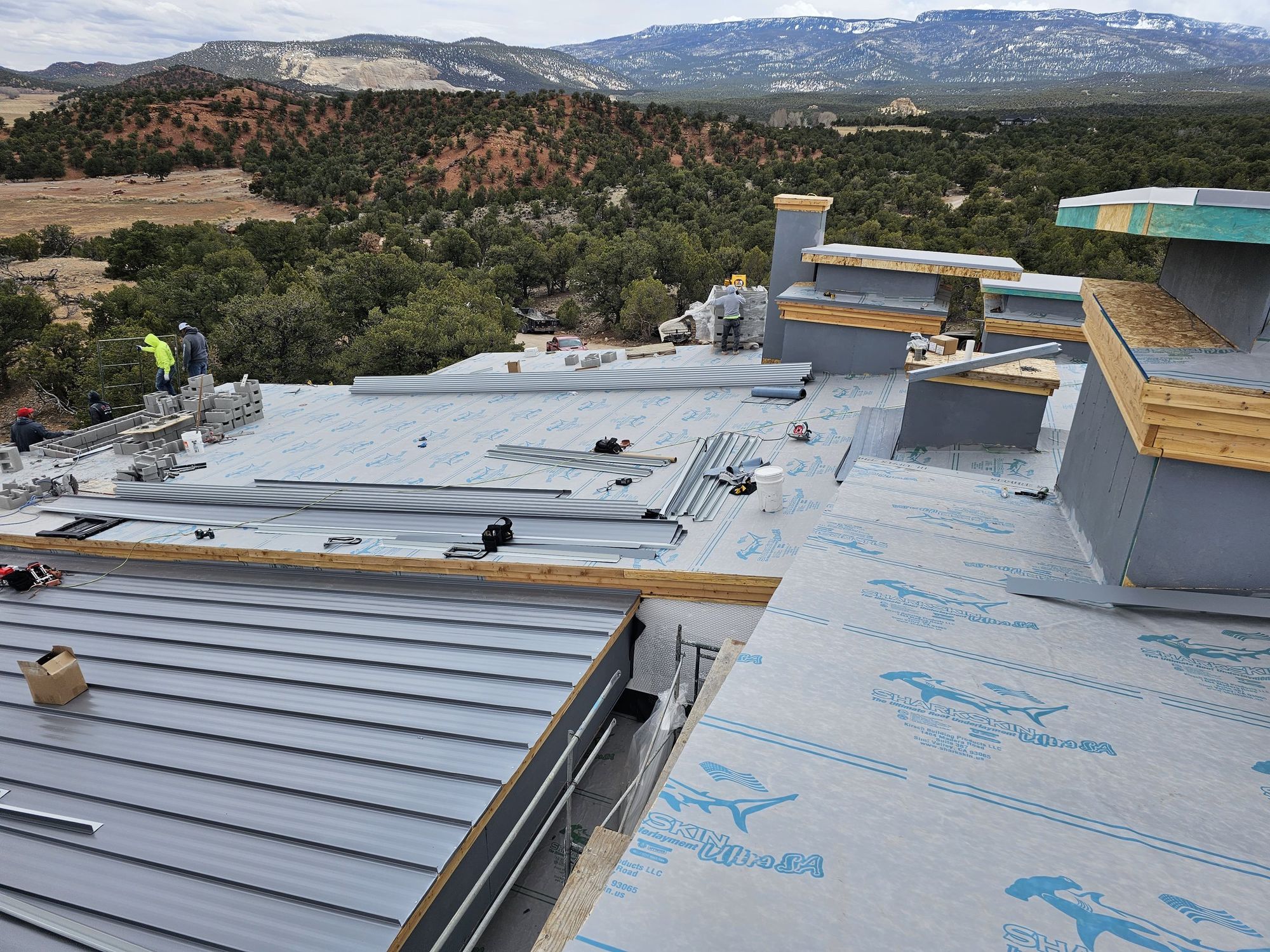
Standing Seam Metal Roofing for Heber City homes and buildings
Panels seamed together with clips, so the fasteners never pierce the weather surface.
Heber gets genuine mountain winter. Ice barrier at the eaves is not an upsell in this valley, it is the difference between a roof that survives a thaw cycle and one that stains the ceiling every March.
No exposed fastener means no gasket to dry out and back out in fifteen years.
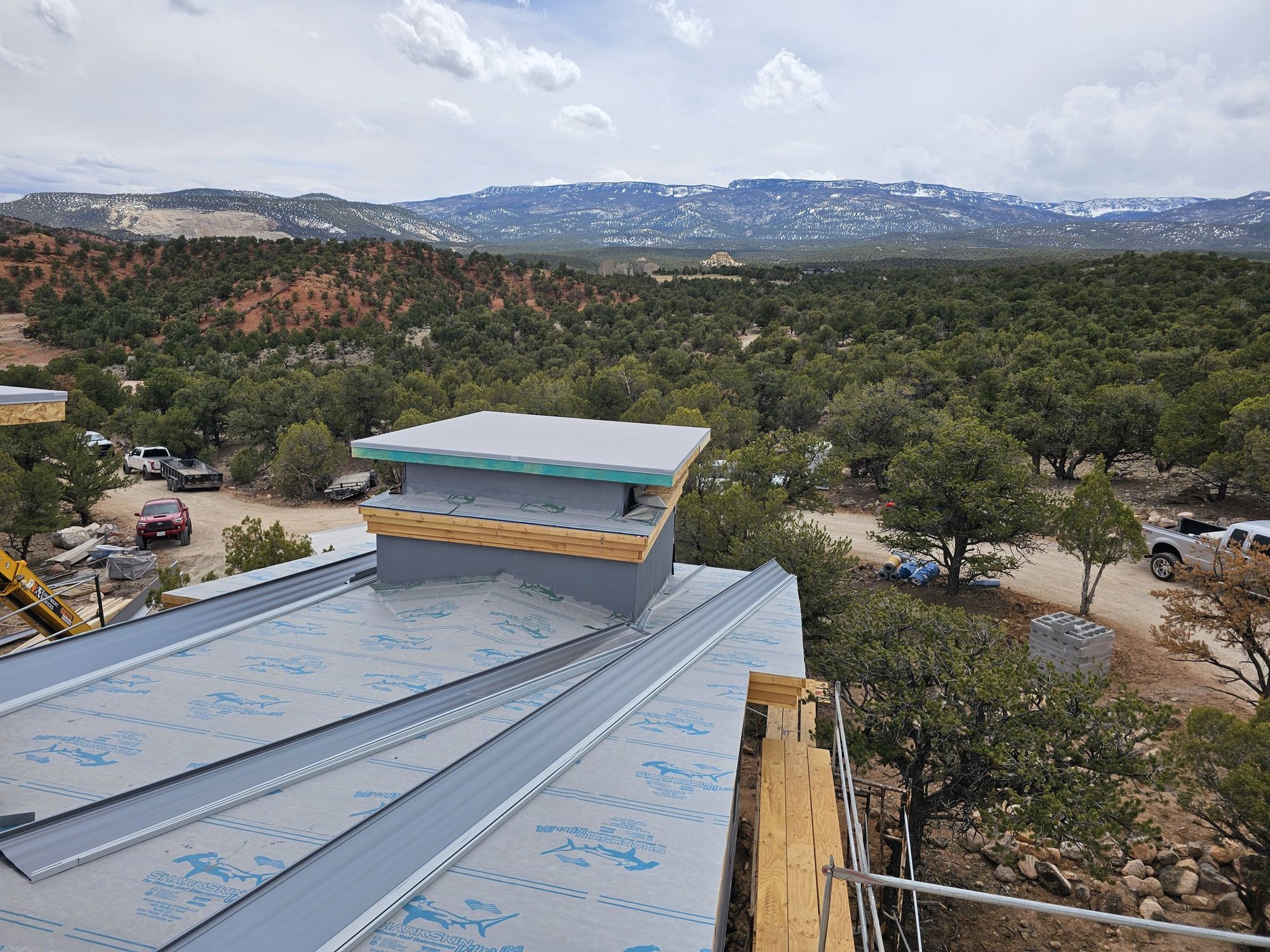
What matters on standing seam metal roofing
Movement is the design problem
Metal expands and contracts with temperature across the whole length of a panel. A metal roof that was pinned down rather than allowed to move will oil-can, work its fasteners loose, or tear at a fixing point. The clip and fastener strategy is the engineering.
Where metal earns its keep
At elevation, where snow sits for months, a metal roof sheds load instead of carrying it. That single property is why so much of the high country is metal.
How the system goes together
How long a bead of sealant lasts
Roof sealant is a consumable. In this climate, with the ultraviolet load and the temperature swing, a good product stays flexible for a handful of years and then shrinks, crazes and pulls away from one side of the joint. That is normal and expected behavior for the material.
Design so sealant is a backup
Every joint that matters should shed water by its shape, with the sealant there as a second line. Where sealant is the only thing standing between water and the deck, somebody has signed you up for a maintenance visit every few years.
Ask what is holding a repair together
If the answer is caulk, ask again.
Standing seam versus exposed fastener
Standing seam hides its fasteners under the raised seam, so nothing that holds the panel down is exposed to weather. Corrugated and other exposed-fastener panels screw through the face with a rubber washer at every screw, which costs less up front and means those washers are a maintenance item down the road. Both belong on roofs up here. They just have different lives.
Panel movement decides the detail
Whichever system, the panel has to be free to expand and contract or it will work its own fastener holes open.
What we check
- Panel profile and gauge against the snow load
- Clip spacing and room left for movement
- Underlayment rated for the heat under metal
- Trim at the eaves, rakes and walls
What the job looks like
Get on the roof
We walk it rather than look from the drive, check the decking underfoot, the flashings and the ventilation, and photograph what we find before any number is discussed.
Show you what we saw
The photographs come back to you with a plain read of what the roof needs and, just as often, what it does not need yet.
Crew on site
The crews we hire work under Hancock’s direction, staged so landscaping and the drive are protected, working the detail in the order it is supposed to go on rather than the order that is quickest.
Leave it clean
Site cleared at the end of every day, a magnet run over the whole yard for nails at the finish, and the roof walked with you before we go.
Chimneys and the winter melt
Masonry sits colder than the roof around it and snow banks against the uphill side. Meltwater runs down the brick and looks for a way in. Step flashing, counter flashing tucked into a reglet cut, and a cricket behind a wide chimney are what keep it out. A bead of sealant across a chimney base is a temporary measure that somebody will be redoing in two winters.
Old mortar makes it worse
Where the joints have gone soft, the water gets into the masonry itself and the flashing is only half the job.
Dust storms before the rain
Ahead of a summer cell the wind arrives dry and full of grit off the open ground west of here. That grit gets driven into every horizontal surface on a roof, then the rain lands on top of it and packs it into a paste in the valleys and the gutter seams.
Grit is an abrasive
It grinds at the mat under foot traffic and it holds moisture against metal long after the surface has dried.
So we clear twice a year
Once before summer, once after the leaves are down.
Where roofs go wrong
The shortcut we see most
Panels fastened tight at both ends with no allowance for movement. The roof oil-cans in summer, works its fasteners loose over a few seasons, and tears at a fixing point.
What good looks like instead
Clips and fasteners that let the panel move with temperature, and terminations detailed for the expansion the metal will actually see.
Signs worth a look
- Fasteners backing out or their washers cracked
- Panels oil-canning visibly along a run
- Seams opening at a termination
- Rust starting at a cut edge or penetration
What to expect
Lifespan against cost
Metal costs more up front and lasts considerably longer. Whether that is the right trade depends on how long you intend to be in the building, and we will talk through that honestly rather than push the bigger job.
Snow behaviour
Metal sheds snow, which is an advantage at elevation and a hazard over a walkway or a door. Snow retention gets designed in where the building needs it rather than added after somebody gets hit.
Noise and insulation
Over a solid deck with underlayment, a metal roof is not appreciably louder than asphalt. The drumming people remember is metal over open purlins on an outbuilding.
Getting to Heber City
Heber City sits inside the ground we cover around Salt Lake City. Working it regularly is why we can tell you what a roof needs without hedging.
That proximity is most of what matters when weather moves through. Heber City sits in Wasatch County, and we are on roofs across it regularly enough to know how the housing there was built.
Questions we get asked
Not the question you had? Call the shop and ask a person. We would rather talk it through than have you guess from a website.
(801) 382-8898Do you actually work in Heber City?
We do. Heber City falls well inside the radius we run, and being there often is what lets us tell you how the housing around it was built.
How fast can you get to Heber City after a storm?
We stop the water first. Temporary work is genuinely temporary and we say so, but it buys the time to do the actual repair right.
What happens if you find bad decking?
We show you. The decking is only visible during a tear-off, so that is when soft sheathing gets found and replaced. We photograph it rather than just add it to a list.
Do you work through the winter?
Yes, with judgment. Shingles need to seal, and in genuine cold that takes longer or needs hand sealing. Emergency work happens whenever it has to. Full replacements get scheduled around the weather rather than forced into it.
What makes a Utah roof different?
Snow load, ice at the eaves, canyon wind and high-altitude sun, all on the same roof. A crew that learned roofing somewhere mild has to learn it again up here.
Where Heber City sits on our map
Heber City work is scheduled like the rest of the valley.
Standing Seam Metal Roofing in Heber City
Call (801) 382-8898.