
Flat Roofing around Lehi
Low-slope roofs where water has to be driven off, not shed.
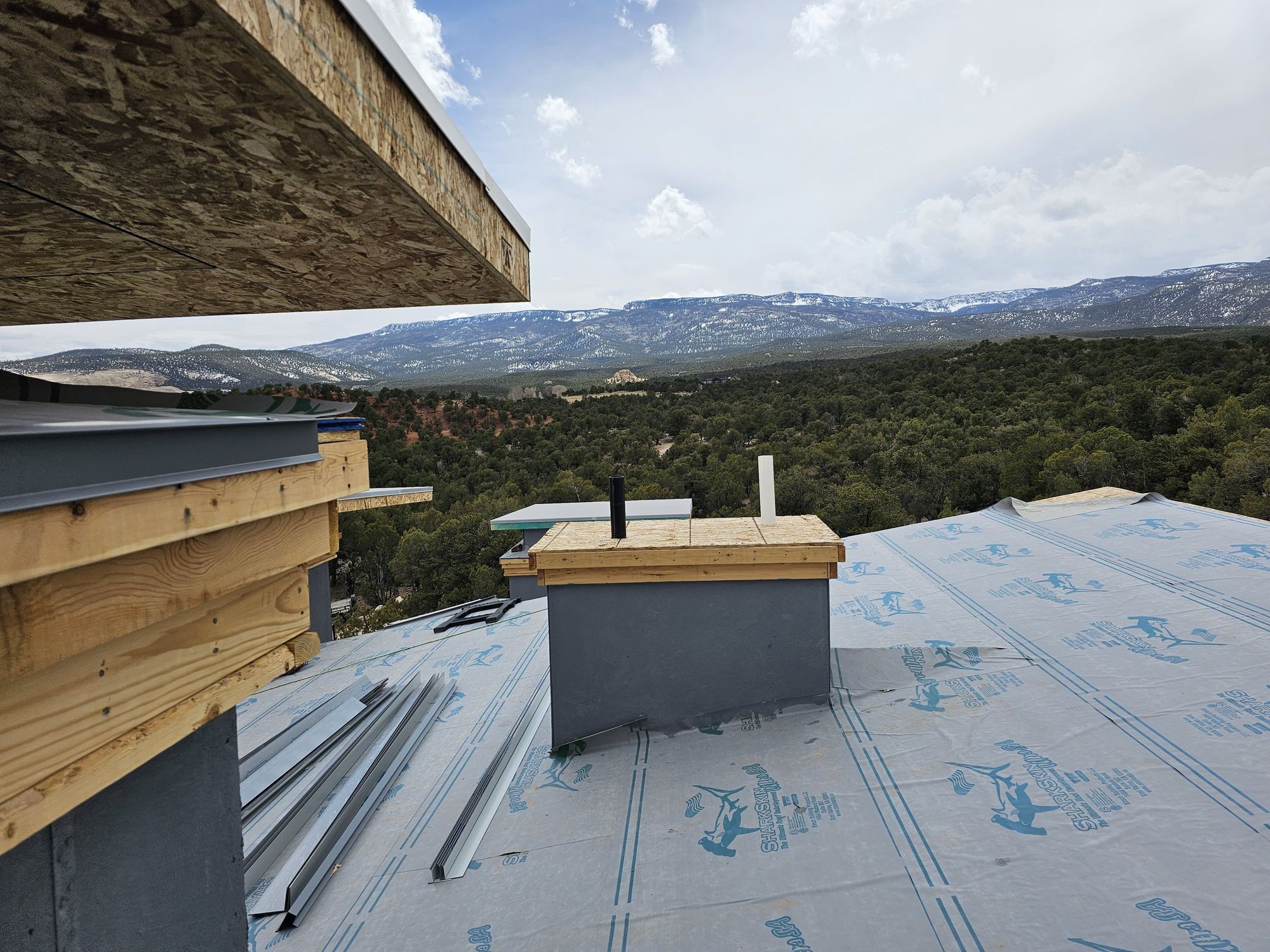
Flat Roofing for Lehi homes and buildings
Membrane systems with the drainage and terminations detailed for a roof that holds water if you let it.
Lehi has grown fast, which means a great many roofs went on within a few years of each other and are now aging out together. Ventilation and nailing pattern are the two things we check first on these.
On a flat roof the drainage plan is the roof. Everything else is material choice.
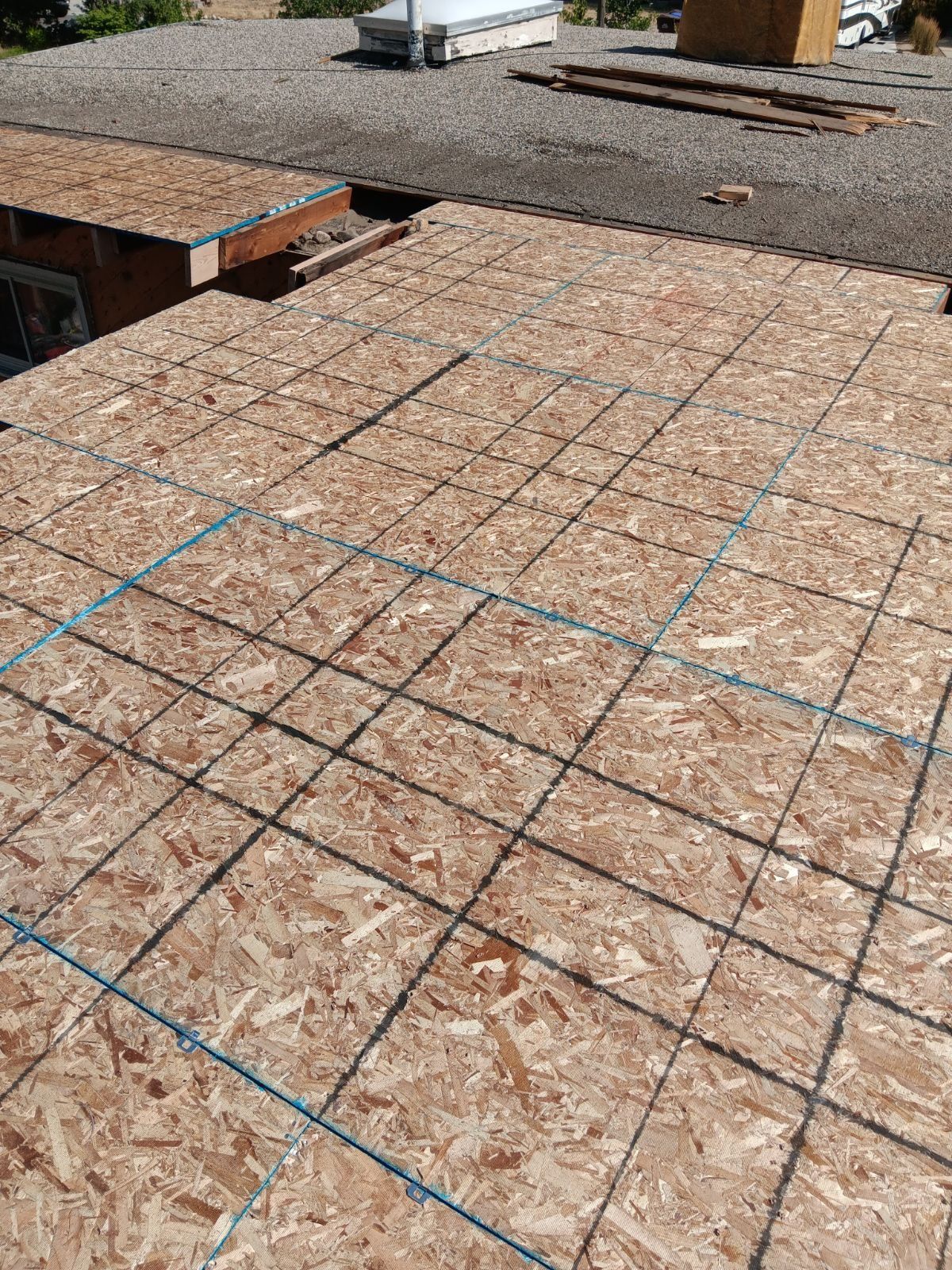
What matters on flat roofing
Drainage before material
The first question on any low-slope roof is where the water goes. Ponding is what kills membranes, and a roof that holds water for days after a storm will fail early regardless of which sheet is on it. We look at the slope, the drains and the terminations before we talk about material.
Seams and terminations
Field failures on commercial roofs are rare. Failures at seams, curbs, drains and the parapet edge are common. A hot-air welded seam that has been probed is a continuous sheet. Anything taped or glued and unverified is a scheduled leak.
Flat Roofing around Lehi
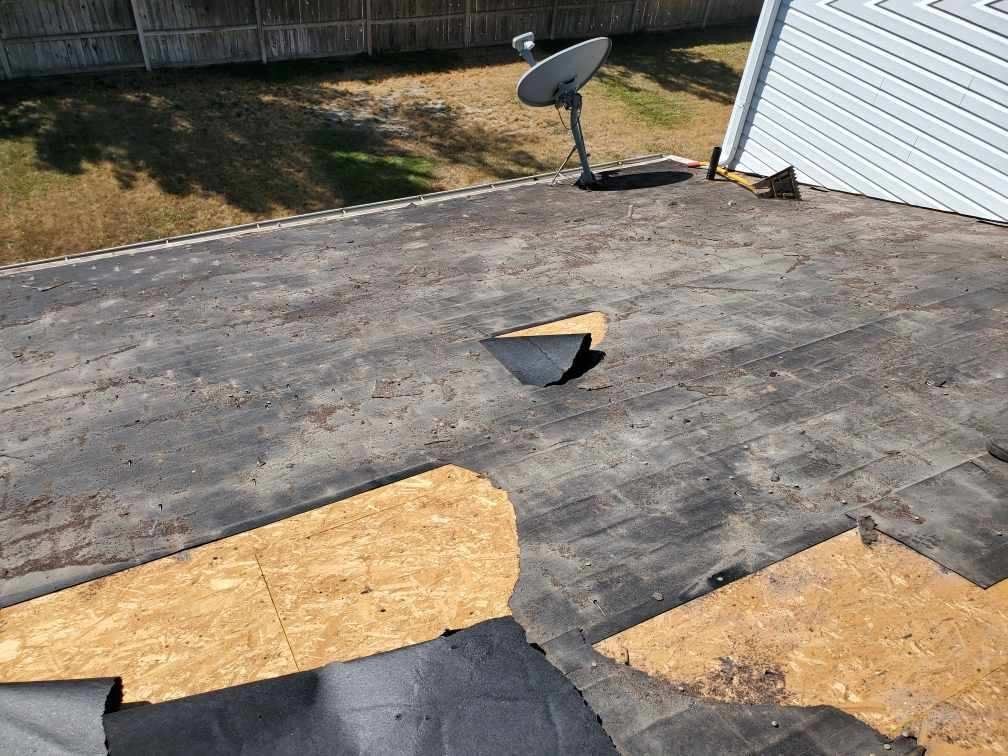
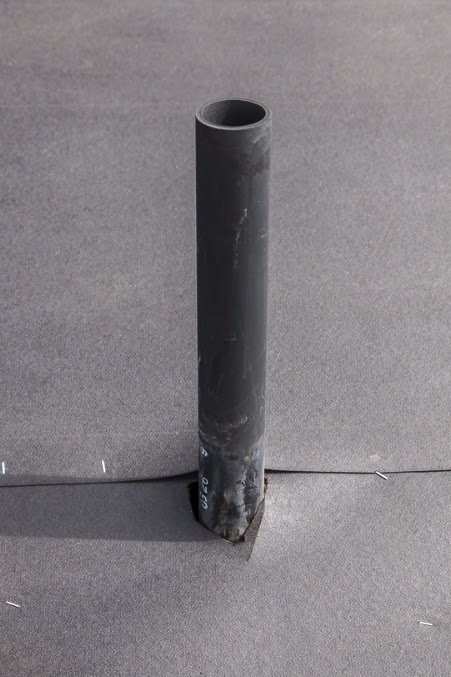
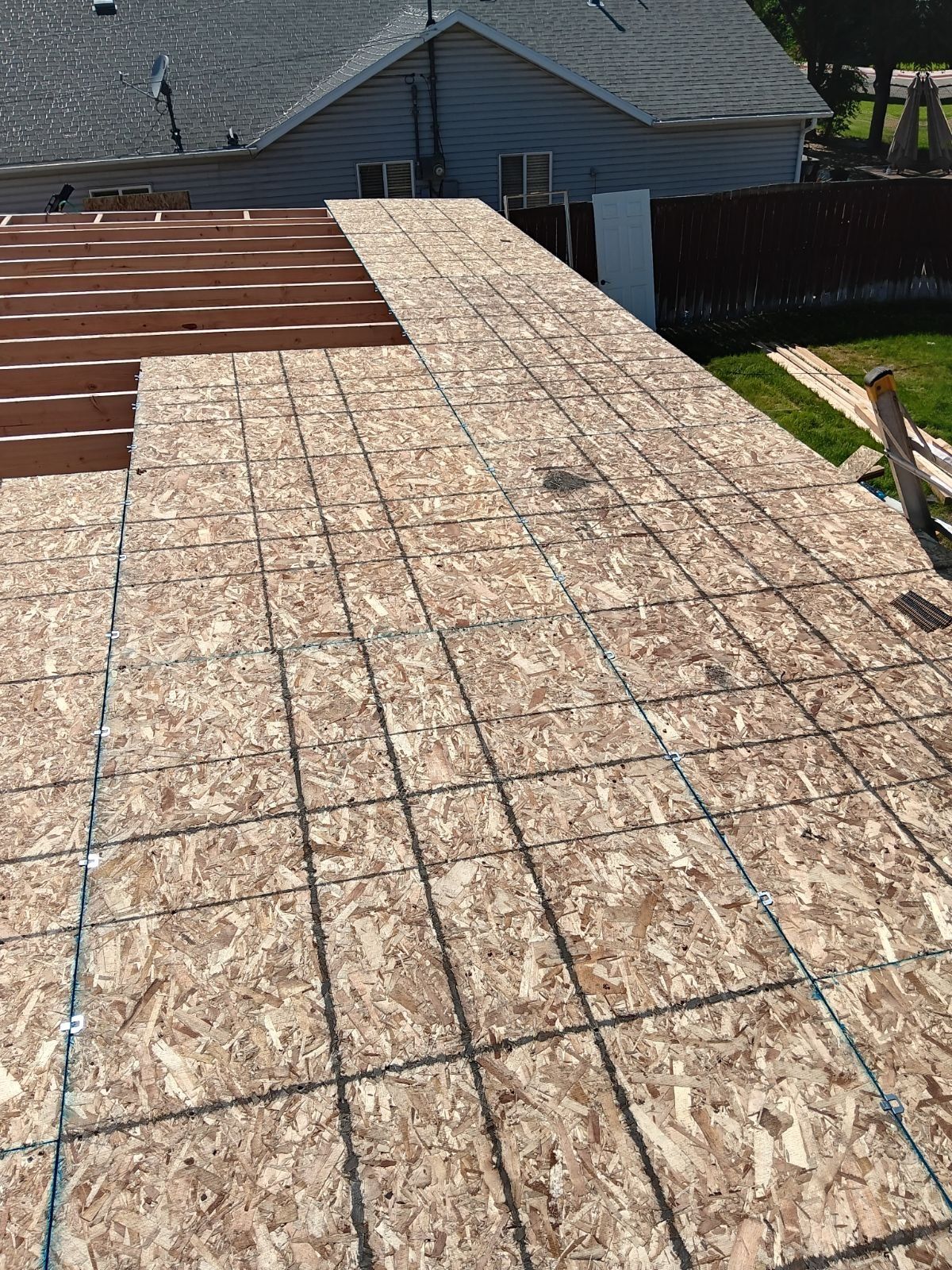
How the system goes together
Six nails in the right line
Every shingle wrapper prints a nailing pattern and a nail line, and that pattern is what the wind rating was earned with. High nailing misses the reinforced strip and leaves the nail head sitting in the exposed area of the shingle below. Four nails where the wrapper asks for six cuts the uplift resistance on the one part of the roof the wind works hardest.
Overdriven is as bad as missing
A gun set too hot cuts through the mat and the shingle is hanging on a hole.
Cheapest detail to get right
And the most common thing done wrong.
How long a bead of sealant lasts
Roof sealant is a consumable. In this climate, with the ultraviolet load and the temperature swing, a good product stays flexible for a handful of years and then shrinks, crazes and pulls away from one side of the joint. That is normal and expected behavior for the material.
Design so sealant is a backup
Every joint that matters should shed water by its shape, with the sealant there as a second line. Where sealant is the only thing standing between water and the deck, somebody has signed you up for a maintenance visit every few years.
Ask what is holding a repair together
If the answer is caulk, ask again.
What we check
- Field condition and granule loss
- Valleys, ridges and every transition
- Penetrations and their flashing
- Gutter and fascia condition
What the job looks like
Get on the roof
We walk it rather than look from the drive, check the decking underfoot, the flashings and the ventilation, and photograph what we find before any number is discussed.
Show you what we saw
The photographs come back to you with a plain read of what the roof needs and, just as often, what it does not need yet.
Crew on site
The crews we hire work under Hancock’s direction, staged so landscaping and the drive are protected, working the detail in the order it is supposed to go on rather than the order that is quickest.
Leave it clean
Site cleared at the end of every day, a magnet run over the whole yard for nails at the finish, and the roof walked with you before we go.
The rot that follows a slow leak
The dangerous leak is not the one that stains a ceiling in a week. It is the one that puts a cup of water into a rafter bay every storm for four years. Nothing shows inside because the insulation absorbs it and the attic dries out between events, while the sheathing goes dark, then soft, then delaminates around the fasteners.
How we find it
Daylight through the deck from inside the attic, rust at the nail points, and a sheathing surface that gives under a knuckle.
Wood is the expensive part
Shingles are a material cost. Structure is not.
Spring wind off the benches
Canyon wind is the thing homeowners here tend to shrug off. It does not arrive as a steady push, it arrives in gusts that lift a shingle tab, break the seal strip, and set it down again looking fine. Three or four of those and the tab is loose, water gets a path, and nobody knows until a ceiling stains.
Rakes and ridges go first
Edges take the uplift. That is why we nail the rake tighter, use a starter course with a factory seal at the eave, and look at ridge caps before anything else after a blow.
Where roofs go wrong
The shortcut we see most
A membrane laid over wet insulation because tearing off would have cost a day. The roof looks finished, the moisture stays underneath, and the sheet fails early from below.
What good looks like instead
Moisture surveyed, wet sections cut out and replaced, drainage corrected, then the membrane installed and its seams probed.
Signs worth a look
- Ponding water still standing two days after rain
- Seams that have lifted or opened at an edge
- Blisters or ridging across the field
- Interior staining near drains, curbs or the parapet
What to expect
Scheduling around your operation
Most commercial work can be staged so the disruptive part happens when the building is quiet. Tear-off noise, crane or hoist time and material deliveries all get planned against your hours rather than ours.
What the roof survey covers
Before specifying anything we survey the existing assembly: slope and drainage, moisture in the insulation, the condition of seams and terminations, and how the roof is being used. A roof somebody walks on weekly needs a different answer from one nobody touches.
Documentation
Commercial and public work runs on records. We photograph the existing condition, the work in progress and the finished assembly, so there is a file rather than a recollection.

Getting to Lehi
On a booked replacement the calendar does most of the work. On the day something fails at a Lehi house, stopping the water comes first and the real repair follows.
That proximity is most of what matters when weather moves through. Lehi sits in Utah County, and we are on roofs across it regularly enough to know how the housing there was built.
Questions we get asked
Not the question you had? Call the shop and ask a person. We would rather talk it through than have you guess from a website.
(801) 382-8898Do you actually work in Lehi?
Yes. Lehi sits inside the ground we cover around Salt Lake City, and the crew is there most weeks rather than once a season.
How fast can you get to Lehi after a storm?
Storm calls jump the queue. We get there, stop what is coming in, and schedule the real fix rather than rushing a permanent repair in bad weather.
Will you tell me if I do not need a new roof?
Yes. Plenty of what we look at turns out to be a repair, and we say so. A roof with years left in it gets left alone, and you get the photographs either way.
How long does a roof replacement take?
Most houses in this valley are a one to two day job once the crew is on site. Steeper pitches, multiple layers to strip and complicated roofs with a lot of valleys take longer, and we tell you which yours is before we start.
Do you handle the insurance side?
On hail-damaged roofs, we work with your insurance to get the roof covered. We document the damage thoroughly with photographs, so the claim reflects what is actually on the roof.
Where Lehi sits on our map
Lehi work is scheduled like the rest of the valley.